


How to Integrate Radar Level Sensors with Industrial IoT Platforms?
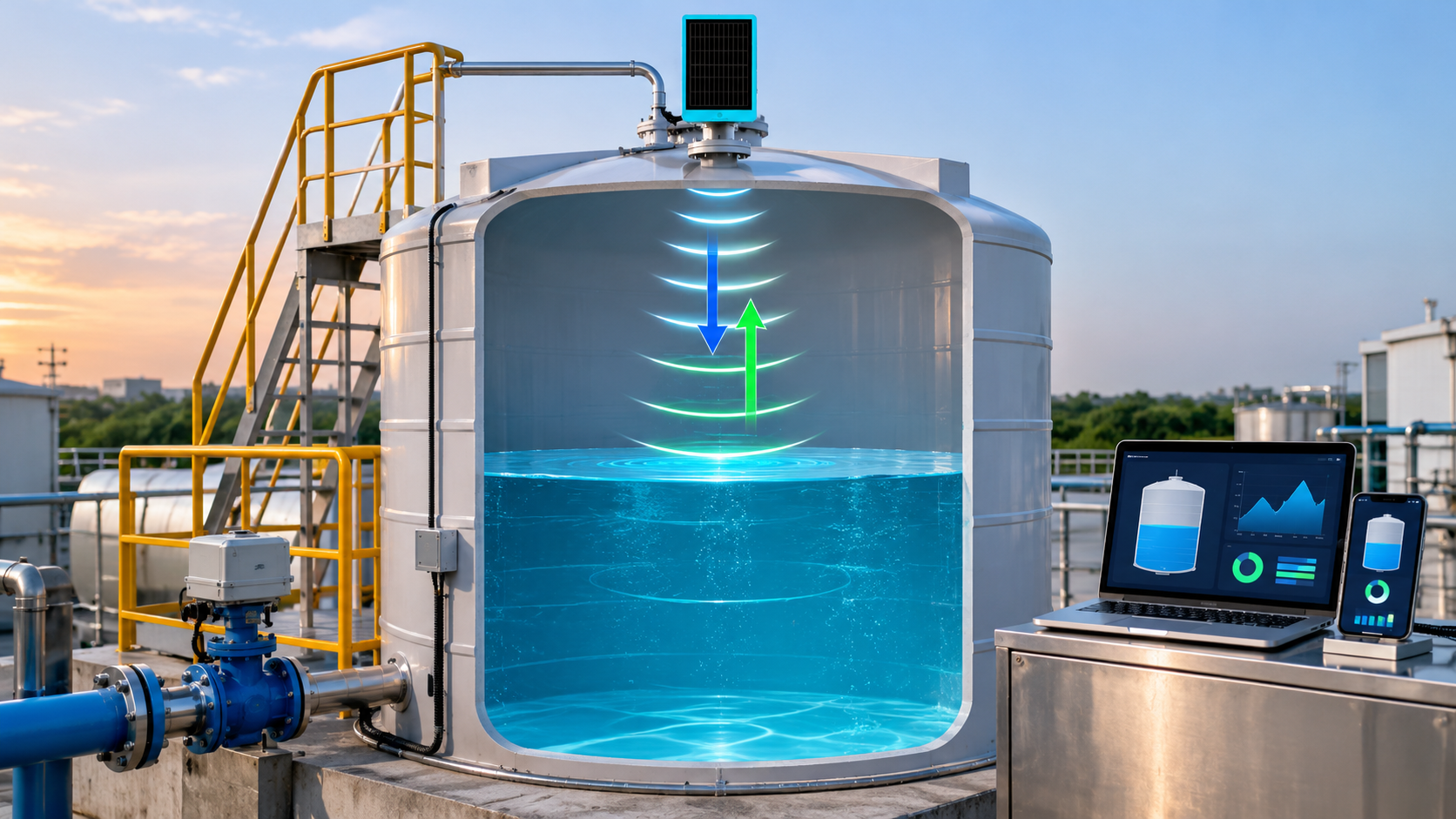
Industrial facilities increasingly rely on connected technologies to improve process visibility, reduce manual inspections, and manage storage operations efficiently. Monitoring liquid levels in tanks is an important part of this transformation. Traditional measurement methods may require frequent physical checks, while modern radar-based systems can provide continuous, non-contact level measurement.
Integrating radar level sensors with Industrial Internet of Things (IIoT) platforms allows industries to collect, transmit, visualize, and analyze tank-level data remotely. This enables better operational decisions, timely alerts, and improved process automation.
A reliable tank level sensor combined with a compatible tank level transmitter and an IoT platform can create a connected monitoring solution for industrial water and liquid storage applications.
What Is a Radar Level Sensor?
A radar level sensor is an electronic instrument that measures the level of liquid or solid material inside a tank using electromagnetic waves. It sends radar signals toward the material surface and calculates the distance based on the reflected signal.
Unlike contact-based measurement technologies, radar sensors generally operate without touching the stored material. This makes them suitable for applications where liquid properties, temperature variations, or challenging operating conditions can affect conventional measurement methods.
Key advantages include:
-
Non-contact level measurement.
-
Continuous monitoring of tank levels.
-
Reduced mechanical wear because there are no moving measurement parts.
-
Suitability for many industrial storage applications.
-
Integration with compatible industrial controllers and monitoring systems.
A radar-based tank level sensor can help industries monitor water, chemicals, oils, and other compatible materials, depending on the sensor specifications.
Why Integrate Radar Level Sensors with Industrial IoT Platforms?
An individual sensor provides measurement data, but an Industrial IoT platform makes that information more accessible and useful.
By connecting radar sensors to an IIoT system, operators can monitor tank levels from centralized dashboards rather than depending entirely on local inspections.
Important benefits include:
Real-time visibility: Operators can view tank-level measurements from a connected monitoring interface.
Remote monitoring: Authorized personnel can check storage conditions without visiting every tank location.
Automated alerts: Configured notifications can indicate high-level, low-level, or abnormal measurement conditions.
Improved operational efficiency: Continuous data availability helps reduce repetitive manual inspections.
Historical data analysis: Stored measurements can help identify consumption patterns, unusual variations, and operational trends.
Scalable monitoring: Multiple sensors can be connected to a centralized platform when the communication infrastructure supports expansion.
Essential Components Required for Integration
Successful integration requires more than installing a radar sensor. The complete setup must include compatible measurement, communication, and software components.
Radar Level Sensor
The radar sensor measures the distance between its mounting position and the material surface. The measured distance is converted into a tank-level value using the configured tank dimensions.
Tank Level Transmitter
A tank level transmitter communicates the measured level to a controller, PLC, gateway, or monitoring platform.
Depending on the model, the transmitter may support industrial communication interfaces such as:
-
4–20 mA output.
-
HART communication.
-
RS485.
-
Modbus RTU.
-
Modbus TCP through a suitable interface.
The actual interface must be verified against the sensor and platform specifications.
C. Industrial IoT Gateway
An IoT gateway connects field instruments to the industrial network or cloud platform. It may convert protocols, collect measurements, and securely transmit data to remote applications.
D. Industrial IoT Platform
The platform receives and processes sensor information. It typically provides dashboards, alerts, historical records, and data visualization.
E. Network Connectivity
Depending on the installation, communication may use Ethernet, Wi-Fi, cellular networks, or other industrial communication technologies.
Step-by-Step Process to Integrate Radar Level Sensors with IIoT Platforms
A structured implementation process helps ensure accurate measurements and reliable communication.
Step 1: Select the Appropriate Radar Sensor
Start by evaluating the tank dimensions, material properties, operating temperature, pressure, and installation environment.
Choose a radar instrument with a suitable measurement range, accuracy, antenna design, and process connection.
Step 2: Install and Configure the Sensor
Mount the sensor at an appropriate position on the tank. Avoid installation locations where internal structures, inlet streams, or obstructions may interfere with the radar signal.
Configure the tank height, measurement range, reference point, and other parameters according to the manufacturer's instructions.
Step 3: Connect the Transmitter to a Controller or Gateway
Connect the sensor's output to a compatible PLC, industrial controller, or IoT gateway.
For example:
-
Use a compatible analog input for a 4–20 mA output.
-
Use an appropriate communication interface for RS485 or Modbus RTU.
-
Configure the required protocol settings, such as device address, baud rate, and register mapping, where applicable.
Step 4: Configure Data Transmission
Set up the gateway to collect measurements and transmit them to the selected IIoT platform.
Depending on the system architecture, communication may use MQTT, HTTP APIs, OPC UA, or other supported protocols.
Step 5: Build the Monitoring Dashboard
Configure the platform to display useful information, including:
-
Current tank level.
-
Percentage of tank capacity.
-
High-level and low-level conditions.
-
Historical measurement trends.
-
Sensor communication status.
-
Configured alarm notifications.
Step 6: Test and Validate the Complete System
Compare the displayed readings with actual tank measurements under different operating conditions.
Check communication reliability, alarm thresholds, data updates, and recovery after network interruptions.
A properly validated tank level transmitter integration helps ensure that the information displayed on the IIoT dashboard accurately represents field conditions.
How MyTank Can Support Connected Water Monitoring
MyTank can be part of a smart water monitoring approach that brings tank-level information into a connected digital environment.
When compatible sensors, transmitters, gateways, and software interfaces are available, an integrated solution can help users monitor water storage conditions and access useful operational information remotely.
Potential capabilities of a connected monitoring setup include:
-
Centralized visibility of connected water tanks.
-
Remote access to tank-level information.
-
Configurable high-level and low-level alerts.
-
Historical water-level information.
-
Monitoring of multiple storage locations, depending on system capacity.
-
Improved visibility into water usage and replenishment requirements.
For industrial applications, confirm that the selected MyTank configuration supports the radar sensor's output or communication protocol. An additional gateway or interface may be required to connect certain industrial instruments.
Common Integration Challenges and How to Overcome Them
Although radar sensors and IIoT platforms offer significant benefits, integration can involve technical challenges.
|
Integration Challenge |
Recommended Approach |
|
Protocol incompatibility |
Select a gateway that supports the sensor's communication interface. |
|
Incorrect level readings |
Verify tank dimensions, sensor positioning, and configuration settings. |
|
Signal interference |
Review mounting location and follow the manufacturer's installation guidelines. |
|
Network interruptions |
Use suitable connectivity and configure data buffering where supported. |
|
Incorrect dashboard values |
Validate scaling, engineering units, and register mapping. |
|
Delayed notifications |
Review transmission intervals and alert configuration. |
|
Multiple sensor integration |
Use a platform and gateway architecture designed for the required number of devices. |
Addressing these issues during implementation can improve system reliability and reduce operational disruptions.
Industrial Applications of Radar-Based IoT Monitoring
Radar-based level monitoring integrated with Industrial IoT platforms can support several industries.
Water treatment plants: Monitor storage tanks, treatment reservoirs, and process water levels.
Manufacturing facilities: Track liquid storage levels used in production processes.
Chemical industries: Monitor compatible chemical storage applications using appropriately specified instruments.
Food and beverage facilities: Support liquid ingredient and process-water monitoring where the sensor meets hygiene and material requirements.
Commercial infrastructure: Monitor water storage across large buildings and distributed facilities.
In these applications, a properly configured tank level sensor and connected tank level transmitter can improve measurement visibility and support more informed operational decisions.
Conclusion
Integrating radar level sensors with Industrial IoT platforms helps industries move toward connected, data-driven tank monitoring. By combining accurate radar measurement with compatible transmitters, gateways, communication protocols, and monitoring dashboards, businesses can access tank-level information remotely and respond more effectively to changing storage conditions.
A reliable tank level sensor provides the measurement, while a compatible tank level transmitter and IoT gateway help deliver that information to the digital platform.
Solutions such as MyTank can support smarter water monitoring when configured with compatible industrial devices and communication interfaces. Before implementation, evaluate sensor compatibility, communication requirements, network reliability, and platform capabilities to achieve a dependable integration.
- Digital Agency
- Literie
- Location de voitures
- Restaurant
- Restaurant
- Mode
- Mode
- Information
- Marketing
- Tourisme
- Développement
- Découverte
- Législation
- Gastronomie
- Pâtisserie
- Evento
- Art
- Causes
- Crafts
- Dance
- Drinks
- Film
- Fitness
- Food
- Giochi
- Gardening
- Health
- Home
- Literature
- Music
- Networking
- Altre informazioni
- Party
- Religion
- Shopping
- Sports
- Theater
- Wellness
 Italiano
 Indian
 English
 French
 Arabic
 Spanish
 Portuguese
 Deutsch
 Turkish
 Dutch
 Russian
 Romaian
 Portuguese (Brazil)
 Greek
