


How Radar Sensors and Smart Pump Controllers Automate Water Filling in Chennai Buildings
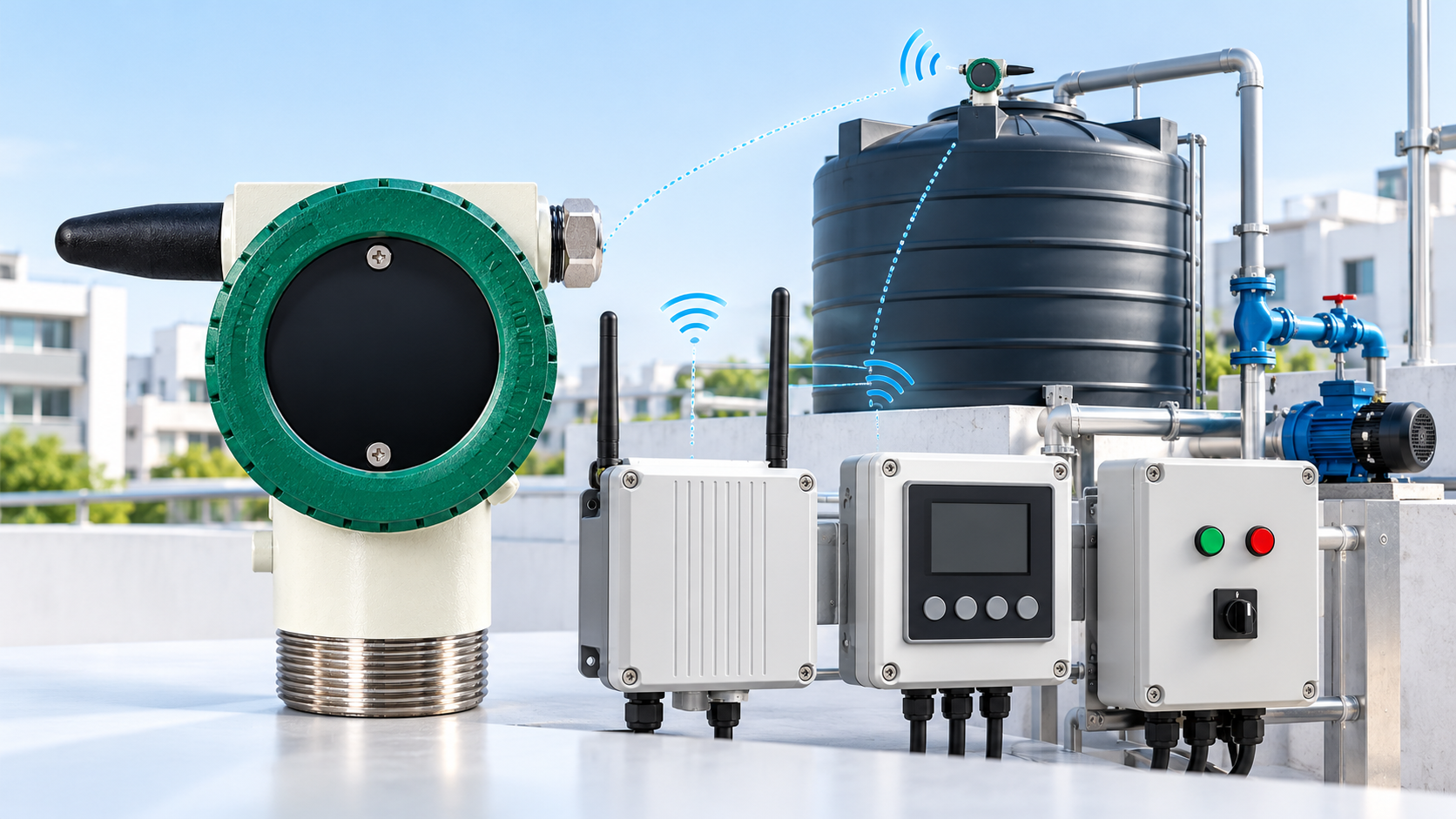
Water management is an important requirement for residential apartments, commercial complexes, hotels, hospitals, and industrial facilities in Chennai. Many buildings depend on underground sumps and overhead water tanks to maintain a consistent water supply. However, manual pump operation can lead to tank overflow, water wastage, unnecessary electricity consumption, and unexpected water shortages.
Radar sensors and smart pump controllers can automate water filling by measuring tank levels and controlling pump operation according to predefined conditions. By integrating a Radar Water Level Sensor Chennai solution with a wireless water level monitoring system, building managers can monitor water storage remotely and improve operational efficiency. End-to-End IoT Solutions such as MyTank can bring connected water monitoring and compatible pump automation into a centralized management system.
Why Manual Water Filling Creates Challenges
In many Chennai buildings, maintenance teams operate pumps manually or rely on basic float switches to control water filling. These methods may require regular supervision, particularly when several tanks need to be managed.
Common challenges include:
-
Water overflow: Pumps may continue running after a tank reaches its maximum capacity.
-
Water shortages: Tanks may become empty before staff notice the problem.
-
Electricity wastage: Pumps may operate longer than necessary.
-
Manual supervision: Staff may need to inspect multiple tanks throughout the day.
-
Limited visibility: Building managers may not know the water levels across all tanks at a given time.
An automated system can help address these issues by combining accurate water-level measurements, configured control logic, and suitable pump controllers.
How Radar Water Level Sensors Measure Tank Levels
A radar sensor uses electromagnetic waves to measure the distance between the sensor and the water surface. The system calculates the water level using the measured distance and the configured tank dimensions.
Unlike contact-based measurement methods, radar sensors do not need to be submerged in water.
A Radar Water Level Sensor Chennai installation can provide several advantages:
-
Non-contact measurement: Measure water levels without placing the sensing element directly in the water.
-
Continuous or periodic readings: Obtain measurements at configured intervals, depending on the device.
-
High-level detection: Identify when a tank approaches its configured maximum level.
-
Remote monitoring: Send readings to a compatible monitoring platform.
-
Automation support: Provide measurement data to compatible controllers for pump operation.
When selecting a radar sensor, check its measurement range, accuracy, mounting requirements, environmental protection, and compatibility with the intended control system.
How Smart Pump Controllers Automate Water Filling
A smart pump controller receives water-level information from compatible sensors or a monitoring system and uses configured rules to operate the pump.
For example, an apartment building in Chennai may have an underground sump that supplies an overhead water tank. The controller can be configured to start the pump when the overhead tank's level falls below a specified threshold and stop it when the target level is reached.
A typical automated filling sequence works as follows:
-
Measure the water level: The radar sensor monitors the overhead tank.
-
Check the filling requirement: The controller compares the measured level with the configured start threshold.
-
Check water availability: The system verifies the underground sump level if a compatible sensor and control logic are installed.
-
Start the pump: The controller activates the pump when the required conditions are satisfied.
-
Monitor the filling process: The system continues checking the tank level.
-
Stop the pump: The controller switches off the pump when the configured stop threshold is reached.
-
Generate alerts: The system notifies responsible personnel when supported abnormal conditions occur.
The exact sequence depends on the installation and controller configuration. Suitable electrical protection and independent safety measures should be included where required.
The Role of a Wireless Water Level Monitoring System
A wireless water level monitoring system connects sensors to a compatible gateway or communication network, allowing tank-level readings to be viewed remotely.
This is particularly useful for buildings with multiple tanks located on different floors or across separate structures.
A connected system may support:
-
Remote tank-level monitoring: View readings without physically visiting each tank.
-
Centralized dashboards: Check several connected tanks through one interface.
-
Low-water alerts: Identify tanks that require refilling.
-
High-water alerts: Detect tanks approaching configured overflow thresholds.
-
Pump status monitoring: View pump operating status where compatible equipment provides this information.
-
Historical data: Review water-level patterns and pumping activity when supported.
Connectivity options may include LoRa, cellular networks, or other compatible technologies. The choice depends on site coverage, communication range, power availability, and gateway requirements.
How End-to-End IoT Solutions Connect Sensors, Pumps, and Cloud Platforms
End-to-End IoT Solutions combine the hardware, communication infrastructure, monitoring software, and control equipment required to manage connected devices.
For automated water filling, the system generally includes the following components:
|
Component |
Function |
|
Radar water level sensor |
Measures the water level inside the tank |
|
Communication module |
Transmits sensor readings to a compatible receiver or gateway |
|
IoT gateway |
Collects readings and forwards data to the monitoring platform |
|
Cloud platform |
Stores and displays connected tank information |
|
Smart pump controller |
Operates compatible pumps using configured control logic |
|
Mobile app or dashboard |
Allows users to monitor tank levels and supported alerts |
The complete system should be designed so that water-level readings, pump controls, and notifications work together reliably.
For critical installations, local pump-control and safety functions should not depend solely on cloud connectivity. A properly designed system can maintain essential control locally while using the cloud for remote monitoring.
How MyTank Supports Automated Water Management
MyTank provides a connected approach to water tank management through water-level sensing, remote monitoring, and compatible pump automation.
For Chennai apartments, commercial buildings, hotels, and industrial facilities, a suitable MyTank configuration can help bring connected tank readings and supported automation functions into one monitoring environment.
Potential capabilities, depending on the selected equipment and configuration, include:
-
Remote water-level monitoring: View connected tank readings through a compatible mobile application or dashboard.
-
Multi-tank visibility: Monitor several connected tanks from a centralized platform.
-
Water-level alerts: Receive notifications for configured high-level or low-level conditions.
-
Pump automation: Integrate with compatible wireless pump-control equipment.
-
Operational monitoring: Review available water-level information to support maintenance and water management decisions.
Before installation, confirm the supported sensor models, communication methods, maximum number of tanks, and pump-control functions for the specific MyTank configuration.
Benefits of Automated Water Filling in Chennai Buildings
Automating water filling can improve daily facility management when the sensors, controllers, and communication equipment are correctly configured.
Reduced Water Overflow
The controller can stop a compatible pump when the tank reaches its configured filling limit, helping reduce avoidable overflow.
Improved Water Availability
Monitoring both the underground sump and overhead tank can help the system coordinate pumping according to water availability and demand.
Reduced Manual Supervision
Maintenance teams can use remote readings and supported alerts instead of repeatedly visiting every tank.
More Efficient Pump Operation
Configuring appropriate start and stop thresholds can help avoid unnecessary pump runtime. Actual electricity savings depend on the existing system and operating conditions.
Better Multi-Tank Management
A centralized wireless water level monitoring system can help building managers review water storage across multiple floors or buildings.
Important Factors Before Installing an Automated System
Before deploying a Radar Water Level Sensor Chennai solution with smart pump controllers, evaluate these requirements:
-
Sensor accuracy: Confirm that the radar sensor suits the tank dimensions and operating environment.
-
Controller compatibility: Ensure the sensor readings can be used by the selected pump controller.
-
Sump protection: Prevent the pump from operating when the source tank has insufficient water, where applicable.
-
Overflow protection: Configure suitable pump-stop thresholds and independent safeguards where required.
-
Communication reliability: Test sensor-to-gateway connectivity at the actual installation locations.
-
Electrical safety: Include suitable protection against overload, dry running, and other relevant faults.
-
Power failure handling: Define safe pump behaviour when power or communication is interrupted.
-
Maintenance: Inspect sensors, controllers, wiring, and communication equipment according to manufacturer recommendations.
These checks help ensure that automation improves reliability rather than introducing new operational risks.
Conclusion
Radar sensors and smart pump controllers can automate water filling in Chennai buildings by measuring tank levels, starting pumps when refilling is required, and stopping them when configured target levels are reached.
A suitable Radar Water Level Sensor Chennai solution provides the measurement data, while a wireless water level monitoring system enables remote visibility and supports alerts. End-to-End IoT Solutions such as MyTank can bring connected water monitoring and compatible pump automation together, helping building managers simplify operations, reduce manual supervision, and manage water storage more efficiently.
The key to reliable automation is selecting compatible equipment, configuring appropriate control thresholds, validating communication, and maintaining suitable electrical and overflow protection.
- Digital Agency
- Literie
- Location de voitures
- Restaurant
- Restaurant
- Mode
- Mode
- Information
- Marketing
- Tourisme
- Développement
- Découverte
- Législation
- Gastronomie
- Pâtisserie
- Etkinlik
- Art
- Causes
- Crafts
- Dance
- Drinks
- Film
- Fitness
- Food
- Oyunlar
- Gardening
- Health
- Ana sayfa
- Literature
- Music
- Networking
- diğer
- Party
- Religion
- Shopping
- Sports
- Theater
- Wellness
 Turkish
 Indian
 English
 French
 Arabic
 Spanish
 Portuguese
 Deutsch
 Dutch
 Italiano
 Russian
 Romaian
 Portuguese (Brazil)
 Greek
