


How to Select an IoT-Enabled Radar Level Sensor Manufacturer in India
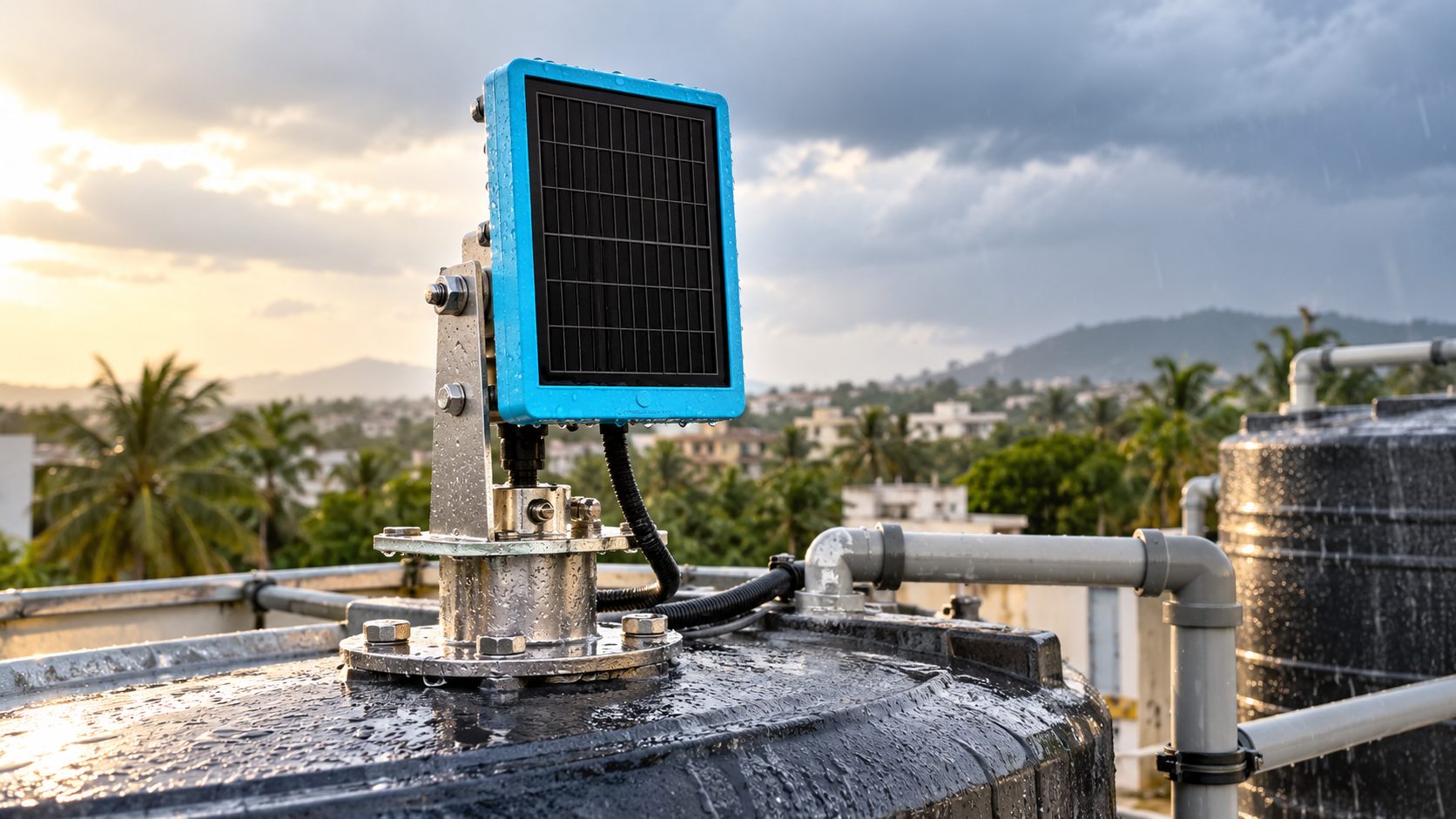
Water tank monitoring is becoming increasingly connected as industries, apartments, commercial buildings, hospitals, farms, and infrastructure facilities adopt IoT-based technologies. Instead of relying only on manual tank inspections, organizations can use radar sensors, wireless connectivity, cloud platforms, and automation to monitor water levels remotely.
However, choosing the right technology provider requires more than simply comparing sensor prices. Businesses need to consider measurement accuracy, connectivity, installation requirements, IoT integration, scalability, and technical support.
If you are looking for a Radar Level Sensor Manufacturer in India, understanding these factors can help you select a solution that matches your application requirements.
What Is an IoT-Enabled Radar Level Sensor?
An IoT-enabled radar level sensor combines radar-based level measurement with wireless or network connectivity.
The radar sensor measures the distance between the sensor and the water surface. The measured information can then be transmitted to an IoT platform, where users can access the data remotely.
A typical system works through:
Radar Sensor → IoT Connectivity → Cloud Platform → Dashboard/Mobile Application
This architecture can enable continuous monitoring without requiring an operator to physically inspect every tank.
How Does a Radar Water Tank Level Sensor Work?
A Radar Water Tank Level Sensor uses electromagnetic waves to measure the distance between the sensor and the water surface.
The sensor is generally installed above the liquid. It sends a radar signal toward the water surface and receives the reflected signal.
The system processes the returned signal to determine the distance and convert it into a water-level measurement.
Because the measurement is contactless, the sensing device does not need to be submerged in the tank.
Why Choose an IoT-Enabled Radar Sensor?
A standalone sensor can provide a local level reading, but IoT connectivity can extend its capabilities.
An IoT-enabled system can support:
-
Remote water-level monitoring
-
High- and low-level alerts
-
Historical data collection
-
Multi-tank monitoring
-
Cloud-based dashboards
-
Pump automation
-
Remote access
-
Data analysis
This can be particularly useful for facilities where tanks are distributed across different locations.
Key Factors to Consider When Choosing a Manufacturer
Radar Technology
Start by understanding the radar technology used by the manufacturer.
Depending on the application, different radar frequencies and sensor configurations may be available. The appropriate technology should be selected based on tank dimensions, installation conditions, required range, and measurement objectives.
Measurement Accuracy
Accuracy is an important consideration when selecting a Radar Water Tank Level Sensor.
The required accuracy depends on how the level data will be used. Basic monitoring may have different requirements from applications involving automated pump control or detailed water management.
Ask the manufacturer about the sensor's measurement accuracy and operating range for your specific application.
Measurement Range
The sensor should be suitable for the depth or height of the tank being monitored.
Before purchasing, provide the manufacturer with information such as:
-
Tank height
-
Installation position
-
Minimum level
-
Maximum level
-
Tank configuration
This helps determine whether the selected sensor is appropriate.
Wireless Connectivity
An IoT-enabled radar sensor needs an appropriate communication method.
Depending on the installation, technologies such as LoRa, NB-IoT, 4G, Wi-Fi, or other wireless technologies may be considered.
The right option depends on:
-
Network availability
-
Distance
-
Data requirements
-
Power availability
-
Number of sensors
-
Installation environment
A good manufacturer should be able to recommend connectivity based on the actual deployment conditions.
Cloud Platform and Dashboard
The sensor is only one component of an IoT monitoring system.
Check whether the manufacturer provides access to a cloud-based dashboard or supports integration with your existing platform.
A useful monitoring platform may provide:
-
Current tank levels
-
Historical data
-
High/low-level alerts
-
Multiple tank views
-
User access
-
Data reports
-
Remote monitoring
Multi-Tank Monitoring
If your facility has several water tanks, ask whether the system can monitor them from a single platform.
For example, an apartment complex may have underground sumps and multiple rooftop tanks.
A centralized system can allow facility managers to view different tanks from one dashboard rather than checking each location individually.
Pump Automation Compatibility
If you want to automate water transfer, the radar sensor should be compatible with the required pump-control system.
A basic automation sequence could be:
Low tank level → Sensor detects level → Controller starts pump → Tank fills → High level reached → Pump stops
This can reduce manual pump operation and help coordinate water transfer according to predefined conditions.
Power Requirements
Consider how the sensor will be powered.
Depending on the installation, options may include:
-
Wired power
-
Battery power
-
Solar power
For remote locations, battery or solar-powered solutions may be useful where conventional electrical power is difficult to provide.
Installation Requirements
The physical installation environment can affect radar measurement.
Before selecting the sensor, evaluate:
-
Tank structure
-
Mounting position
-
Tank roof
-
Internal obstructions
-
Pipe arrangements
-
Measurement range
-
Environmental conditions
A reliable Radar Level Sensor Manufacturer in India should be able to provide guidance on sensor positioning and installation.
Scalability
Think beyond the first installation.
If you currently need to monitor five tanks but may need to monitor 50 tanks in the future, select a system that can scale accordingly.
A scalable IoT platform can make it easier to add sensors and monitoring locations without replacing the entire system.
Questions to Ask a Radar Level Sensor Manufacturer
Before purchasing, consider asking:
-
What radar technology does the sensor use?
-
What is the measurement range?
-
What level of accuracy can be expected for my tank?
-
Which wireless connectivity options are supported?
-
Can the sensor connect to a cloud monitoring platform?
-
Can multiple tanks be monitored from one dashboard?
-
Can the sensor integrate with pump automation?
-
What are the power requirements?
-
What installation support is provided?
-
What technical and after-sales support is available?
These questions can help buyers compare different solutions based on actual application requirements rather than price alone.
Applications of IoT-Enabled Radar Level Sensors
IoT-enabled radar level monitoring can be used across various sectors, including:
-
Industrial water tanks
-
Apartment complexes
-
Commercial buildings
-
Hospitals
-
Hotels
-
Educational institutions
-
Agricultural facilities
-
Municipal infrastructure
-
Underground sumps
-
Rooftop water tanks
The appropriate configuration will depend on the tank type, measurement requirements, connectivity, and automation needs.
Why the Right Manufacturer Matters
Choosing a Radar Level Sensor Manufacturer in India is not simply about purchasing a sensing device.
The manufacturer can play an important role in sensor selection, installation, IoT integration, connectivity, configuration, and technical support.
A complete solution can provide greater value when the sensor, communication technology, monitoring platform, and automation system are designed to work together.
Conclusion
Selecting an IoT-enabled radar solution requires careful consideration of both the sensor and the overall monitoring ecosystem.
A Radar Water Tank Level Sensor can provide contactless water-level measurement, while IoT connectivity can make that information available remotely through a cloud-based platform.
When choosing a Radar Level Sensor Manufacturer in India, evaluate radar technology, accuracy, measurement range, connectivity, cloud integration, pump automation, power requirements, scalability, installation, and technical support.
The right combination of radar sensing and IoT technology can help organizations build a more connected approach to water tank monitoring and management.
- Digital Agency
- Literie
- Location de voitures
- Restaurant
- Restaurant
- Mode
- Mode
- Information
- Marketing
- Tourisme
- Développement
- Découverte
- Législation
- Gastronomie
- Pâtisserie
- Event
- Art
- Causes
- Crafts
- Dance
- Drinks
- Film
- Fitness
- Food
- Games
- Gardening
- Health
- Home
- Literature
- Music
- Networking
- Other
- Party
- Religion
- Shopping
- Sports
- Theater
- Wellness
 English
 Indian
 French
 Arabic
 Spanish
 Portuguese
 Deutsch
 Turkish
 Dutch
Dutch
 Italiano
 Russian
 Romaian
 Portuguese (Brazil)
 Greek
Greek
