


Guniting Work Contractors for RCC Repair Projects
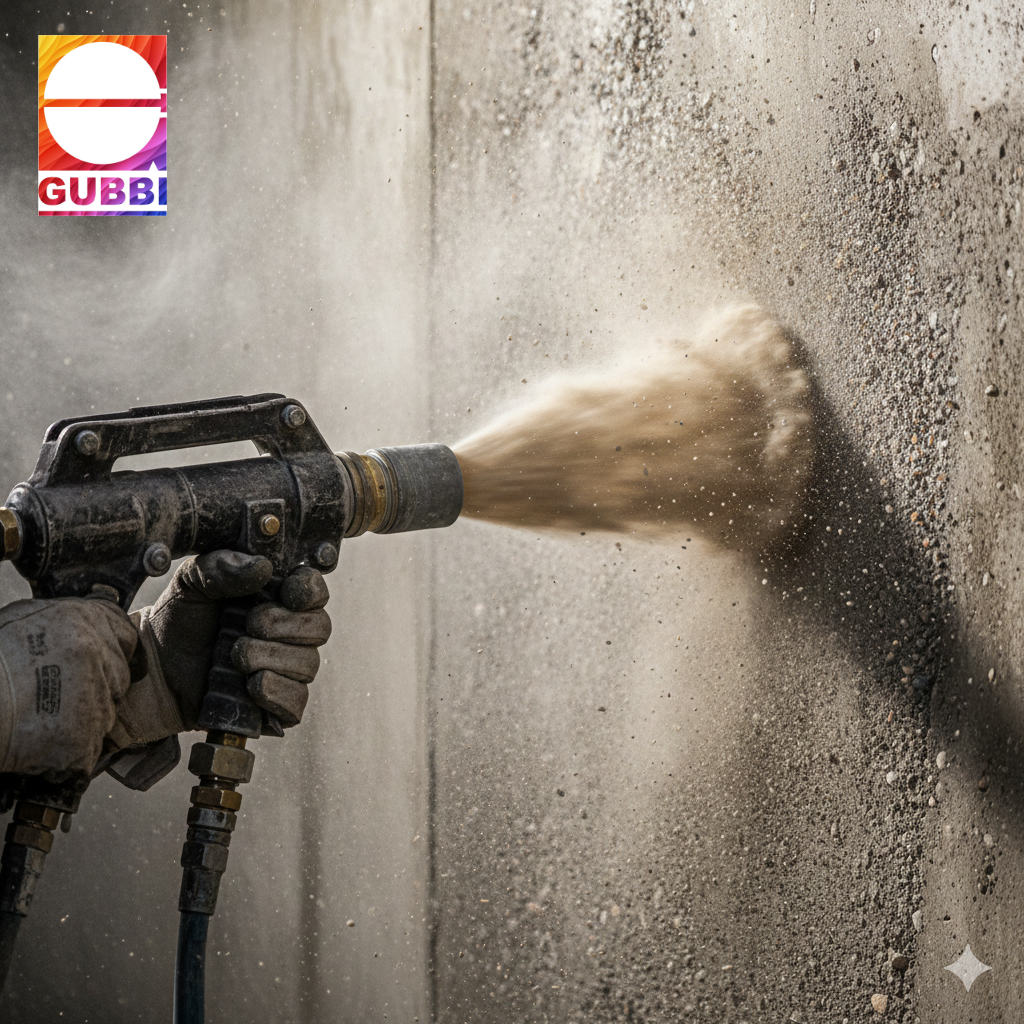
Guniting Services is a specialised concrete repair and surface rehabilitation technique used when existing structures need restoration without extensive shuttering or conventional rebuilding. It involves projecting cementitious material onto a prepared surface at high velocity so the material forms a compact repair layer. The method is commonly considered for deteriorated RCC members, masonry, retaining structures, tanks, industrial assets and other construction components where surface damage or concrete loss requires controlled repair.
Why Guniting Is Considered for Damaged Concrete
For industrial and infrastructure owners, choosing the right repair method is more important than simply covering visible defects. Cracks, spalling, exposed reinforcement, honeycombing and surface deterioration can indicate deeper problems caused by moisture, corrosion, ageing, chemical exposure or repeated loading. Guniting can become useful when engineers determine that a sprayed repair layer is suitable for restoring the affected area and improving the condition of the existing substrate.
Guniting and Shotcreting: Understanding the Difference
Guniting is often associated with shotcreting, although terminology can vary according to the process and material used. Traditional guniting generally refers to dry-mix material conveyed through a hose and mixed with water near the nozzle before projection. High-velocity application helps compact the material against the prepared surface. Understanding the repair requirement is essential because the selected process should match structural condition, thickness, reinforcement and site limitations.
Why Structural Assessment Should Come First
The first step in any guniting work is assessment rather than application. A damaged concrete surface should be examined to understand deterioration, reinforcement condition, crack pattern, moisture exposure and possible causes of failure. Engineers may review drawings, previous repair records and operating conditions. This assessment helps determine whether guniting alone is appropriate or whether the project also requires concrete replacement, corrosion treatment, grouting, strengthening or waterproofing measures.
Importance of Proper Surface Preparation
Surface preparation has a major influence on the performance of guniting. Loose, weak, cracked or delaminated concrete must be removed until a sound substrate is reached. Dust, laitance, oil, debris and other contaminants should also be cleared so the new material can bond properly. Where reinforcement is exposed, corrosion products may need to be removed and the steel treated according to the repair specification before the guniting layer is applied.
Preparing Reinforcement and the Repair Area
After preparation, the repair area is checked for geometry, reinforcement requirements and substrate condition. Depending on the engineering design, wire mesh, bars, anchors or other reinforcement may be installed before spraying. The surface may also require controlled dampening to support proper bonding and hydration. These preparatory activities directly affect the quality, thickness, adhesion and performance expected from completed guniting work. These steps should be completed before material application begins.
Equipment Used for Guniting Work
Guniting machines, compressors, hoses and nozzles need to be selected and operated according to project requirements. Material proportioning, water control, air pressure, nozzle distance and application angle can influence rebound, compaction and surface finish. Skilled nozzle operation is particularly important because inconsistent spraying can create weak areas, uneven thickness or excessive material loss. Proper equipment setup therefore forms an important part of quality control during concrete repair work.
Where Guniting Can Be Advantageous
One significant advantage of guniting is its suitability for areas where conventional formwork is difficult to install. Vertical surfaces, overhead sections, irregular profiles and restricted access zones can present challenges for traditional concrete placement. Pneumatic application allows repair material to be projected directly onto prepared surfaces. For industrial facilities and infrastructure assets, this can make certain repair activities more practical while reducing the need for extensive temporary shuttering arrangements.
Concrete Problems That May Require Guniting
Guniting can be considered for several types of concrete deterioration, but it should not be treated as a universal solution. Spalled concrete, damaged surfaces, local section loss and certain rehabilitation requirements may be suitable when the substrate and structural design permit. However, severe reinforcement loss, major cracks or underlying foundation problems may require other interventions. The repair strategy should therefore be based on engineering assessment rather than appearance alone.
Guniting for Industrial Structures
Industrial facilities frequently operate under conditions that accelerate concrete deterioration. Cooling towers, chimneys, tanks, process areas, foundations and other RCC structures can experience moisture, temperature variation, chemical exposure, vibration and long service periods. When deterioration develops, shutting down operations for extensive rebuilding may be difficult. Guniting may provide a practical rehabilitation option for selected areas while wider maintenance is planned. This approach can reduce disruption while addressing selected deterioration.
Guniting for Cooling Tower Rehabilitation
Cooling tower rehabilitation is one application where sprayed repair techniques can be considered for deteriorated concrete. Cooling tower components may experience persistent moisture, environmental exposure and ageing, contributing to cracking, surface erosion and reinforcement corrosion. Before guniting, affected concrete should be assessed and prepared carefully. The repair design may also include corrosion protection, crack treatment, protective coatings or other measures depending on the deterioration mechanism and operating environment.
Guniting for Infrastructure Repair
Guniting can also support repair work on retaining walls, masonry surfaces, tunnels, culverts and other infrastructure components where suitable substrate conditions exist. Its ability to cover irregular surfaces makes it useful where conventional concrete placement is difficult. For infrastructure owners, the important consideration is not simply whether guniting can be applied, but whether the mix, reinforcement, thickness, curing method and surface preparation satisfy the technical requirements of the specific asset.
Guniting for Water-Related Structures
In water-related structures, repair planning requires particular attention to moisture and service conditions. Tanks, channels and similar structures may develop deterioration due to water exposure, leakage, cracking or reinforcement corrosion. Guniting may be incorporated into a broader repair system where appropriate, but the cause of water ingress should first be identified. A sprayed repair layer cannot compensate for unresolved movement, failed joints, severe cracking or other conditions affecting the structure.
Role of Skilled Guniting Contractors
Guniting work contractors should maintain appropriate site controls during execution. Pneumatic spraying can generate rebound, dust, noise and overspray, while repair locations may involve elevated work, confined spaces or operating industrial equipment. Proper barricading, personal protective equipment, access systems and housekeeping are important. Safety planning should be integrated with the repair sequence so workers, plant operations and surrounding assets remain protected throughout the activity during every shift.
What to Check Before Selecting Guniting Contractors
When comparing guniting contractors, project owners should look beyond the quoted rate. The contractor should understand the existing structure, coordinate with engineers, provide suitable equipment and follow a documented repair methodology. Experience with industrial and infrastructure environments is valuable where access, shutdown schedules, safety requirements and operating constraints affect execution. A clear scope of work also helps prevent misunderstandings about preparation, application, finishing and curing.
Importance of Workmanship During Guniting
Guniting quality depends heavily on workmanship. A technically suitable material can still produce poor results if the nozzle is operated incorrectly, the surface is inadequately prepared or application is inconsistent. Experienced guniting contractors understand the importance of controlling material flow, water addition, spray distance, layer thickness and rebound. They also coordinate preparation, reinforcement fixing, application and curing so the process follows the approved method rather than becoming simple surface patching.
Why Guniting Should Not Be Treated as Cosmetic Repair
A common mistake is to treat guniting as a cosmetic solution for every damaged concrete surface. Painting over deterioration or applying a sprayed layer without removing unsound concrete may hide symptoms while leaving the underlying problem unresolved. Effective rehabilitation begins with identifying the deterioration mechanism and selecting an appropriate repair system. Guniting works best when it forms part of an engineering solution addressing substrate, reinforcement, exposure conditions and service life.
Inspection and Quality Control
Inspection and quality checks help verify whether completed guniting work meets project requirements. Depending on the repair specification, checks may cover surface preparation, reinforcement placement, material quality, application thickness, bond, curing and visual uniformity. Testing requirements should be established by the responsible engineer and project specifications rather than assumed to be identical for every job. Proper documentation also helps owners maintain a record of rehabilitation work for future maintenance planning.
Choosing Guniting Services for Industrial Projects
Choosing guniting services for an industrial or infrastructure project should depend on the condition of the structure and the proposed repair methodology. A contractor should explain why guniting is suitable, what preparation is required, how reinforcement will be handled and how completed work will be checked. For organisations evaluating specialist support, Gubbi Civil Engineers Limited can be considered for industrial concrete repair where guniting forms part of the planned solution.
Planning the Guniting Work Scope
For organisations planning concrete rehabilitation, the project scope should describe damaged elements, access conditions, expected repair thickness, reinforcement requirements, surface preparation, material specifications, curing and inspection requirements. This makes contractor evaluation easier and reduces uncertainty during execution. It also allows owners to compare proposals on technical suitability instead of price alone. A well-defined scope is especially important for industrial facilities where repair work must fit around production and operational constraints.
Guniting as Part of Long-Term Structural Maintenance
The demand for specialised concrete repair continues as industrial and infrastructure assets remain in service for longer periods. Instead of automatically replacing deteriorated components, owners increasingly evaluate rehabilitation methods that can restore selected areas while extending asset usability. Guniting is one technique within this wider repair toolkit. Its suitability depends on engineering assessment, site conditions and execution quality, making experienced guniting contractors important for structural maintenance planning.
Ultimately, guniting is most valuable when it is used for the right problem, on the right substrate and with the right execution controls. It can support concrete surface restoration, rehabilitation and selected strengthening applications where the repair design permits. For industrial plants and infrastructure owners, the priority is understanding the cause of deterioration before selecting a contractor. A planned guniting work package can become part of a practical rehabilitation strategy. Guniting should therefore be viewed as part of a wider concrete rehabilitation strategy rather than an isolated surface treatment. Its success depends on accurate assessment, proper preparation, suitable materials, controlled spraying, appropriate curing and inspection. When these elements are coordinated, guniting can help restore selected deteriorated areas and support continued asset use. For demanding industrial and infrastructure projects, careful planning remains the foundation of successful repair execution.
- Digital Agency
- Literie
- Location de voitures
- Restaurant
- Restaurant
- Mode
- Mode
- Information
- Marketing
- Tourisme
- Développement
- Découverte
- Législation
- Gastronomie
- Pâtisserie
- Evento
- Art
- Causes
- Crafts
- Dance
- Drinks
- Film
- Fitness
- Food
- Giochi
- Gardening
- Health
- Home
- Literature
- Music
- Networking
- Altre informazioni
- Party
- Religion
- Shopping
- Sports
- Theater
- Wellness
 Italiano
 Indian
 English
 French
 Arabic
 Spanish
 Portuguese
 Deutsch
 Turkish
 Dutch
 Russian
 Romaian
 Portuguese (Brazil)
 Greek
