


36 Inch White Bathroom Vanities: A Bright, Practical Choice for Everyday Bathrooms
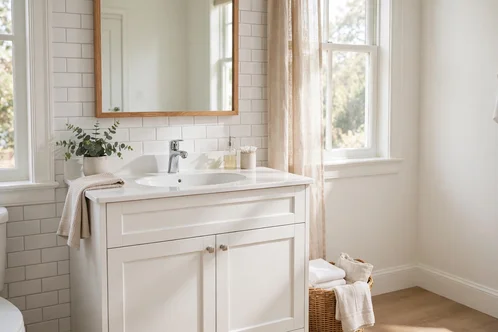
Some bathroom decisions are about making a statement. Others are about making daily life easier. A 36-inch white bathroom vanity sits firmly in the second camp, and that is exactly why it suits so many homes. It is wide enough to be genuinely useful, compact enough to fit the average bathroom without a struggle, and finished in the one colour that has never gone out of fashion in a room built around water, light and cleanliness.
If you are renovating a family bathroom, updating an en-suite, or simply replacing a tired unit that no longer earns its place, this size and finish combination deserves a close look. This guide walks through what a 36-inch white vanity actually gives you in counter space and storage, how the floating and freestanding versions differ, which basins, worktops and handles pair well with white, and how to keep the finish looking bright year after year.
Why White Works So Well in an Everyday Bathroom
White is the default bathroom colour for good reason, and it is worth understanding those reasons before dismissing it as the safe choice. First, white reflects light better than any other finish. Most bathrooms have one small window at best, and many have none at all. A white vanity bounces both natural and artificial light around the room, making the space feel larger, cleaner, and calmer than the same layout in a darker finish. In a compact bathroom, that effect is not cosmetic — it changes how the room feels every time you walk in.
Second, white is forgiving about style. It sits comfortably in a modern bathroom with clean lines and frameless glass, in a traditional room with panelled walls and classic fittings, and in everything in between. Trends in tile colours, towel colours and accessories come and go, but a white vanity rarely clashes with any of them. If you like to refresh a room with new paint or textiles every few years, white gives you a neutral base that never needs replacing just because your taste moved on.
Third, white reads as clean, and in a bathroom that matters psychologically as much as practically. There is also an honest, practical side to it: pale surfaces show coloured splashes and toothpaste marks clearly, which sounds like a drawback but actually encourages a quick wipe at the moment a mark appears, rather than letting grime build up invisibly. Meanwhile, pale dust and light water spotting are far less visible on white than on dark finishes.
What 36 Inches Actually Gives You
Thirty-six inches — roughly 91 centimetres — is a sweet spot in vanity sizing, and understanding what that width delivers helps you judge it against your own room. It is substantially more generous than the24-4 an30-inchch units aimed at cloakrooms, yet it stops well short of the 48-inch and wider units that demand a large bathroom.
On the counter, 36 inches gives you a comfortable single basin with genuine working space on both sides. That means room for a soap dispenser and a toothbrush holder without crowding the basin edge, space to set down a hairbrush or a wash bag, and elbow room when you are washing your face or brushing your teeth. Anyone who has used a narrow vanity where every item lives on a few centimetres of ledge will recognise how much difference those extra inches make to an ordinary morning.
Below the counter, the width translates into storage that a smaller unit simply cannot offer. Depending on the internal layout, a 36-inch vanity typically provides either a pair of drawers, a cupboard with an internal shelf, or a combination of both. That is enough volume for the daily essentials of one or two people — towels, toiletries, cleaning supplies and spares — kept behind closed doors instead of on open shelves or windowsills. This width comes in different internal layouts, as the Veil vanity collection online shows, so think about whether drawers or cupboard space suits your routine better before you choose.
One caution: 36 inches is the width of the unit, not the width of the space it needs. Check the full footprint, including depth, door swing, drawer travel, and the clearance you need to stand comfortably at the basin. Note radiators, towel rails, and pipes that might compete for the same stretch of wall.
Floating vs Freestanding in White
Once you have settled on the size and finish, the next decision is how the vanity meets the floor — or whether it meets it at all. Both styles are available in white, and each changes the character of the room.
A floating vanity is fixed to the wall with open floor beneath it. In white, the effect is especially strong: the pale unit seems to hover, the visible floor runs uninterrupted to the wall, and the room feels noticeably larger and lighter. Floating units also make cleaning simpler, because you can run a mop or vacuum straight underneath with nothing in the way, and there are no feet or plinths to trap dust and moisture. They suit modern and minimalist bathrooms particularly well. The trade-offs are practical: the wall must be strong enough to carry the unit and its contents, the plumbing needs to run into the wall or be neatly boxed, and you lose the storage that would otherwise extend to the floor.
A freestanding vanity sits on the floor, usually on legs or a plinth base, and reads more like a piece of furniture. In white, it brings a classic, calm presence that works beautifully in traditional and transitional bathrooms. Freestanding units are generally simpler to install because the floor carries the weight and the plumbing can arrive from below. Storage often runs deeper, too. The downsides: the unit occupies visual floor space, which can make a small room feel fuller, and the base needs a little more attention when cleaning.
Neither style is better in the abstract. In a small or windowless bathroom where every sense of space counts, floating white is hard to beat. In a larger room, or one with a period character, freestanding white often looks more at home. Let the room — its size, its wall construction and its style — make the decision.
Basin and Worktop Pairings That Suit White
A white vanity is a backdrop, which means the basin and worktop you pair with it carry a lot of the design weight. The good news is that white gives you more freedom here than almost any other finish.
For the basin, the most seamless option is a white ceramic basin on a white unit — an integrated or semi-recessed basin keeps the whole arrangement calm and unified, and it is the easiest combination to keep looking spotless. A vessel basin that sits on top of the worktop adds height and a more decorative note, where you want a more designed feel without changing colour. Whichever style you choose, check the proportions: on a 36-inch unit, a single centred basin is the natural arrangement, leaving balanced counter space on both sides.
Worktops are where you can introduce contrast or keep things tonal. Pale stone, marble-effect surfaces and light quartz-style tops keep the palette soft and bright, and they hide water marks well. Light natural wood adds warmth and stops an all-white scheme from feeling cold, which suits family bathrooms particularly well. If you prefer definition, a mid-grey or softly veined top gives gentle contrast without the drama of black. Very dark worktops can look striking on white, but be honest about upkeep: dark glossy surfaces show every water spot and pale smear, and they will ask more of you in a hard-water area. When comparing options within a dedicated size range, such as the 36-inch bathroom vanities category, look at the unit and top together rather than choosing each in isolation — the pairing is what you will actually live with.
Hardware Choices That Finish a White Vanity
Handles, taps and fittings are the jewellery of a white vanity, and because the background is neutral, your choice here has an outsized effect on the room's character.
Chrome is the classic partner for white: bright, reflective and easy to match across taps, shower fittings and towel rails. It keeps the look fresh and suits most bathrooms. Brushed nickel and stainless finishes offer a slightly softer, warmer version of the same idea and show fingerprints less readily. Matt black hardware on white creates a crisp, modern contrast — black handles and a black tap against a white unit look deliberate and graphic, and the combination is forgiving because each element defines the other. Brushed brass or brushed gold warms white up beautifully, giving a more traditional or boutique feel, and it pairs especially well with marble-effect worktops and warm lighting.
Whichever direction you choose, consistency matters more than the specific finish. Handles, tap, mirror frame, and ideally the shower and toilet fittings, should sit in the same family. A single mismatched item draws the eye for the wrong reasons. Also think about handle style as well as colour: long bar handles suit modern floating units, knobs suit traditional freestanding designs, and integrated or push-to-open fronts give a handle-free minimal look — though they will show fingerprints on the door edge, which on white is mercifully less obvious than on dark finishes.
Keeping a White Finish Bright
The most common hesitation about a white vanity is whether it will stay white. With solid wood vanities finished for bathroom use, and a simple routine, it does — but the routine matters, because the enemies of a white finish are standing water, abrasive cleaners and neglect of small marks.
Make a habit of wiping splashes around the basin as part of your normal routine rather than as a special cleaning event. A soft cloth kept nearby makes this effortless. Toothpaste, coloured toiletries and make-up should be wiped up promptly; they lift easily when fresh and become stubborn when left to dry. Clean the unit with a soft, damp cloth and a mild bathroom cleaner, working from the top down, and dry the surface afterwards. Avoid scouring pads and harsh bleach-based products, which can dull or yellow a finish over time.
Pay attention to the details that age a vanity quietly: water pooling where the basin meets the worktop, drips running down drawer fronts from wet hands, and the inside of drawers and cupboards, where spilled products can sit unnoticed. A quick check inside every few weeks keeps storage clean and prevents stains migrating to the cabinet interior. Ventilation helps everything: running an extractor fan or opening a window after showers reduces the humidity that challenges any bathroom furniture, whatever its colour.
White is not the finish that hides a busy household; it is the finish that makes a busy household easy to keep on top of, because nothing hides from you — you see the mark, you wipe the mark, and the room looks fresh again.
Lighting: The Partner Every White Vanity Needs
White and light are natural allies, but the relationship still needs managing. Because a white vanity reflects so much light, poor lighting can leave it looking flat or slightly stark, while good lighting makes the whole room feel clean and generous.
Plan for even light at face level. A mirror light, a pair of wall lights either side of the mirror, or a well-positioned overhead fitting with a diffuser will all light your face without harsh shadows — important for shaving, make-up and the school-run inspection of teeth. Avoid relying on a single bright downlight directly above the basin, which casts shadows downward and makes the mirror less useful.
Choose a warm-to-neutral light temperature. Very cool, blue-toned light can make white finishes look clinical, while warm light softens the room and flatters both the vanity and the people using it. If your bathroom has a window, notice how daylight falls across the vanity before finalising tile and accessory colours; white faithfully shows whatever light the room gives it. Comparing finishes under your own lighting is one reason ranges of white vanity units for bathrooms are worth studying alongside your room's tile and wall colours rather than in isolation on a screen.
Common Mistakes to Avoid
Most white vanity disappointments trace back to a handful of avoidable errors. The first is choosing on colour alone and forgetting the room: a 36-inch unit is a versatile size, but it still needs a wall that fits it, a door that clears it, and space to stand at the basin. Measure twice, including depth and door swing, before you commit.
The second is going all-white everywhere without contrast. White vanity, white basin, white tiles, white walls, and chrome everywhere can end up feeling flat and cold. The finish works best with at least one counterpoint — a warmer worktop, coloured towels, a patterned floor, black or brass hardware, or a painted wall. The third mistake is neglecting storage planning: count what you actually keep in the bathroom and be honest about whether drawers or a cupboard will hold it, because a beautiful vanity surrounded by clutter helps no one.
Finally, do not skip the practical checks: confirm how the unit is mounted or supported, where your plumbing arrives, and how the basin waste aligns. These unglamorous details decide whether installation is an afternoon's work or a saga.
A Short Buying Checklist
Before you order any 36-inch white vanity, work through this list:
- Have you measured the wall width, the unit depth, and the door and drawer clearance?
- Does the wall construction suit a floating unit, or is freestanding the safer choice?
- Single basin centred, with enough counter left on both sides for daily items?
- Drawers, cupboard, or a mix — matched to what you actually store?
- Worktop material chosen for its upkeep as much as its looks?
- Hardware finish consistent across handles, tap, and mirror?
- Lighting at face level planned, in a warm-to-neutral tone?
- A cleaning routine you will genuinely keep — soft cloth, mild cleaner, no abrasives?
If you can answer yes to each, you are choosing with your eyes open.
Conclusion
A 36-inch white bathroom vanity will never be the most dramatic object in a showroom, and it does not need to be. What it offers is harder to find than drama: a size that genuinely serves everyday routines, a finish that brightens the room and adapts to every style change around it, and storage that keeps a family bathroom calm instead of cluttered. Choose the mounting style your room supports, pair it with a worktop and hardware you will enjoy looking at, and keep it bright with a light-touch routine. Do that, and this practical classic will quietly earn its place every single day.
- Digital Agency
- Literie
- Location de voitures
- Restaurant
- Restaurant
- Mode
- Mode
- Information
- Marketing
- Tourisme
- Développement
- Découverte
- Législation
- Gastronomie
- Pâtisserie
- Evenement
- Art
- Causes
- Crafts
- Dance
- Drinks
- Film
- Fitness
- Food
- Spellen
- Gardening
- Health
- Home
- Literature
- Music
- Networking
- Overig
- Party
- Religion
- Shopping
- Sports
- Theater
- Wellness
 Dutch
 Indian
 English
 French
 Arabic
 Spanish
 Portuguese
 Deutsch
 Turkish
 Italiano
 Russian
 Romaian
 Portuguese (Brazil)
 Greek
