


Understanding the Importance of CAN Bus Diagnostics in Modern Automotive Systems
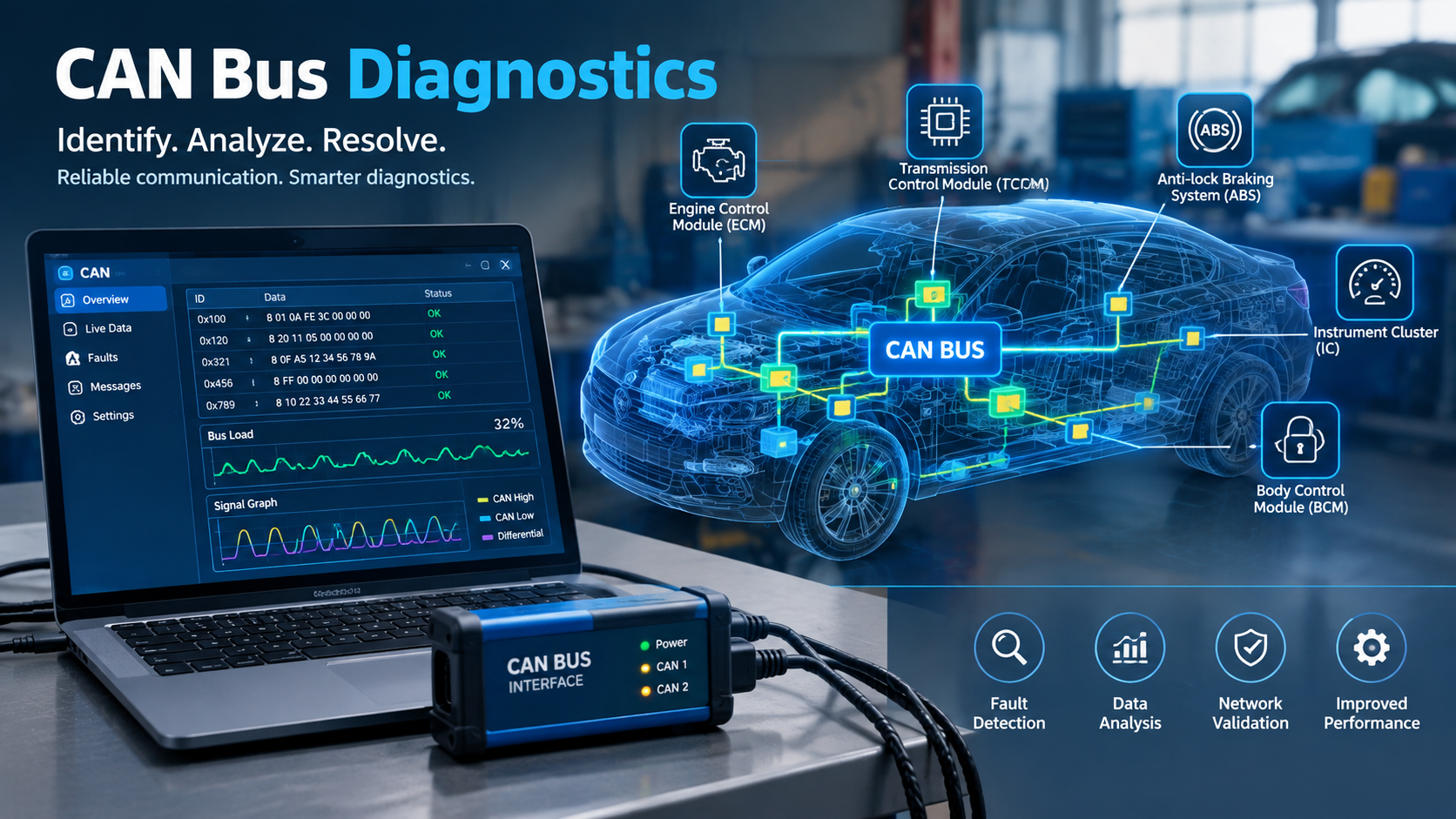
Modern vehicles use advanced electronic systems to manage engine performance, transmission, braking, safety features, and other important functions. These systems communicate with each other through electronic networks that allow different control units to exchange information. One of the most widely used communication technologies in this field is the Controller Area Network (CAN).
As vehicles become more technologically advanced, maintaining reliable communication between electronic components is essential. This is where CAN Bus Diagnostics plays an important role in identifying communication problems and maintaining system performance.
What Is a CAN Bus System?
A Controller Area Network is a communication protocol that allows multiple electronic control units (ECUs) to exchange data without requiring a separate communication connection for every device.
In automotive applications, different components such as engine control modules, transmission systems, anti-lock braking systems, and dashboard instruments use the CAN network to share information.
This communication architecture reduces wiring complexity and supports efficient data exchange between different vehicle systems.
Why CAN Bus Diagnostics Is Important
A vehicle's CAN network may experience communication errors due to damaged wiring, loose connectors, electrical interference, faulty control modules, or incorrect network configurations.
These problems can affect multiple electronic systems and may lead to warning lights, unexpected behaviour, or communication failures.
CAN Bus Diagnostics helps engineers identify these issues by examining network communication, monitoring error messages, and checking the condition of connected components.
Early identification of communication problems can prevent more serious system failures and unnecessary component replacement.
Common CAN Bus Communication Problems
Several issues can affect the performance of a CAN network.
1. Wiring Problems: Damaged cables, poor connections, or incorrect wiring can interrupt communication between electronic control units.
2. Termination Resistance Issues: Incorrect termination resistance may affect signal quality and cause communication errors.
3. Electrical Interference: Electromagnetic interference from nearby electrical equipment can disturb communication signals.
4. Faulty Electronic Control Units: A malfunctioning ECU may generate incorrect messages or interfere with network communication.
5. Network Configuration Errors: Incorrect baud rates or communication settings can prevent devices from exchanging information properly.
Tools Used for CAN Network Testing
Engineers use different diagnostic tools to investigate CAN communication problems. These may include CAN analyzers, oscilloscopes, multimeters, diagnostic scanners, and specialized software applications.
These tools help examine signal waveforms, communication traffic, voltage levels, error frames, and message timing.
By analyzing this information, engineers can identify the source of a communication problem and determine the appropriate corrective action.
Applications Across Automotive Industries
CAN communication is used in passenger vehicles, commercial trucks, buses, agricultural machinery, and construction equipment.
The technology also supports communication in industrial automation and other embedded control applications.
Reliable diagnostics are therefore important for maintaining the performance of different electronic systems across multiple industries.
Conclusion
Electronic communication is a fundamental part of modern automotive technology. CAN Bus Diagnostics helps engineers identify network faults, analyze communication behaviour, and improve the reliability of connected electronic systems. Regular testing and proper troubleshooting can support better vehicle performance, reduce downtime, and improve the overall reliability of automotive electronics.
- Digital Agency
- Literie
- Location de voitures
- Restaurant
- Restaurant
- Mode
- Mode
- Information
- Marketing
- Tourisme
- Développement
- Découverte
- Législation
- Gastronomie
- Pâtisserie
- Evento
- Art
- Causes
- Crafts
- Dance
- Drinks
- Film
- Fitness
- Food
- Jogos
- Gardening
- Health
- Início
- Literature
- Music
- Networking
- Outro
- Party
- Religion
- Shopping
- Sports
- Theater
- Wellness
 Portuguese (Brazil)
 Indian
 English
 French
 Arabic
 Spanish
 Portuguese
 Deutsch
 Turkish
 Dutch
 Italiano
 Russian
 Romaian
 Greek
