


How Energy Harvesting Technology Can Support Remote Water Monitoring
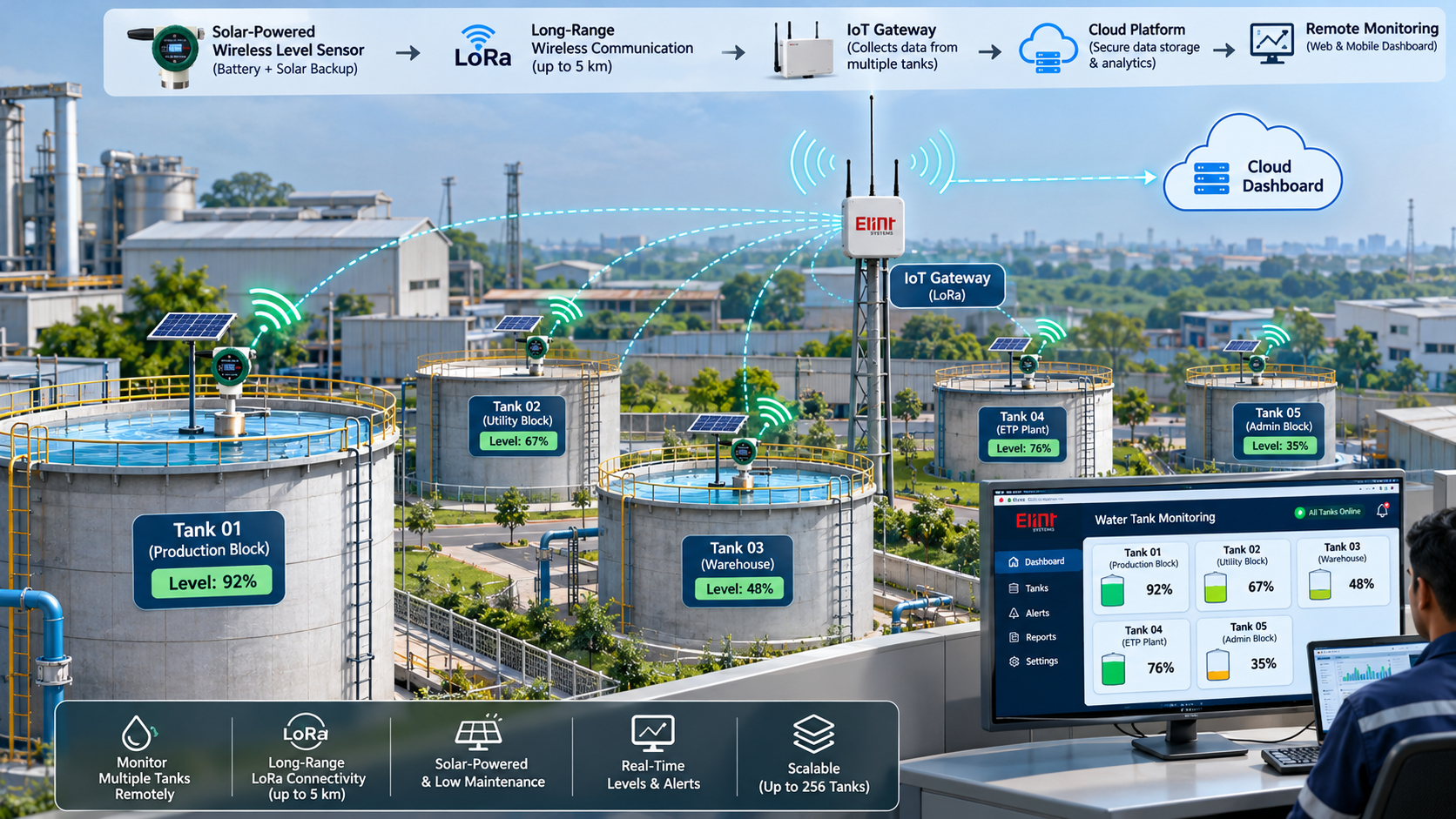
Water is one of the most essential resources for residential, commercial, and industrial applications. As water consumption increases, efficient water storage and monitoring have become increasingly important. Traditional water level monitoring methods often require manual inspections, wired electrical connections, or frequent battery replacements, making remote monitoring challenging in certain locations.
This is where energy harvesting technology is creating new opportunities for smarter water management.
Energy harvesting is the process of capturing small amounts of energy from surrounding environmental sources, such as sunlight, heat, vibration, or movement, and converting it into usable electrical power. When combined with wireless communication and intelligent sensing technologies, it can support remote water monitoring systems with reduced dependence on conventional power supplies.
Modern solutions involving a tank level transmitter, a Wireless radar level sensor, and intelligent monitoring platforms can help users access water level information without constantly visiting the tank location.
But how exactly can energy harvesting support remote water monitoring? How does it work with wireless sensors? And what role can it play in Smart Water Tank Automation?
Let's explore how this technology is shaping the future of intelligent water management.
What Is Energy Harvesting Technology?
Energy harvesting technology refers to the process of collecting energy from external environmental sources and converting it into electrical energy to operate electronic devices.
Instead of relying entirely on conventional electricity or frequently replacing batteries, energy harvesting systems use available energy sources to support the operation of low-power electronic equipment.
Some common energy harvesting methods include:
Solar Energy Harvesting
Solar energy harvesting uses photovoltaic panels to convert sunlight into electrical energy.
It is particularly useful for remote water monitoring installations where access to conventional electrical connections may be limited.
Solar-powered monitoring systems can operate sensors, controllers, and wireless communication modules when appropriately designed with energy storage and power management.
Thermal Energy Harvesting
Thermal energy harvesting converts temperature differences into electrical energy using thermoelectric generators.
Although its practical application depends on the availability of a consistent temperature difference, it can support certain low-power monitoring applications.
Vibration Energy Harvesting
Vibration-based systems capture mechanical energy from movement or vibration and convert it into electrical power.
This approach may be useful in environments where machinery or other equipment produces continuous mechanical vibrations.
Mechanical Energy Harvesting
Mechanical energy harvesting converts physical movement, pressure, or motion into usable electrical energy.
Depending on the application, it can provide supplementary power for small electronic devices.
The suitability of each method depends on the energy available, the sensor's power requirements, and the operating environment.
Why Is Energy Harvesting Important for Remote Water Monitoring?
Remote water monitoring involves measuring and transmitting water level information from tanks, reservoirs, and storage facilities to users in different locations.
However, powering monitoring equipment can become challenging when installations are located far from electrical infrastructure.
Energy harvesting offers a potential solution by providing supplementary or primary electrical power through locally available energy sources.
Here are some important advantages.
Reduced Dependence on Conventional Power Supplies
Remote monitoring installations may not always have convenient access to grid electricity.
Solar-powered energy harvesting can provide an alternative power source, allowing suitably designed monitoring equipment to operate in locations where electrical connections are difficult to install.
Reduced Battery Replacement Requirements
Battery replacement can become expensive and inconvenient when sensors are installed in elevated tanks, remote reservoirs, or difficult-to-access locations.
Energy harvesting combined with rechargeable storage can help reduce the frequency of battery replacement, depending on energy availability and system consumption.
Greater Installation Flexibility
Wireless monitoring systems do not always require extensive communication cabling between the tank and the monitoring location.
When combined with an appropriate energy source, they can simplify installation in locations where traditional wired systems are impractical.
More Sustainable Monitoring Infrastructure
Using renewable energy sources such as sunlight can reduce dependence on conventional electrical supplies.
This makes energy harvesting an interesting option for organizations looking to develop more energy-efficient water monitoring infrastructure.
How Does Energy Harvesting Work with a Tank Level Transmitter?
A tank level transmitter is a measuring instrument that determines the amount or level of liquid stored inside a tank and converts the measurement into an electrical signal.
Depending on its technology, a transmitter may use radar, ultrasonic, pressure-based, or other measurement principles.
When integrated with an energy harvesting system, the overall monitoring architecture can be designed to use harvested energy to support sensing, data processing, and wireless communication.
A typical system involves the following stages:
Step 1: Energy Collection
A solar panel or another suitable energy harvesting device captures energy from the surrounding environment.
Step 2: Power Management
A power management circuit regulates the harvested energy and directs it toward the monitoring electronics or an energy storage device.
Step 3: Water Level Measurement
The tank level transmitter measures the water level and generates measurement data.
Step 4: Data Processing
A controller processes the sensor information and prepares it for transmission.
Step 5: Wireless Communication
A compatible communication module sends the water level information to a remote receiver, gateway, or monitoring platform.
Step 6: Remote Monitoring
Users can access the transmitted information through a suitable dashboard, computer, or mobile application.
This architecture can help reduce dependence on direct electrical connections while supporting more convenient remote water management.
However, the energy harvesting system must be appropriately sized to meet the transmitter's power consumption, measurement frequency, and communication requirements.
How Does a Wireless Radar Level Sensor Support Remote Water Monitoring?
A Wireless radar level sensor combines radar-based measurement technology with wireless communication capabilities to support convenient water level monitoring.
Radar sensors use electromagnetic waves to determine the distance between the sensor and the liquid surface. Because measurement does not generally require direct contact with the water, radar technology can be suitable for many water storage applications.
When integrated into a wireless monitoring architecture, the sensor can transmit measurement information to a remote monitoring system.
Key Benefits of Wireless Radar Level Sensors
Non-Contact Measurement
Radar technology measures the distance to the water surface without requiring the sensor to come into direct contact with the liquid.
Remote Data Accessibility
Wireless communication allows measured water level information to be transmitted to a compatible monitoring platform.
Reduced Wiring Requirements
Wireless communication can reduce the need for long communication cables between monitoring equipment and control locations.
Continuous Water Level Monitoring
Depending on the sensor configuration, measurement intervals can be programmed to provide regular updates about changing water levels.
Flexible Monitoring Applications
Wireless radar technology can be considered for residential water tanks, commercial storage facilities, industrial tanks, and remote water storage installations.
Can Energy Harvesting Power a Wireless Radar Level Sensor?
Yes, energy harvesting can potentially support wireless radar level monitoring systems. However, the complete system must be designed around the sensor's actual power requirements.
Radar measurement electronics and wireless communication modules may require more energy than simpler low-power sensors.
A practical system may therefore combine:
-
Solar panels for energy generation.
-
Rechargeable batteries or supercapacitors for energy storage.
-
Power management circuits for efficient energy distribution.
-
Low-power controllers for data processing.
-
Wireless communication modules for remote transmission.
The system may also use scheduled measurements and communication intervals to reduce energy consumption.
Importantly, not every Wireless radar level sensor is designed to operate directly from harvested energy. Compatibility must be confirmed with the sensor manufacturer.
The Role of Energy Harvesting in Smart Water Tank Automation
Smart Water Tank Automation uses connected sensors, controllers, and communication technologies to monitor and manage water storage with less manual intervention.
Energy harvesting can complement these systems by providing an alternative or supplementary source of electrical power.
When properly integrated, energy-efficient monitoring technologies can support several automation functions.
Automated Water Level Monitoring
A connected sensor continuously or periodically measures the water level inside the tank.
The information is transmitted to a compatible monitoring system, allowing users to understand water availability remotely.
Intelligent Pump Control
Water level information can be used by an automation controller to operate water pumps according to configured upper and lower water level limits.
For example:
-
When the water level reaches a predefined low limit, the system can initiate a filling process.
-
When the tank reaches its configured upper limit, the controller can stop the pump.
This functionality requires compatible control equipment and appropriate safety interlocks.
Water Overflow Prevention
Automated water level monitoring can help identify when a tank is approaching its maximum capacity.
A compatible automation system can generate alerts or control the filling process to reduce the possibility of overflow.
Remote Monitoring and Notifications
Users can receive water level updates and alerts through compatible applications or monitoring platforms.
This is particularly useful for buildings, apartments, and facilities where tanks may be located away from regular working areas.
Improved Water Management Efficiency
Access to timely water level information helps users make better decisions about water storage, consumption, and replenishment.
By combining suitable sensors, automation controllers, and energy-efficient power systems, Smart Water Tank Automation can support more convenient and organized water management.
Benefits of Energy-Efficient Wireless Water Monitoring Systems
Energy harvesting and wireless communication can work together to improve the flexibility of modern water monitoring infrastructure.
Some important benefits include:
|
Benefit |
How it helps |
|
Reduced power dependency |
Supports monitoring where grid electricity is difficult to access |
|
Lower maintenance requirements |
Can reduce battery replacement frequency |
|
Wireless connectivity |
Minimizes extensive communication cabling |
|
Remote accessibility |
Allows users to monitor water levels from different locations |
|
Energy efficiency |
Supports optimized power consumption |
|
Flexible installation |
Makes monitoring possible in suitable remote locations |
|
Automation support |
Provides data for intelligent water management |
Remote Monitoring for Residential Buildings
In residential buildings and apartments, remote monitoring can help residents and maintenance teams understand water availability without physically inspecting rooftop or underground tanks.
Industrial Water Storage Monitoring
Industrial facilities often require continuous awareness of water availability for their operational processes.
Wireless monitoring can help provide timely information from storage locations where conventional monitoring arrangements may be difficult to implement.
Agricultural Water Management
Remote monitoring can also support agricultural water storage applications.
Sensors installed in tanks and reservoirs can transmit water level information over long-range wireless networks, helping farmers and facility managers plan water usage.
Challenges and Limitations of Energy Harvesting Technology
Although energy harvesting offers several advantages, it is important to understand its limitations before implementing it in a remote water monitoring system.
Inconsistent Energy Availability
Solar energy generation depends on sunlight availability, weather conditions, shading, and panel positioning.
During extended cloudy periods, the amount of harvested energy may decrease.
A properly sized energy storage system can help maintain operation when energy generation is temporarily insufficient.
Sensor Power Consumption
Different sensors have different electrical requirements.
A Wireless radar level sensor may consume more power during measurement and wireless transmission than a basic low-power sensing device.
Therefore, energy harvesting solutions must be designed according to the actual operating requirements of the selected sensor.
Wireless Communication Requirements
Wireless communication consumes energy, particularly when transmitting data over long distances or through networks with weak signal conditions.
Selecting an appropriate communication technology, such as LoRaWAN, NB-IoT, or another suitable wireless protocol, is important.
Energy Storage Limitations
Energy harvesting systems often require batteries or supercapacitors to store electricity for periods when environmental energy is unavailable.
Storage capacity, charging efficiency, temperature conditions, and battery life should be considered during system design.
Installation and Maintenance
Solar panels must be positioned to receive sufficient sunlight, while electronic components require suitable protection against moisture, heat, dust, and other environmental conditions.
Regular system checks help maintain reliable performance.
How MyTank Monitoring Supports Smarter Water Management
Efficient water management starts with knowing how much water is available in a storage tank.
Traditional manual inspection methods can be inconvenient, especially when tanks are installed on rooftops, underground, or in locations that are difficult to access.
Modern water monitoring solutions offer a more convenient approach by providing users with better visibility into water availability.
MyTank Monitoring can be positioned around the growing importance of intelligent water level monitoring and convenient water management.
By understanding the role of connected sensing technologies, users can explore smarter ways to monitor water storage and improve everyday water management practices.
The broader benefits of modern water monitoring solutions include:
-
Better Water Visibility: Access information about available water levels more conveniently.
-
Improved Monitoring: Reduce the need for frequent manual tank inspections.
-
Smarter Water Management: Make informed decisions about water consumption and refilling.
-
Automation Opportunities: Support compatible automated pump control and water level alert systems.
-
Remote Accessibility: Monitor water storage from locations away from the physical tank.
When combined with suitable sensing and communication technologies, energy-efficient monitoring architectures can contribute to the development of more sustainable water management systems.
For MyTank, the opportunity lies in helping users understand how intelligent monitoring, wireless connectivity, and automation can make water management more convenient.
Note: Specific energy harvesting, solar power, wireless radar, and automation capabilities should only be attributed to MyTank products where those features are confirmed in the relevant product specifications.
What Is the Future of Energy Harvesting in Remote Water Monitoring?
The future of remote water monitoring is closely connected to developments in low-power electronics, wireless communication, renewable energy, and intelligent automation.
Researchers and technology developers are exploring ways to reduce the energy requirements of monitoring devices while improving their measurement and communication capabilities.
Several developments are particularly important.
Battery-Free Monitoring Technologies
Battery-free sensing is an emerging area in which devices use harvested energy to perform measurements and transmit information.
Some experimental water-level monitoring systems have demonstrated that carefully designed low-power sensors can operate using small solar energy harvesting devices.
Low-Power Wireless Communication
Technologies such as LoRa and LoRaWAN can support long-range communication with relatively low power requirements when properly configured.
These technologies are useful for applications where monitoring equipment is installed far from the main control location.
Intelligent Power Management
Future monitoring systems may use adaptive measurement intervals, scheduled communication, and intelligent energy management to optimize available power.
For example, a sensor may transmit routine updates at longer intervals and increase reporting frequency when an important water level change is detected.
Integration with Smart Infrastructure
As connected monitoring systems become more common, water level information can become part of larger building management and industrial automation platforms.
This can help improve water visibility, maintenance planning, and operational efficiency.
Energy harvesting is therefore not simply an alternative power source. It can become an important part of developing flexible, energy-efficient, and remotely accessible water monitoring infrastructure.
Frequently Asked Questions (FAQs)
What is energy harvesting in remote water monitoring?
Energy harvesting is the process of collecting energy from environmental sources, such as sunlight, heat, or vibration, and converting it into electrical power. In remote water monitoring, this energy can help operate sensors, controllers, and wireless communication equipment.
How does energy harvesting power wireless sensors?
Energy harvesting devices collect energy from available sources and convert it into electricity. Power management circuits regulate this electricity, while batteries or supercapacitors can store excess energy for later use.
Can a tank level transmitter operate using harvested energy?
Yes, a suitable tank level transmitter can operate using harvested energy if the power generation and storage system meets its electrical requirements. The transmitter's power consumption, measurement frequency, and communication requirements must be considered.
What is a Wireless radar level sensor?
A Wireless radar level sensor is a level measurement device that uses electromagnetic waves to determine the distance to a liquid surface and communicates measurement information through a wireless network or compatible communication system.
How does energy harvesting improve water tank automation?
Energy harvesting can provide supplementary or primary power to connected monitoring equipment. This can support remote water level measurement, wireless communication, automated alerts, and compatible pump control systems.
What are the benefits of remote water monitoring?
Remote water monitoring provides convenient access to tank level information without requiring frequent physical inspections. It can improve water management, support timely refilling, reduce manual effort, and help identify potential water shortages.
Can solar energy power wireless water level sensors?
Yes. Solar panels can generate electricity for compatible wireless water level monitoring systems. A suitable power management circuit and energy storage system can help maintain operation when sunlight is unavailable.
Is energy harvesting suitable for Smart Water Tank Automation?
Yes. Energy harvesting can support Smart Water Tank Automation by providing power to compatible sensors and wireless monitoring equipment. However, the system must be designed to meet the power requirements of all connected components.
Conclusion
Energy harvesting technology is creating new opportunities for more efficient and sustainable remote water monitoring. By converting environmental energy into usable electricity, it can help reduce dependence on conventional power supplies and support monitoring installations in locations where electrical infrastructure is limited.
When combined with a suitable tank level transmitter, Wireless radar level sensor, and low-power communication technologies, energy harvesting can contribute to more flexible and energy-efficient water monitoring systems.
Furthermore, integrating these technologies with Smart Water Tank Automation can help improve water level visibility, support automated pump operation, reduce manual monitoring, and make water management more convenient.
As renewable energy and wireless sensing technologies continue to develop, energy harvesting is expected to remain an important area of innovation in remote water monitoring.
- Digital Agency
- Literie
- Location de voitures
- Restaurant
- Restaurant
- Mode
- Mode
- Information
- Marketing
- Tourisme
- Développement
- Découverte
- Législation
- Gastronomie
- Pâtisserie
- Evenement
- Art
- Causes
- Crafts
- Dance
- Drinks
- Film
- Fitness
- Food
- Spellen
- Gardening
- Health
- Home
- Literature
- Music
- Networking
- Overig
- Party
- Religion
- Shopping
- Sports
- Theater
- Wellness
 Dutch
 Indian
 English
 French
 Arabic
 Spanish
 Portuguese
 Deutsch
 Turkish
 Italiano
 Russian
 Romaian
 Portuguese (Brazil)
 Greek
