


Why Is My Tank Level Transmitter Not Sending Signals to the Control Panel?
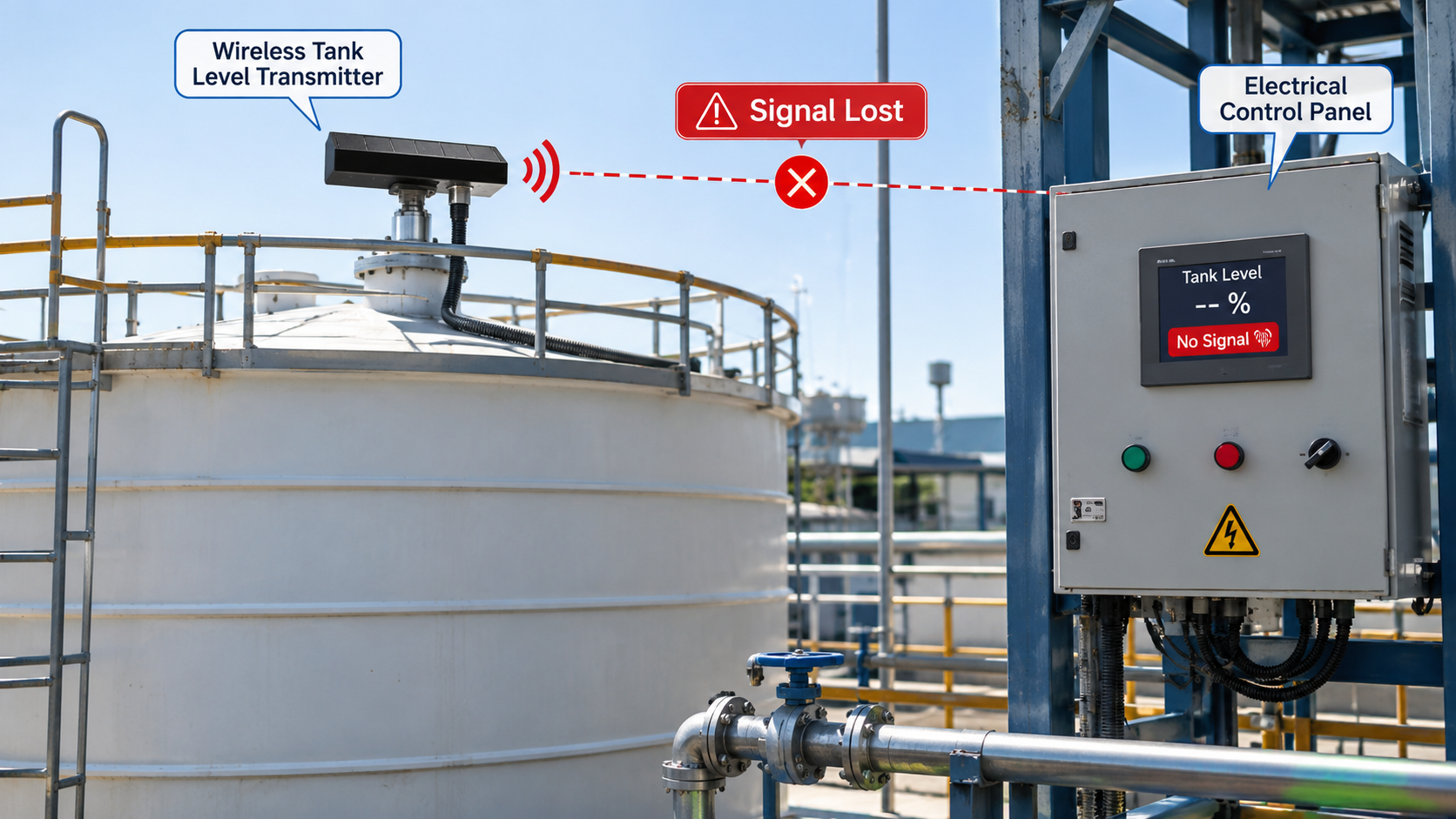
A tank level transmitter plays an important role in monitoring water storage and controlling pump operations. It measures the water level inside a tank and sends the collected information to a control panel or monitoring system. When the transmitter stops sending signals, the control panel may display incorrect readings, show no water-level information, or fail to respond to changing tank levels.
This issue can affect residential buildings, commercial facilities, industrial plants, and agricultural installations. It may also interrupt automatic pump operations and increase the risk of tank overflow or unexpected water shortages.
Understanding the common causes of signal failure can help maintenance teams identify problems and restore normal monitoring. With solutions such as a suitable Water tank level sensor and MyTank Monitoring, users can also improve visibility into their water storage systems.
Power Supply Problems
One of the most common reasons a tank level transmitter stops sending signals is an interrupted power supply.
Depending on the transmitter design, the device may operate using a battery, an external power supply, or a solar-powered system. If the power source becomes disconnected or insufficient, the transmitter may stop measuring and transmitting water-level information.
Possible causes include:
-
Disconnected power cables.
-
Damaged electrical connections.
-
Low or depleted battery levels.
-
Faulty power adapters.
-
Solar charging problems in solar-powered devices.
How to troubleshoot:
Check whether the transmitter is receiving the required power. Inspect the battery condition, power connections, and charging components according to the manufacturer's instructions. If the device uses a solar panel, check for physical damage or obstructions that may affect charging.
Damaged or Loose Wiring Connections
Wiring problems can interrupt communication between a tank level transmitter and the control panel. Even when the sensor is functioning correctly, loose terminals or damaged cables can prevent measurement signals from reaching the receiving equipment.
Common wiring-related problems include:
-
Loose terminal connections.
-
Broken or damaged cables.
-
Incorrect wiring polarity.
-
Corrosion at connection points.
-
Improper cable termination.
How to troubleshoot:
Inspect the wiring between the transmitter and control panel. Check terminal connections, cable insulation, and wiring polarity against the manufacturer's wiring diagram. Replace damaged cables and tighten loose connections.
Electrical inspection should be performed by a qualified technician, particularly when the equipment operates at mains voltage.
Incorrect Signal Configuration
A transmitter may be working correctly but still fail to communicate with the control panel if both devices are configured differently.
Industrial tank monitoring systems may use different signal types and communication protocols. Common examples include:
-
4–20 mA analogue signals.
-
0–10 V analogue signals.
-
RS-485 communication.
-
Modbus RTU.
-
Wireless communication protocols.
For example, if the transmitter is configured for a 4–20 mA output but the control panel expects a 0–10 V input, the panel may not interpret the measurement correctly.
How to troubleshoot:
Verify that the transmitter output type matches the control panel input configuration. Check communication settings, device addresses, baud rates, and other protocol parameters where applicable.
Always refer to the technical documentation for both devices before changing configuration settings.
Wireless Connectivity Problems
Wireless tank monitoring systems depend on stable communication between the sensor and the receiving device or gateway. If the wireless connection becomes weak or unavailable, water-level readings may not reach the control panel or cloud platform.
Common reasons for wireless signal failure include:
-
Excessive distance between the sensor and receiver.
-
Physical obstructions such as concrete walls or metal structures.
-
Wireless interference from nearby equipment.
-
Incorrect network configuration.
-
Gateway power or connectivity problems.
-
Poor cellular network coverage.
How to troubleshoot:
Check the communication range supported by the system and confirm that the sensor and receiver are within the recommended operating distance. Inspect the gateway's power and network status. If the system uses LoRa, NB-IoT, 4G, or another wireless technology, verify that the required network coverage and configuration are available.
Faulty Water Tank Level Sensor
Sometimes the communication problem originates from the sensor itself. A faulty Water tank level sensor may fail to measure the water level accurately or generate a usable output signal.
Sensor problems can develop because of:
-
Physical damage.
-
Moisture entering unsuitable sensor enclosures.
-
Incorrect installation.
-
Deposits or obstructions affecting measurement.
-
Electrical component failure.
-
Age-related deterioration.
For example, an ultrasonic sensor may produce unreliable measurements if its sound path is obstructed. A radar sensor may also experience measurement issues due to unsuitable mounting conditions or interference from internal tank structures.
How to troubleshoot:
Inspect the sensor for visible damage and verify that it is installed according to the manufacturer's recommendations. Check the sensor's diagnostic indicators, output readings, and fault codes where available. If the device continues to malfunction, arrange professional testing or replacement.
Control Panel Input or Configuration Failure
The transmitter may be sending signals correctly while the control panel fails to receive or process them.
This can happen when the panel's input module, communication interface, or configuration settings are faulty.
Possible reasons include:
-
Damaged analogue input modules.
-
Faulty communication ports.
-
Incorrect channel assignments.
-
Incorrect scaling settings.
-
Loose input terminals.
-
PLC or controller configuration errors.
How to troubleshoot:
Check whether the control panel displays any communication or input errors. Compare the actual transmitter output with the signal received at the panel input. If the transmitter output is correct but the panel does not display the reading, the problem may be in the wiring, input module, or controller configuration.
A qualified automation technician can test the signal path and identify the faulty component.
Incorrect Sensor Installation
Incorrect installation can affect both measurement accuracy and signal reliability.
For example, installing a radar sensor too close to tank walls, internal pipes, or other obstructions may affect its measurement performance. Similarly, improper mounting or unsuitable positioning can cause some sensors to provide inconsistent readings.
How to troubleshoot:
Review the installation guidelines and check whether the sensor is mounted in the recommended position. Ensure that the measurement path is suitable for the selected sensor technology. Verify cable routing, antenna positioning, and environmental protection requirements.
Correct installation is essential for reliable operation over the long term.
How MyTank Monitoring Helps Reduce Monitoring Difficulties
Traditional tank monitoring systems may require frequent physical inspections to identify missing readings or communication problems. Connected monitoring solutions provide an alternative by bringing water-level information into a central digital platform.
MyTank Monitoring by Elint Systems is designed to help users monitor water storage through wireless sensors, mobile applications, and a cloud-based platform.
Its capabilities include:
-
Wireless water-level monitoring: Collects readings from compatible tank level sensors.
-
Remote monitoring: Provides access to available tank information through a mobile application and cloud dashboard.
-
Multi-tank visibility: Supports remote monitoring of up to 256 tanks, depending on system configuration.
-
Wireless connectivity: Supports communication technologies such as LoRa and cellular IoT options, depending on the deployment.
-
Pump automation: Supports compatible single-phase and three-phase smart starters for configured automation applications.
-
Centralised monitoring: Helps users access information from multiple water storage locations.
By bringing sensor information into a connected platform, MyTank Monitoring can help facility teams identify monitoring issues more conveniently and manage water storage operations with better visibility.
Preventive Maintenance Tips for Reliable Signal Transmission
Regular maintenance can reduce the likelihood of communication failures and unexpected monitoring interruptions.
Consider the following practices:
-
Inspect power connections: Check batteries, charging systems, and external power supplies regularly.
-
Check wiring: Look for damaged insulation, loose terminals, and corroded connections.
-
Verify communication: Confirm that wireless gateways and receivers are operating correctly.
-
Review sensor readings: Compare displayed measurements with actual tank levels periodically.
-
Check installation conditions: Ensure sensors remain correctly positioned and unobstructed.
-
Review control panel settings: Verify signal types, communication parameters, and input configurations.
-
Follow maintenance schedules: Perform inspections and servicing according to manufacturer recommendations.
These steps help maintain reliable communication between the tank level transmitter and the monitoring or control system.
Conclusion
When a tank level transmitter stops sending signals to the control panel, the problem may be related to power supply, wiring, wireless connectivity, sensor damage, incorrect configuration, or control panel failure.
A systematic troubleshooting process helps identify the source of the issue without unnecessarily replacing functioning equipment. Choosing a suitable Water tank level sensor, ensuring correct installation, and maintaining communication components are equally important for reliable water-level monitoring.
With connected solutions such as MyTank Monitoring, facility managers can access tank information remotely and improve visibility across their water storage operations.
- Digital Agency
- Literie
- Location de voitures
- Restaurant
- Restaurant
- Mode
- Mode
- Information
- Marketing
- Tourisme
- Développement
- Découverte
- Législation
- Gastronomie
- Pâtisserie
- Мероприятие
- Art
- Causes
- Crafts
- Dance
- Drinks
- Film
- Fitness
- Food
- Игры
- Gardening
- Health
- Главная
- Literature
- Music
- Networking
- Другое
- Party
- Religion
- Shopping
- Sports
- Theater
- Wellness
 Russian
 Indian
 English
 French
 Arabic
 Spanish
 Portuguese
 Deutsch
 Turkish
 Dutch
 Italiano
 Romaian
 Portuguese (Brazil)
 Greek
