


How Robotic Palletizer Systems Improve Warehouse Efficiency
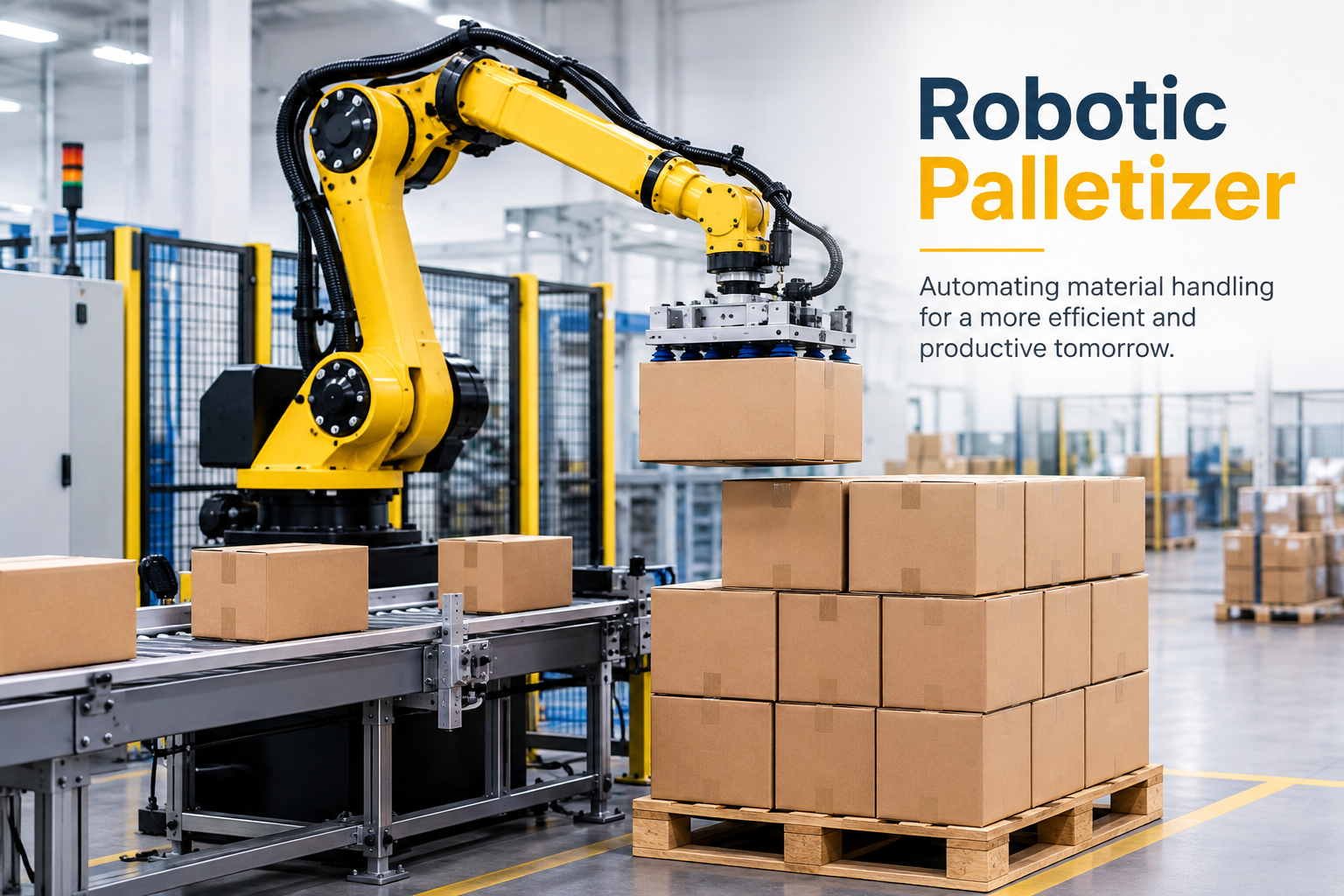
Warehousing and distribution operations require accurate product handling, organized storage, and timely order preparation. As businesses manage increasing product volumes, manual palletizing can become a challenge. It may require additional labour, increase handling time, and create inconsistencies in pallet arrangements. Automation provides an effective way to address these challenges.
A Robotic Palletizer helps automate the process of stacking products onto pallets. By combining robotic arms, gripping tools, conveyors, and control systems, businesses can improve the movement of packaged goods from production areas to storage and distribution facilities.
Understanding Robotic Palletizer Technology
A robotic palletizer is an industrial automation solution designed to pick products and arrange them on pallets according to programmed patterns. It can work with different packaging formats, including boxes, bags, containers, and bundles.
The system generally includes a robotic arm, end-of-arm tooling, sensors, conveyor equipment, safety devices, and a control unit. These components work together to perform accurate and repeatable palletizing operations.
Why Warehouses Are Adopting Robotic Palletizers
Faster Material Handling
Automated palletizing helps reduce the time required to arrange products manually. It supports a continuous flow of packaged goods and can help reduce bottlenecks near the end of a production line.
Improved Space Utilization
Robotic systems can follow predefined stacking patterns to create organized pallets. Proper stacking can help businesses use available warehouse and transportation space more effectively.
Reduced Repetitive Labour
Employees may spend considerable time lifting and positioning products. Automation takes over many repetitive palletizing activities, allowing workers to focus on supervision, quality checks, and other important responsibilities.
Greater Operational Consistency
Robotic systems follow programmed movements and stacking instructions. This supports uniform pallet arrangements and reduces variations caused by repetitive manual handling.
Important Components of a Robotic Palletizing System
A complete robotic palletizing solution involves several integrated components.
-
Robotic Arm: Performs the picking and placement movements.
-
Gripper System: Holds products securely during transfer.
-
Conveyor System: Moves products towards the palletizing area.
-
Sensors: Detect product position and support accurate handling.
-
Control System: Coordinates robot movements and operating sequences.
-
Safety Equipment: Helps protect workers and equipment during operation.
Selecting compatible components is important for achieving reliable performance.
Factors to Consider Before Implementation
Businesses should consider production volume, product characteristics, available space, pallet dimensions, and integration requirements. The system should also be compatible with existing warehouse processes.
Employee training and regular maintenance are equally important. A well-planned implementation helps businesses achieve better results from their automation investment.
Frequently Asked Questions
1. How does a robotic palletizer work in a warehouse?
A robotic palletizer receives products through a conveyor or material-handling system. Sensors or programmed instructions help identify product positions, while the robotic arm picks and places each item onto a pallet. The system follows a selected stacking pattern until the required pallet arrangement is completed.
2. Can robotic palletizers support different packaging formats?
Yes, a suitably configured robotic palletizer can handle different packaging formats, such as cartons, bags, boxes, and containers. The gripping mechanism and programming need to match the characteristics of the products. Businesses should assess packaging variations when planning an installation.
3. Are robotic palletizers suitable for small warehouses?
Robotic palletizers can be considered for smaller facilities when the production volume, available floor space, and operational requirements justify automation. Compact robotic configurations may help businesses automate specific packaging activities without requiring a large installation area.
4. What maintenance does a robotic palletizer require?
Maintenance may include inspecting robotic joints, checking grippers, cleaning sensors, reviewing safety devices, and examining electrical connections. Following the manufacturer's maintenance schedule and identifying unusual movements or performance changes early can help maintain reliable operation.
Conclusion
Robotic palletizer systems are helping warehouses and distribution facilities improve product handling and packaging efficiency. Their ability to perform repetitive stacking tasks with consistency makes them useful for modern material-handling operations. With proper planning and integration, businesses can build more organized and productive warehouse environments.
- Digital Agency
- Literie
- Location de voitures
- Restaurant
- Restaurant
- Mode
- Mode
- Information
- Marketing
- Tourisme
- Développement
- Découverte
- Législation
- Gastronomie
- Pâtisserie
- Evenement
- Art
- Causes
- Crafts
- Dance
- Drinks
- Film
- Fitness
- Food
- Spellen
- Gardening
- Health
- Home
- Literature
- Music
- Networking
- Overig
- Party
- Religion
- Shopping
- Sports
- Theater
- Wellness
 Dutch
 Indian
 English
 French
 Arabic
 Spanish
 Portuguese
 Deutsch
 Turkish
 Italiano
 Russian
 Romaian
 Portuguese (Brazil)
 Greek
