


Which Features Should a Custom Real Estate Tokenization Platform Include to Support Business Growth?
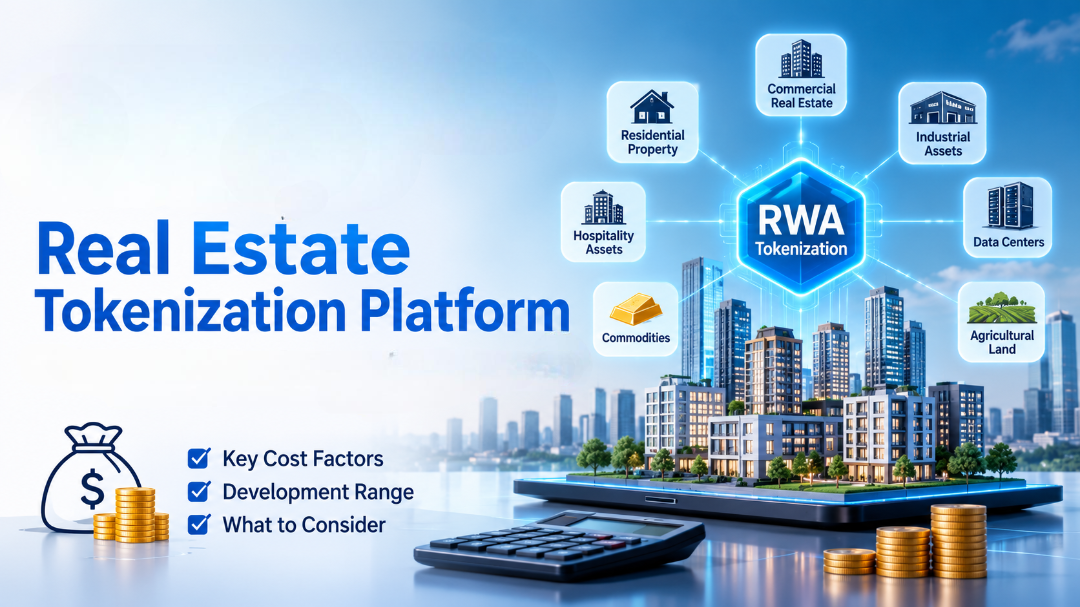
The real estate industry is gradually adopting blockchain technology to introduce more flexible investment models, improve asset management, and create new opportunities for capital formation. Traditional property investment systems often involve complex ownership structures, extensive documentation, manual administration, and limited access to investment opportunities. These challenges are encouraging property developers, real estate investment firms, asset managers, and financial businesses to explore real estate tokenization.
A custom real estate tokenization platform allows businesses to represent eligible property ownership interests, beneficial interests, or other real estate-related financial rights through blockchain-based digital tokens. Unlike conventional property management or investment applications, these platforms can combine asset onboarding, token issuance, investor management, compliance, transactions, and portfolio administration within a unified digital ecosystem.
However, developing a platform that simply supports token creation is not enough to achieve long-term business growth. Enterprises need a feature-rich infrastructure that can accommodate different property categories, support multiple investment models, automate operational processes, and expand as business requirements evolve.
So, which features should businesses prioritize when developing a custom real estate tokenization platform? Let's explore the essential capabilities.
1. Property Asset Onboarding and Management
Property onboarding is one of the foundational features of a real estate tokenization platform. Businesses need a structured system to register, verify, categorize, and manage properties before initiating tokenization.
A centralized asset management module allows administrators to maintain essential property information and supporting documentation.
Important features include:
-
Property registration and categorization.
-
Ownership and title document management.
-
Property location and description.
-
Valuation and appraisal records.
-
Rental income and financial performance details.
-
Legal agreements and ownership verification.
-
Property images, reports, and supporting documents.
-
Asset status tracking and approval workflows.
For example, a property development company managing residential apartments, commercial buildings, and rental properties should be able to onboard all these asset categories through a single administrative interface.
This feature helps businesses organize their asset portfolios and establish a reliable foundation for token issuance.
2. Flexible Token Issuance and Configuration
A custom real estate tokenization platform should support flexible token creation based on the underlying property's legal and financial structure.
Not every real estate investment follows the same ownership model. Some businesses may tokenize SPV-based beneficial interests, while others may represent contractual revenue rights or eligible investment interests.
The token issuance module should allow administrators to configure token parameters according to the selected structure.
Essential capabilities include:
-
Custom token creation.
-
Token supply configuration.
-
Fractional ownership or interest allocation.
-
Token pricing and allocation.
-
Investor participation limits.
-
Token minting and burning.
-
Transfer restrictions.
-
Token lifecycle management.
For instance, a commercial property valued at $5 million could be structured into 50,000 investment tokens at an illustrative initial price of $100 each, subject to the applicable legal and offering structure.
This flexibility allows businesses to introduce different property investment models without developing separate issuance infrastructure for every project.
3. Smart Contract Automation
Smart contracts help automate predefined operations within a real estate tokenization platform. They reduce the need for manual intervention in repetitive processes and create transparent records of eligible blockchain transactions.
A well-designed platform should include smart contracts for:
-
Token issuance and allocation.
-
Ownership record updates.
-
Eligible token transfers.
-
Rental income distribution.
-
Dividend or revenue-sharing calculations.
-
Investment subscription processing.
-
Redemption and buyback conditions.
-
Corporate actions and ownership changes.
For example, if a tokenized rental property generates monthly income, the platform can calculate eligible investor distributions based on predefined contractual rules.
Smart contract functionality should be audited and tested before deployment to reduce vulnerabilities and operational risks.
4. Integrated KYC and AML Verification
Investor verification is essential for businesses operating real estate tokenization platforms, particularly when offering investment opportunities across different markets.
A custom platform should integrate identity verification and compliance workflows directly into investor onboarding.
Key features include:
-
Identity document verification.
-
Address verification.
-
KYC onboarding.
-
AML screening.
-
Investor accreditation checks where applicable.
-
Risk profiling and suitability checks.
-
Sanctions screening.
-
Jurisdiction-based investor restrictions.
-
Ongoing compliance monitoring.
These features help businesses manage investor eligibility and maintain compliance with applicable regulatory requirements.
Rather than treating compliance as a separate administrative activity, enterprises should integrate it into the platform's complete investment lifecycle.
5. Investor Registration and Management Dashboard
A user-friendly investor dashboard is another important feature for supporting business growth.
Investors should have access to a centralized interface where they can discover property investment opportunities, review relevant documentation, manage their holdings, and monitor portfolio performance.
The investor dashboard should include:
-
Secure registration and login.
-
Investor profile management.
-
Identity verification status.
-
Available property investment listings.
-
Investment subscription functionality.
-
Token holding overview.
-
Investment history.
-
Income and distribution statements.
-
Property performance reports.
-
Transaction notifications.
-
Digital document access.
A well-organized dashboard improves the investor experience and can help businesses build stronger long-term relationships with their investment communities.
6. Multiple Property Investment Models
One of the most valuable features of a custom real estate tokenization platform is the ability to support different investment structures.
Businesses should avoid developing infrastructure that only accommodates one type of property investment.
Instead, the platform should provide configurable investment models that can support different business objectives.
Some potential models include:
Fractional Property Investment: Divide eligible property interests into smaller digital units, allowing multiple investors to participate.
SPV-Based Tokenization: Represent eligible interests in a special purpose vehicle that holds the underlying property.
Rental Income Tokenization: Structure tokens around contractual rights to receive a share of eligible rental income.
Real Estate Fund Tokenization: Digitize eligible interests in real estate investment funds.
Property Development Financing: Create investment structures that allow eligible investors to participate in the financing of property development projects.
Commercial Property Investment: Support investment opportunities involving offices, shopping centers, warehouses, and industrial properties.
Supporting multiple investment models allows businesses to expand their offerings and serve different investor segments.
7. Rental Income and Distribution Management
For businesses managing income-generating properties, rental income distribution is an important platform capability.
Manually calculating investor entitlements and processing recurring distributions can become complicated when multiple properties and investors are involved.
A rental income management module can streamline these activities.
Important functionalities include:
-
Rental income recording.
-
Property-level revenue tracking.
-
Expense and deduction management.
-
Investor entitlement calculations.
-
Distribution scheduling.
-
Payment processing integration.
-
Distribution history.
-
Financial reporting.
For example, a property generating $50,000 in monthly rental income can use predefined distribution rules to calculate eligible investor payments after applicable expenses, reserves, and contractual deductions.
This feature helps businesses manage income-related operations more efficiently while improving financial visibility for investors.
8. Secondary Market and Token Transfer Management
Investors may want to transfer or sell their tokenized real estate interests before the underlying property is sold or the investment reaches maturity.
A custom platform can incorporate secondary transfer or marketplace functionality to support eligible transactions.
Essential features include:
-
Token listing functionality.
-
Buy and sell order management.
-
Investor-to-investor transfers.
-
Transfer eligibility verification.
-
Transaction history.
-
Pricing information.
-
Marketplace administration.
-
Settlement integration.
However, businesses should recognize that enabling token transfers does not automatically create liquidity. Secondary trading must comply with applicable securities and transfer restrictions, and actual liquidity depends on market demand and available counterparties.
9. Property Valuation and Performance Analytics
Businesses managing multiple tokenized properties need reliable tools to monitor asset performance and investment activity.
An analytics module can provide administrators and investors with insights into property-level and portfolio-level performance.
Recommended analytics features include:
-
Property valuation records.
-
Rental yield calculations.
-
Occupancy rate tracking.
-
Operating expense reports.
-
Historical asset performance.
-
Portfolio allocation.
-
Investment return reporting.
-
Property-level financial comparisons.
-
Revenue and cash flow monitoring.
For example, a real estate investment company managing residential and commercial properties can compare rental performance, operating costs, and valuation changes through a unified dashboard.
These insights help businesses make informed asset management decisions and communicate investment performance more effectively.
10. Multi-Wallet and Secure Custody Integration
Wallet infrastructure is essential for managing blockchain-based property tokens.
A custom platform should provide secure wallet functionality that accommodates different investor preferences and business requirements.
Key wallet capabilities include:
-
Investor wallet creation.
-
Wallet connection.
-
Token balance tracking.
-
Transaction history.
-
Secure private key management.
-
Multi-signature authorization.
-
Custodial and non-custodial wallet support.
-
Blockchain transaction monitoring.
Businesses should also implement strong security controls, including encryption, access management, multi-factor authentication, and secure key recovery mechanisms.
The choice between custodial and non-custodial infrastructure should depend on the platform's operating model and regulatory obligations.
11. Multi-Currency and Payment Gateway Integration
Real estate tokenization businesses targeting international investors may need to support multiple payment methods and currencies.
Payment integration allows investors to participate in eligible offerings through convenient funding channels.
Useful payment features include:
-
Fiat payment processing.
-
Multiple currency support.
-
Bank transfer integration.
-
Stablecoin payment support where permitted.
-
Deposit and withdrawal management.
-
Payment confirmation.
-
Transaction reconciliation.
-
Refund management.
For example, an international real estate investment platform may support eligible investors using different fiat currencies while maintaining consistent investment records.
Payment integrations should also incorporate appropriate transaction monitoring and financial compliance controls.
12. Admin Dashboard and Business Management Tools
While investor-facing features are important, administrators need equally powerful tools to manage platform operations.
A comprehensive admin dashboard helps businesses control asset onboarding, investor activities, token issuance, and financial operations.
Essential administrative features include:
-
Investor account management.
-
Property approval workflows.
-
Token issuance administration.
-
Investment allocation management.
-
KYC and AML monitoring.
-
Transaction oversight.
-
Income distribution management.
-
Fee configuration.
-
Reports and analytics.
-
User roles and permissions.
-
Platform activity logs.
Role-based access control is particularly important for enterprises with multiple teams handling property verification, compliance, finance, and investor relations.
13. API Integration and Third-Party Connectivity
As a business expands, its tokenization platform may need to connect with several external systems.
API integration makes it possible to exchange information between the tokenization infrastructure and other business applications.
Potential integrations include:
-
Property management software.
-
Banking and payment systems.
-
KYC and AML providers.
-
Digital asset custodians.
-
Property valuation services.
-
Accounting and ERP platforms.
-
Document verification services.
-
Blockchain analytics tools.
-
External marketplaces.
For example, integrating property management software can help synchronize rental income and occupancy information with the tokenization platform.
A flexible API architecture also makes it easier to introduce new features without rebuilding the entire platform.
14. Multi-Chain Compatibility and Interoperability
Businesses may eventually want to expand their tokenized real estate offerings across different blockchain ecosystems.
Multi-chain compatibility can provide additional flexibility in terms of infrastructure selection, investor access, and blockchain integrations.
A custom platform can incorporate:
-
Support for selected blockchain networks.
-
Cross-chain token management.
-
Blockchain-specific smart contract modules.
-
Network transaction monitoring.
-
Token interoperability.
-
Secure cross-chain communication.
However, cross-chain transfers introduce additional security and operational considerations. Enterprises should implement interoperability only when it supports a clear business requirement.
15. Scalable Architecture and Enterprise-Level Security
A platform designed for a small number of properties may not be suitable for an enterprise managing hundreds of assets and thousands of investors.
Scalability should therefore be considered during the initial development stage.
Important technical capabilities include:
-
Modular platform architecture.
-
Cloud-based infrastructure.
-
Database optimization.
-
Load balancing.
-
High-availability deployment.
-
Data encryption.
-
Multi-factor authentication.
-
Role-based permissions.
-
Disaster recovery.
-
Continuous security monitoring.
-
Smart contract audits.
A scalable architecture allows businesses to introduce new property categories, investor segments, and financial workflows as their operations grow.
16. Reporting, Documentation, and Audit Trails
Transparency and accurate documentation are essential for managing tokenized real estate investments.
A reporting module should allow businesses to maintain records of asset activity, investor participation, financial transactions, and compliance operations.
Important reporting capabilities include:
-
Asset ownership documentation.
-
Token issuance records.
-
Investor transaction statements.
-
Income distribution reports.
-
Property performance statements.
-
Compliance reports.
-
Financial summaries.
-
Audit logs.
-
Downloadable investment documents.
These capabilities help businesses improve operational oversight and provide investors with access to relevant information.
How These Features Support Real Estate Business Growth
The right combination of platform features can help businesses move beyond basic property tokenization and establish a more comprehensive digital investment ecosystem.
|
Platform feature |
Business growth opportunity |
|---|---|
|
Multi-asset onboarding |
Expand into different property categories |
|
Flexible token issuance |
Introduce new investment structures |
|
Smart contract automation |
Reduce repetitive administrative activities |
|
Investor dashboard |
Improve investor experience and engagement |
|
Rental income management |
Support income-generating investment models |
|
Secondary marketplace |
Enable eligible token transfers |
|
Portfolio analytics |
Improve asset and investment oversight |
|
API integrations |
Connect with existing business systems |
|
Multi-chain support |
Expand blockchain infrastructure options |
|
Compliance management |
Support regulated business operations |
For example, a property developer initially launching a residential property tokenization platform could eventually expand into commercial real estate, rental portfolios, and property development financing without creating an entirely separate system for every business model.
This ability to expand is what makes custom platform development particularly valuable for growing enterprises.
Custom Real Estate Tokenization Platform Development: What Should Businesses Prioritize?
Although all these features can contribute to platform functionality, businesses do not necessarily need to implement everything during the initial launch.
A phased development strategy can help enterprises control development complexity and prioritize essential capabilities.
|
Development phase |
Features to prioritize |
|---|---|
|
Phase 1: Core platform |
Property onboarding, token issuance, investor registration |
|
Phase 2: Compliance and automation |
KYC, AML, smart contracts, wallet integration |
|
Phase 3: Investment management |
Rental distributions, dashboards, reporting |
|
Phase 4: Expansion |
Secondary marketplace, API integrations, analytics |
|
Phase 5: Enterprise scaling |
Multi-chain infrastructure, advanced security, additional asset categories |
The initial development scope should reflect the business model, target investors, legal structure, and asset categories.
Enterprises planning to manage multiple property categories should prioritize modular architecture from the beginning, even if advanced features are introduced later.
Conclusion
A successful custom real estate tokenization platform requires much more than digital token creation. It needs a complete set of features that support property onboarding, flexible token issuance, investor management, regulatory compliance, smart contract automation, income distribution, and portfolio analytics.
For property developers, investment firms, asset managers, and financial enterprises, choosing the right feature set can determine how effectively the platform supports business expansion and evolving investment requirements.
The most effective approach is to develop a modular and scalable solution that accommodates different property categories and investment structures while maintaining strong security and compliance controls.
Working with an experienced real estate tokenization development company such as Inoru can help businesses plan and build customized tokenization infrastructure aligned with their operational requirements, asset structures, and long-term growth objectives.
As real estate investment models continue to evolve, enterprises with flexible tokenization platforms will be better positioned to explore new funding opportunities, expand investor participation, and modernize property investment operations.
- Digital Agency
- Literie
- Location de voitures
- Restaurant
- Restaurant
- Mode
- Mode
- Information
- Marketing
- Tourisme
- Développement
- Découverte
- Législation
- Gastronomie
- Pâtisserie
- Evento
- Art
- Causes
- Crafts
- Dance
- Drinks
- Film
- Fitness
- Food
- Juegos
- Gardening
- Health
- Inicio
- Literature
- Music
- Networking
- Otro
- Party
- Religion
- Shopping
- Sports
- Theater
- Wellness
 Spanish
 Indian
 English
 French
 Arabic
 Portuguese
 Deutsch
 Turkish
 Dutch
 Italiano
 Russian
 Romaian
 Portuguese (Brazil)
 Greek
