


Why Does Cbbmachine Differential Shaft Matter in Slitting Operations?
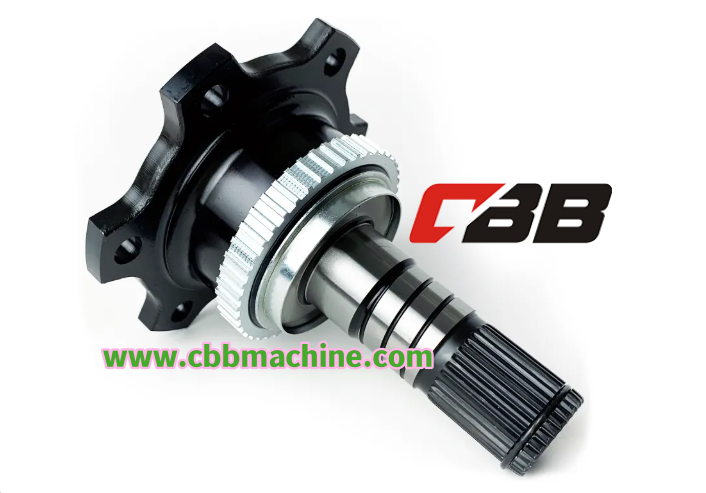
In converting industries where several narrow rolls must be processed from a wider material web, a Differential Shaft from Cbbmachine offers a practical approach to managing variations in winding tension. Designed to accommodate differences between individual rolls, this mechanical component helps support coordinated winding while allowing each position to respond to its own material requirements. Its role is particularly relevant to production environments where consistent roll formation and controlled material handling influence everyday operations.
During slitting and rewinding, a wide web is divided into narrower sections that may differ in thickness, width, or winding resistance. When these sections are wound together on a common shaft, variations in material characteristics can create uneven tension. Some rolls may become too tight, while others may remain loose. A differential mechanism helps address this challenge by allowing controlled relative movement between winding positions instead of requiring every roll to behave identically.
This operating principle can help manufacturers manage the practical differences that arise during continuous processing. By allowing individual winding positions to accommodate changes in resistance, the shaft can support more consistent roll formation and reduce problems associated with uneven winding. The actual result depends on the material, machine configuration, operating conditions, and adjustment method selected for the application.
Material compatibility plays an important role in equipment selection. Packaging films, paper substrates, laminates, foil, and other flexible materials may respond differently to tension during winding. A configuration suitable for one material may require adjustment when used with another. Production teams should therefore consider substrate characteristics, slit width, core dimensions, winding requirements, and the intended operating environment before selecting a suitable assembly.
Another important consideration is the relationship between the shaft and the surrounding machine. Mounting arrangements, drive connections, working width, loading procedures, and operator access can influence installation and daily use. Evaluating these factors early helps manufacturers plan equipment integration more effectively. Clear communication with a supplier can also help determine whether the proposed configuration aligns with the existing production line.
In practical operation, the benefits of differential winding depend on appropriate setup. Operators need to understand how tension adjustments affect roll formation and how material behavior changes throughout the process. Careful setup procedures can help prevent loose edges, telescoping rolls, wrinkles, and other winding irregularities. While the shaft supports independent response across winding positions, the complete system must still be configured according to the requirements of the material being processed.
Maintenance should also form part of the equipment management plan. Regular checks of friction components, moving sections, mounting parts, and contact surfaces can help identify wear or contamination that may affect operation. Keeping the assembly clean and following the manufacturer's maintenance recommendations can support predictable performance. Inspection practices should reflect the production environment and the demands placed on the equipment.
For manufacturers, a suitable winding solution is about more than holding material in place. It involves balancing operational flexibility, roll quality, ease of adjustment, and compatibility with existing machinery. Understanding how differential winding works enables purchasing teams and production engineers to evaluate equipment based on real processing needs rather than relying on general descriptions alone.
Before making a selection, consider the materials you process, the winding behavior you need to achieve, and the conditions under which the machine operates. Sharing these details with an experienced supplier can help clarify technical requirements and guide the selection process toward an appropriate configuration.
Every finished roll tells a story about the process behind it. If you want to improve how your production line responds to changing winding conditions, visit https://www.cbbmachine.com/product/ and browse the available industrial solutions. Follow the details that match your application, ask new questions about your setup, and turn your next equipment review into a more informed step forward.
- Digital Agency
- Literie
- Location de voitures
- Restaurant
- Restaurant
- Mode
- Mode
- Information
- Marketing
- Tourisme
- Développement
- Découverte
- Législation
- Gastronomie
- Pâtisserie
- Event
- Art
- Causes
- Crafts
- Dance
- Drinks
- Film
- Fitness
- Food
- Παιχνίδια
- Gardening
- Health
- Κεντρική Σελίδα
- Literature
- Music
- Networking
- άλλο
- Party
- Religion
- Shopping
- Sports
- Theater
- Wellness
 Greek
 Indian
 English
 French
 Arabic
 Spanish
 Portuguese
 Deutsch
 Turkish
 Dutch
 Italiano
 Russian
 Romaian
 Portuguese (Brazil)
