


How LoRa Technology Supports Radar Level Sensor Applications in India
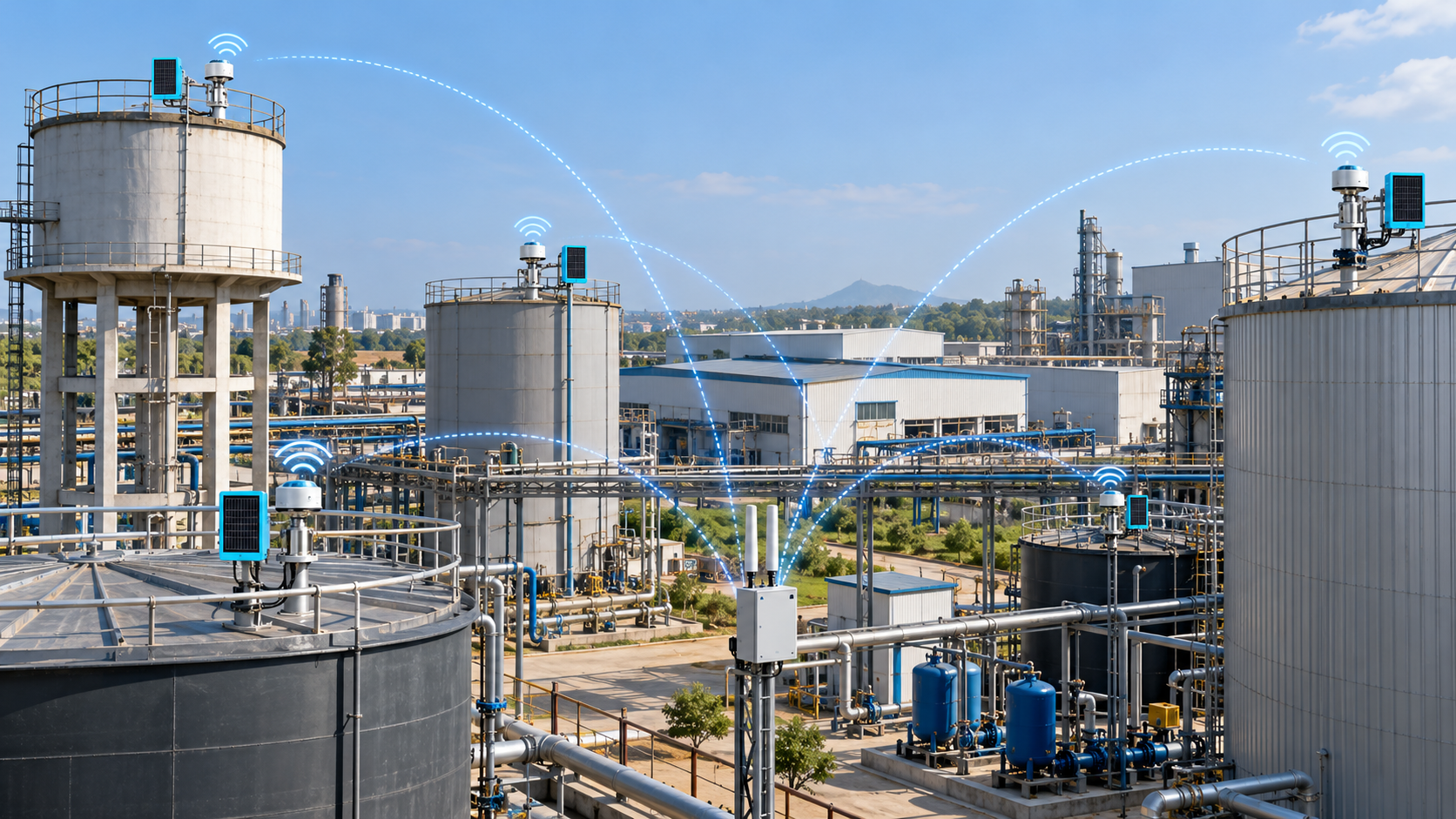
Accurate water level measurement is important for apartments, hospitals, industrial facilities, commercial buildings and agricultural operations across India. When tanks are spread across multiple buildings or remote locations, manually checking water levels can be time-consuming and may delay the response to low-water conditions or overflow.
LoRa technology offers a wireless communication option for connecting level sensors to monitoring systems. When combined with a suitable radar level sensor, it enables water level data to be transmitted to a compatible gateway and monitoring platform without requiring a dedicated communication cable from every tank.
For businesses evaluating a Radar Level Sensor Manufacturer in India, understanding how radar measurement and LoRa connectivity work together can help identify the right solution for Wireless Tank Level Monitoring.
What Is LoRa Technology?
LoRa, short for Long Range, is a wireless communication technology designed for low-power, long-range data transmission. It is commonly used in Internet of Things (IoT) applications where devices need to send small amounts of information over a wireless network.
In water management, LoRa can transmit measurements from connected sensors installed on overhead tanks, underground sumps and industrial storage tanks.
Its potential advantages include:
-
Long-range communication: Can connect distributed devices when site conditions and network design support the required coverage.
-
Low-power operation: Suitable for appropriately designed battery-powered monitoring devices.
-
Reduced communication wiring: Can simplify installations where running cables to every tank is difficult.
-
Multi-device connectivity: A suitably designed network can collect readings from multiple sensors.
-
Remote data access: Readings can be forwarded to a monitoring platform through a compatible gateway and backhaul connection.
Actual communication range depends on antenna placement, obstacles, building materials, interference and the selected equipment.
LoRa and LoRaWAN are related but different: LoRa is the radio technology, while LoRaWAN is a communication protocol that defines how compatible devices communicate through a network.
How a Radar Level Sensor Works with LoRa
A radar level sensor measures the distance to the liquid surface using electromagnetic waves. The sensor uses the returned signal to calculate the liquid level based on its configured reference point and tank dimensions.
LoRa provides the wireless link that transmits the measurement data to a receiving device or gateway.
A typical arrangement works as follows:
-
Measure: A radar sensor measures the distance to the water surface.
-
Calculate: The device or connected controller converts the measurement into a water level.
-
Transmit: A compatible LoRa-enabled device sends the reading wirelessly.
-
Receive: A gateway collects the transmitted data.
-
Process: The monitoring platform receives and displays the information.
-
Alert: Configured rules generate notifications when readings cross defined thresholds.
This arrangement supports Wireless Tank Level Monitoring without requiring a separate communication cable between every tank and the monitoring point.
The sensor, radio module, gateway and software must be compatible. A standard radar sensor does not automatically support LoRa unless it has the required wireless interface or is connected to a compatible communication device.
Why LoRa Is Useful for Tank Monitoring Across India
Many facilities in India operate water tanks in locations that are difficult to connect using conventional wiring. Examples include apartment rooftops, hospital utility areas, industrial yards, agricultural storage facilities and remote infrastructure sites.
LoRa may be useful in these environments because it can reduce the complexity of communication wiring.
Apartment complexes
Large residential communities may have several overhead tanks and underground sumps across different blocks. Wireless connectivity can help bring readings from distributed tanks into a central monitoring system.
Hospitals
Hospitals can use connected level sensors to monitor selected storage tanks and receive configured low-level alerts. This can help maintenance staff identify tanks that require attention.
Industrial facilities
Factories and industrial campuses may need to monitor storage tanks located across a large site. A suitably designed LoRa network can transmit readings to a central dashboard.
Agriculture and irrigation
Remote water storage tanks can be monitored where conventional communication infrastructure is limited, provided suitable coverage and power arrangements are available.
Commercial buildings
Hotels, offices and educational campuses can use connected tank monitoring to improve visibility into water storage and support compatible pump automation.
The best connectivity choice depends on the site layout, required reporting frequency, network availability and operational needs.
Reduce Communication Wiring and Installation Complexity
In a conventional wired installation, sensor signals may need to travel through cables, conduits and control panels before reaching the monitoring system. In buildings with multiple floors or widely separated tanks, this can increase installation complexity.
A LoRa-enabled monitoring system can reduce the need for dedicated communication wiring between tanks and a central receiver.
Potential benefits include:
-
Less communication cabling across rooftops and utility areas.
-
Easier expansion when additional compatible sensors are installed.
-
Reduced disruption in locations where cable routing is difficult.
-
Centralised access to readings from connected tanks.
-
Flexible placement of sensors and gateways within the designed coverage area.
However, wireless monitoring does not eliminate all wiring. Some devices still require power connections, pump-control wiring or local electrical protection. Site surveys and coverage testing are important before installation.
Use Wireless Tank Level Monitoring for Timely Alerts
Knowing the current water level is useful, but timely notifications can help maintenance teams act before a tank becomes critically low or overflows.
A connected system can be configured to generate alerts when the measured level crosses a defined threshold.
For example:
-
A low-level alert can indicate that an overhead tank needs replenishment.
-
A high-level alert can help staff respond before overflow occurs.
-
A falling sump level can prompt an inspection of the incoming water supply.
-
Unexpected level changes can trigger a review of consumption, pumping or possible leakage.
The availability of these alerts depends on the sensor, gateway, monitoring software and configured notification methods.
Alert thresholds should reflect the tank's dimensions, normal consumption and pumping sequence. Excessive alert sensitivity may create unnecessary notifications, while poorly configured thresholds can delay intervention.
Combine LoRa Connectivity with Pump Automation
Radar level measurement and LoRa connectivity can provide the data needed by a compatible automation system to manage water pumping.
A typical arrangement may use readings from both an underground sump and an overhead tank.
The operating sequence could be:
-
The overhead tank level falls below its configured low threshold.
-
The control system checks whether the sump contains sufficient water.
-
A compatible pump controller starts the pump when operating conditions permit.
-
The pump stops when the overhead tank reaches its configured target level.
-
Suitable protection devices prevent operation under specified unsafe conditions.
-
The monitoring platform displays the available tank and pump information.
This arrangement can help reduce unnecessary pump operation and support more consistent tank-level management.
Important: LoRa transmits information; it does not itself control a pump or provide dry-run protection. Automated operation requires compatible controllers, suitable control logic and appropriate electrical protection. Safety-critical pump shutdowns should not depend solely on a remote wireless link unless the system has been specifically engineered for that purpose.
What Should You Check Before Selecting a LoRa-Enabled Radar Sensor?
When comparing products from a Radar Level Sensor Manufacturer in India, evaluate both the measurement technology and the communication system.
|
Selection factor |
What to verify |
|
Measurement range |
Confirm that the sensor covers the tank's full operating range and specified blind zone |
|
Accuracy |
Review the manufacturer's accuracy and repeatability specifications |
|
Installation |
Check mounting requirements and possible signal obstructions |
|
Environmental protection |
Confirm suitability for rain, dust, humidity and site temperatures |
|
Radio coverage |
Test communication at actual sensor locations |
|
Power source |
Check mains, battery or solar requirements |
|
Reporting frequency |
Confirm how often readings are transmitted |
|
Gateway compatibility |
Verify radio settings, protocol and network compatibility |
|
Software integration |
Confirm dashboard, alert and data-export requirements |
|
Technical support |
Review commissioning, troubleshooting and maintenance support |
Do not select a system based only on a claimed maximum communication distance. Actual performance depends on the physical environment and network configuration.
LoRa vs Other Connectivity Options
LoRa is not the only option for connected water monitoring. The appropriate technology depends on how far the sensors are from the monitoring system, how much data needs to be transmitted and whether cellular or wired infrastructure is available.
|
Connectivity option |
Potential use |
|
LoRa |
Low-power communication between compatible devices and a local gateway |
|
LoRaWAN |
Standardised networking for compatible LoRa devices and gateways |
|
4G |
Remote sites where cellular coverage and a suitable data connection are available |
|
NB-IoT or Cat-M1 |
Supported low-power cellular deployments where the relevant network is available |
|
Wi-Fi |
Installations with suitable Wi-Fi coverage and power |
|
Wired communication |
Systems requiring direct, dependable links to controllers or building-management equipment |
These options are not interchangeable in every installation. Some systems use LoRa for sensor-to-gateway communication and 4G or Wi-Fi to send the collected information to the cloud.
How MyTank Supports LoRa-Based Water Tank Monitoring
MyTank, associated with Elint Systems, provides connected water tank monitoring and automation capabilities. Its published product information describes solar-powered radar level sensors, LoRa connectivity, multi-tank monitoring, mobile and cloud access, alerts and compatible pump-control equipment.
For facilities exploring Radar level sensor and Wireless Tank Level Monitoring, a suitable MyTank configuration can help bring tank-level information into a central interface.
Potential capabilities include:
-
Remote level visibility: Review connected overhead tank and sump readings.
-
Multi-tank monitoring: Monitor supported tanks through a central application or dashboard.
-
Configured alerts: Receive notifications for selected water-level conditions.
-
Wireless communication: Use supported LoRa connectivity between sensors and the monitoring system.
-
Pump automation: Support automatic pump operation through compatible smart starters and controls.
-
Expansion options: Extend monitoring as required, subject to the system architecture and supported device capacity.
MyTank's published specifications describe monitoring up to 32 tanks using LoRa-connected sensors and scaling to as many as 256 tanks with LoRaWAN. Confirm the applicable gateway, device capacity and configuration requirements with the supplier before deployment.
For industrial applications, verify the sensor's measurement range, accuracy, environmental rating, communication compatibility and installation requirements. Not every third-party radar sensor will necessarily integrate with every MyTank configuration.
Wireless monitoring can improve visibility, but accurate readings still depend on appropriate installation, commissioning, sensor maintenance and reliable communication.
Implementation Checklist for Indian Facilities
Before deploying a LoRa-enabled radar monitoring system, use the following checklist:
-
Identify all tanks and document their dimensions.
-
Determine the required measurement accuracy and reporting frequency.
-
Select suitable radar sensors for each application.
-
Conduct a wireless coverage survey across the site.
-
Position gateways to provide reliable communication.
-
Verify compatibility between sensors, gateways and the monitoring platform.
-
Configure low-level and high-level alerts.
-
Define the required pump automation and protection logic.
-
Test the system under actual operating conditions.
-
Establish procedures for communication failures, maintenance and alert response.
A pilot installation on a small number of tanks can help validate measurement performance and wireless coverage before expanding to the full facility.
Conclusion
LoRa technology can make radar-based tank monitoring more practical in locations where communication cabling is difficult or expensive to install. Radar measures the water level, while LoRa transmits the resulting data to compatible gateways and monitoring platforms.
For businesses evaluating a Radar Level Sensor Manufacturer in India, the key is to assess measurement performance, wireless coverage, gateway compatibility and monitoring requirements together.
When appropriately configured, a Radar level sensor and Wireless Tank Level Monitoring solution such as MyTank can support remote visibility, configured alerts and compatible pump automation across multiple tanks.
By planning sensing, connectivity, monitoring and control as one integrated system, facilities can improve their understanding of water storage and respond more effectively to changing tank levels.
- Digital Agency
- Literie
- Location de voitures
- Restaurant
- Restaurant
- Mode
- Mode
- Information
- Marketing
- Tourisme
- Développement
- Découverte
- Législation
- Gastronomie
- Pâtisserie
- Evenement
- Art
- Causes
- Crafts
- Dance
- Drinks
- Film
- Fitness
- Food
- Jeux
- Gardening
- Health
- Domicile
- Literature
- Music
- Networking
- Autre
- Party
- Religion
- Shopping
- Sports
- Theater
- Wellness
 French
 Indian
 English
 Arabic
 Spanish
 Portuguese
 Deutsch
 Turkish
 Dutch
 Italiano
 Russian
 Romaian
 Portuguese (Brazil)
 Greek
