


How to Build a Wedding Diamond Jewellery Set on a Budget
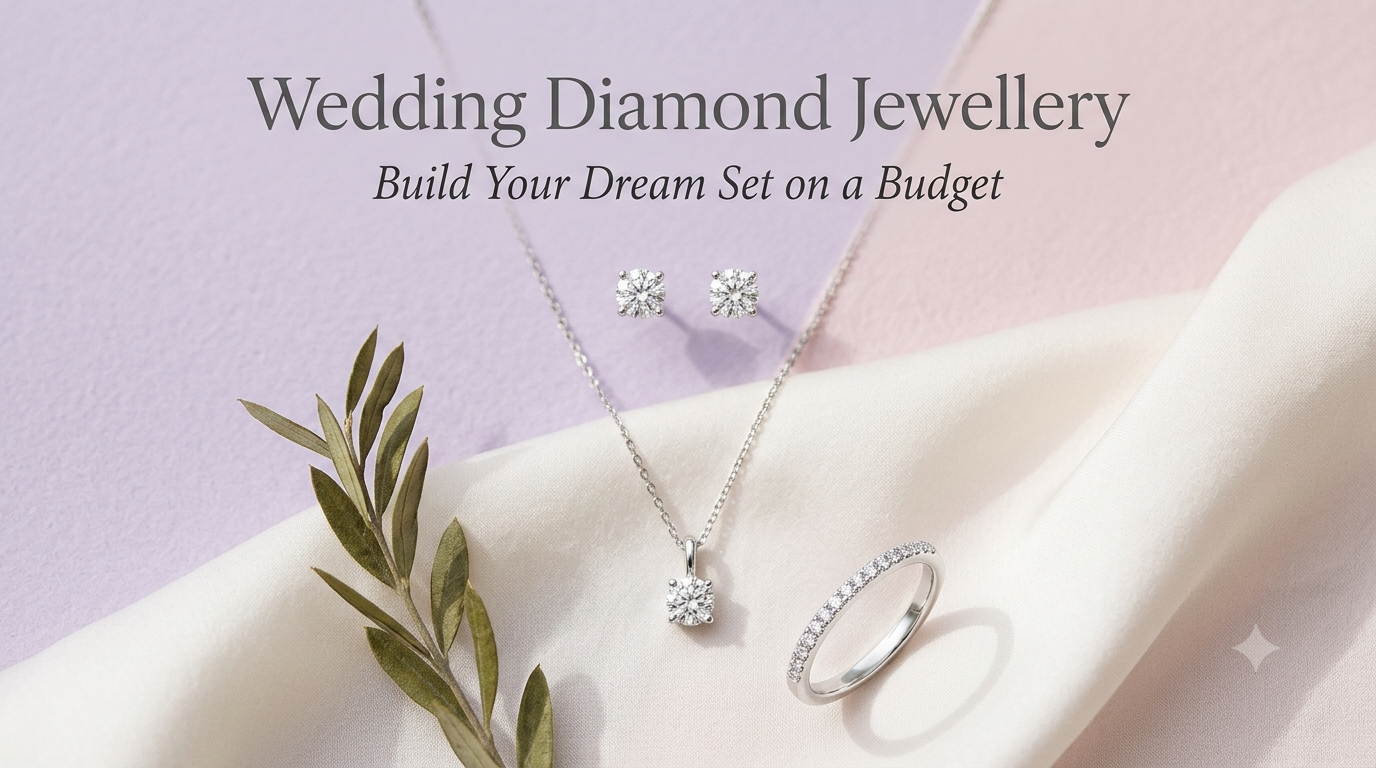
A beautiful wedding diamond jewellery set does not need perfectly matching diamonds or a luxury price tag. With a clear budget and a few smart choices, you can create a look that feels elegant, personal, and suitable for your wedding day.
The secret is to choose pieces that work well together instead of buying an entire matching collection. A simple diamond band, elegant earrings, and a delicate necklace can look just as special as a larger set when they complement your outfit and personal style.
Whether you prefer traditional wedding jewellery or modern designs, planning your purchases can help you manage costs without losing the details that matter most.
In this guide, you will learn how to plan your budget, compare diamond options, coordinate different jewellery pieces, and avoid hidden costs when shopping for wedding diamond jewellery.
Set a Budget Before Choosing Your Wedding Diamond Jewellery
Before looking at diamond designs, decide how much you can comfortably spend. Starting with a budget makes it easier to compare options and avoid paying extra for details you may not notice when wearing the jewellery.
Pick the Pieces That Matter Most
Not every bride needs a ring, necklace, earrings, bracelet, and hair accessory. Your ideal wedding jewellery set depends on your outfit, ceremony, traditions, and personal preferences.
Start by listing the pieces you want and ranking them by importance.
-
Wedding band: Choose a comfortable design that you can wear regularly after the wedding.
-
Diamond earrings: Studs, drops, or chandelier earrings can add sparkle to your bridal look.
-
Diamond necklace: Consider your neckline and the amount of detail on your outfit before selecting a design.
-
Diamond bracelet: A delicate bracelet can complete the look without competing with other jewellery.
-
Hair accessories: Keep these optional if your budget is limited.
Set a maximum spending limit and reserve some money for taxes, resizing, alterations, or repairs. This small allowance can help you manage unexpected expenses.
Split Your Budget With a Simple Example
Suppose your total budget for wedding diamond jewellery is $1,500. You could divide it among three essential pieces.
| Jewellery piece | Illustrative budget |
|---|---|
| Diamond earrings | $700 |
| Wedding band | $500 |
| Diamond necklace | $300 |
| Total | $1,500 |
These amounts are examples, not current market prices. Actual costs depend on the diamond specifications, metal, design, retailer, and location.
You can adjust the amounts to suit your priorities. For example, if your wedding outfit has an elaborate neckline, you might spend more on earrings and less on a necklace.
Always compare the final price of each piece, including the diamonds, gold or other metal, setting, taxes, and additional charges.
Use Current Data to Set Realistic Expectations
Wedding spending surveys can help you understand how other couples approach jewellery purchases, but their averages should not determine your personal budget.
According to The Knot's 2026 Real Weddings Study, which surveyed more than 10,000 US couples married in 2025, the average engagement ring spend was $4,600. The study reported average prices of $7,000 for natural diamond centre stones and $4,300 for lab-grown centre stones in engagement rings. These figures describe the US engagement ring market, not the cost of a complete wedding jewellery set or prices in India. Source: The Knot's 2026 Real Weddings Study.
The main lesson is to compare similar products rather than assume that one average fits every buyer. A three-piece set with small diamonds will have different costs from a bridal necklace with larger stones.
Choose Diamond Details That Save Money Without Spoiling the Look
The size of a diamond is only one part of its appearance. Cut, colour, clarity, and the way the stone is set can all influence how a piece looks.
Focus on Cut and Appearance
Cut affects how a diamond interacts with light and contributes to its brightness, fire, and sparkle. Two diamonds with similar carat weights can look different because of their proportions and craftsmanship.
The Gemological Institute of America (GIA) explains that a well-cut diamond can display stronger brightness and more balanced light patterns than a poorly cut stone. Learn about diamond cut from GIA.
When comparing wedding diamond jewellery, consider these steps:
-
View diamonds under consistent lighting whenever possible.
-
Ask for clear photographs or videos that show the stone from different angles.
-
Compare the diamond's face-up appearance, not just its carat weight.
-
Review the grading report and ask the jeweller to explain any details you do not understand.
A smaller, well-cut diamond may be a better choice than a larger stone that looks dull.
Trade Size for Better Value
If your budget is limited, consider adjusting the diamond size or selecting grades that offer a good balance between appearance and cost.
For example, a 0.90-carat diamond may be worth comparing with a one-carat diamond. The price difference depends on the individual stones and seller, but comparing nearby carat weights can reveal more affordable options.
You can also explore near-colourless diamonds and eye-clean clarity grades. Eye-clean means that inclusions are not readily visible to the unaided eye under normal viewing conditions.
However, do not choose a lower grade automatically. Check the actual diamond because inclusions, colour, and their visibility vary from stone to stone.
Compare Natural and Lab-Grown Diamonds
Natural and lab-grown diamonds are both real diamonds. They share the same essential chemical composition and crystal structure, but they differ in origin.
Natural diamonds form through geological processes, while lab-grown diamonds are produced using controlled technological processes.
Lab-grown diamonds can offer a lower purchase price for comparable diamond specifications, allowing buyers to consider different sizes or designs within the same budget. However, prices vary considerably by retailer, market conditions, and stone quality. There is no single price difference that applies to every diamond.
When comparing both options, check:
-
Carat weight and diamond shape
-
Cut quality, colour, and clarity
-
Grading documentation and disclosure of origin
-
Metal purity and setting quality
-
Return, exchange, and repair policies
Choose the option that meets your priorities and budget. The aim is to understand what you are paying for rather than selecting a diamond based on its origin alone.
Build a Coordinated Set Without Buying a Matching Collection
A wedding diamond jewellery set does not have to come from one collection. Combining individual pieces can create a coordinated look while giving you more control over spending.
Choose One Design Detail to Link the Pieces
Select one detail that appears throughout your jewellery. It could be the metal colour, diamond shape, setting style, or a small decorative element.
For example, round diamond stud earrings can pair beautifully with a plain wedding band and a slim diamond pendant. The pieces do not need identical settings because their simplicity creates a consistent appearance.
You can also combine a statement necklace with understated earrings. This approach helps one piece stand out without making the complete look feel crowded.
Match Jewellery to Your Outfit and Neckline
Your wedding outfit can help you decide which pieces deserve the largest share of your budget.
-
High neckline: Focus on earrings or a bracelet instead of a large necklace.
-
V-neck outfit: A pendant or necklace that follows the neckline can create a balanced look.
-
Strapless outfit: A necklace can add detail, while earrings provide another option if you prefer a simpler neckline.
-
Heavily embroidered outfit: Consider minimal diamond jewellery that does not compete with the fabric.
-
Simple bridal outfit: A statement necklace or larger earrings can become the main feature.
Try your complete jewellery set with your outfit, hairstyle, and veil before the wedding. This helps you check the proportions and identify pieces that may feel uncomfortable or look too heavy.
Make Your Jewellery Useful After the Wedding
Wedding jewellery can become more valuable to your wardrobe when you can wear it beyond the ceremony.
Choose earrings that work with everyday clothes, a wedding band that feels comfortable for regular use, or a pendant that can be worn alone or layered with other necklaces.
Simple settings may also be easier to maintain than intricate designs with many small details. Ask your jeweller about cleaning, inspection, and repair requirements before buying.
Thinking about future wear can help you spend more wisely on pieces that remain useful long after the wedding celebrations.
Shop Smart and Avoid Hidden Costs
A low advertised price does not always mean a better purchase. Compare the complete jewellery piece, the information provided by the seller, and the services included with your purchase.
Compare Sellers on More Than Price
Ask each jeweller for written details about the diamonds, metal purity, setting materials, and final cost.
Compare the following before making a decision:
-
Diamond grading reports and stone specifications
-
Gold purity, such as 14K or 18K, where applicable
-
Making charges and setting costs
-
Taxes, delivery, and resizing fees
-
Return and exchange policies
-
Warranty terms and repair coverage
If the jewellery is valuable enough to insure, consider an independent appraisal and ask your insurer which documents are required.
A transparent seller should be able to explain the price and provide the relevant product details without rushing your decision.
Look for Savings Without Risking Quality
There are several ways to reduce the overall cost of wedding diamond jewellery without sacrificing the features that matter to you.
Compare ready-made and custom designs. Ready-made pieces may be less expensive because they do not require a new design process. Custom jewellery gives you more control over the details, but the final cost depends on the design and workmanship.
Consider resetting family jewellery. If you have inherited diamonds or gold, ask a qualified jeweller whether the existing materials can be reused. This can help you create a meaningful piece while potentially reducing the need to purchase new materials.
Compare different metal options. Gold purity and metal weight affect the price. Choose a metal that suits your budget, durability requirements, and preferences.
Shop without rushing. Compare at least three offers for similar specifications. Be cautious of unusually low prices when the seller cannot provide clear diamond details, reliable documentation, or reasonable return terms.
A Practical Wedding Jewellery Budget Example
Consider a couple planning a simple wedding diamond jewellery set. They want diamond earrings, a wedding band, and a necklace but do not want to overspend.
Instead of purchasing three new pieces immediately, they explore the following approach:
-
Diamond earrings: They compare lab-grown diamond studs in different sizes and choose a pair that fits their budget and preferred appearance.
-
Wedding band: They select a simple band that feels comfortable for everyday wear instead of paying extra for an elaborate design.
-
Necklace: They ask a jeweller to assess a family diamond and explore whether it can be reset into a delicate pendant.
-
Final comparison: They review the total cost, including the new jewellery, resetting work, taxes, and any additional charges.
The couple's final spending will depend on the stones, metal, labour, and retailer. Rather than assigning an invented market price, this example shows how comparing alternatives can help them make a more informed decision.
The same approach works whether your budget is modest or generous: identify what you need, compare realistic options, and spend more only when the difference matters to you.
Finish Your Wedding Diamond Jewellery Set With a Clear Buying Plan
Before paying for your jewellery, take a few minutes to review your choices. A short checklist can help you avoid unexpected expenses and keep the purchase organised.
Your Pre-Purchase Checklist
-
Confirm the total price, including taxes, setting, shipping, and resizing.
-
Check diamond specifications and grading documentation.
-
Verify the metal purity and setting materials.
-
Read the return, exchange, warranty, and repair terms.
-
Confirm that the pieces fit comfortably and complement your wedding outfit.
-
Keep receipts, grading reports, and clear photographs for your records.
-
If needed, arrange an appraisal and suitable insurance coverage.
It is also sensible to consider the cost of your jewellery alongside your complete wedding budget. Your jewellery should fit comfortably within your overall spending plan rather than forcing you to compromise on other important expenses.
Build a Wedding Diamond Jewellery Set You Love and Can Afford
Creating a beautiful wedding diamond jewellery set is about making thoughtful choices, not buying the most expensive pieces. Start with a realistic budget, prioritise the jewellery you will wear most, and compare diamonds by their appearance and specifications.
You can coordinate individual pieces through a shared design detail, explore natural and lab-grown options, and consider resetting family jewellery where appropriate. Small decisions like choosing a simpler band or a versatile pair of earrings can make a meaningful difference to your total spending.
Most importantly, choose jewellery that feels comfortable, suits your wedding outfit, and remains useful after the celebrations.
Your next step: List your three must-have jewellery pieces, set a maximum budget, and compare at least three offers before making your final decision. A little planning can help you find wedding diamond jewellery that reflects your style without putting unnecessary pressure on your finances.
- Digital Agency
- Literie
- Location de voitures
- Restaurant
- Restaurant
- Mode
- Mode
- Information
- Marketing
- Tourisme
- Développement
- Découverte
- Législation
- Gastronomie
- Pâtisserie
- Event
- Art
- Causes
- Crafts
- Dance
- Drinks
- Film
- Fitness
- Food
- Games
- Gardening
- Health
- Home
- Literature
- Music
- Networking
- Other
- Party
- Religion
- Shopping
- Sports
- Theater
- Wellness
 English
 Indian
 French
 Arabic
 Spanish
 Portuguese
 Deutsch
 Turkish
 Dutch
 Italiano
 Russian
 Romaian
 Portuguese (Brazil)
 Greek
