


How Radar Sensors Improve Wireless Water Tank Monitoring Accuracy in India
Accurate water level measurement is essential for apartments, industrial facilities, commercial buildings, hospitals, and agricultural operations. Inaccurate readings can lead to tank overflow, unexpected water shortages, unnecessary pump operation, and increased maintenance costs.
Traditional water level monitoring methods often require manual inspections or basic measuring devices that provide limited visibility into changing tank conditions. Radar sensors offer a modern alternative by measuring water levels without direct contact with the stored water.
When combined with wireless connectivity and cloud-based software, radar sensors can help businesses improve measurement reliability and monitor water storage remotely. For organizations evaluating a Wireless Water Tank Monitoring System in India, understanding how radar technology works can help them choose the right solution.
What Is a Wireless Radar Level Sensor?
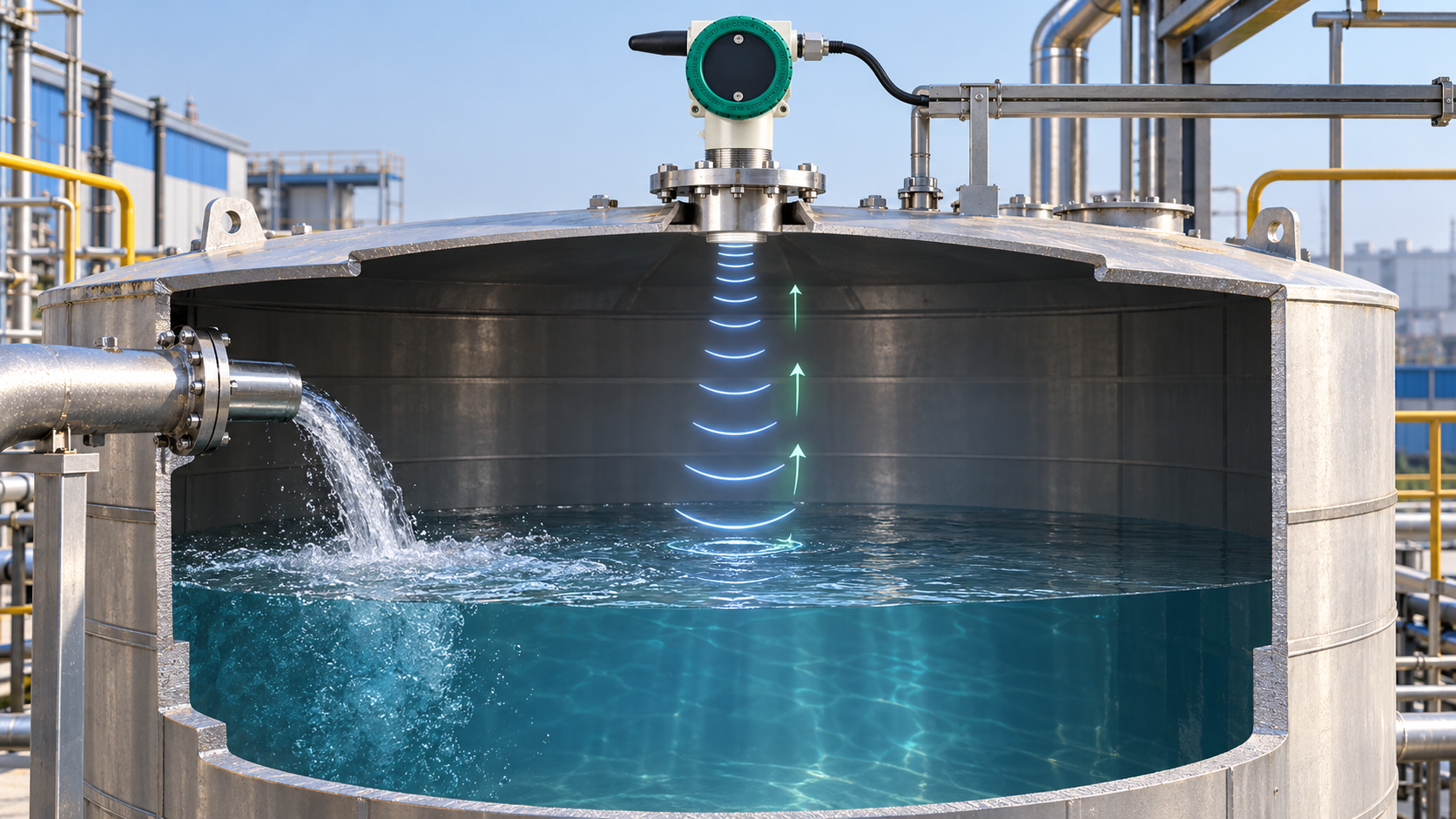
A Wireless radar level sensor uses electromagnetic waves to measure the distance between the sensor and the water surface. The sensor transmits a radar signal, receives the reflected signal, and calculates the distance to determine the water level.
Unlike contact-based sensors, radar sensors measure the water level from above the surface. When integrated with wireless communication, the sensor can transmit readings to a compatible gateway, monitoring dashboard, or cloud platform.
This combination supports Remote Tank Level Monitoring, allowing facility managers to check water levels without physically visiting every tank.
The measurement accuracy of a radar sensor depends on its specifications, installation position, tank geometry, water surface conditions, and the surrounding environment.
How Radar Sensors Improve Water Level Monitoring Accuracy
Non-Contact Measurement Reduces Certain Measurement Challenges
Radar sensors measure the distance to the water surface without requiring a probe to remain submerged in the liquid.
This can reduce issues associated with direct contact between the sensing element and the stored water. It can also make radar suitable for applications where contact-based measurement is inconvenient.
For tanks containing ordinary stored water, non-contact measurement can simplify installation and maintenance when the sensor is correctly selected and mounted.
Reduced Influence from Temperature and Humidity
Environmental conditions can affect different water level measurement technologies in different ways.
Radar sensors are generally less affected by changes in air temperature, humidity, and vapour than ultrasonic sensors. This can be useful in facilities where environmental conditions fluctuate.
However, radar performance can still be influenced by factors such as condensation on the antenna, obstructions, mounting geometry, and the properties of the water surface. Correct installation remains important.
Reliable Measurement Across Different Tank Applications
Radar sensors are available in models designed for different measurement ranges and operating environments. This allows users to select a suitable device for overhead tanks, underground sumps, industrial storage tanks, and other applications.
Before choosing a sensor, verify:
-
The tank's height and required measurement range.
-
The sensor's specified accuracy and resolution.
-
The mounting arrangement and distance from the water surface.
-
The presence of internal structures or obstructions.
-
The environmental protection rating required for the installation.
Selecting the right sensor for the actual tank conditions is essential for obtaining reliable readings.
Consistent Data for Remote Monitoring
A wireless monitoring system transmits sensor readings to a connected platform, enabling users to review water levels remotely.
A properly configured system can display current readings, identify low- and high-level conditions, and generate alerts when predefined thresholds are reached.
For example, an apartment maintenance team can check overhead tank levels through a dashboard instead of relying entirely on physical inspections.
Reliable measurements combined with appropriate reporting intervals can help users make better-informed decisions about refilling and water usage.
Better Support for Automatic Pump Control
Accurate water level information can help a compatible pump controller determine when to start or stop a pump.
For example, a controller may start refilling when an overhead tank reaches a configured low-level threshold and stop the pump when the tank reaches a high-level threshold.
When configured correctly, this can help reduce overflow and unnecessary pump operation. Additional safeguards may be needed to protect against sensor failures, low sump levels, and electrical faults.
The radar sensor provides the measurement; the controller and associated equipment are responsible for executing the pump control logic.
Radar vs. Ultrasonic Sensors for Wireless Tank Monitoring
Both radar and ultrasonic sensors can measure water levels without direct contact, but they use different measurement principles.
|
Feature |
Radar Sensor |
Ultrasonic Sensor |
|
Measurement principle |
Electromagnetic waves |
Sound waves |
|
Contact with water |
Non-contact |
Non-contact |
|
Temperature influence |
Generally lower |
Generally higher |
|
Sensitivity to vapour and humidity |
Usually less affected |
Can be more affected |
|
Foam and surface effects |
Depends on sensor type and application |
Foam can interfere with measurements |
|
Installation considerations |
Correct mounting and antenna clearance |
Clear acoustic path is important |
|
Cost |
Often higher |
Often lower |
Neither technology is automatically the best choice for every tank. Compare the manufacturer's specifications, site conditions, installation requirements, and total system cost before deciding.
Why Wireless Connectivity Matters for Water Tank Monitoring
Accurate sensing is only one part of a complete monitoring solution. Wireless communication allows measurements to reach users without requiring a signal cable from every tank to a central monitoring point.
A Wireless Water Tank Monitoring System in India may use technologies such as LoRa, NB-IoT, or cellular connectivity, depending on the site, sensor design, and network availability.
Potential benefits include:
-
Reduced signal cabling between sensors and monitoring equipment.
-
Remote access to readings from supported devices.
-
Centralized visibility across multiple tanks.
-
Alerts for configured high- and low-level conditions.
-
Integration with compatible pump controllers and other equipment.
Wireless communication range, battery life, and data delivery reliability depend on the hardware, network coverage, reporting frequency, and installation environment.
How Remote Tank Level Monitoring Helps Businesses
Remote Tank Level Monitoring gives facility managers a convenient way to check water storage across different locations.
For example, a commercial building with several overhead tanks can use connected radar sensors to view water levels through a central dashboard. Maintenance staff can identify tanks that need attention and respond before water shortages disrupt operations.
Depending on the monitoring platform and connected equipment, remote monitoring may also support:
-
Reviewing current tank levels and historical readings.
-
Receiving configured alerts for critical water levels.
-
Checking pump status when compatible controls are integrated.
-
Monitoring several connected tanks from one interface.
-
Identifying recurring water storage or operational issues.
These functions can reduce dependence on manual inspections and improve visibility into day-to-day water management.
How MyTank Supports Wireless Water Tank Monitoring
MyTank provides a connected approach to water tank monitoring and compatible water management operations. Depending on the selected hardware and configuration, a MyTank solution can support remote tank-level visibility, centralized monitoring, alerts, and integration with compatible pump automation equipment.
For organizations comparing a Wireless Water Tank Monitoring System in India, it is important to evaluate the sensor and monitoring platform together.
Before choosing a radar-based solution, confirm the supported sensor models, measurement specifications, wireless communication requirements, alert functions, and compatibility with the intended installation.
Explore the MyTank water monitoring platform at https://mytank.cloud/.
What to Check Before Buying a Wireless Radar Level Sensor
Use this checklist when evaluating a radar-based monitoring solution:
-
Accuracy specifications: Check the stated accuracy and resolution for the intended measurement range.
-
Tank dimensions: Confirm that the sensor is suitable for the tank height and mounting position.
-
Environmental conditions: Consider condensation, vapour, temperature, and possible obstructions.
-
Wireless connectivity: Verify signal coverage and compatibility with the monitoring platform.
-
Power requirements: Compare battery-powered, solar-powered, and mains-powered options where available.
-
Alert configuration: Confirm whether high- and low-level notifications are supported.
-
Automation compatibility: Verify that the sensor can work with the intended pump controller if automatic operation is required.
-
Maintenance and support: Review installation guidance, warranty, and after-sales service.
Conclusion
Radar sensors can improve wireless water tank monitoring by providing non-contact measurements that are generally less affected by temperature and humidity changes than ultrasonic measurements. When correctly selected and installed, they can provide useful water level data for residential, commercial, and industrial applications.
For businesses choosing a Wireless Water Tank Monitoring System in India, the combination of a suitable Wireless radar level sensor and Remote Tank Level Monitoring can improve visibility into water storage, support timely alerts, and help manage pumping operations more efficiently.
Evaluate the sensor specifications, wireless network, and monitoring platform together to find a solution that fits your site's requirements
- Digital Agency
- Literie
- Location de voitures
- Restaurant
- Restaurant
- Mode
- Mode
- Information
- Marketing
- Tourisme
- Développement
- Découverte
- Législation
- Gastronomie
- Pâtisserie
- مناسبة
- Art
- Causes
- Crafts
- Dance
- Drinks
- Film
- Fitness
- Food
- الألعاب
- Gardening
- Health
- الرئيسية
- Literature
- Music
- Networking
- أخرى
- Party
- Religion
- Shopping
- Sports
- Theater
- Wellness
 Arabic
 Indian
 English
 French
 Spanish
 Portuguese
 Deutsch
 Turkish
 Dutch
 Italiano
 Russian
 Romaian
 Portuguese (Brazil)
 Greek
