


How IoT Water Level Sensors Enable Automatic Water Pump Control in India
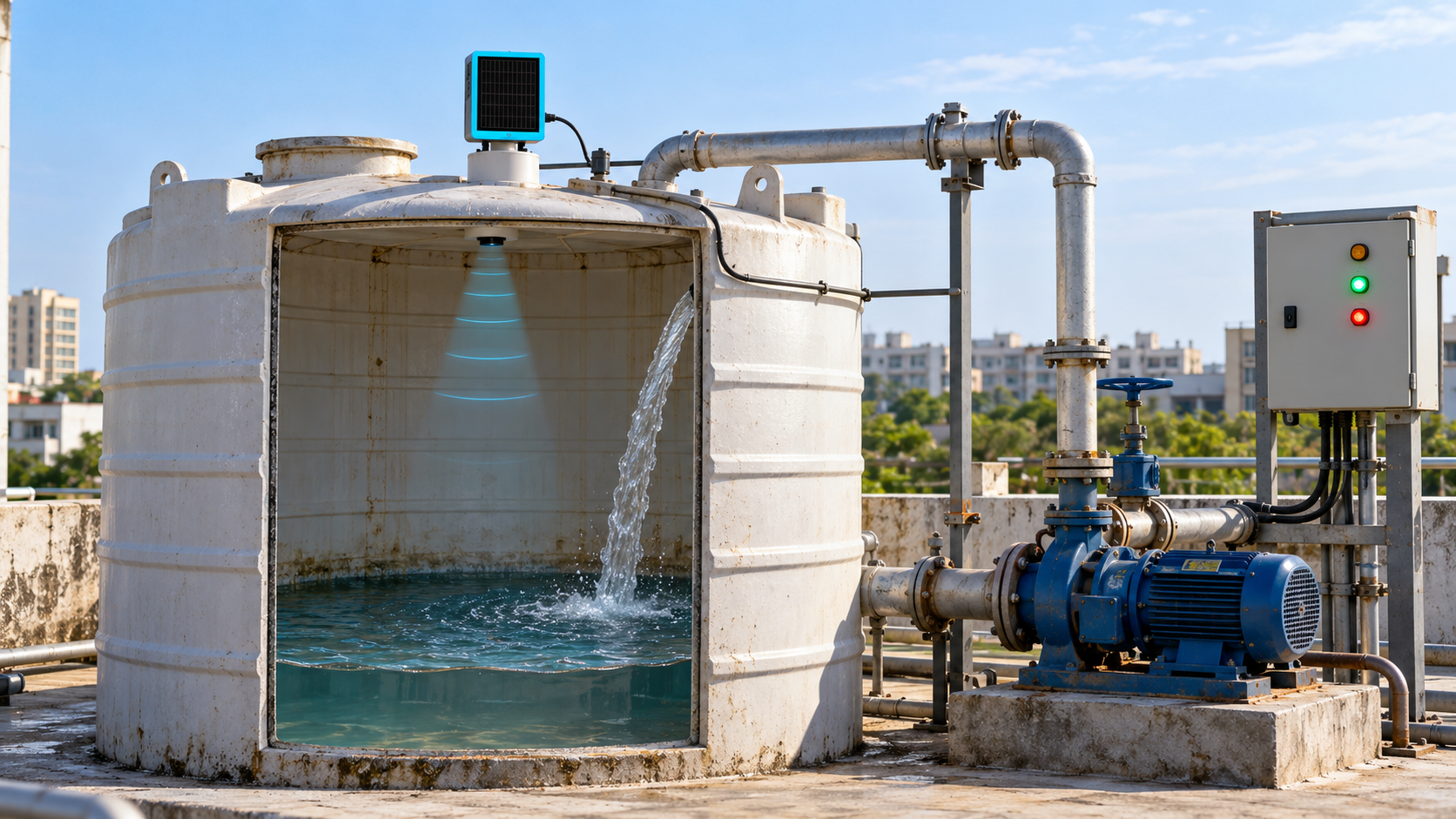
Managing water storage efficiently is a major concern for apartments, commercial buildings, industries, hospitals, and agricultural facilities across India. Traditional water management often relies on manual tank inspections and manually switching pumps on or off. This can lead to tank overflow, water shortages, unnecessary pump operation, and increased maintenance work.
IoT technology is changing how water pumps and storage tanks are managed. By connecting sensors, pump controllers, wireless communication, and cloud-based monitoring platforms, businesses can automate water pumping based on predefined water levels.
A reliable Water Level Sensor Manufacturer in India can help businesses identify suitable sensing technologies and build solutions that support efficient water management through Smart Water Tank Automation.
What Is an IoT Water Level Sensor?
An IoT water level sensor measures the amount of water in a tank, sump, reservoir, or other storage system and communicates the readings to a connected device or monitoring platform.
A modern Water tank level sensor can use radar, ultrasonic, or other measurement technologies, depending on the application's requirements. When integrated with a compatible controller, the sensor can help initiate automatic pump operations based on configured water level thresholds.
For example, when the overhead tank reaches a low-level threshold, the control system can start the pump if sufficient water is available in the sump. When the overhead tank reaches its configured high-level threshold, the controller can stop the pump.
The exact operation depends on the system's configuration, available sensors, and control logic.
How IoT Sensors Enable Automatic Water Pump Control
Real-Time Water Level Detection
The first step in automatic pump control is measuring the water level accurately.
Sensors installed in overhead tanks and underground sumps provide information about available water. Depending on the equipment, readings may be transmitted to a local controller, wireless gateway, or cloud-connected platform.
This reduces dependence on manual inspections and helps the control system respond to changing water levels.
Automatic Pump Starting and Stopping
When sensors are connected to a compatible pump controller, predefined water level thresholds can trigger pumping operations.
A typical setup works as follows:
-
The overhead tank reaches a configured low-water threshold.
-
The controller checks the relevant operating conditions, such as sump water availability.
-
The pump starts if the system's conditions are satisfied.
-
Water flows into the overhead tank.
-
The pump stops when the tank reaches its configured high-water threshold.
This process helps maintain water availability while reducing the risk of overflow caused by pumps running longer than necessary.
Preventing Tank Overflow
Tank overflow wastes water and may cause dampness, damage, or additional cleaning and maintenance work.
An IoT-enabled monitoring system can track the tank level and trigger a stop command when the configured high-level threshold is reached, provided the pump controller and control system are properly installed.
Additional safeguards, such as independent high-level cut-offs and suitable electrical protection, can provide extra protection against sensor or controller failures.
Protecting Pumps from Dry Running
A pump may be damaged if it operates without an adequate water supply. For example, an underground sump may become empty while the pump is filling an overhead tank.
A suitably configured automation system can use sump-level information to prevent the pump from starting or continuing to operate when water availability is insufficient.
Dry-run protection should be designed according to the pump type and installation. Appropriate electrical or pump-protection devices may be required in addition to water level sensors.
Remote Monitoring and Alerts
IoT-enabled pump control can also provide remote visibility into water storage and pump operation.
Depending on the selected system, users may be able to:
-
View current tank levels through a mobile application or dashboard.
-
Receive high-level and low-level alerts.
-
Check pump operating status.
-
Identify water shortages before they disrupt daily operations.
-
Monitor multiple connected tanks from a central location.
These features help facility managers make timely decisions and reduce the need to physically inspect every tank.
What Is Smart Water Tank Automation?
Smart Water Tank Automation combines water level sensors, compatible pump controllers, and monitoring software to manage water storage with less manual intervention.
Rather than relying entirely on a person to switch the pump on or off, the system uses configured thresholds and operating conditions to control pumping.
A typical installation may include:
-
A water level sensor in the overhead tank.
-
A water level sensor in the underground sump.
-
A compatible pump controller or smart starter.
-
Wireless communication equipment, where required.
-
A monitoring dashboard or mobile application.
-
Suitable electrical protection and manual override facilities.
The system should be designed for the specific pump, electrical supply, tank arrangement, and operating requirements. Automatic control should include appropriate fail-safe behaviour and a safe manual operating option.
Benefits of Automatic Water Pump Control in India
Reduced Water Wastage
Automatic pump stopping at a configured high-water threshold can help reduce overflow and unnecessary water loss.
Less Manual Work
Facility staff do not need to depend entirely on routine tank inspections or remember to switch pumps on and off.
Improved Water Availability
Configured low-level thresholds can help initiate refilling before the overhead tank becomes empty, subject to adequate water availability and system operation.
More Efficient Pump Operation
Automation can help avoid unnecessary pumping and improve control over when pumps operate.
Better Visibility Across Multiple Tanks
For apartments, factories, hotels, and commercial buildings, connected monitoring can help maintenance teams track several tanks through a common interface.
Faster Response to Abnormal Conditions
Configured alerts can help users identify low water levels, pump issues, or other monitored conditions that need attention.
How to Choose a Water Level Sensor Manufacturer in India
Selecting the right supplier is important because the sensor must work reliably with the pump controller and monitoring system.
Consider these factors before making a purchase:
-
Sensor technology: Choose radar, ultrasonic, or another suitable technology based on the tank environment.
-
Measurement accuracy: Check the sensor's specified accuracy and measurement range.
-
Controller compatibility: Confirm that the sensor can work with the required pump control equipment.
-
Connectivity: Verify support for the wireless or wired communication method required at your site.
-
Automation features: Check for high- and low-level control, sump protection, and pump status monitoring where required.
-
Power supply: Review the power requirements for sensors, gateways, and controllers.
-
System scalability: Consider whether the solution can support additional tanks and locations.
-
Technical support: Review installation assistance, warranty, maintenance, and after-sales service.
A complete solution should be evaluated as a system rather than by comparing the sensor alone.
How MyTank Supports Smart Water Tank Automation
MyTank provides a connected approach to water tank monitoring and compatible water management operations. Depending on the selected hardware and configuration, a MyTank solution can support remote water level monitoring, alerts, centralized tank visibility, and integration with compatible pump automation equipment.
For example, a facility can use connected sensors to monitor overhead tank and sump levels while a compatible controller manages the pump according to configured operating conditions.
Before implementation, verify the supported sensor models, controller compatibility, communication requirements, and available automation functions for the intended installation.
Explore the MyTank water monitoring platform at https://mytank.cloud/.
Industries That Can Benefit from IoT Pump Automation
Apartment complexes: Automate overhead tank refilling and monitor sump water availability.
Commercial buildings: Help maintenance teams manage water storage with less manual intervention.
Industrial facilities: Monitor utility tanks and control compatible pumps according to operating requirements.
Hotels and hospitals: Improve oversight of water availability for day-to-day operations.
Agricultural facilities: Monitor storage tanks and automate suitable pumping processes where the equipment and water supply permit.
Conclusion
IoT water level sensors are transforming water management by enabling automatic pump starting and stopping, remote monitoring, and timely alerts. When sensors are integrated with compatible controllers and appropriate safety protections, they can help reduce overflow, improve water availability, and simplify routine maintenance.
A reliable Water Level Sensor Manufacturer in India can help identify the right hardware and integration options for your facility. By combining a suitable Water tank level sensor with Smart Water Tank Automation, businesses can manage water storage more efficiently and reduce dependence on manual pump operation.
- Digital Agency
- Literie
- Location de voitures
- Restaurant
- Restaurant
- Mode
- Mode
- Information
- Marketing
- Tourisme
- Développement
- Découverte
- Législation
- Gastronomie
- Pâtisserie
- Event
- Art
- Causes
- Crafts
- Dance
- Drinks
- Film
- Fitness
- Food
- Games
- Gardening
- Health
- Home
- Literature
- Music
- Networking
- Other
- Party
- Religion
- Shopping
- Sports
- Theater
- Wellness
 English
 Indian
 French
 Arabic
 Spanish
 Portuguese
 Deutsch
 Turkish
 Dutch
 Italiano
 Russian
 Romaian
 Portuguese (Brazil)
 Greek
