


The Guide to Arm Rest Gel Pads, Head Gel Pads, and Silicon Head Rings for Patient Safety
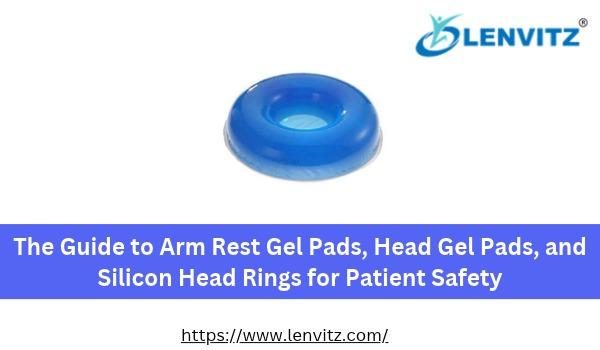
During surgical procedures and medical treatments, long periods of immobility on firm hospital surfaces can create intense pressure points on delicate anatomical structures. The head, neck, arms, and elbows are especially prone to nerve compression and pressure injuries if not properly supported. Modern operating rooms rely heavily on specialized support devices—such as a medical-grade gel cushion, arm rest gel pad positioners, protective head gel pad units, and circular silicon head ring supports—to ensure total patient safety and comfort.
Why Head and Arm Support Matters in Medical Care
When patients are under anesthesia or resting for long durations, they cannot adjust their position to relieve physical discomfort. Prolonged pressure over the delicate nerve pathways in the arms or the rounded contours of the skull can compromise local blood circulation.
Without appropriate padding, this sustained force can lead to tissue damage, severe post-operative soreness, or nerve dysfunction like ulnar nerve palsy. High-performance medical gel accessories solve this issue by gently distributing body weight across a wider surface area.
Key Positioning Accessories for Patient Protection
Different areas of the body require specific, anatomically shaped gel positioners:
1. Head and Neck Positioners
Supporting the head during surgery requires balancing pressure relief with firm head stability. A dedicated head gel pad cradles the skull to distribute weight evenly. For surgeries requiring central stabilization or open access to breathing tubes, a contoured silicon head ring is ideal. The ring design supports the occipital region while leaving the central area clear, preventing flat-head pressure points, eye stress, and ear compression.
2. Arm and Shoulder Protectors
During extended procedures, arms are often extended on side boards or tucked securely. Using a contoured arm rest gel pad protects the vulnerable ulnar and radial nerves running through the arm and elbow joints. These pads absorb friction and shield soft tissue from hard table edges.
3. General Support Gel Cushions
For broader areas like the lower back, hips, or knees, a versatile gel cushion acts as an adaptable layer of protection. It conforms to body contours, ensuring uniform weight distribution and preventing pressure sores across extended surgical cases.
Benefits of Medical Gel Over Traditional Cushions
Medical-grade gel positioners outperform traditional sponge or foam accessories in several key areas:
-
Superior Pressure Redistribution: The fluid-like viscoelastic properties of gel simulate human body tissue, absorbing downward force and shear stress.
-
Hygienic & Easy to Clean: High-grade gel positioners are fluid-resistant, non-porous, latex-free, and simple to sanitize between medical procedures.
-
Long-Term Durability: Gel accessories do not flatten or lose their shape over time, providing reliable physical support for years.
Conclusion
Patient safety during medical procedures involves every detail of physical support. Incorporating high-quality positioning tools like a durable gel cushion, a protective arm rest gel pad, an ergonomic head gel pad, and a stable silicon head ring helps clinical teams deliver optimal care. By prioritizing targeted gel support, healthcare providers protect patients from avoidable pressure injuries and promote smoother post-operative recoveries.
- Digital Agency
- Literie
- Location de voitures
- Restaurant
- Restaurant
- Mode
- Mode
- Information
- Marketing
- Tourisme
- Développement
- Découverte
- Législation
- Gastronomie
- Pâtisserie
- Veranstaltung
- Art
- Causes
- Crafts
- Dance
- Drinks
- Film
- Fitness
- Food
- Spiele
- Gardening
- Health
- Startseite
- Literature
- Music
- Networking
- Andere
- Party
- Religion
- Shopping
- Sports
- Theater
- Wellness
 Deutsch
 Indian
 English
 French
 Arabic
 Spanish
 Portuguese
 Turkish
 Dutch
 Italiano
 Russian
 Romaian
 Portuguese (Brazil)
 Greek
