


Bunions Treatment: Options for Bunions and Tailor’s Bunions
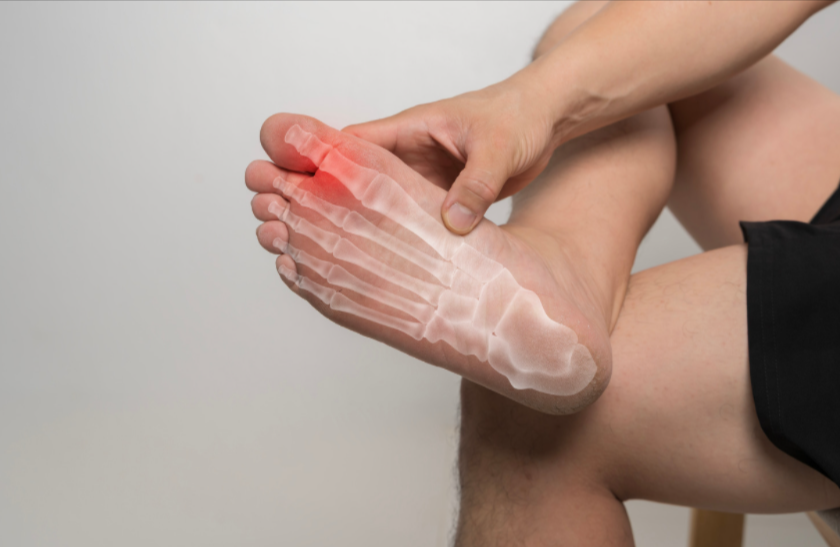
Patient guide · Foot and ankle · 5 min read
You know the moment. You slip off your shoes at the end of a long day and there it is again: a sore, swollen lump on the side of your foot that seems a little bigger than last year. Maybe you've started choosing shoes for how they fit around it rather than how they look. Maybe you've stopped walking as far as you used to.
Bunions are incredibly common, and there's no reason to feel embarrassed about them. There are also more ways to deal with them than people think. This guide explains what's going on in the foot, how bunions and their smaller cousin, the tailor's bunion, are managed, and when it's worth seeing a specialist.
What is a bunion?
A bunion, medically called hallux valgus, is a bony lump on the inner side of the foot at the base of the big toe. Over time the big toe drifts sideways towards the others, and the joint at its base sticks out. It's a progressive problem, which means it tends to change slowly rather than appear overnight.
According to Mr Pavel Akimau's website, more than a third of people over 65 have bunions, and women are affected about twice as often as men. Many people live with them without any trouble. For others, shoes become harder and harder to wear, the toe keeps drifting, and the neighbouring toes can develop deformities and painful calluses.
Why do bunions form?
There isn't one cause. Family history plays a big part, because foot shape is inherited. Tight or narrow shoes don't create a bunion on their own, but they can make one more painful and may speed it along. Flat feet, loose joints and certain types of arthritis can also contribute.
Non-surgical options
If your bunion isn't causing much trouble, simple steps can keep you comfortable. In general, bunions treatment starts with the least invasive options:
-
Roomier shoes. A wide toe box and soft upper reduce pressure on the lump.
-
Padding and spacers. Soft pads protect the bump, and toe spacers can ease rubbing between toes.
-
Insoles. These may help with foot mechanics and comfort, though they don't straighten the toe.
-
Pain relief. Occasional over-the-counter options can help flare-ups. Check with a pharmacist or GP first.
-
Activity pacing. Alternating long walks with rest, and avoiding very high heels, can reduce discomfort.
It's important to be honest about one thing: none of these measures reverse a bunion. They manage symptoms. If the toe keeps moving or the pain keeps growing, it's reasonable to think about surgery.
When surgery makes sense
Surgery is worth discussing if your bunion causes persistent pain, makes shoes hard to wear, is affecting the other toes or is limiting what you want to do. For people in that position, surgical correction is often the most reliable way to fix the problem. When you're comparing a treatment for bunions, it helps to know that modern surgery is very different from the older, more invasive operations many people remember hearing about.
Mr Akimau uses a minimally invasive technique for bunion correction, which he introduced to the North Midlands area. It involves cutting and repositioning the bones through small skin incisions, using special instruments and implants. According to his website, many patients are delighted with how quick and comfortable the recovery has been. Everyone's experience differs, so ask at consultation what to expect in your own case.
What about a tailor's bunion?
You might have a similar lump on the outside of the foot, at the base of the little toe. That's called a tailor's bunion, or bunionette, and the name comes from tailors who used to sit cross-legged for long hours with the outer edge of the foot pressed against the floor.
It's usually caused by the little toe's bone angling outwards, sometimes with a bony prominence, and it tends to be painful in narrow shoes. In most cases, tailor’s bunion treatment follows the same pattern as for big toe bunions: roomier footwear, padding to protect the area and activity adjustments first. If the lump stays painful despite these steps, a specialist assessment can confirm what's happening and whether any other option is appropriate.
What to expect at a consultation
A good appointment starts with a conversation about your symptoms, the shoes you wear, your work and what you've already tried. Your foot will be examined, usually standing as well as sitting, and weight-bearing X-rays are often arranged to show the true alignment. You'll then discuss the options, benefits and risks, and what recovery involves, so you can decide at your own pace.
Frequently asked questions
Do bunions always need surgery?
No. Many people manage well with suitable footwear and padding. Surgery is usually considered when pain, shoe problems or toe deformities continue despite those steps.
Can a bunion go away without surgery?
A bunion won't straighten on its own. Non-surgical measures can ease the symptoms, but they don't change the bone alignment.
Are bunions hereditary?
Often, yes. Foot shape runs in families, so you may have inherited a tendency to develop them.
How is a tailor's bunion different from a bunion?
A bunion forms at the base of the big toe on the inner side of the foot. A tailor's bunion forms at the base of the little toe on the outer side.
When should I see a specialist?
If a bunion is painful, getting worse, affecting other toes or limiting your activity, it's sensible to get an assessment.
Final thoughts
You don't have to simply live with a bunion that's holding you back. Start with comfortable shoes and the simple measures, keep an eye on whether things are changing, and speak to a specialist if it's affecting your day-to-day life. To book a consultation with Mr Akimau, call 07934 539252 or email [email protected].
- Digital Agency
- Literie
- Location de voitures
- Restaurant
- Restaurant
- Mode
- Mode
- Information
- Marketing
- Tourisme
- Développement
- Découverte
- Législation
- Gastronomie
- Pâtisserie
- Evento
- Art
- Causes
- Crafts
- Dance
- Drinks
- Film
- Fitness
- Food
- Jogos
- Gardening
- Health
- Início
- Literature
- Music
- Networking
- Outro
- Party
- Religion
- Shopping
- Sports
- Theater
- Wellness
 Portuguese (Brazil)
 Indian
 English
 French
 Arabic
 Spanish
 Portuguese
 Deutsch
 Turkish
 Dutch
Dutch
 Italiano
 Russian
 Romaian
 Greek
Greek
