


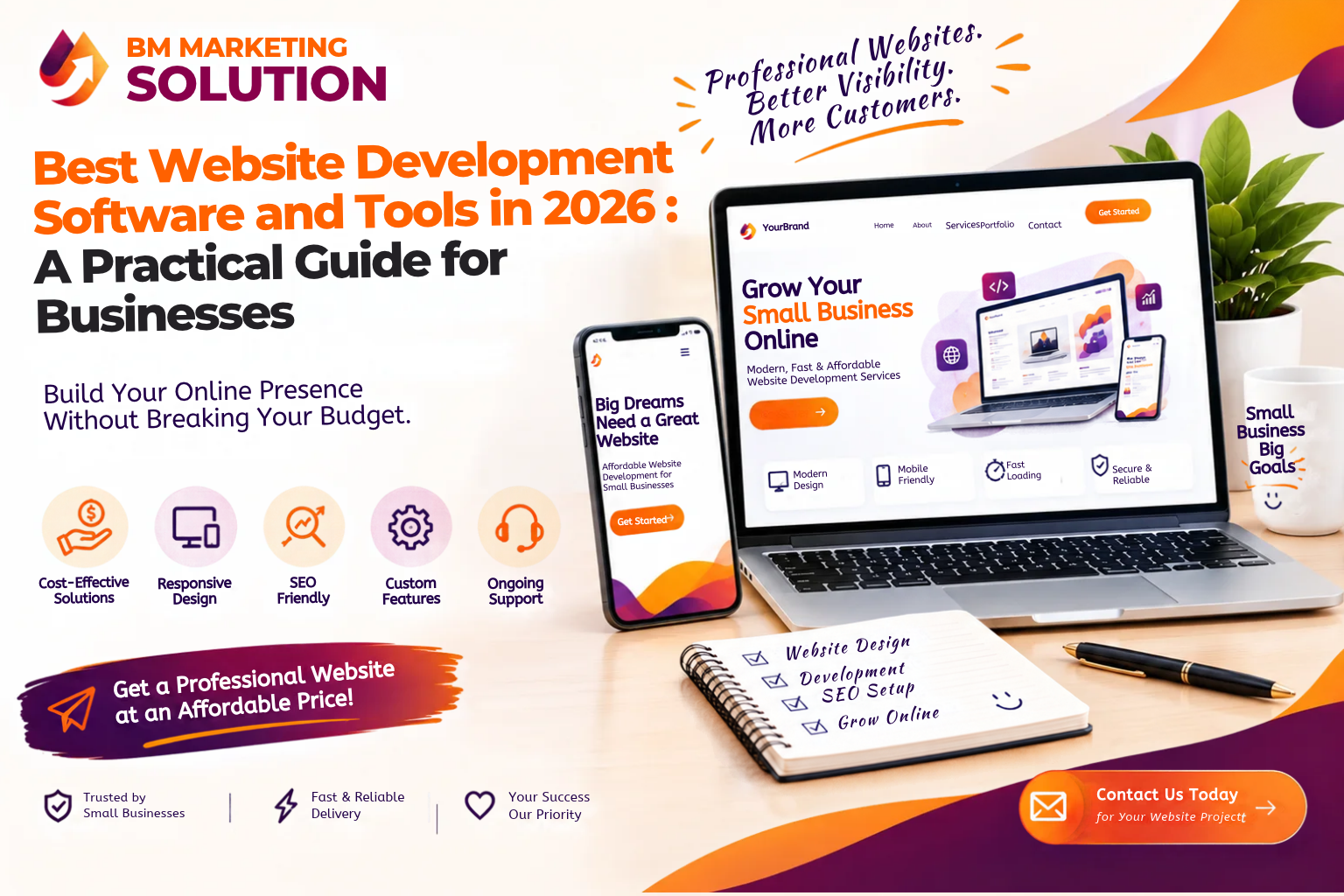
Best Website Development Software and Tools in 2026: A Practical Guide for Businesses
Overview :
Choosing the right website development software can feel like standing in a crowded digital store. Every platform promises speed, beautiful design, and business growth, but the best choice depends on what you actually need.
In 2026, website builders are smarter, more flexible, and connected to marketing tools. Whether you are launching a personal brand, an online shop, or a growing company website, the right tool can save time and create a better experience for your visitors.
1. Best for Flexibility :
and Long-Term Growth WordPress remains a strong choice for businesses that want control. It supports thousands of themes and plugins, making it possible to build a simple blog, service website, membership platform, or online store. Its biggest advantage is flexibility. You can begin with a small website and expand it as your business grows.
WordPress is especially useful when SEO, content marketing, and customized features are important.
2. Wix is designed for people who want to create a professional website without writing code. Its drag-and-drop editor, templates, hosting, and business features are easy to manage from one dashboard. It works well for freelancers, local businesses, consultants, and new entrepreneurs who want to publish quickly. Wix is a practical option when simplicity matters more than advanced customization.
3. Shopify: Best for E-Commerce Businesses.
For product-based businesses, Shopify offers a focused environment for selling online. It includes product management, payment options, inventory tools, shipping support, and marketing integrations.
Store owners can choose a theme, add products, and start accepting orders without building every feature from scratch. Shopify is a good fit for brands that want to spend more time selling and less time managing technical details.
4. Best for Professional Design:
Webflow gives designers greater visual control while still offering a visual development experience. It is useful for creative agencies, technology companies, and brands that need a distinctive website. Designers can build responsive layouts, animations, and polished landing pages with fewer compromises. Webflow is ideal when appearance, performance, and brand consistency are high priorities.
5. Squarespace:
Best for Elegant Small-Business Websites.
Squarespace is known for clean templates and a smooth editing experience. It is a strong option for photographers, coaches, restaurants, artists, and service providers who want a refined online presence. Its built-in tools cover blogging, appointments, portfolios, basic e-commerce, and analytics. The platform is simple enough for beginners while still delivering a polished result.
6. Best for Fast, Modern Landing Pages Framer is gaining attention among startups and product teams that need attractive landing pages quickly. It combines design freedom with publishing tools, making it useful for testing ideas, announcing products, and creating campaign pages. If your priority is a modern look and fast iteration, Framer can be an excellent addition to your website toolkit.
What Makes a Website Tool Future-Ready?
Website development in 2026 is moving beyond attractive pages. Artificial intelligence can help organize content, suggest headlines, generate layout ideas, answer visitor questions, and identify gaps in the customer journey. However, automation should support human judgment rather than replace it. Your website still needs an authentic voice, accurate information, and a clear understanding of your audience.
Look for tools that offer responsive design, built-in security, dependable backups, analytics, accessibility options, and easy connections with email marketing or customer relationship software.
These features may not seem exciting at launch, but they protect your investment as traffic increases. It is also wise to check ownership rules before committing. Make sure you can export your content, manage your domain, and move to another platform if your needs change.
A beautiful website that nobody can find will not deliver meaningful results.
Choose software that lets you improve page speed, structure headings, add descriptive image text, create search-friendly URLs, and publish helpful articles. The strongest platform is the one that supports both today’s launch and tomorrow’s strategy.
How Should You Choose?
Start with your business goal, not the platform’s popularity. Ask whether you need online payments, frequent content updates, booking forms, advanced SEO, multilingual pages, or custom integrations. Also consider your budget, technical confidence, expected traffic, and plans. A low-cost builder may be perfect for a basic site, while a growing company may need a more scalable solution.
The tool is only one part of the result. A successful website also needs clear messaging, mobile-friendly design, quick loading, secure hosting, strong calls to action, and useful content.
Regular updates and SEO improvements help the website remain valuable after launch.
Need help selecting or building the right solution?
BM Marketing Solution provides digital marketing, website development, software development, mobile app, SEO, and UI/UX services for businesses. Their team can help turn your idea into a user-friendly experience.
Contact BM Marketing Solution :
Website: bmmarketingsolution.com
Phone: +91 90220 51223
Email: [email protected]
Frequently Asked Questions :
1. What is the best website development software in 2026?
Ans : The best software depends on your business goals. WordPress is ideal for flexibility and SEO, Shopify works well for e-commerce, Wix is beginner-friendly, and Webflow or Framer are excellent for modern, highly visual websites.
2. Which website builder is best for beginners?
Ans : Wix and Squarespace are popular choices for beginners because they offer easy drag-and-drop editors, ready-made templates, hosting, and built-in business tools. You can create and publish a professional website without advanced coding knowledge.
3. Is WordPress still useful for business websites?
Ans : Yes, WordPress remains one of the most flexible platforms for business websites. It supports blogs, service pages, online stores, booking systems, membership websites, and custom features through themes and plugins.
4. Should I hire a professional website development company?
Ans : Hiring a professional can save time and help you build a faster, secure, mobile-friendly, and search-optimized website. A development company can also provide ongoing support, custom design, SEO, integrations, and digital marketing services based on your business needs.
- Digital Agency
- Literie
- Location de voitures
- Restaurant
- Restaurant
- Mode
- Mode
- Information
- Marketing
- Tourisme
- Développement
- Découverte
- Législation
- Gastronomie
- Pâtisserie
- Evento
- Art
- Causes
- Crafts
- Dance
- Drinks
- Film
- Fitness
- Food
- Giochi
- Gardening
- Health
- Home
- Literature
- Music
- Networking
- Altre informazioni
- Party
- Religion
- Shopping
- Sports
- Theater
- Wellness
 Italiano
 Indian
 English
 French
 Arabic
 Spanish
 Portuguese
 Deutsch
 Turkish
 Dutch
Dutch
 Russian
 Romaian
 Portuguese (Brazil)
 Greek
Greek
