


How to Find a Reliable Hospital Water Management Company in Chennai
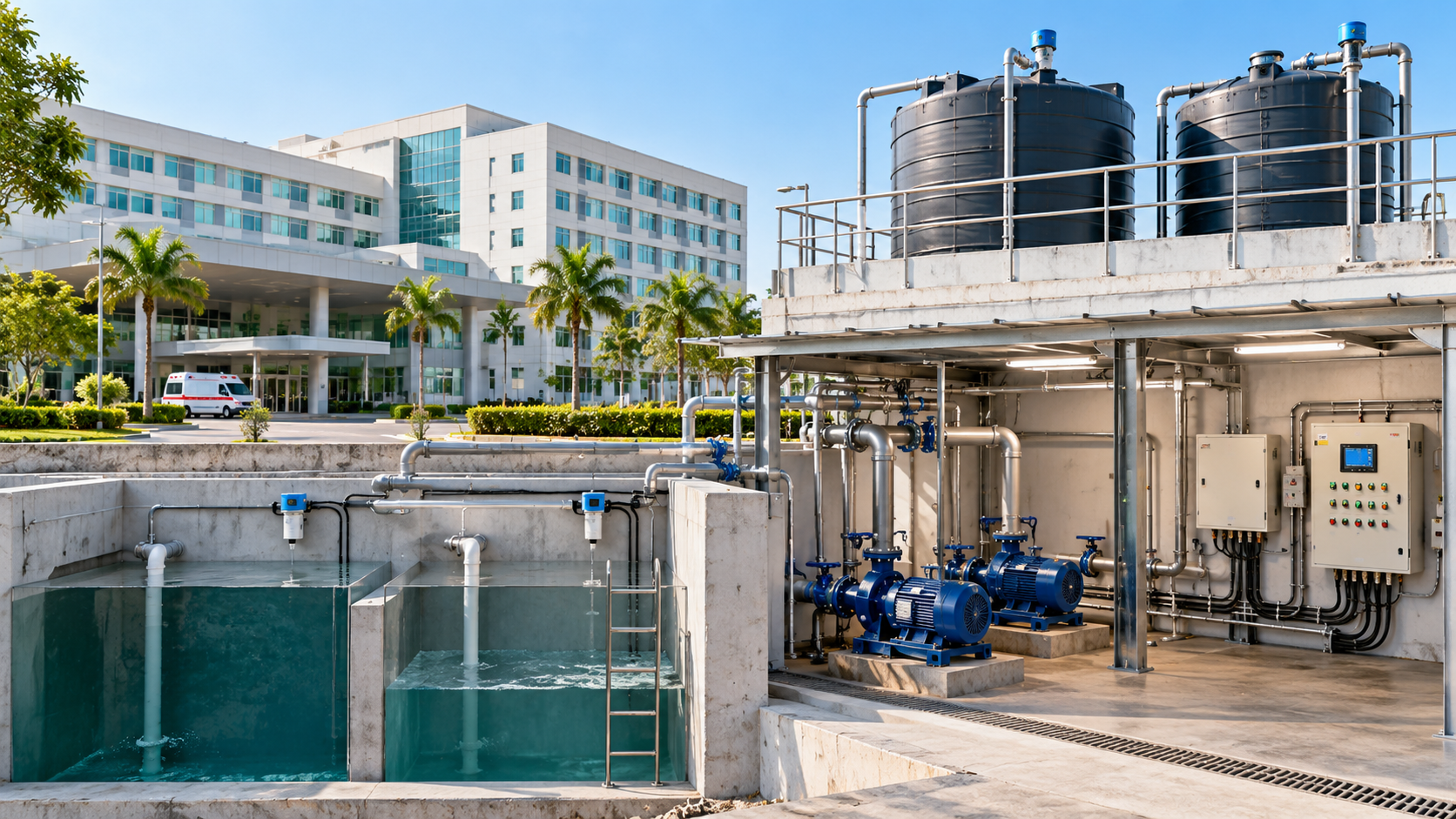
Hospitals depend on a continuous and reliable water supply for patient care, sanitation, housekeeping, laboratories, kitchens, cooling systems, and other daily operations. With multiple underground sumps, rooftop tanks, pumps, and distribution lines, manually managing hospital water infrastructure can become difficult.
This is why many healthcare facilities are exploring technology-based hospital water management Chennai solutions that provide real-time visibility into water levels and support automated pump and water-flow control.
However, choosing the right company is important. A suitable solution should not only monitor water tanks but also support reliable connectivity, alerts, pump automation, remote monitoring, and Water Supply Automation based on the hospital's requirements.
Why Hospitals Need Better Water Management
A hospital may have several water storage points distributed across different floors, buildings, or areas of the campus. Monitoring each tank manually can consume staff time and may not provide continuous visibility.
Common challenges include:
-
Difficulty checking tanks located on rooftops or restricted areas
-
Water tank overflow due to delayed pump switching
-
Low water levels in underground sumps
-
Pumps being operated manually
-
Difficulty coordinating multiple pumps
-
Limited visibility into water levels between inspections
-
Unexpected changes in water consumption
-
Lack of centralized monitoring for multiple tanks
A connected water management solution can help address these challenges by collecting tank-level information and presenting it through a centralized monitoring platform.
What to Look for in a Hospital Water Management Company in Chennai
Before selecting a provider, hospitals should evaluate both the technology and the company's ability to support the installation and long-term operation of the system.
Real-Time Water Tank Monitoring
One of the most important features is real-time monitoring of water levels.
A Water Tank Level Monitoring System can use sensors installed on underground sumps, rooftop tanks, and other storage tanks to measure water levels.
Instead of depending entirely on manual inspection, facility teams can view tank status through a monitoring interface, depending on the system configuration.
For hospitals with multiple tanks, this can make it easier to identify:
-
Current tank levels
-
Low-level conditions
-
High-level conditions
-
Tank filling patterns
-
Abnormal level changes
-
Tanks requiring attention
Support for Multiple Tanks
A hospital water management system should be capable of handling the number of tanks used by the facility.
Large hospitals may have:
-
Underground water sumps
-
Rooftop tanks
-
Fire-water storage tanks
-
Separate tanks for different buildings
-
Utility water storage
-
Multiple water distribution points
Ask the company whether its platform can monitor multiple tanks from a centralized dashboard and whether the system can be expanded when the hospital adds new buildings or storage infrastructure.
Pump Monitoring and Automation
Monitoring tank levels is only one part of water management. Hospitals also need to manage the pumps responsible for transferring water between storage locations.
A suitable system may integrate tank-level information with pump controllers.
For example:
Low Sump Level → Pump Operation Restricted
or
Low Rooftop Tank Level → Pump ON → Tank Filling → Required Level → Pump OFF
The exact automation logic depends on the hospital's infrastructure and system configuration.
When compatible automation is implemented, automated pump control can reduce dependence on manual switching and help coordinate water movement between different storage points.
Water Supply Automation
A reliable hospital water management provider should also understand the importance of Water Supply Automation.
Water Supply Automation can connect different parts of the water infrastructure, such as:
Water Source → Underground Sump → Pump → Rooftop Tank → Distribution Network
Sensors can provide information about water levels, while controllers can use configured conditions to support pump and valve operation.
This approach can help facility teams manage water infrastructure more systematically rather than treating every tank and pump as a separate manual operation.
Remote Monitoring Capability
Hospitals operate around the clock, so water infrastructure may need to be monitored even when facility managers are not physically near a tank.
Remote monitoring allows authorized personnel to check water-level information from a centralized platform.
This can be particularly useful for:
-
Rooftop tanks
-
Underground sumps
-
Multiple hospital buildings
-
Large healthcare campuses
-
Difficult-to-access tanks
A remote monitoring platform can provide greater visibility without requiring staff to physically inspect every storage location each time.
Alerts and Notifications
Another important feature to evaluate is the availability of configurable alerts.
Depending on the system, notifications may be generated when a tank reaches a defined level or when a monitored condition requires attention.
For example:
-
Low water level
-
High water level
-
Pump status changes
-
Unusual tank-level conditions
-
Communication issues
Before purchasing, ask the provider what types of alerts are supported and how they are delivered.
Wireless Connectivity
Hospitals may have tanks distributed across large buildings or campuses. Running communication cables to every monitoring point may not always be practical.
Wireless technologies can simplify connectivity between sensors, gateways, controllers, and monitoring platforms.
Depending on the deployment, technologies such as LoRa, cellular connectivity, or other wireless communication methods may be considered.
The right option depends on:
-
Distance between tanks
-
Building structure
-
Signal availability
-
Number of monitoring points
-
Existing infrastructure
-
Required communication reliability
A reliable company should evaluate the hospital's environment before recommending a connectivity method.
Centralized Cloud Monitoring
When multiple tanks and pumps are involved, a centralized dashboard can make water infrastructure easier to understand.
Cloud monitoring can allow authorized users to access information about connected tanks from a common interface.
For example, a facility manager could potentially view:
|
Monitoring Parameter |
Purpose |
|
Tank Level |
Understand current water availability |
|
Low-Level Status |
Identify tanks requiring attention |
|
High-Level Status |
Monitor potential overflow conditions |
|
Pump Status |
Understand pump operation |
|
Historical Data |
Review water-level patterns |
|
Alerts |
Respond to configured conditions |
The exact dashboard capabilities vary between providers, so hospitals should request a demonstration before making a purchase.
Scalability for Future Expansion
Hospitals frequently expand their facilities, add new buildings, or modify their water infrastructure.
Therefore, the selected hospital water management Chennai solution should be scalable.
Ask:
-
How many tanks can the system monitor?
-
Can new tanks be added later?
-
Can additional pumps be integrated?
-
Can different hospital buildings be connected?
-
Can users and access permissions be managed?
-
Can the system support future automation requirements?
A scalable platform can help avoid replacing the entire monitoring system when infrastructure changes.
Integration with Existing Infrastructure
Hospitals may already have pumps, electrical panels, sensors, valves, and water pipelines installed.
A new system should therefore be evaluated for compatibility with the existing infrastructure.
The provider should assess:
-
Pump specifications
-
Motor ratings
-
Electrical control panels
-
Tank locations
-
Sensor mounting requirements
-
Communication availability
-
Existing automation equipment
The objective should be to create a practical monitoring and automation solution rather than unnecessarily replacing functioning infrastructure.
Installation and Technical Support
Technology is only useful when it is properly installed and maintained.
Before selecting a company, ask about:
-
Site surveys
-
Installation
-
Sensor configuration
-
Controller installation
-
Connectivity testing
-
System commissioning
-
User training
-
Troubleshooting
-
Maintenance support
For hospitals, technical support is particularly important because water infrastructure supports continuous facility operations.
Data and Historical Monitoring
A modern water monitoring platform may store historical tank-level information.
This can help facility teams understand how water levels change throughout the day or across different periods.
Historical information may help identify:
-
Recurring low-water conditions
-
Frequent tank filling cycles
-
Unusual consumption patterns
-
Potential operational issues
-
Changes in water demand
The availability and depth of historical analytics depend on the selected platform.
Hospital Water Management: Manual vs Smart Approach
|
Feature |
Manual Management |
Connected Water Management |
|
Tank Inspection |
Periodic physical checks |
Real-time remote visibility |
|
Water Level |
Checked manually |
Sensor-based monitoring |
|
Pump Operation |
Manual switching |
Configurable automation |
|
Multiple Tanks |
Difficult to coordinate |
Centralized monitoring |
|
Alerts |
Staff-dependent |
Configurable notifications |
|
Historical Data |
Limited |
Digital records may be available |
|
Remote Access |
Generally unavailable |
Supported by connected platforms |
|
Water Supply |
Manual coordination |
Supports Water Supply Automation |
Questions to Ask Before Choosing a Company
Before selecting a provider for hospital water management Chennai, ask these questions:
-
Can the system monitor underground and rooftop tanks?
-
How many tanks can be connected?
-
What type of water-level sensors are used?
-
Does the system support real-time monitoring?
-
Can pumps be monitored and automated?
-
Does it support Water Supply Automation?
-
What wireless connectivity options are available?
-
Can the system be accessed remotely?
-
Are alerts and notifications available?
-
Can the platform store historical data?
-
Can it integrate with existing pumps and electrical panels?
-
Is the system scalable for future expansion?
-
What installation and maintenance support is provided?
-
Is user training included?
-
What happens if communication between a sensor and the platform is interrupted?
Consider a Complete Water Monitoring and Automation Platform
For hospitals looking for a connected approach, a platform such as MyTank can be considered as part of the evaluation process.
A system like MyTank can bring together tank-level monitoring, wireless connectivity, pump automation, remote monitoring, and cloud-based visibility depending on the deployment and configuration.
The basic concept is to connect water storage and pumping infrastructure so that facility teams can obtain better visibility into the status of their water system.
For example:
Tank Sensors → Wireless Connectivity → Cloud Platform → Monitoring Dashboard → Pump/Automation Controls
This type of architecture can support hospitals that want to move from periodic manual inspections toward more connected water infrastructure management.
How to Select the Right Provider
A practical selection process can follow these steps:
Step 1: Map the Hospital's Water Infrastructure
Identify all:
-
Underground sumps
-
Rooftop tanks
-
Pumps
-
Valves
-
Distribution points
-
Buildings requiring monitoring
Step 2: Define Monitoring Requirements
Determine which tanks need real-time monitoring and what information facility managers need to see.
Step 3: Identify Automation Requirements
Decide whether the hospital needs only monitoring or also pump control, valve control, and Water Supply Automation.
Step 4: Evaluate Connectivity
Compare wireless and cellular communication options based on the hospital's physical environment.
Step 5: Request a Demonstration
Ask shortlisted providers to demonstrate their monitoring dashboard, alerts, reporting, and automation capabilities.
Step 6: Check Installation and Support
Evaluate the provider's ability to install, configure, commission, and maintain the system.
Step 7: Compare Total Requirements
Instead of comparing providers only on initial cost, consider:
-
Monitoring capabilities
-
Automation features
-
Scalability
-
Connectivity
-
Installation
-
Support
-
Maintenance
-
Platform usability
Conclusion
Finding a reliable hospital water management Chennai company requires more than selecting a water-level sensor supplier. Hospitals should evaluate the complete system, including tank monitoring, pump control, connectivity, alerts, remote access, scalability, and technical support.
A Water Tank Level Monitoring System can provide real-time visibility into water storage, while Water Supply Automation can support coordinated pump and water-flow management where the infrastructure is compatible.
By clearly mapping their water infrastructure and comparing providers based on technology, integration, scalability, and support, Chennai hospitals can select a water management solution that better matches their operational requirements.
- Digital Agency
- Literie
- Location de voitures
- Restaurant
- Restaurant
- Mode
- Mode
- Information
- Marketing
- Tourisme
- Développement
- Découverte
- Législation
- Gastronomie
- Pâtisserie
- Event
- Art
- Causes
- Crafts
- Dance
- Drinks
- Film
- Fitness
- Food
- Games
- Gardening
- Health
- Home
- Literature
- Music
- Networking
- Other
- Party
- Religion
- Shopping
- Sports
- Theater
- Wellness
 English
 Indian
 French
 Arabic
 Spanish
 Portuguese
 Deutsch
 Turkish
 Dutch
Dutch
 Italiano
 Russian
 Romaian
 Portuguese (Brazil)
 Greek
Greek
