


Bunion Treatment Options: From Wider Shoes to Minimally Invasive Surgery
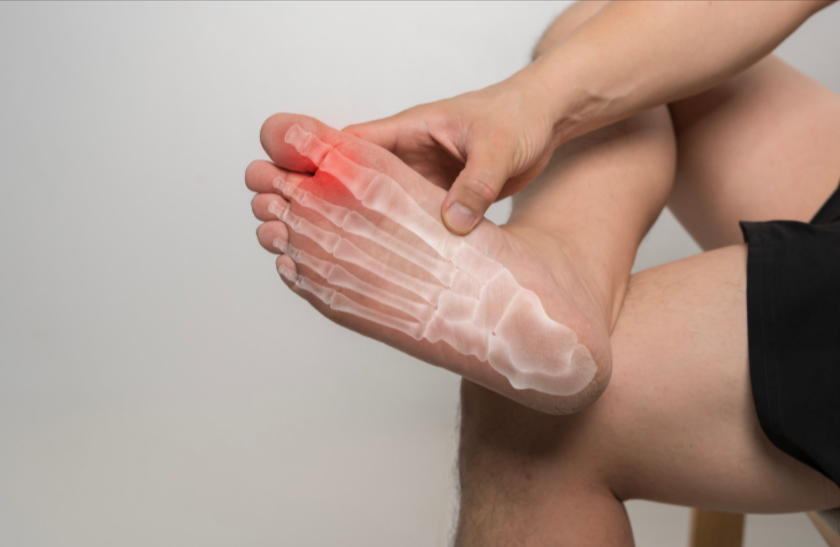
A bunion rarely shows up overnight. It's usually a slow, creeping change: the big toe drifts a little further toward the others each year, until one day the lump on the side of your foot is the reason you can't get your favourite shoes on anymore. If that sounds familiar, you're far from alone, and there's a wide range of bunions treatment options before surgery ever needs to come up.
This guide covers what a bunion actually is, the non-surgical steps worth trying first, and what modern treatment for bunions looks like when surgery is the only reliable option left. It also covers the lesser-known tailor's bunion treatment, a related but distinct problem on the outside of the foot. Clinical detail comes from Mr Pavel Akimau, Consultant Orthopaedic Surgeon at University Hospitals of North Staffordshire NHS Trust since 2021.
What exactly is a bunion?
The medical name is hallux valgus, and it's more common than most people expect. More than a third of people over 65 have one, and it affects women roughly twice as often as men. Plenty of people carry a bunion for years without much bother. For others, the big toe keeps drifting sideways, pushing the lesser toes out of alignment, forming painful callosities underneath the foot, and making shoes a daily struggle.
That drift is the reason bunions are progressive for some people and not others. Once it starts pushing the smaller toes out of position, the problem tends to compound instead of settling down.
Bunions treatment: what to try first
Before surgery is even on the table, a sensible bunions treatment plan usually starts with the basics:
-
Wider, softer shoes. A shoe with a roomy toe box takes pressure off the lump immediately, and it's often the single biggest source of relief.
-
Padding and spacers. Silicone pads or toe spacers reduce rubbing between the big toe and the shoe, and between the big and second toe.
-
Orthotics. A podiatrist can assess your foot mechanics and suggest an insole that slows further drift.
-
Activity adjustments. High-impact activities in tight shoes tend to speed things up, so swapping footwear for the gym or a long walk is worth doing early.
These steps manage symptoms and can slow progression, but they don't reverse the deformity. If the bunion keeps growing, keeps hurting, or is starting to affect your other toes, that's the point to talk to a specialist about treatment for bunions that actually corrects the alignment.
When treatment for bunions means surgery
For a truly stubborn bunion, corrective surgery is the only reliable way to fix the underlying problem instead of just managing it. Mr Akimau has introduced a minimally invasive bunion correction technique to the North Midlands area and now uses this approach for all his bunion surgery.
The technique involves cutting and resetting the bones in the foot through small skin incisions, using specialised instruments and implants instead of one large cut. Patients tend to be pleased both with the correction itself and with how quick and comparatively painless the recovery is, especially compared with the older, more invasive open technique.
Tailor's bunion treatment: a different problem, same instinct
A tailor's bunion, sometimes called a bunionette, forms on the opposite side of the foot, at the base of the little toe, not the big toe. It gets its old-fashioned name from tailors who used to sit cross-legged, with the outer edge of the foot rubbing on the ground.
The general approach mirrors ordinary bunion care: wider shoes and padding first, with surgery reserved for cases that don't settle. Because a tailor's bunion sits on a different bone with different mechanics, the surgical technique used for it can differ from the main big-toe procedure. [CONFIRM: Mr Akimau's exact approach to tailor's bunion correction, since the current information on this covers hallux valgus specifically]. If you have a bunionette and not a classic bunion, mention that clearly when booking, so the right assessment is arranged from the start.
How to tell if it's time for a specialist opinion
-
Shoes that used to fit now rub or pinch every time
-
The lump has visibly grown over the past year
-
Your second toe is starting to overlap the big toe
-
Pain is present even in bare feet, not just in shoes
Any of these are reasonable enough reasons to book an assessment instead of waiting it out.
Frequently asked questions
Can a bunion be fixed without surgery?
Not fully. Shoes, padding and orthotics reduce pain and can slow how fast it progresses, but only surgery corrects the actual bone alignment.
Is bunion surgery painful?
The minimally invasive approach was adopted specifically because it's markedly less painful and disruptive than the traditional open operation, with a quicker return to normal footwear.
How long is recovery after minimally invasive bunion surgery?
Recovery varies by patient and by how much correction is needed. [CONFIRM: typical recovery and return-to-shoes timeline for this specific technique].
Is a tailor's bunion the same as a regular bunion?
No. A regular bunion affects the big toe joint, while a tailor's bunion affects the joint at the base of the little toe. Both can be managed with similar conservative steps, but they're separate conditions.
Will my bunion come back after surgery?
Recurrence is uncommon with modern corrective techniques, though footwear choices afterwards still make a difference to long-term results.
Get in touch
Mr Pavel Akimau is a Consultant Orthopaedic Surgeon based in Staffordshire, seeing patients in Staffordshire, Cheltenham and Bristol. Call 07934 539252 or 01782 432227, email [email protected], or visit the Bunions page to book an appointment.
- Digital Agency
- Literie
- Location de voitures
- Restaurant
- Restaurant
- Mode
- Mode
- Information
- Marketing
- Tourisme
- Développement
- Découverte
- Législation
- Gastronomie
- Pâtisserie
- Evento
- Art
- Causes
- Crafts
- Dance
- Drinks
- Film
- Fitness
- Food
- Juegos
- Gardening
- Health
- Inicio
- Literature
- Music
- Networking
- Otro
- Party
- Religion
- Shopping
- Sports
- Theater
- Wellness
 Spanish
 Indian
 English
 French
 Arabic
 Portuguese
 Deutsch
 Turkish
 Dutch
Dutch
 Italiano
 Russian
 Romaian
 Portuguese (Brazil)
 Greek
Greek
