


How to Install an IoT-Based Pump Monitoring System in Karnataka Buildings
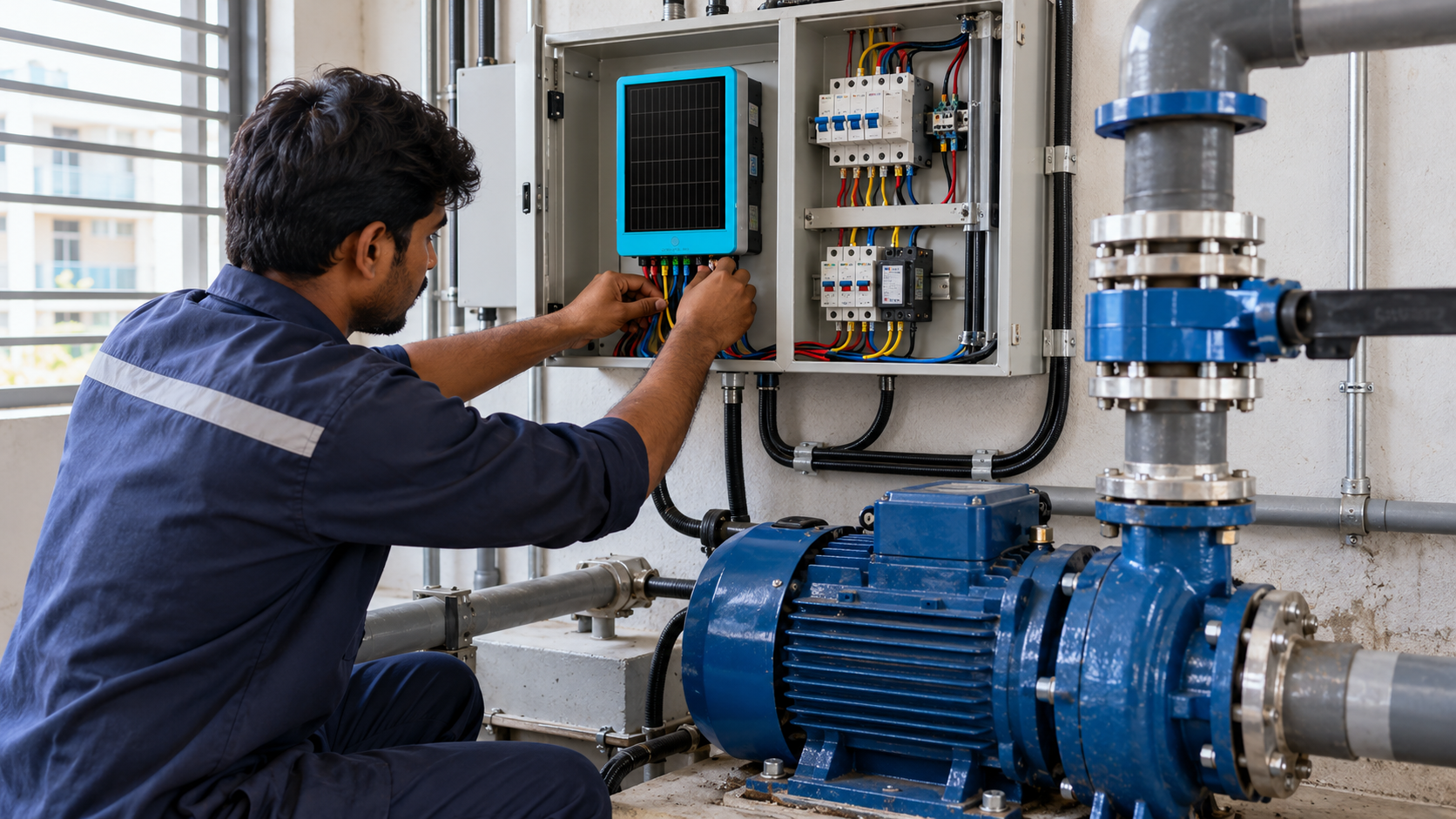
Water pumps play an important role in apartments, gated communities, commercial buildings, hospitals, hotels, institutions, and industrial facilities across Karnataka. However, relying only on manual pump inspections can make it difficult to identify abnormal operation, low water levels, or unnecessary pump running.
An IoT pump monitoring Karnataka solution can connect water-level sensors, pump controllers, gateways, and cloud software to provide remote visibility into water infrastructure. A properly configured IoT pump monitoring system can help facility teams monitor pump status, tank levels, alerts, and operating history.
Platforms such as the MyTank IoT Platform can provide a centralized environment for connected water monitoring and pump-management applications, depending on the system configuration.
What Is an IoT-Based Pump Monitoring System?
An IoT-based pump monitoring system connects physical water infrastructure to a digital monitoring platform.
A typical architecture includes:
Water-Level Sensor → Pump Controller → IoT Gateway → Cloud Platform → Dashboard
The sensors collect information from tanks or sumps, while the controller monitors or manages pump operation. The gateway transfers relevant information to the cloud platform, where authorized users can access it remotely.
Step 1: Assess the Existing Water Infrastructure
Before installing an IoT system, inspect the existing water infrastructure.
Identify:
-
Number of pumps
-
Pump type and capacity
-
Number of underground sumps
-
Number of overhead tanks
-
Existing electrical panels
-
Pump control method
-
Tank dimensions
-
Available power sources
-
Existing communication networks
This assessment helps determine which sensors, controllers, and connectivity options are appropriate.
Step 2: Identify the Parameters to Monitor
An IoT pump monitoring system can monitor different parameters depending on the application's requirements.
Common parameters include:
-
Pump ON/OFF status
-
Underground sump level
-
Overhead tank level
-
Pump operating duration
-
Start-stop activity
-
Low-level conditions
-
High-level conditions
-
Communication status
Defining these requirements before installation helps avoid unnecessary sensors and components.
Step 3: Install Water-Level Sensors
Water-level sensors are an important part of the monitoring system.
Sensors can be installed in:
-
Underground sumps
-
Overhead tanks
-
Storage tanks
-
Other water reservoirs
The appropriate sensing technology depends on the tank design and application. Radar-based and other level-sensing technologies may be considered depending on the installation requirements.
The sensor should be positioned correctly to obtain reliable measurements throughout the required water-level range.
Step 4: Install the Pump Controller
The pump controller provides an interface between the existing pump infrastructure and the IoT monitoring system.
Depending on the configuration, it can provide information about pump operation and may also support automated pump control.
For example:
Low Overhead Tank Level → Pump Starts
Required Tank Level Reached → Pump Stops
The control logic should be configured according to the site's water system and appropriate electrical safety requirements.
Step 5: Configure IoT Connectivity
The next step is connecting sensors and controllers to the monitoring platform.
Depending on the building, communication may use:
-
LoRa
-
Cellular IoT
-
Wi-Fi
-
Other suitable wireless technologies
The right option depends on the distance between devices, building layout, network availability, power requirements, and number of connected devices.
For larger installations, a gateway may collect information from multiple sensors before transmitting it to the cloud.
Step 6: Connect the System to the Cloud
Once the field devices are connected, their information can be transmitted to a cloud-based monitoring platform.
This allows authorized users to access information remotely through a dashboard or mobile interface.
For an IoT pump monitoring Karnataka deployment, the cloud platform can provide centralized visibility into connected pumps and tanks.
Step 7: Configure the MyTank IoT Platform
The MyTank IoT Platform can be used for connected water monitoring and management applications, depending on the deployment configuration.
After connecting the relevant sensors and controllers, the system can be configured to display information such as:
-
Tank water levels
-
Pump status
-
Alerts
-
Historical information
-
Connected equipment
For buildings with multiple tanks, centralized monitoring can help facility teams understand the overall condition of their water infrastructure.
Step 8: Configure Alerts
Alerts can help maintenance personnel respond to important water-system conditions.
Depending on the system configuration, alerts may be created for:
-
Low tank level
-
High tank level
-
Unusual pump operation
-
Extended pump runtime
-
Communication problems
-
Other predefined conditions
Alert thresholds should be selected according to the actual operating requirements of the building.
Step 9: Test the IoT Pump Monitoring System
Testing is an important part of installation.
The facility team should verify:
-
Sensor readings
-
Pump status
-
Data transmission
-
Dashboard updates
-
Alert delivery
-
Controller operation
-
Connectivity
-
Automation logic, where applicable
Testing different operating conditions can help identify configuration issues before the system is placed into regular operation.
Step 10: Train Facility Personnel
The maintenance team should understand how to use the monitoring platform.
Training can cover:
-
Viewing tank levels
-
Checking pump status
-
Understanding alerts
-
Reviewing historical information
-
Responding to abnormal conditions
-
Using manual controls where supported
-
Basic troubleshooting
This helps ensure that the IoT system becomes part of the building's regular maintenance process.
Example Installation for a Karnataka Apartment
Consider a Bengaluru apartment with an underground sump, rooftop tank, and electric transfer pump.
The installation could follow this structure:
Sump Level Sensor
↓
IoT Controller/Gateway
↓
Pump Control Panel
↓
Cloud Platform
↓
MyTank IoT Platform / Dashboard
The system can provide information about sump and overhead tank levels and pump operation.
If the overhead tank reaches a configured low level and the sump contains sufficient water, the configured automation logic can operate the pump. When the required tank level is reached, the pump can stop according to the configured control logic.
Benefits of IoT Pump Monitoring in Karnataka Buildings
An IoT pump monitoring Karnataka solution can provide several operational advantages.
Remote Visibility
Facility managers can view connected pump and tank information without continuously visiting pump rooms.
Faster Awareness
Configured alerts can notify personnel about important water-level or pump conditions.
Historical Information
Operating data can help teams understand pump and water-level patterns over time.
Reduced Manual Monitoring
Routine inspections can be supplemented with continuous digital monitoring.
Scalable Monitoring
Additional tanks and pumps can potentially be added as monitoring requirements grow, depending on the system architecture.
Installation Checklist
Before completing an IoT pump monitoring system installation, verify:
-
Pump compatibility
-
Tank dimensions
-
Sensor installation position
-
Controller compatibility
-
Connectivity availability
-
Gateway configuration
-
Cloud platform connection
-
Alert settings
-
Automation settings
-
Dashboard access
-
System testing
-
Maintenance-team training
Conclusion
Installing an IoT-based pump monitoring solution involves more than simply attaching a sensor to a water tank. The complete system should connect sensors, pump controllers, communication equipment, cloud software, and user interfaces into a coordinated architecture.
An IoT pump monitoring Karnataka solution can provide remote visibility into pump and tank conditions, while an IoT pump monitoring system can support monitoring, alerts, and automation depending on the configuration.
Platforms such as the MyTank IoT Platform can provide a centralized environment for connected water monitoring and pump-management applications. With proper site assessment, installation, configuration, testing, and staff training, Karnataka buildings can develop a more connected approach to water and pump management.
- Digital Agency
- Literie
- Location de voitures
- Restaurant
- Restaurant
- Mode
- Mode
- Information
- Marketing
- Tourisme
- Développement
- Découverte
- Législation
- Gastronomie
- Pâtisserie
- Evento
- Art
- Causes
- Crafts
- Dance
- Drinks
- Film
- Fitness
- Food
- Giochi
- Gardening
- Health
- Home
- Literature
- Music
- Networking
- Altre informazioni
- Party
- Religion
- Shopping
- Sports
- Theater
- Wellness
 Italiano
 Indian
 English
 French
 Arabic
 Spanish
 Portuguese
 Deutsch
 Turkish
 Dutch
Dutch
 Russian
 Romaian
 Portuguese (Brazil)
 Greek
Greek
