


Navigating the SF6 Phase-Out: The Strategic Rise of Eco-Efficient Hybrid Switchgear
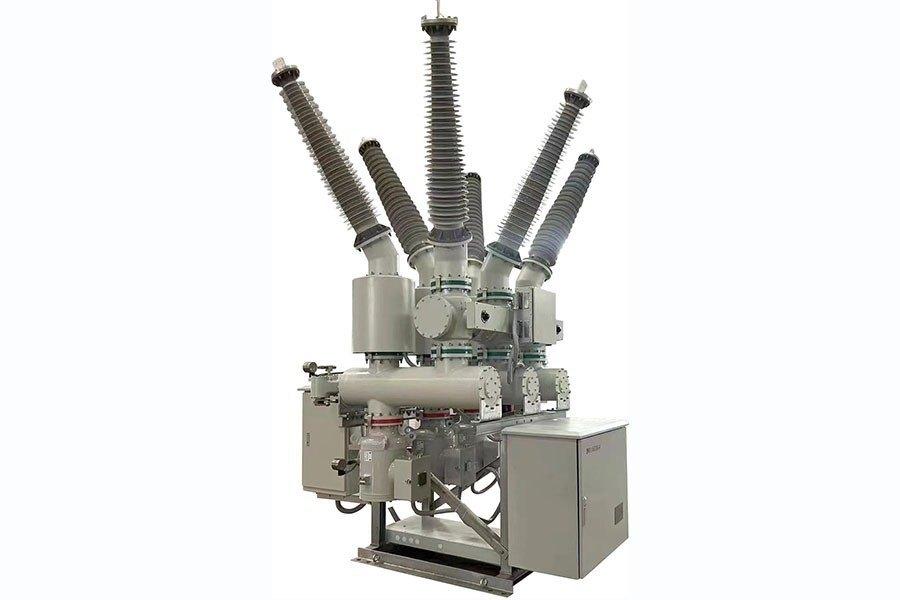
Global Hybrid Switchgear Market Outlook: Navigating Substation Footprint Constraints, SF6-Free Eco-Gas Transitions, Offshore Wind Interconnections, and the Strategic Engineering Shift Toward Modular Plug-and-Switch Architectures (2026–2032)
Across the international electric utility, renewable power transmission, heavy industrial manufacturing, rail electrification, and offshore infrastructure sectors, high-voltage electrical substation architecture is undergoing a decisive structural evolution. For decades, transmission system operators (TSOs), distribution network owners, and industrial facility engineers were forced into a binary capital expenditure compromise when designing switching substations. They had to choose between conventional Air-Insulated Switchgear (AIS) or fully enclosed Gas-Insulated Switchgear (GIS). While air-insulated switchgear offered lower initial equipment procurement costs and direct visual inspection of live components, its sprawling land footprint, high civil engineering expenses, and total vulnerability to coastal salt-fog contamination and industrial particulate flashovers created severe operational liabilities. Conversely, while fully gas-insulated switchgear compressed substation boundaries by up to ninety percent within sealed metallic enclosures, its high procurement costs, complex civil gas-handling requirements, and prolonged maintenance outage durations made widespread deployment economically prohibitive across cost-sensitive brownfield retrofits.
Today, global power delivery is navigating unprecedented structural demands: the massive integration of multi-gigawatt utility-scale renewable generation, accelerating urban land densification, escalating real estate acquisition costs, stringent environmental regulations governing greenhouse gases like sulfur hexafluoride (SF6), and the rapid expansion of high-voltage offshore wind platforms. Under these demanding operating environments, power utilities and industrial conglomerates can no longer accept the real estate footprint of open-air substations or the high capital costs and inflexible installation lifecycles of full GIS installations.
Consequently, hybrid switchgear—also recognized in modern power engineering as compact mixed technology switchgear (MTS) and Plug-and-Switch Systems (PASS)—has established itself as an optimal, value-engineered medium- and high-voltage transmission solution. By combining the operational virtues of air-insulated flexibility with the compact reliability of gas-insulated enclosures, hybrid switchgear consolidates circuit breakers, disconnector switches, earthing switches, current transformers, and voltage inductive sensors into a single, factory-assembled, and pre-commissioned metal-clad bay. Air-insulated bushings interface directly with external overhead busbars or transmission lines, while the primary dynamic switching arc-extinction and isolation components remain hermetically sealed within an optimized gas-insulated chamber.
By eliminating the expansive inter-phase electrical clearance distances required in air while reducing total footprint by up to seventy percent compared to classic AIS, modern hybrid switchgear drastically compresses civil installation timelines, withstands severe environmental pollution, and delivers high electrical reliability. From retrofitting congested urban utility substations and energizing high-voltage mobile disaster-recovery trailers to providing rugged, compact electrical isolation atop offshore wind substations, hybrid switchgear has cemented its position as a cornerstone of next-generation global electrical grid modernization.
According to a detailed market intelligence study published by Maximize Market Research, the global hybrid switchgear market was valued at USD 6.24 billion in 2025 and is projected to expand at a compound annual growth rate (CAGR) of 7.71% across the forecast period from 2026 to 2032, reaching an estimated valuation of USD 10.50 billion by 2032.
This multi-billion-dollar market expansion reflects a decisive shift across transmission and distribution (T&D) capital budgeting. Utility procurement directors and industrial plant executives are shifting capital away from sprawling, open-air yard layouts and complex, site-erected GIS assemblies toward factory-tested, modular hybrid bays that minimize on-site civil works. High-voltage equipment manufacturers, engineering, procurement, and construction (EPC) conglomerates, and grid operators that align their commercial roadmaps with standardized plug-and-switch modules, fluoronitrile eco-gas insulation alternatives, integrated optical condition monitoring, and rapid mobile substation configurations are capturing expanding market share while strengthening power grid resilience worldwide.
𝐃𝐨𝐰𝐧𝐥𝐨𝐚𝐝 𝐏𝐃𝐅 𝐁𝐫𝐨𝐜𝐡𝐮𝐫𝐞 @ https://www.maximizemarketresearch.com/request-sample/66384/
For full access to the comprehensive strategic report, visit: https://www.maximizemarketresearch.com/market-report/hybrid-switchgear-market/66384/
Executive Strategic Overview: The Operational Dilemma of Substation Modernization
High-voltage electrical substations serve as the critical control nodes of modern power grids, routing electric power, stepping voltage up or down, and protecting transmission corridors by interrupting high-magnitude fault currents within milliseconds. However, aging grid infrastructure across North America and Europe, combined with rapid greenfield industrialization across the Asia-Pacific, Latin America, and the Middle East, has strained traditional substation design practices:
-
Severe Urban Land Scarcity and Civil Acquisition Costs: Expanding electricity demand within dense urban centers—spurred by data center clusters, commercial high-rises, and electric vehicle charging hubs—requires utility substations situated close to load centers. Purchasing the multiple acres of land required for a traditional 145 kV or 245 kV open-air AIS substation is either physically impossible or prohibitively expensive.
-
Complex Brownfield Replacement Outages: Thousands of legacy AIS substations installed between the 1960s and 1980s have reached the end of their operational design lifespans. Replacing these aged assets with conventional equipment requires shutting down transmission lines for months, causing grid congestion, risking blackouts, and incurring severe regulatory downtime penalties.
-
Harsh Operating Environments and Flashover Risks: Traditional open-air disconnectors and circuit breaker bushings installed in coastal maritime areas, desert regions, or heavy industrial petrochemical complexes suffer from continuous environmental pollution. Airborne salt deposition, sandstorms, and chemical soot cause dielectric tracking across ceramic insulator surfaces, triggering catastrophic electrical flashovers and unplanned outages that require frequent, labor-intensive insulator washing.
-
The High Capital and Civil Burden of Full GIS: While full GIS resolves environmental pollution and land footprint issues, its initial capital equipment cost is typically two to three times higher than AIS. Furthermore, GIS requires specialized cleanroom installation protocols on-site, extensive SF6 gas-handling certification, and high foundation precision, which inflate total project lead times.
Modern hybrid switchgear resolves these operational and capital dilemmas through pre-engineered modular integration. By encasing only the critical switching elements—the circuit breaker interrupter, disconnector, fast earthing switch, and instrument transformers—inside an aluminum or cast-iron gas-insulated enclosure, while utilizing external composite silicone bushings to connect with conventional open-air busbars, hybrid switchgear delivers GIS-level environmental resilience and compactness at a capital outlay significantly lower than full GIS.
Furthermore, hybrid switchgear bays are delivered to the construction site completely pre-assembled, pre-wired, and pressurized with insulating gas directly from the manufacturing plant. This Plug-and-Switch System (PASS) methodology slashes on-site civil foundation work, assembly, and high-voltage commissioning schedules from several months down to a matter of days. A brownfield bay replacement that previously required a prolonged three-month outage can be completed during a brief weekend maintenance window, minimizing grid disruptions and maximizing asset uptime.
Macroeconomic Drivers and Catalytic Market Trends
The sustained expansion of the global hybrid switchgear market is propelled by a combination of grid decarbonization policies, renewable infrastructure spending, urban space constraints, and environmental safety regulations:
1. Accelerated Expansion of Utility-Scale Offshore and Onshore Wind Farms
The global transition toward non-fossil energy generation is driving capital expenditure into massive offshore wind installations across the North Sea, the Baltic Sea, the Atlantic coast of the United States, and coastal China. Offshore wind platforms operate under extreme physical spatial constraints and severe marine atmospheric corrosion. Installing traditional open-air switchgear on offshore collector platforms is physically unfeasible due to space and weight limits, while deploying full GIS can introduce service access complications. Hybrid switchgear provides an optimal balance: it fits within compact platform modules, withstands harsh saline humidity through sealed enclosures, and enables rapid plug-and-play bay replacement via crane, driving high demand across offshore substation engineering.
2. The Rapid Proliferation of Rapid-Deployment Mobile Substations
Grid operators are increasingly purchasing trailer-mounted, mobile substations to restore power rapidly following extreme weather events (such as hurricanes, winter freezes, and wildfires), mitigate equipment transformer failures, and provide temporary power bypasses during planned substation overhauls. Hybrid switchgear is the preferred switching technology for mobile substations. Because a complete hybrid bay integrates circuit breakers, disconnectors, and instrument transformers into a single compact housing, it mounts seamlessly onto standard flatbed highway trailers without exceeding Department of Transportation road height and weight clearances, allowing utilities to deploy a 145 kV or 245 kV switching substation anywhere on the grid within hours.
3. Decisive Regulatory Mandates Phase Out SF6 in Favor of Eco-Efficient Gas Alternatives
Sulfur hexafluoride (SF6) has long served as the standard dielectric insulating medium in high-voltage switchgear due to its exceptional arc-quenching properties. However, SF6 is also a potent greenhouse gas, possessing a Global Warming Potential (GWP) 24,300 times greater than carbon dioxide and an atmospheric lifespan exceeding 3,200 years. Regulatory frameworks—most notably the European Union’s F-gas Regulation revisions and similar environmental mandates from the California Air Resources Board (CARB)—have established phased bans and financial penalties on new SF6 electrical equipment. This regulatory shift has accelerated the commercialization of eco-efficient hybrid switchgear utilizing alternative dielectric gases, such as fluoronitrile-based gas mixtures (e.g., C4-FN) and synthetic technical air (Clean Air), allowing utilities to comply with net-zero mandates without sacrificing electrical performance.
4. Heavy Industrial Electrification and Grid Modernization Across Emerging Economies
Energy-intensive process industries—such as mining, metal smelting, semiconductor foundries, and chemical refining—demand high electrical power reliability within crowded plant perimeters. Expanding production lines requires upgrading high-voltage step-down substations without expanding physical plant real estate. Industrial operators are retrofitting aging AIS yards with hybrid switchgear to double substation capacity within their existing physical footprints. Simultaneously, emerging economic powerhouses across the Asia-Pacific and the Middle East are investing heavily in nationwide grid reinforcement projects to connect remote desert solar parks and industrial corridors to national transmission grids.
Technology Architecture: Hybrid Modularity, Arc Interruption, and Digital Substation Intelligence
Modern hybrid switchgear represents an advanced electromechanical system combining high-voltage physics, metallurgy, dielectric materials science, and digital automation:
The Integrated Plug-and-Switch System (PASS) Architecture
At the mechanical core of a hybrid switchgear bay sits the unified enclosure design:
-
Combined Switching Functions: Traditional substations install the circuit breaker, disconnector, and earthing switches as physically distinct mechanical structures separated by open-air clearances. Hybrid switchgear combines the circuit breaker interrupter and a multi-position (closed, open, earthed) disconnector switch into a single gas-filled chamber. This eliminates external operating linkages, driveshafts, and support insulators, removing multiple mechanical points of failure.
-
Composite Silicone Bushings: Rather than utilizing brittle, heavy porcelain bushings prone to seismic fracturing and environmental cracking, modern hybrid bays utilize high-temperature vulcanized (HTV) silicone composite bushings. These lightweight bushings feature hydrophobic surfaces that prevent the formation of continuous conductive water films, eliminating surface leakage currents and resisting seismic shock waves.
-
Low-Gas Volume Design: Because only the primary dynamic switching core is gas-insulated—while the busbar interconnections remain air-insulated—hybrid switchgear utilizes up to seventy percent less dielectric gas than an equivalent full GIS installation, substantially reducing gas leakage risks, environmental liability, and inventory tracking costs.
Arc Quenching and Dielectric Media Evolution: Vacuum and Eco-Gases
The interruption of high-energy short-circuit fault currents (frequently reaching 40 kA to 63 kA) requires advanced arc physics:
-
Self-Blast Auto-Puffer Interrupters: Modern high-voltage hybrid circuit breakers utilize optimized auto-puffer nozzles. During fault interruption, the heat of the electric arc itself builds up pressure within the arc chamber, assisting the mechanical operating spring mechanism in blasting gas across the contact gap. This auto-blast design minimizes the mechanical force required from the drive mechanism, improving operating reliability and extending mechanical operating lifespans past 10,000 switching operations.
-
Vacuum Interrupters for Medium-to-High Voltages: For voltage ratings up to 72.5 kV and 145 kV, manufacturers are increasingly replacing gas-based arc quenching with sealed ceramic vacuum interrupters. In vacuum technology, the contact separation occurs in a high-vacuum chamber, extinguishing the electrical arc instantly at the first current zero without generating toxic gas decomposition byproducts.
-
Fluoronitrile and Dry Air Dielectric Mixtures: For voltages reaching 245 kV and 550 kV, leading manufacturers have developed hybrid bays operating on proprietary fluoronitrile-based gas mixtures (such as C4-FN blended with carbon dioxide and oxygen) or compressed technical air. These eco-efficient gas mixtures deliver high dielectric breakdown strength and arc interruption capabilities while lowering the Global Warming Potential of the gas charge by over 99% compared to pure SF6.
IEC 61850 Digital Substation Integration and Condition Telemetry
Modern hybrid switchgear bays deploy digital process bus architecture aligned with the international IEC 61850 standard:
-
Non-Conventional Instrument Transformers (NCITs): Traditional bulky, oil-filled inductive copper current and voltage transformers are replaced by compact Rogowski coils and optical voltage sensors integrated directly inside the hybrid housing. NCITs provide wide dynamic range without magnetic saturation, streaming digital sampled values directly over high-speed optical fiber cables.
-
Continuous Online Condition Monitoring: Hybrid bays incorporate integrated digital sensor suites that continuously track gas density, moisture content, breaker contact wear (measured by calculating accumulated interrupted I²t energy), operating coil current profiles, and mechanical drive travel times. By streaming telemetry to cloud-based predictive maintenance dashboards, asset managers can shift away from rigid calendar-based maintenance to condition-based operational overhauls, eliminating unexpected component failures and lowering life-cycle operating costs.
Comprehensive Segment Intelligence: Where Value and Deployment Activity Reside
The global hybrid switchgear market displays distinct commercial dynamics across voltage ratings, installation environments, structural applications, and end-user profiles:
By Voltage Rating: 72.5 kV to 245 kV Anchors Utility Transmission; 245 kV to 550 kV Drives High-Value Grid Interconnections
-
72.5 kV to 245 kV: Represents the largest and most commercially active segment of the global hybrid switchgear market. This voltage bracket forms the backbone of sub-transmission networks, urban primary distribution substations, utility-scale renewable collector yards, and heavy industrial plant step-down substations. The 145 kV hybrid bay is the industry benchmark for brownfield substation modernizations, allowing utilities to replace aged open-air bays with pre-tested plug-and-switch modules within constrained yard footprints.
-
245 kV to 550 kV: Captures the highest capital expenditure value per unit and is the fastest-expanding technology tier by investment volume. Driven by major inter-regional high-voltage bulk transmission interconnections, bulk hydroelectric generation switchyards, and centralized offshore wind transmission hubs requiring high interrupting capabilities (50 kA to 63 kA) and robust transient recovery voltage (TRV) withstand capabilities.
-
Up to 72.5 kV: A high-volume segment serving medium-voltage distribution, renewable solar farm aggregation points, commercial infrastructure electrification, and electrified railway catenary feeder substations.
By Installation: Onshore Leads Volume; Offshore Represents the Strategic Growth Frontier
-
Onshore Installation: Commands the largest baseline share of total global revenue and installed bay count. Driven by utility grid reinforcement, brownfield urban substation retrofits, mobile disaster-recovery substations, and heavy industrial process manufacturing plants across North America, Europe, and Asia.
-
Offshore Installation: Represents the highest compound annual growth rate among installation types. Offshore wind farm converter and collector platforms operate under strict physical space and crane-lifting weight envelopes. Hybrid switchgear provides the compact physical profile and marine corrosion resistance required for high-humidity, salt-laden sea environments, making it an optimal solution for modern marine energy developers.
By Application: Transmission and Distribution Leads Scale; Industrial and Transportation Accelerate
-
Infrastructure and Utility Transmission & Distribution: The primary revenue-generating application vertical, accounting for the vast majority of global demand. Driven by national utilities and independent transmission operators executing multi-year grid reliability investments and renewable interconnection programs.
-
Industrial and Resource Extraction: A rapidly expanding segment driven by power-intensive industries, including chemical processing, oil and gas terminals, metal fabrication, and subterranean mining. These facilities deploy hybrid switchgear to protect critical motors and arc furnaces while saving valuable surface industrial land.
-
Transportation and Rail Electrification: Driven by national high-speed rail networks, urban metro transit expansions, and maritime port electrification initiatives requiring compact, vibration-resistant, and low-maintenance trackside switching substations.
Regional Perspectives: Analyzing Global Grid Modernization Patterns
The adoption, engineering specifications, and commercial procurement of hybrid switchgear exhibit distinct regional variations shaped by legacy grid density, environmental regulations, and energy transition targets:
Asia-Pacific: The Dominant Global Epicenter of Substation Construction and Renewable Expansion
The Asia-Pacific region commands the largest market share in the global hybrid switchgear landscape and is projected to maintain the fastest compound annual growth rate through 2032. China, India, Japan, South Korea, and Southeast Asian nations represent the global heartland of electric grid infrastructure expansion, heavy manufacturing growth, and massive renewable power integration.
-
China's Massive Grid Investment and Clean Energy Hubs: China represents both the world’s largest consumer and a primary manufacturing producer of high-voltage switchgear. Supported by massive state grid infrastructure initiatives led by State Grid Corporation of China (SGCC) and China Southern Power Grid, the nation is deploying hybrid switchgear across remote western solar and wind bases, coastal offshore wind platforms, and high-density urban transformer stations across Shanghai, Shenzhen, and Beijing.
-
India's Rapid Grid Electrification and Substation Upgrades: In India, the expansion of the national power transmission corridor under the Green Energy Corridors initiative, coupled with complete railway catenary electrification, is fueling strong demand for hybrid switchgear. Indian state transmission utilities and private transmission operators (such as Adani Energy Solutions and Power Grid Corporation of India) are aggressively procuring 145 kV and 245 kV hybrid bays to modernize aging urban substations where land acquisition is cost-prohibitive.
-
Japan and South Korea High-Density Reliability: Japan and South Korea face acute geographic land constraints and high exposure to earthquakes, coastal typhoons, and tsunami hazards. Power utilities in these nations rely heavily on compact, highly seismic-resistant hybrid switchgear to maintain power delivery to critical semiconductor manufacturing hubs and high-density coastal population centers.
Europe: Pioneer in SF6 Elimination, Offshore Wind Clusters, and Brownfield Retrofits
Europe represents a technologically sophisticated market led by Germany, the United Kingdom, France, Italy, Spain, and the Netherlands. The European operating environment is governed by aggressive decarbonization mandates and strict environmental directives.
The European market is the global pioneer in adopting SF6-free eco-efficient hybrid switchgear. Under the European Union’s revised F-gas Regulation, utilities are phasing out the procurement of SF6-insulated switchgear, driving rapid commercial demand for hybrid bays utilizing fluoronitrile gas mixtures and technical dry air. Furthermore, the massive expansion of offshore wind generation across the North Sea and Baltic Sea makes Europe the world's most lucrative market for offshore-rated hybrid switchgear installations. European transmission system operators (such as TenneT, National Grid, and Amprion) utilize hybrid switchgear to execute complex brownfield replacements within legacy substations without expanding physical security fence lines.
North America: Aging Infrastructure Overhauls, Resiliency Spending, and Mobile Fleets
North America holds a major share of the global hybrid switchgear market, anchored by power transmission modernization across the United States and Canada. The North American power grid faces unique operational pressures: an aging fleet of legacy air-insulated substations (many exceeding 40 to 50 years of operation), high vulnerability to severe climate events (polar vortex freezes, Atlantic hurricanes, and western wildfires), and rapid load growth driven by massive artificial intelligence data center construction.
United States investor-owned utilities (IOUs) and regional transmission organizations (RTOs) are investing billions of dollars in grid hardening and substation physical security. Hybrid switchgear is widely procured across North America to execute rapid brownfield bay replacements, eliminating months of construction labor in a market facing acute shortages of skilled high-voltage substation technicians. Furthermore, North American utilities represent the world's largest buyers of high-voltage mobile substations, utilizing truck-mounted hybrid switchgear bays to provide rapid emergency restoration following severe natural disasters.
Latin America and the Middle East & Africa: Developing Resource and Grid Frontiers
-
Latin America: Driven by Brazil, Chile, Mexico, and Colombia, the regional market is expanding through large-scale utility solar installations, long-distance transmission corridors, and heavy mining infrastructure. Open-cast copper mining operations in the high-altitude Atacama Desert of Chile deploy ruggedized hybrid switchgear capable of operating reliably under extreme ambient temperature swings and thin atmospheric air conditions.
-
Middle East & Africa: Driven by sovereign economic diversification programs and mega-infrastructure projects across the Gulf Cooperation Council (GCC)—including Saudi Arabia and the United Arab Emirates. GCC transmission networks face harsh desert operating environments characterized by intense ambient summer heat (exceeding 50°C), fine silica dust ingress, and high humidity along coastal shorelines. Middle Eastern utilities are deploying outdoor hybrid switchgear bays to eliminate the severe insulator contamination flashovers common to traditional open-air substations.
Competitive Landscape: The Shift from Component Machinists to Integrated Grid Solution Providers
The competitive structure of the global hybrid switchgear market is defined by high technological entry barriers, extensive international patent portfolios, and rigorous utility qualification and type-testing procedures. High-voltage switchgear must undergo destructive short-circuit and dielectric type-testing at certified third-party testing laboratories (such as KEMA-CESI) before being approved for deployment on national transmission grids.
Prominent global corporations and specialized high-voltage engineering innovators operating in this sector include:
-
Hitachi Energy Ltd. – Switzerland / Japan
-
Siemens Energy AG – Germany
-
GE Vernova – United States
-
ABB Ltd. – Switzerland
-
Schneider Electric SE – France
-
Mitsubishi Electric Corporation – Japan
-
Toshiba Energy Systems & Solutions Corporation – Japan
-
Hyosung Heavy Industries Corporation – South Korea
-
HD Hyundai Electric Co., Ltd. – South Korea
-
Bharat Heavy Electricals Limited (BHEL) – India
-
Meidensha Corporation – Japan
-
Iljin Electric Co., Ltd. – South Korea
-
China XD Group Co., Ltd. – China
-
Sieyuan Electric Co., Ltd. – China
-
Chint Group – China
Market leaders maintain their competitive advantages through comprehensive modular product suites, global manufacturing footprints, and proprietary eco-gas technologies. Pioneers like Hitachi Energy (with its PASS product family) and Siemens Energy command substantial international market share by offering flexible, factory-assembled hybrid bays that integrate seamlessly into both greenfield projects and legacy substation layouts.
Concurrently, manufacturers like GE Vernova and Siemens Energy are leading the commercial deployment of SF6-free hybrid switchgear utilizing alternative gas chemistries and clean-air vacuum interruption. Meanwhile, fast-growing Asian manufacturers—including Hyosung Heavy Industries, Sieyuan Electric, and HD Hyundai Electric—are gaining international market share across emerging economies by providing competitively priced, high-reliability hybrid bays that meet international IEC and IEEE standards.
Strategic Roadmap: Core Decisions for Grid Operators, EPC Contractors, and Equipment Makers
To capture expanding market share, manage supply chain lead times, and maintain commercial competitiveness through 2032, executive leaders across switchgear manufacturing firms, utility engineering teams, and EPC construction conglomerates should execute four core strategic decisions:
1. Transition R&D Portfolios Decisively Toward SF6-Free Eco-Gas Chemistries
Equipment manufacturers can no longer rely solely on legacy SF6 gas product lines. With the European Union, California, and other regulatory jurisdictions enacting progressive bans on greenhouse gases in electrical switchgear, engineering leadership must accelerate the development and type-testing of SF6-free hybrid switchgear. Developing modular bays utilizing fluoronitrile gas mixtures or vacuum interrupters with compressed technical air protects manufacturers from future regulatory obsolescence and positions them to win lucrative municipal and utility green procurement tenders.
2. Standardize Fully Integrated Plug-and-Switch (PASS) Bay Topologies
Substation EPC construction suffers from severe labor shortages, high on-site civil expenses, and project scheduling delays. Switchgear manufacturers must standardize pre-engineered, factory-assembled, and pre-commissioned hybrid bays that integrate the circuit breaker, disconnector, earthing switches, and digital instrument transformers into a single shippable block. Standardizing on plug-and-play modules enables EPC contractors to reduce on-site installation schedules by up to seventy percent, slash civil foundation footprints, and eliminate costly on-site high-voltage wiring errors.
3. Expand Mobile Substation and Disaster-Resilience Product Offerings
Given increasing climate volatility and aging grid transformers, utility demand for emergency response infrastructure is rising. High-voltage equipment builders should develop dedicated, trailer-mounted mobile hybrid switchgear bays designed specifically for highway transport. Providing turnkey, rapid-deployment mobile switching bays that utilities can drive to an affected substation and energize within twenty-four hours establishes a high-margin, recurring capital sales channel among disaster-preparedness and grid-resilience budgets.
4. Embed Comprehensive IoT Digital Health Monitoring and IEC 61850 Process Bus Integration
To move beyond one-time hardware sales, equipment providers must embed intelligent digital sensor suites into hybrid bays as standard factory equipment. Integrating continuous optical gas density monitors, partial discharge acoustic sensors, and digital non-conventional instrument transformers (NCITs) allows manufacturers to package hybrid switchgear with cloud-based predictive asset management software. Providing "Switchgear-as-an-Intelligent-Node" enables utilities to transition to condition-based maintenance, lowers customer total cost of ownership, and secures long-term digital service and maintenance contracts for vendors.
Vision 2032: The Era of Autonomous, Eco-Efficient, and Self-Healing Substation Nodes
Looking forward toward 2032 and beyond, the hybrid switchgear market will evolve from an era of mixed electromechanical equipment into an era of autonomous, eco-efficient, and digitally cognitive substation nodes. The convergence of artificial intelligence, green dielectric materials science, and digital twin technology will transform how high-voltage transmission networks switch, isolate, and route electrical power.
In the connected transmission grid of 2032, hybrid switchgear will operate with zero environmental impact and complete operational autonomy. SF6 gas will be entirely phased out of new installations, replaced by advanced synthetic air and fluoronitrile molecules with near-zero Global Warming Potential. High-voltage hybrid bays will feature solid-state and piezoelectric fast-operating mechanisms, capable of separating contacts within fractions of a cycle to clear extreme fault currents without mechanical wear.
Furthermore, hybrid switchgear bays will function as intelligent edge-computing nodes. Embedded microprocessors running machine learning models will analyze real-time acoustic signatures, micro-vibrations, and dielectric telemetry, predicting mechanical linkage wear or contact degradation months before any physical breakdown occurs. During severe storms or transmission grid disturbances, decentralized smart substations will communicate autonomously with neighboring nodes, reconfiguring switching topologies within milliseconds to isolate damaged transmission lines and prevent cascading regional blackouts.
Through continuous power engineering innovation, advanced materials science, and an enduring commitment to grid reliability and environmental sustainability, the global hybrid switchgear market stands as an indispensable cornerstone of the global energy transition. The electrical manufacturers, utility operators, and engineering pioneers that master these advanced, compact, and eco-efficient switching capabilities will lead the future of electrical infrastructure, building a cleaner, more resilient, and dynamic power grid for generations to come.
For full access to the comprehensive strategic report, visit: https://www.maximizemarketresearch.com/market-report/hybrid-switchgear-market/66384/
About Maximize Market Research
Maximize Market Research publishes sector forecasts, competitive analysis, and consulting insight for teams evaluating demand, competition, pricing, and growth strategy across high-value industries. By combining rigorous field investigations, primary stakeholder interviews, and advanced econometric modeling, Maximize Market Research equips corporate executives, institutional investors, and strategic planners with clear market intelligence to inform high-stakes business decisions.
Corporate Headquarters
MAXIMIZE MARKET RESEARCH PVT. LTD.
2nd Floor, Navale IT Park Phase 3,
Pune Banglore Highway, Narhe,
Pune, Maharashtra 411041, India
Phone: +91 9607365656
Email: [email protected]
- Digital Agency
- Literie
- Location de voitures
- Restaurant
- Restaurant
- Mode
- Mode
- Information
- Marketing
- Tourisme
- Développement
- Découverte
- Législation
- Gastronomie
- Pâtisserie
- Evento
- Art
- Causes
- Crafts
- Dance
- Drinks
- Film
- Fitness
- Food
- Jogos
- Gardening
- Health
- Início
- Literature
- Music
- Networking
- Outro
- Party
- Religion
- Shopping
- Sports
- Theater
- Wellness
 Portuguese
 Indian
 English
 French
 Arabic
 Spanish
 Deutsch
 Turkish
 Dutch
Dutch
 Italiano
 Russian
 Romaian
 Portuguese (Brazil)
 Greek
Greek
