


A Stiff Big Toe Joint: What's Changed Beyond Fusion
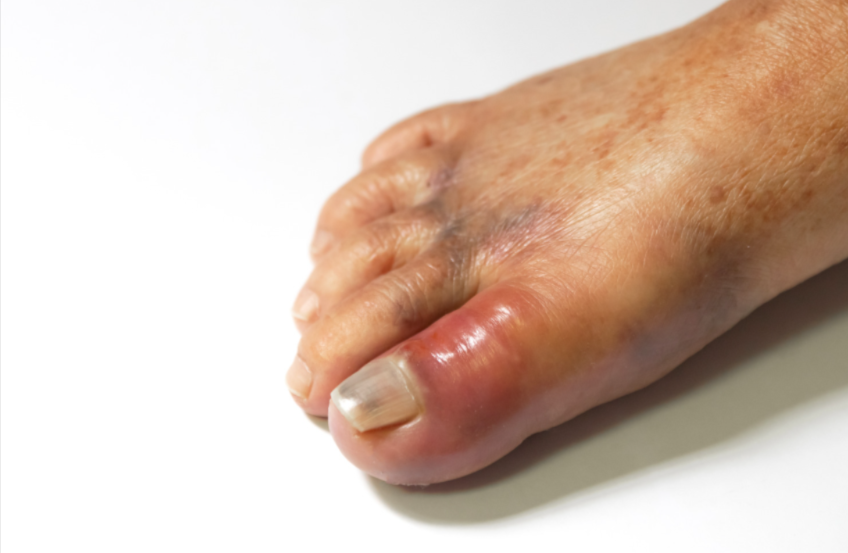
Short answer: Big toe arthritis (hallux rigidus) is treated in steps. Stiffer shoes, insoles and injections come first, and surgery follows once pain limits daily life. Surgery now includes joint-preserving choices such as a synthetic cartilage implant, alongside older options like trimming bone spurs or fusing the joint. The right one depends on how worn the joint is and how much movement you want to keep.
For years the advice for a worn big toe joint was blunt: put up with it, or fuse it. If you wanted to keep bending that toe for walking uphill, running, kneeling or yoga, you often felt stuck. That's slowly changing. Here's a plain-English look at a new treatment for big toe arthritis, who it suits, and where the older operations still make sense.
How to Tell the Joint Is the Problem
The big toe joint takes several times your body weight with every push-off. When its cartilage wears thin, you'll usually notice:
-
Stiffness first thing in the morning or after sitting
-
A bony lump on top of the joint that rubs on shoes
-
Pain when you rise onto your toes or walk uphill
-
Less bend in the toe than the other foot has
A weight-bearing X-ray confirms the diagnosis and shows how much joint space is left. That picture matters, because it points towards the right treatment.
What to Try Before Any Operation
Most people should start without surgery. Nothing here regrows cartilage, but it can calm symptoms for a long time.
|
Step |
What it does |
Limit |
|
Stiff-soled or rocker shoes |
Cuts how much the joint has to bend |
Needs wearing daily to help |
|
Supportive insoles |
Shifts pressure away from the joint |
Won't change the joint itself |
|
Anti-inflammatory gel or short tablet courses |
Settles flare-ups |
Short-term relief only |
|
Activity changes |
Swaps high-impact for cycling or swimming |
Can feel restrictive |
|
Injection into the joint |
Can quieten a bad flare |
Relief varies and often wears off |
If you've done all of this for several months and pain still rules your week, it's reasonable to talk about surgery.
The Older Operations, Still Useful
Cheilectomy removes the bone spur on top of the joint and a little of the damaged surface. It suits earlier arthritis, where you still have a decent gap in the joint and want to keep movement.
Fusion (arthrodesis) joins the two bones so the joint no longer moves. It's reliable at relieving pain and is often the right answer for advanced arthritis. The cost is permanent stiffness in that joint, which some people accept happily and others don't.
So What's New?
The change that's got the most attention is a synthetic cartilage implant. It's a small hydrogel plug placed into the end of the metatarsal bone to act as a new cushioned surface, so the joint keeps moving. The US Food and Drug Administration approved it in 2016, and a randomised trial comparing it with fusion reported similar success rates, around 79.5% for the implant and 78.7% for fusion (Baumhauer et al, as reported in Dankert et al, 2019). People are usually able to bear weight sooner than after a fusion.
Now the honest part. It isn't for everyone. Patients with a significant bunion alongside the arthritis are often steered elsewhere, and real-world data has been less rosy than the trial. An early single-centre US series reported a meaningful number of patients needing further surgery (Cassinelli et al, 2019). Longer follow-up is still building. A good surgeon will tell you this before you agree to anything.
Which Option Suits Which Patient?
|
Situation |
Option usually discussed |
|
Early arthritis, a spur on top, movement still good |
Cheilectomy |
|
Moderate to advanced wear, want to keep movement, no big bunion |
Synthetic cartilage implant (if suitable) |
|
Severe wear, pain at rest, very little movement left |
Fusion |
|
Wear plus a significant bunion |
Fusion or a combined approach, planned individually |
This is a guide to the conversation, not a prescription. Your X-rays, your foot shape and your goals decide the plan.
What Recovery Roughly Looks Like
Recovery depends on the operation and the surgeon's protocol. Cheilectomy usually allows quicker walking, while implants and fusions need a period of protected weight-bearing in a stiff shoe or boot before you rebuild strength. Swelling around the toe settles slowly and can still be visible at three months, which is normal. Ask for the exact timeline for your procedure, including when you can drive and return to work. [CONFIRM: Mr Akimau's standard protocol for each operation]
Questions Worth Asking Your Surgeon
-
What stage is my arthritis, and what do my X-rays show?
-
Which options am I a suitable candidate for, and why?
-
How many of these operations do you perform each year?
-
What are the chances I'll need another procedure?
-
What will I be able to do at three, six and twelve months?
Frequently Asked Questions
Can big toe arthritis be reversed without surgery? No. Shoes, insoles and injections reduce symptoms and can delay surgery for years, but they don't rebuild worn cartilage.
Is fusion still a good operation? Yes. For severe arthritis it remains dependable at relieving pain, and for many people the loss of movement is a fair trade.
Will a cartilage implant let me run again? Some patients return to sport, but there's no guarantee and it depends on the state of the joint. Discuss your specific goals before deciding.
How long can I wait before having surgery? There's no fixed deadline. Surgery is usually considered once pain limits everyday life despite sensible non-surgical care.
Does a bunion change my options? It can. A significant bunion alongside arthritis often affects which operation is suitable, so the two are assessed together.
Should I see a foot and ankle specialist? If pain has lasted more than a few months or you're weighing surgery, yes. A specialist can grade the joint and explain every option.
Get Your Toe Assessed
Mr Pavel Akimau is a Consultant Trauma and Orthopaedic Surgeon (GMC 6100148) who sees foot and ankle patients privately at Nuffield Health North Staffordshire Hospital, Nuffield Health Cheltenham Hospital and North Bristol Private Hospital. You can book through the contact page.
- Digital Agency
- Literie
- Location de voitures
- Restaurant
- Restaurant
- Mode
- Mode
- Information
- Marketing
- Tourisme
- Développement
- Découverte
- Législation
- Gastronomie
- Pâtisserie
- Evento
- Art
- Causes
- Crafts
- Dance
- Drinks
- Film
- Fitness
- Food
- Giochi
- Gardening
- Health
- Home
- Literature
- Music
- Networking
- Altre informazioni
- Party
- Religion
- Shopping
- Sports
- Theater
- Wellness
 Italiano
 Indian
 English
 French
 Arabic
 Spanish
 Portuguese
 Deutsch
 Turkish
 Dutch
Dutch
 Russian
 Romaian
 Portuguese (Brazil)
 Greek
Greek
