


How to Upgrade a Bengaluru Apartment to an IoT-Based Water Management System
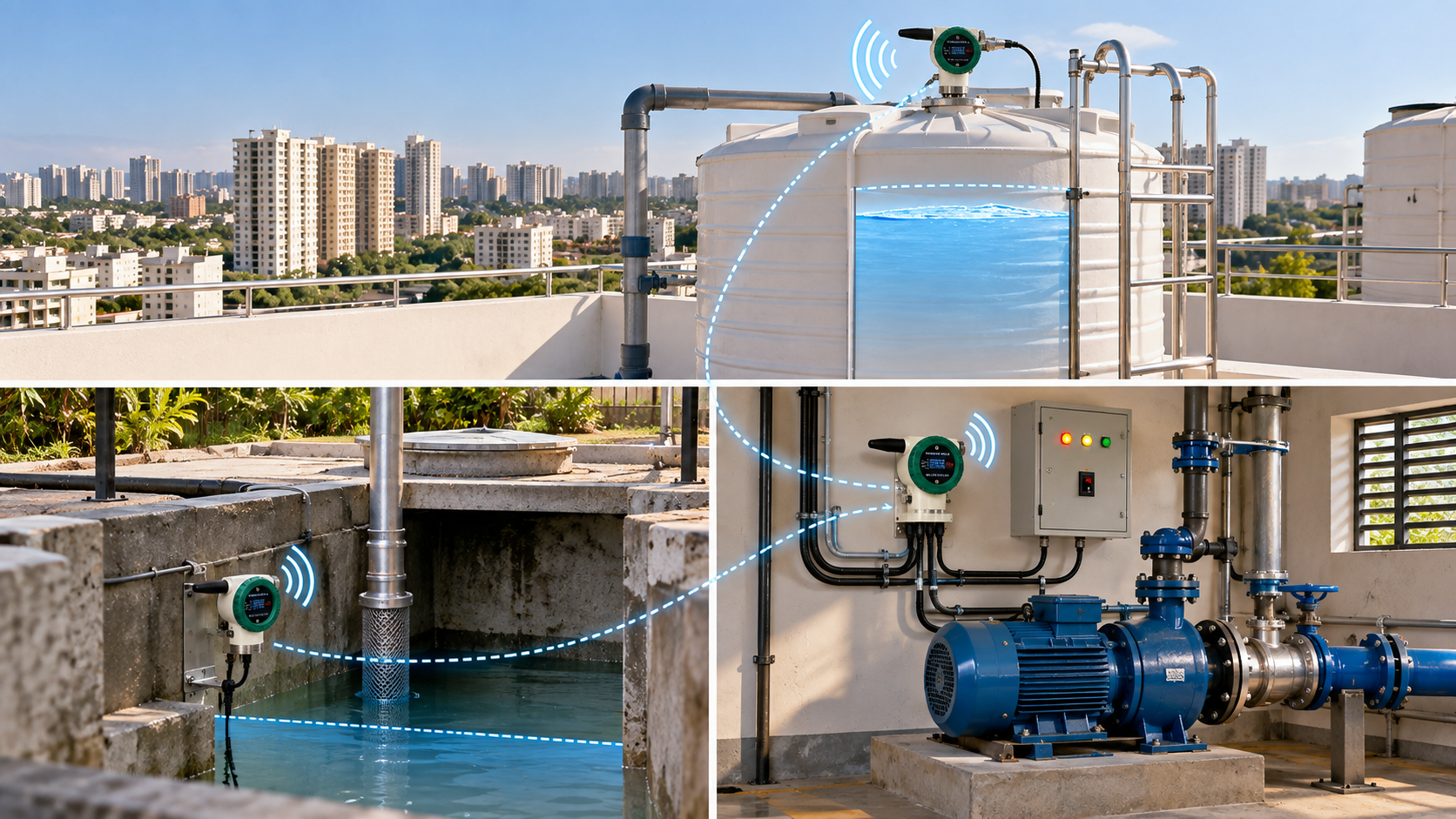
Managing water in a large apartment community can become increasingly difficult as the number of residents, tanks, pumps and water sources grows. Manual tank inspections and pump operation may provide limited visibility, especially when facility teams need to manage multiple underground sumps and rooftop tanks.
An IoT-based water management system can connect these different components through sensors, wireless communication, cloud monitoring and automation. For apartment communities looking to modernize their infrastructure, this approach can form the foundation of Smart Water Management for Apartments in Bengaluru.
Upgrading does not necessarily mean replacing the entire existing water infrastructure. In many cases, existing tanks and pumps can be integrated with new monitoring and automation technologies.
What Is an IoT-Based Water Management System?
An IoT-based system uses connected sensors and devices to collect information from the water infrastructure and transmit it to a centralized platform.
A typical apartment system can include:
Water Tanks → Level Sensors → IoT Connectivity → Cloud Platform → Dashboard → Pump Automation
This allows facility managers to monitor water conditions in real time and make decisions based on current and historical data.
A smart water management system can potentially monitor:
-
Underground sump levels
-
Rooftop tank levels
-
Pump operation
-
Water consumption
-
Low-level conditions
-
High-level conditions
-
Abnormal water-level changes
Why Upgrade from Manual Monitoring?
Traditional water management often depends on maintenance personnel physically checking tanks and switching pumps.
This approach can become difficult when an apartment community has several tanks spread across different locations.
Manual monitoring may also provide information only at the time of inspection. If a tank level changes significantly afterward, the facility team may not know until the next inspection.
An IoT-based system provides continuous data, allowing facility teams to monitor water infrastructure remotely.
Step 1: Assess the Existing Water Infrastructure
Before installing new technology, the apartment association should map its existing water system.
Identify:
-
Underground sumps
-
Rooftop tanks
-
Water sources
-
Transfer pumps
-
Booster pumps
-
Existing control panels
-
Water pipelines
-
Existing sensors or switches
-
Areas where water consumption is measured
This assessment helps determine where IoT sensors and controllers should be installed.
Step 2: Install Smart Water-Level Sensors
The next step is to monitor the key water-storage points.
Sensors can be installed in underground sumps and rooftop tanks to measure changing water levels.
Depending on the application, technologies such as radar, ultrasonic or other level-sensing methods can be considered.
The sensor continuously provides information that can be transmitted to the monitoring platform.
For a large apartment community, multiple sensors can provide a more complete view of the water network.
Step 3: Add IoT Connectivity
Once sensors are installed, they need a way to communicate with the monitoring platform.
Possible connectivity options include:
-
LoRa
-
NB-IoT
-
4G
-
LTE-M
-
Wi-Fi
The appropriate option depends on factors such as building layout, distance between tanks, network availability, power requirements and the number of monitoring points.
Wireless connectivity can be particularly useful when tanks are located far apart.
Step 4: Connect the System to a Cloud Platform
The sensor data can then be transmitted to a cloud-based platform.
A solution such as MyTank can provide a centralized environment for monitoring connected water infrastructure.
Instead of facility managers physically checking each tank, the system can provide access to water-level information through a connected dashboard.
Depending on the configuration, the platform can provide information such as:
-
Current tank levels
-
Tank-level history
-
Low-level alerts
-
High-level alerts
-
Water consumption information
-
Pump-related data
Step 5: Introduce Pump Automation
Monitoring is only one part of a complete smart water management system.
The next step can be connecting water-level information with pump control.
For example:
Rooftop Tank Low → Level Sensor → Controller → Pump Starts
Then:
Rooftop Tank High → Level Sensor → Controller → Pump Stops
The actual control logic should be configured according to the apartment's water infrastructure and safety requirements.
This can reduce the need for maintenance staff to manually switch pumps throughout the day.
Step 6: Add Pump Protection
When upgrading an existing system, pump protection should also be considered.
For example, a pump may need protection from operating when the underground sump has insufficient water.
A connected water-level sensor can provide the information required to identify low-water conditions.
Depending on the controller, the system may be configured to prevent or stop pump operation when the source water level falls below a defined threshold.
Other protection features may include overload or fault monitoring.
Step 7: Set Up Real-Time Alerts
Alerts can help facility teams respond quickly to important water-system conditions.
A smart system may provide notifications for:
-
Low sump level
-
High rooftop tank level
-
Critical water level
-
Pump fault
-
Unusual water-level changes
-
Sensor communication problems
This allows facility managers to investigate potential problems without continuously monitoring the dashboard.
Step 8: Monitor Multiple Tanks from One Platform
Large apartment communities may have several water-storage points.
A centralized IoT platform can bring information from different tanks into one interface.
For example:
|
Monitoring Point |
Level |
Condition |
|
Sump 1 |
74% |
Normal |
|
Sump 2 |
31% |
Monitoring |
|
Rooftop Tank 1 |
82% |
Normal |
|
Rooftop Tank 2 |
28% |
Low |
This makes it easier to understand the overall water situation across the property.
Step 9: Use Historical Data
One of the advantages of moving to an IoT-based system is the ability to store historical information.
Facility teams can analyze:
-
Daily water consumption
-
Tank filling patterns
-
Peak usage periods
-
Pump operating duration
-
Repeated low-level conditions
-
Unusual changes in water levels
This information can help identify recurring problems and support better water-management decisions.
Step 10: Plan for Future Expansion
An apartment community's water-management requirements may change over time.
When selecting an IoT system, consider whether additional:
-
Tanks
-
Pumps
-
Sensors
-
Buildings
-
Monitoring users
can be added later.
A scalable smart water management system can allow the apartment community to expand its monitoring infrastructure without replacing the entire system.
How MyTank Can Support the Upgrade
MyTank can form part of an IoT-based water-management architecture by connecting water-level monitoring and related water infrastructure to a centralized digital platform.
For a Bengaluru apartment, this can mean moving from isolated manual checks toward a connected system where facility teams can access water-level information remotely.
The overall architecture can look like:
Sump Sensors → IoT Connectivity → MyTank Platform → Dashboard
and, where automation is implemented:
Tank Sensors → Controller → Pump Automation → MyTank Monitoring
The exact features and integrations depend on the installed configuration.
Benefits of Upgrading to IoT-Based Water Management
An IoT upgrade can provide several operational benefits:
Real-Time Visibility
Facility managers can monitor tank levels without physically visiting each location.
Reduced Manual Monitoring
Continuous sensor data can reduce dependence on periodic tank inspections.
Automated Pump Operation
Water-level information can be used to support automatic pump start and stop.
Faster Alerts
Important water-level and equipment conditions can be communicated to facility teams.
Historical Insights
Stored data can help identify consumption patterns and recurring issues.
Centralized Management
Multiple tanks and water-system components can be monitored from one platform.
What Should Apartment Associations Consider Before Upgrading?
Before implementing Smart Water Management for Apartments in Bengaluru, apartment associations should evaluate:
-
Number and size of tanks
-
Number of pumps
-
Existing electrical infrastructure
-
Current pump-control system
-
Sensor installation requirements
-
Wireless connectivity
-
Cloud platform requirements
-
Automation requirements
-
Alert requirements
-
Future expansion plans
-
Maintenance requirements
A phased upgrade can also be considered, beginning with tank-level monitoring and gradually adding pump automation and other connected capabilities.
Conclusion
Upgrading a Bengaluru apartment to an IoT-based water management system does not necessarily require replacing the entire existing water infrastructure.
Existing tanks and pumps can be complemented with water-level sensors, wireless connectivity, cloud monitoring and automated controls.
A smart water management system can provide continuous visibility into sump and rooftop tank levels while helping facility teams manage pumps more systematically.
With a platform such as MyTank, apartment communities can move toward connected water monitoring and build a more data-driven approach to managing their water infrastructure.
For large residential communities, Smart Water Management for Apartments in Bengaluru can provide a practical framework for moving from manual tank checks toward real-time monitoring, automation and centralized water-system management.
- Digital Agency
- Literie
- Location de voitures
- Restaurant
- Restaurant
- Mode
- Mode
- Information
- Marketing
- Tourisme
- Développement
- Découverte
- Législation
- Gastronomie
- Pâtisserie
- Event
- Art
- Causes
- Crafts
- Dance
- Drinks
- Film
- Fitness
- Food
- Παιχνίδια
- Gardening
- Health
- Κεντρική Σελίδα
- Literature
- Music
- Networking
- άλλο
- Party
- Religion
- Shopping
- Sports
- Theater
- Wellness
 Greek
Greek
 Indian
 English
 French
 Arabic
 Spanish
 Portuguese
 Deutsch
 Turkish
 Dutch
Dutch
 Italiano
 Russian
 Romaian
 Portuguese (Brazil)
