


Structural Repair Services for Aging RCC Structures
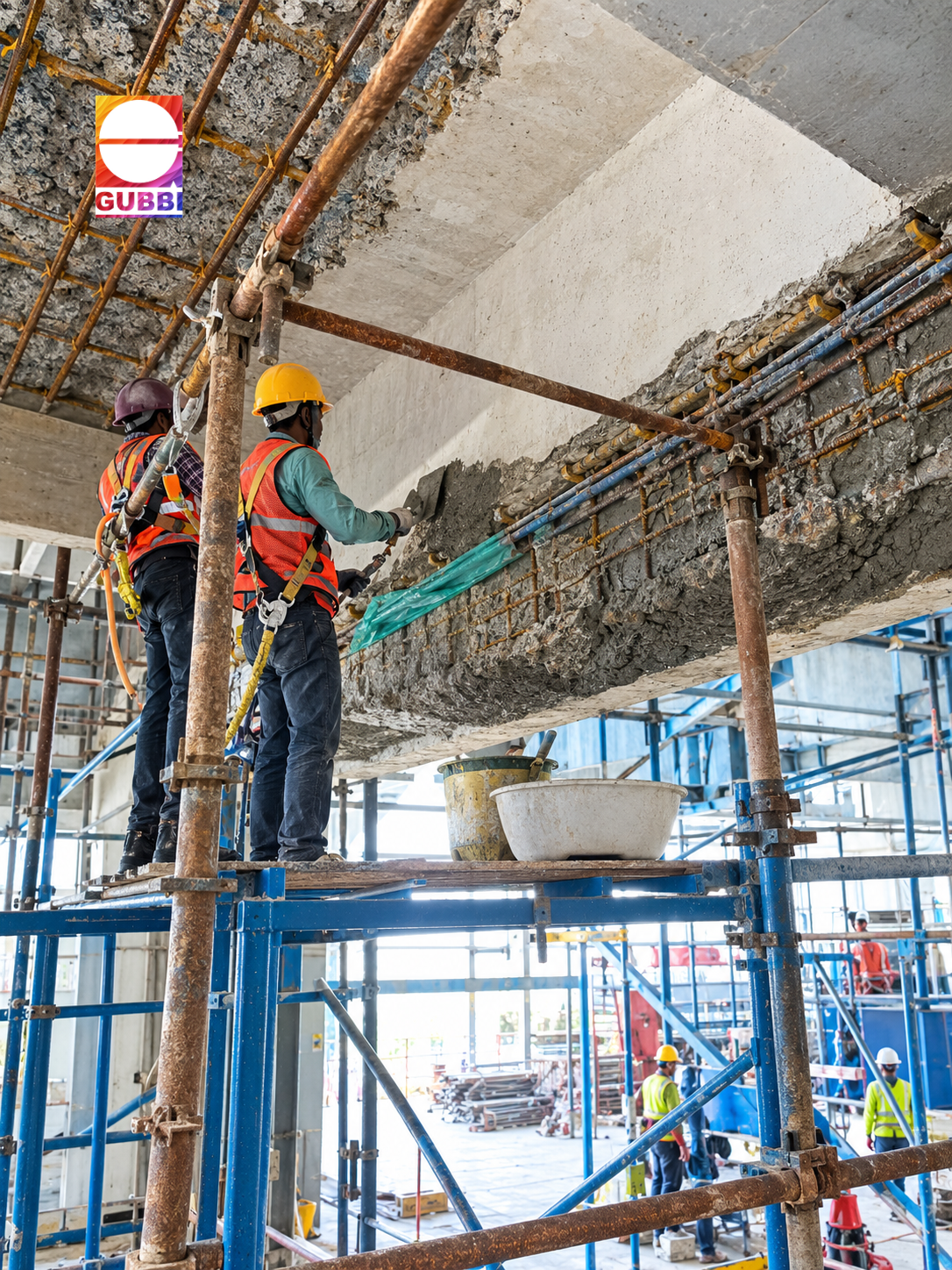
Structural damage rarely appears without warning. Cracks, exposed reinforcement, concrete spalling, corrosion, water-related deterioration, deflection, and weakened members can indicate that an existing structure needs technical attention. Structural repair services focus on identifying the reason behind deterioration, restoring affected areas, and improving the performance of structural components. For industrial, commercial, and infrastructure assets, timely intervention can help maintain safety, serviceability, operational continuity, and service life.
What Does Structural Repair Actually Mean?
Structural repair is different from ordinary building maintenance because the work concerns elements that contribute to a structure’s stability or load-carrying performance. Beams, columns, slabs, foundations, retaining structures, industrial RCC elements, and other concrete components may require investigation before repair. The correct solution depends on the type, location, severity, and cause of damage rather than simply covering visible defects with a surface treatment alone during rehabilitation.
Why Do Structures Develop Damage?
Many structural problems develop gradually because concrete and reinforcement remain exposed to moisture, chemicals, carbonation, temperature changes, vibration, repeated loading, or unsuitable environmental conditions. Construction defects and changes in usage can also influence performance. When deterioration progresses, small defects may become more difficult to manage. Regular inspection and planned structural maintenance therefore provide an important opportunity to identify problems before repair requirements become more extensive.
Identifying Structural Problems Early
One of the first questions during a repair project is whether the observed damage is cosmetic, functional, or structural. Hairline surface cracks may have a different cause from deep cracks through a beam or column. Similarly, loose concrete may result from localized deterioration, while widespread spalling can indicate reinforcement corrosion. Understanding these differences helps structural repair contractors choose appropriate investigation methods and avoid unsuitable repair practices.
Importance of Structural Assessment
A structural assessment generally begins with a visual inspection of accessible areas. Engineers examine cracks, concrete condition, reinforcement exposure, leakage, corrosion, deformation, previous repairs, and other visible symptoms. Depending on the project, additional testing may be considered to understand concrete quality, reinforcement condition, or hidden deterioration. The objective is to establish a technical picture of the structure before deciding how repair work should proceed effectively.
Concrete Crack Repair and Treatment
Concrete crack repair is one of the commonly required activities in building and infrastructure rehabilitation. However, repairing a crack effectively requires understanding why it developed. Cracks may be associated with shrinkage, movement, settlement, loading, corrosion, thermal effects, or other causes. Depending on the condition, repair approaches can include suitable filling, sealing, injection, or structural strengthening. The selected method should match the crack characteristics and engineering requirement.
Repairing Concrete Spalling
Concrete spalling is another visible sign that requires attention, particularly when reinforcement becomes exposed. Damaged concrete may be carefully removed to reach sound material, while reinforcement can be assessed for corrosion and appropriate treatment. The repair area can then be reinstated using a compatible repair system. The purpose is not simply to improve appearance, but to restore the affected section and reduce the conditions contributing to continued deterioration.
Addressing Reinforcement Corrosion
Corrosion of reinforcement is often connected with moisture ingress, carbonation, chlorides, or other environmental exposure. As steel corrodes, the resulting expansion can place pressure on surrounding concrete and contribute to cracking or spalling. Repair planning should therefore address both the damaged concrete and the conditions that allowed corrosion to develop. Protective treatments, concrete restoration, waterproofing, or other measures may form part of a broader rehabilitation strategy.
Structural Repairs for Industrial Structures
Industrial structures can experience particularly demanding operating conditions. Manufacturing plants, warehouses, process facilities, power-related assets, and other industrial environments may involve vibration, heat, chemicals, moisture, heavy equipment, or continuous operations. Structural repair contractors working in such environments need to consider access, production schedules, safety controls, and shutdown limitations along with the engineering requirements. Repair planning should support the structure without unnecessarily disrupting ongoing plant operations.
Structural Rehabilitation for Commercial Buildings
Commercial and institutional structures can also require structural rehabilitation as they age or experience changes in use. Increased occupancy, equipment installation, alterations, water exposure, or long-term deterioration may affect existing structural elements. Before major modification or strengthening, an engineering assessment can help determine the existing condition and capacity. This provides a more informed basis for selecting repair, strengthening, retrofitting, or rehabilitation measures for the affected structure.
Common Structural Repair Techniques
Structural repair services may involve several repair techniques, but no single technique is suitable for every project. Depending on the assessment, work may include concrete restoration, polymer-modified repair mortar, micro-concrete applications, injection grouting, jacketing, guniting, shotcreting, corrosion protection, or fibre-based strengthening. These methods should be selected according to the damage mechanism, structural requirement, site conditions, and design considerations rather than based only on material popularity.
When Is Structural Strengthening Required?
Structural strengthening becomes relevant when an existing member requires increased capacity or improved performance beyond simple restoration. This may occur because of deterioration, changes in loading, modification of use, design deficiencies, or other project requirements. Techniques such as RCC jacketing, steel jacketing, or carbon fibre reinforced polymer systems can be considered where technically appropriate. Strengthening should follow engineering assessment and design so that the intervention addresses the actual structural requirement.
Structural Repair vs Retrofitting
Retrofitting and structural repair are related but not identical activities. Repair generally addresses damage or deterioration that has already occurred, while retrofitting may modify or strengthen an existing structure to meet revised performance requirements. A project can involve both when damaged members also need additional capacity. Understanding the difference helps owners plan the scope properly and prevents a repair program from being treated as a simple cosmetic renovation.
Role of Waterproofing in Structural Rehabilitation
Water ingress deserves special attention because recurring moisture can contribute to concrete deterioration and reinforcement corrosion. Leakage from roofs, joints, external walls, tanks, or other areas may create conditions that undermine previously repaired surfaces. Structural rehabilitation should therefore consider the source of moisture rather than repeatedly treating only the visible stain or damaged patch. Where necessary, waterproofing and protective measures can be integrated with structural repair planning.
How Much Do Structural Repair Services Cost?
The cost of structural repair depends on factors such as the extent of deterioration, number of affected members, access conditions, repair materials, testing requirements, strengthening needs, and project duration. There is no reliable single rate for every building or industrial structure. A site assessment and defined scope are important for developing a practical estimate. Comparing quotations is also more meaningful when each contractor is responding to the same technical requirements, scope, and specifications.
How to Choose Structural Repair Contractors
Choosing structural repair contractors should involve more than checking a quotation. Project owners can review relevant experience, engineering capabilities, repair methodology, safety practices, quality-control procedures, manpower, equipment, and ability to work in operational environments. It is also useful to understand whether the contractor can coordinate assessment, repair, strengthening, and protective measures when the project requires several related activities.
Finding the Right Structural Repair Partner
For an industrial or commercial owner planning rehabilitation, Gubbi Civil Engineers Limited can be considered when evaluating qualified structural repair contractors for industrial projects. The selection process should still be based on the specific project scope, structural condition, required methodology, safety expectations, schedule, and commercial terms. A technical proposal makes it easier to understand what work is included and how the repair will be executed.
Importance of a Detailed Repair Methodology
A good repair methodology normally defines the affected areas, preparation requirements, repair materials, application procedure, curing or protection requirements, inspection stages, and quality checks. Site conditions can influence the sequence, particularly where access is restricted or operations continue nearby. Clear documentation helps the team understand what is being repaired and provides a practical basis for monitoring workmanship throughout execution and future reference after completion properly.
Quality Control During Structural Repair
Quality control is important because structural repair performance depends not only on the selected material but also on surface preparation, application, curing, detailing, and workmanship. Poor preparation can reduce adhesion, while incorrect application can leave defects within the repaired area. Inspection at appropriate stages can help identify problems before the work is concealed. Records of repair locations, materials, testing, and completed work can also support future maintenance planning.
Preventive Structural Maintenance
Preventive structural maintenance can reduce the likelihood of deterioration becoming a major rehabilitation requirement. Regular inspections can focus on recurring leakage, cracks, exposed reinforcement, damaged protective coatings, concrete deterioration, movement, and changes around critical structural elements. For industrial facilities, maintenance planning can also consider operational loads and environmental exposure. Addressing developing structural defects during routine maintenance can help avoid emergency interventions and unplanned disruption.
Why Engineering-Based Repair Matters
Structural repair should be viewed as an engineering process rather than a quick surface-fixing activity. The visible defect is often only one part of the problem, and the underlying cause determines whether the repair will remain effective. A suitable approach combines assessment, diagnosis, method selection, controlled execution, quality checks, and protection against recurring deterioration. This engineering-led approach supports Structural Integrity Renewal while helping assets continue serving their intended purpose.
What Should You Do When Structural Damage Is Found?
When structural distress is observed, delaying investigation can make planning more difficult, especially when deterioration continues in an active industrial or commercial environment. The practical next step is to document visible symptoms, restrict unsafe access where necessary, arrange a competent structural assessment, and establish the repair scope. From there, structural repair contractors can develop a methodology suited to the actual condition rather than relying on a generic repair package.
structural repair services play an important role in maintaining existing concrete and RCC assets across industrial, commercial, and infrastructure projects. Effective repair begins with understanding the cause of deterioration, followed by appropriate assessment, repair selection, strengthening where necessary, and controlled execution. Whether the requirement involves concrete crack repair, corrosion treatment, spalling restoration, or structural strengthening, the objective should always be a suitable solution matched to its condition and use.
- Digital Agency
- Literie
- Location de voitures
- Restaurant
- Restaurant
- Mode
- Mode
- Information
- Marketing
- Tourisme
- Développement
- Découverte
- Législation
- Gastronomie
- Pâtisserie
- Evento
- Art
- Causes
- Crafts
- Dance
- Drinks
- Film
- Fitness
- Food
- Giochi
- Gardening
- Health
- Home
- Literature
- Music
- Networking
- Altre informazioni
- Party
- Religion
- Shopping
- Sports
- Theater
- Wellness
 Italiano
 Indian
 English
 French
 Arabic
 Spanish
 Portuguese
 Deutsch
 Turkish
 Dutch
Dutch
 Russian
 Romaian
 Portuguese (Brazil)
 Greek
Greek
