


Automatic Pump Control Using Real-Time Water Level Sensors in Bengaluru
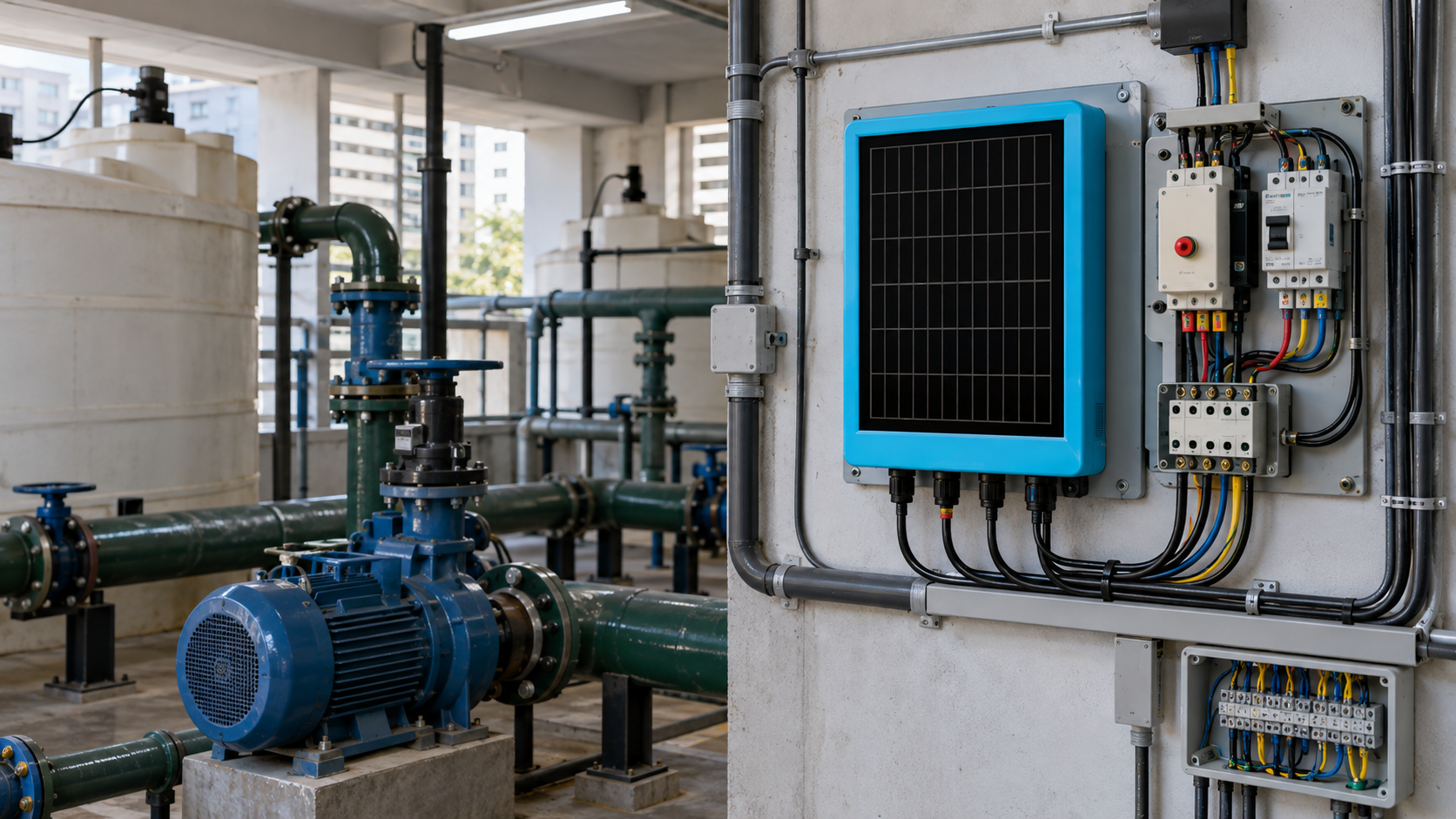
Water pumps are essential for maintaining water availability in commercial buildings across Bengaluru. Offices, IT parks, hospitals, hotels, shopping complexes, educational institutions, and mixed-use buildings often use pumps to transfer water from underground sumps to overhead tanks.
In conventional systems, pump operation may depend on fixed schedules, manual switching, or basic float mechanisms. These approaches can become difficult to manage when buildings have multiple tanks, pumps, and changing water demand.
Real-time water-level sensors provide another approach. By continuously measuring tank levels and connecting the information to an automated control system, buildings can support more responsive pump operation.
An IoT Water Tank Monitoring System for Commercial Buildings in Bengaluru can connect water-level sensors, IoT controllers, cloud platforms, and pump-control equipment. Platforms such as the MyTank IoT Platform can support connected monitoring and automation applications, while Tank-Level-Based Pump Control can use configured water-level thresholds to determine when pump operation is required.
What Is Automatic Pump Control?
Automatic pump control means operating a water pump according to predefined conditions instead of relying entirely on manual switching.
For water-transfer applications, one of the most useful control inputs is the water level inside a tank.
A basic sequence can be:
Tank Level Low → Pump Starts
↓
Tank Fills → Level Continuously Monitored
↓
Target Level Reached → Pump Stops
The actual control logic depends on the sensor, controller, pump, electrical system, and configured operating requirements.
Why Bengaluru Commercial Buildings Need Automated Pump Control
Commercial buildings can have complex water systems.
A typical building may have:
-
Underground sumps
-
Overhead tanks
-
Transfer pumps
-
Booster pumps
-
Multiple building blocks
-
Separate water-storage areas
Manual pump operation requires facility staff to regularly check tank levels and operate pumps.
This can lead to problems such as:
-
Pump running longer than necessary
-
Tank overflow
-
Delayed pump operation
-
Insufficient water in overhead tanks
-
Unnecessary manual intervention
-
Difficulty managing multiple pumps
Automated control can help connect pump operation to the actual water-storage condition.
Role of Real-Time Water Level Sensors
The foundation of automatic pump control is reliable water-level information.
A suitable level sensor measures the water level inside a tank and sends the information to a controller or monitoring platform.
Depending on the application, technologies can include:
-
Radar level sensors
-
Ultrasonic sensors
-
Hydrostatic sensors
-
Other suitable level-sensing technologies
The sensor continuously or periodically provides the current level according to the system configuration.
For example:
Tank Level = 25% → Low-Level Condition
Tank Level = 60% → Normal Condition
Tank Level = 85% → Target/High-Level Condition
These values are illustrative. Actual thresholds should be configured according to the building's tank capacity, water demand, pump characteristics, and operating requirements.
What Is Tank-Level-Based Pump Control?
Tank-Level-Based Pump Control uses water-level information as an input for pump operation.
Instead of saying:
"Run the pump from 8 AM to 9 AM."
the system can use logic such as:
"Run the pump when the tank reaches the configured low threshold and stop it when the target level is reached."
This can make pump operation more closely connected to actual water requirements.
Example
Tank Level Falls Below Lower Threshold
↓
Controller Receives Level Information
↓
Pump Starts
↓
Water Level Rises
↓
Upper Threshold Reached
↓
Pump Stops
This approach can help reduce unnecessary pump operation and support more consistent water management.
How an IoT Water Tank Monitoring System Enables Automation
An IoT Water Tank Monitoring System for Commercial Buildings in Bengaluru can connect the physical water infrastructure to a digital control environment.
A typical architecture is:
Water Level Sensor
↓
IoT Controller
↓
Communication Network
↓
Cloud Platform
↓
Monitoring Dashboard
↓
Pump Control System
The cloud platform can provide visibility into tank conditions, while local or connected control equipment can handle the required pump-control logic.
The exact architecture depends on the system design. Some control functions may be performed locally by the controller, while monitoring and reporting can be handled through the cloud.
How the MyTank IoT Platform Can Support Pump Automation
The MyTank IoT Platform can support connected water-management applications involving tank-level monitoring, remote visibility, alerts, and pump automation.
A commercial building could use connected sensors to monitor:
-
Underground sump levels
-
Overhead tank levels
-
Multiple water-storage points
-
Pump status
-
Other configured water-system parameters
The available information can then be presented through a centralized monitoring interface.
Depending on the installation, this information can support configured pump-control logic.
For example:
Overhead Tank Low + Sump Level Adequate → Pump Operation
Overhead Tank Target Level Reached → Pump Stop
The exact control sequence should be configured according to the building's infrastructure and safety requirements.
Why Monitor the Underground Sump Too?
Monitoring only the overhead tank may not provide sufficient information for pump control.
Consider:
Underground Sump → Transfer Pump → Overhead Tank
Suppose the overhead tank is at 20%, indicating that it needs water.
However, if the underground sump is nearly empty, the transfer pump should not simply operate without considering the available source water.
Monitoring both tanks provides more context.
For example:
Sump Level Adequate + Overhead Tank Low → Pump Operation May Be Permitted
Sump Level Low → Pump Operation Restricted
Overhead Tank Reaches Target Level → Pump Stops
This creates a more coordinated approach to water transfer.
Preventing Tank Overflow
Tank overflow is one of the problems that automated pump control can help address.
Without suitable monitoring, a pump may continue operating after the tank has reached its required level.
With configured level thresholds:
Tank Level Low → Pump Starts
Tank Level High → Pump Stops
This can help reduce unnecessary pumping and overflow.
However, automatic control should not be treated as a replacement for appropriate equipment maintenance, electrical protection, or physical inspection.
Reducing Water Shortage Risks
Automatic pump control can also help ensure that tanks are replenished when required.
If the overhead tank reaches a configured low-level threshold, the system can identify the condition.
Depending on the configured logic:
Low Tank Level → Pump Start → Tank Refill → Target Level → Pump Stop
This can reduce dependence on an operator being available at exactly the right time.
It can be especially useful in large commercial properties where facility teams manage multiple water-storage locations.
Monitoring Multiple Tanks
Large commercial buildings may have several overhead tanks and underground sumps.
For example:
-
Sump A
-
Sump B
-
Rooftop Tank A
-
Rooftop Tank B
-
Rooftop Tank C
Each tank can have an appropriate level sensor.
The monitoring platform can provide a centralized view:
|
Asset |
Level |
Status |
|
Sump A |
75% |
Normal |
|
Sump B |
60% |
Normal |
|
Tank A |
28% |
Low |
|
Tank B |
82% |
Normal |
|
Tank C |
91% |
High |
This allows facility managers to identify which tanks require attention.
Where automation is implemented, the relevant tank-level conditions can also be used as inputs for pump-control logic.
Real-Time Alerts
Automatic control can be supported by alerts.
Useful notifications may include:
-
Low tank level
-
High tank level
-
Critical low level
-
Pump status change
-
Communication failure
-
Other configured conditions
For example:
Tank Level < Low Threshold → Alert
The facility manager can then review the dashboard and determine whether the pump, water source, or another component requires attention.
Historical Data for Pump Management
An IoT system can also store historical tank-level information.
Facility teams can analyze:
-
Pump operating periods
-
Tank filling cycles
-
Tank consumption patterns
-
Low-level events
-
High-level events
-
Repeated pump operation
-
Unusual changes in water level
For example, if a pump runs significantly longer than normal, the facility team can investigate whether there is a change in water demand, a sensor issue, a pump-related problem, or another cause.
Historical data provides evidence for investigation and maintenance planning.
Remote Pump Monitoring
Facility managers may not always be located near pump rooms.
A cloud-connected monitoring system can provide remote visibility into available water-system information.
The basic process is:
Sensor → IoT Device → Cloud → Dashboard → Facility Manager
The dashboard can show the current water level and, where supported, pump status.
This can help facility teams monitor multiple areas without physically visiting every tank.
Connectivity for Automated Pump Systems
An IoT pump-control system requires reliable communication between sensors, controllers, and monitoring platforms.
Depending on the application, communication technologies can include:
-
LoRa
-
4G
-
NB-IoT
-
CAT-M1
-
LTE-M
The appropriate technology depends on the building layout, distance between equipment, network availability, power requirements, and system architecture.
For critical pump-control applications, the provider should also explain how control functions behave if communication with the cloud is temporarily unavailable.
Local Control and Cloud Monitoring
A well-designed system can separate monitoring from critical control functions when appropriate.
For example:
Local Controller → Handles Pump Logic
Cloud Platform → Provides Monitoring, Alerts, and Historical Data
This type of architecture can allow pump-control decisions to remain close to the equipment while giving facility managers remote visibility.
The actual design depends on the selected hardware and control architecture.
What to Consider Before Implementing Automatic Pump Control
Commercial building managers should evaluate several factors.
1. Sensor Selection
Choose a sensor appropriate for the tank and installation environment.
2. Control Thresholds
Define suitable lower and upper operating levels.
3. Pump Compatibility
Verify that the controller is compatible with the pump and electrical system.
4. Sump Monitoring
Consider monitoring the source tank as well as the receiving tank.
5. Alerts
Configure appropriate low-, high-, and equipment-related alerts.
6. Connectivity
Choose communication technology appropriate for the building.
7. Safety and Protection
Ensure appropriate electrical protection and pump safety mechanisms are included.
8. Manual Override
Consider whether authorized operators need a manual control option for maintenance or exceptional conditions.
9. Historical Data
Determine whether pump and tank-level history is required for analysis.
10. Scalability
Ensure additional tanks and pumps can be incorporated if the building expands.
Example: Automatic Pump Control in a Bengaluru Commercial Building
Consider an office complex with:
-
One underground sump
-
Two overhead tanks
-
Two transfer pumps
The system could be configured with suitable thresholds.
Step 1: Monitor
The sensors continuously measure the sump and overhead tank levels.
Step 2: Detect Low Level
One overhead tank falls below its configured lower threshold.
Step 3: Check Source
The system confirms that the underground sump has sufficient water.
Step 4: Start Pump
The configured pump-control system starts the appropriate transfer pump.
Step 5: Monitor Filling
The tank level is continuously monitored as water is transferred.
Step 6: Stop at Target Level
The tank reaches the configured upper threshold and the pump stops according to the control logic.
Step 7: Record Data
The monitoring platform stores the available tank and pump information for future analysis.
This creates a closed monitoring and control cycle.
Benefits of Tank-Level-Based Pump Control
A properly designed Tank-Level-Based Pump Control system can provide several potential benefits.
Reduced Manual Intervention
Operators do not need to manually start and stop pumps for every routine filling cycle.
Better Water Availability
Low-level conditions can trigger configured pump operation when source water is available.
Reduced Overflow Risk
Pumps can be stopped when the tank reaches its configured target level.
Better Pump Management
Pump operation can be connected to actual tank conditions.
Remote Visibility
Facility managers can monitor water infrastructure through a connected platform.
Historical Insights
Stored data can help identify recurring operating patterns.
Conclusion
Automatic pump control using real-time water-level sensors can help Bengaluru commercial buildings manage water infrastructure more systematically. Instead of relying entirely on fixed schedules or manual pump switching, water-level information can become an input for configured pump-control decisions.
An IoT Water Tank Monitoring System for Commercial Buildings in Bengaluru can connect level sensors, IoT devices, cloud monitoring, alerts, and pump-control equipment. The MyTank IoT Platform can support connected water-management applications involving tank monitoring, remote visibility, and pump automation.
With properly configured Tank-Level-Based Pump Control, pumps can be operated according to actual tank conditions, helping reduce unnecessary pumping, support water availability, and reduce overflow risk.
The effectiveness of the system ultimately depends on appropriate sensor selection, control logic, pump compatibility, connectivity, electrical protection, installation quality, and ongoing maintenance.
- Digital Agency
- Literie
- Location de voitures
- Restaurant
- Restaurant
- Mode
- Mode
- Information
- Marketing
- Tourisme
- Développement
- Découverte
- Législation
- Gastronomie
- Pâtisserie
- Evento
- Art
- Causes
- Crafts
- Dance
- Drinks
- Film
- Fitness
- Food
- Jogos
- Gardening
- Health
- Início
- Literature
- Music
- Networking
- Outro
- Party
- Religion
- Shopping
- Sports
- Theater
- Wellness
 Portuguese (Brazil)
 Indian
 English
 French
 Arabic
 Spanish
 Portuguese
 Deutsch
 Turkish
 Dutch
Dutch
 Italiano
 Russian
 Romaian
 Greek
Greek
