


Are Water Management Inefficiencies Increasing Your Costs? Consider AI-Powered Solutions
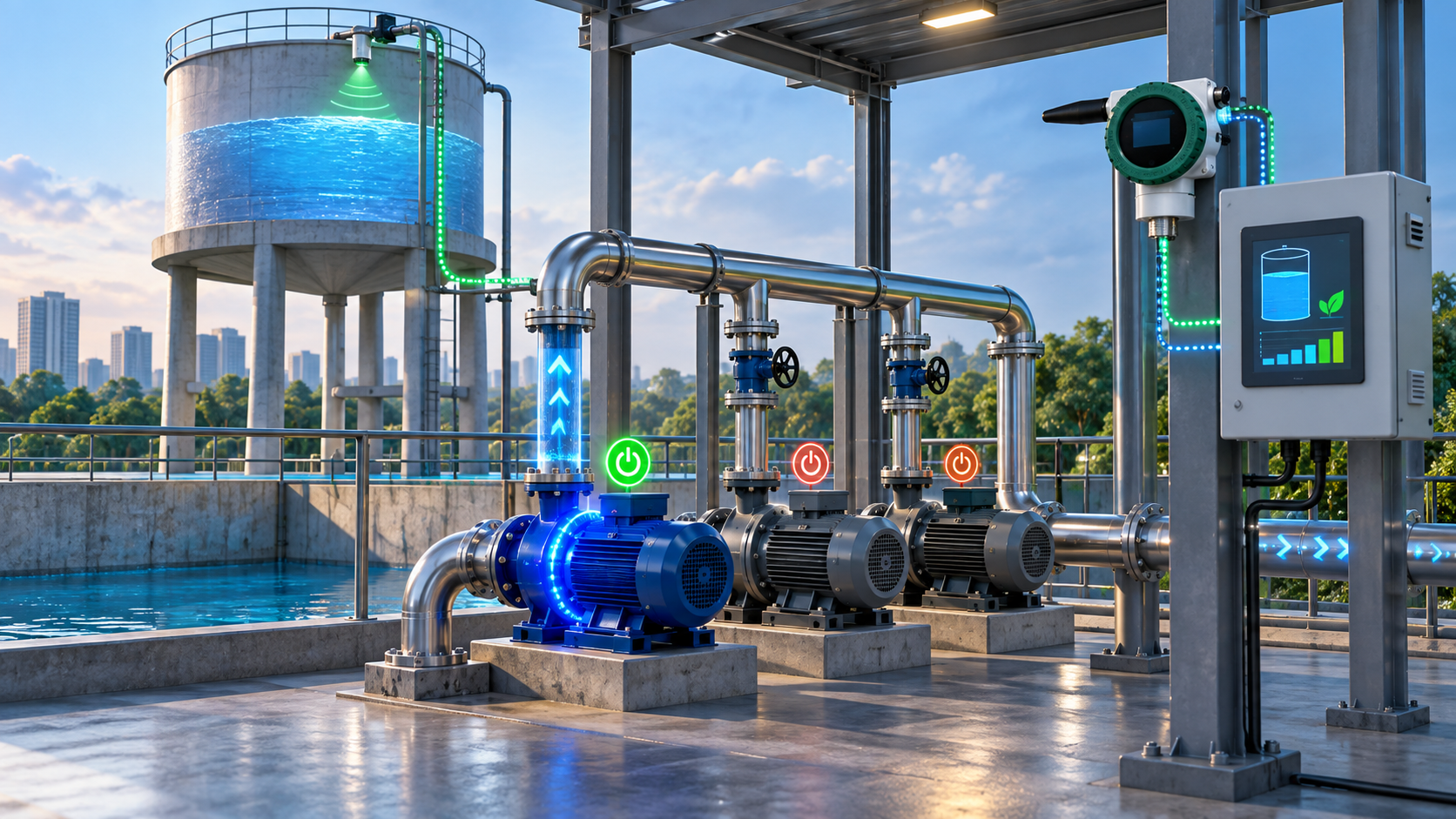
Water management inefficiencies can quietly increase operating costs through water wastage, unnecessary pump operation, overflow incidents, equipment failures, and manual monitoring. Many organizations continue to rely on traditional water level measurement and reactive maintenance, making it difficult to identify problems before they become expensive.
AI-powered water management solutions are changing this approach by combining real-time sensor data, intelligent analytics, and automated control systems. With technologies such as AI water management, MyTank, and a Radar Level Sensor, businesses can improve visibility, reduce operational waste, and make better decisions about their water infrastructure.
The Hidden Cost of Inefficient Water Management
Water-related inefficiencies are not always immediately visible. A pump may run longer than necessary, a storage tank may overflow during unattended operation, or a small leak may continue for weeks without detection. These issues can result in higher electricity consumption, increased maintenance costs, and unnecessary water loss.
Common sources of inefficiency include:
-
Manual monitoring of tank levels.
-
Pumps operating without accurate water level information.
-
Overflow caused by delayed intervention.
-
Dry runs and equipment damage.
-
Undetected leaks or abnormal consumption.
-
Limited visibility across multiple tanks and facilities.
Without continuous monitoring, organizations often discover these problems only after receiving higher utility bills or facing equipment breakdowns.
How AI Water Management Improves Operational Efficiency
AI water management uses connected sensors and intelligent software to analyze water-related data continuously. Instead of simply displaying current tank levels, an AI-enabled system can identify unusual patterns, detect potential problems, and support proactive decision-making.
For example, AI analytics can compare current water consumption with historical patterns. If a facility normally uses a predictable amount of water but suddenly shows unusual consumption, the system can flag the deviation for investigation. Similarly, repeated pump cycles or unexpected drops in water levels may indicate a leak, faulty equipment, or changing demand.
The major advantage is that organizations can move from reactive maintenance to predictive water management. This reduces dependence on manual inspections and helps teams focus on issues that require immediate attention.
The Role of Radar Level Sensor Technology
Accurate data is essential for any intelligent water management system. A Radar Level Sensor provides reliable, non-contact measurement of water levels in tanks, reservoirs, and other storage environments.
Unlike traditional mechanical float sensors, radar technology uses electromagnetic waves to measure the distance between the sensor and the water surface. This allows the system to determine water levels without direct contact with the liquid.
Radar Level Sensor technology offers several benefits:
-
Accurate water level measurement.
-
Non-contact operation.
-
Reduced maintenance requirements.
-
Reliable performance in demanding environments.
-
Better compatibility with digital monitoring systems.
Because radar sensors continuously provide precise level information, they create a strong foundation for AI-based analysis and automation.
MyTank: Turning Water Data into Actionable Insights
MyTank is a smart water monitoring platform that helps organizations connect water infrastructure with digital intelligence. By integrating tank level sensors, IoT connectivity, and centralized monitoring, MyTank enables users to view water conditions remotely and respond to changing operational requirements.
When combined with a Radar Level Sensor, MyTank can provide accurate and timely information about water storage levels. This information can be used to monitor consumption, identify unusual behavior, and improve pump scheduling.
Instead of checking individual tanks manually, facility managers can access centralized information through a connected platform. This is especially useful for organizations managing multiple buildings, residential communities, commercial facilities, or industrial sites.
Reducing Pumping and Energy Costs
One of the most significant financial benefits of intelligent water management is improved pump efficiency. Pumps consume electricity every time they operate, and unnecessary pumping can increase energy costs without improving water availability.
AI-powered systems can help optimize pumping decisions by using real-time water level data and historical consumption patterns. For example, pumps can be scheduled according to actual demand rather than fixed assumptions. This reduces unnecessary operation and helps prevent repeated starts and stops.
Accurate level monitoring also supports better pump protection. When water levels fall below safe operating limits, the system can identify conditions that may lead to dry running. Preventing such events helps reduce equipment damage and maintenance expenses.
Detecting Leaks Before They Become Expensive
Water leaks can create significant financial losses, particularly in large facilities where consumption is difficult to monitor manually. A small leak may not attract attention immediately, but over time it can waste thousands of liters of water and increase utility expenses.
AI-powered monitoring systems can analyze changes in water levels and consumption patterns to identify unusual behavior. When combined with reliable sensor data from a Radar Level Sensor, the system can distinguish between normal usage and unexpected water loss.
Potential warning signs include:
-
Water levels dropping faster than usual.
-
Continuous consumption during inactive periods.
-
Frequent pump operation without corresponding demand.
-
Differences between expected and actual water usage.
Early detection allows maintenance teams to investigate problems before they become major operational or financial issues.
Improving Maintenance Through Predictive Insights
Traditional maintenance often depends on fixed schedules or emergency repairs. While routine inspections remain important, they may not identify problems developing between inspection periods.
AI water management systems can support predictive maintenance by recognizing patterns associated with equipment failure. Unusual pump cycles, inconsistent tank levels, or repeated system alerts may indicate that a component requires attention.
With MyTank and connected Radar Level Sensor technology, maintenance teams can gain better visibility into system performance. This helps them prioritize repairs based on actual operating conditions rather than assumptions.
The result is fewer unexpected breakdowns, improved equipment reliability, and better use of maintenance resources.
Supporting Multi-Site Water Management
Managing water infrastructure across multiple locations can be challenging when each site operates independently. Manual reporting and disconnected monitoring systems make it difficult to compare performance or identify recurring issues.
A centralized platform such as MyTank can help bring information from different tanks and facilities into one monitoring environment. AI-powered analytics can then identify trends across locations, highlight inefficient sites, and support consistent operational standards.
This is particularly valuable for:
-
Apartment communities.
-
Hospitals and educational institutions.
-
Manufacturing facilities.
-
Commercial buildings.
-
Hotels and hospitality properties.
-
Municipal and infrastructure projects.
Centralized monitoring reduces the need for frequent physical inspections and enables faster responses to abnormal conditions.
Why AI-Powered Water Management Is a Smart Investment
Investing in AI-powered water management is not only about adopting new technology. It is about reducing avoidable costs and improving the long-term performance of water infrastructure.
The potential benefits include:
-
Lower water wastage.
-
Reduced electricity consumption.
-
Fewer pump failures.
-
Improved leak detection.
-
Reduced manual monitoring effort.
-
Better maintenance planning.
-
Greater visibility across multiple facilities.
The return on investment can improve further when organizations use existing infrastructure more efficiently instead of relying on costly reactive repairs or unnecessary equipment replacements.
Conclusion
Water management inefficiencies can have a direct impact on operating costs, equipment reliability, and resource conservation. Manual monitoring and traditional control methods often make it difficult to identify problems early enough to prevent financial losses.
By combining AI water management, MyTank, and a reliable Radar Level Sensor, organizations can create a smarter and more efficient approach to water infrastructure management. Real-time data, predictive insights, and automated decision-making help reduce wastage, optimize pumping operations, and identify potential failures before they become costly.
As water demand and operational challenges continue to grow, AI-powered water management offers a practical path toward greater efficiency, reliability, and long-term cost control.
- Digital Agency
- Literie
- Location de voitures
- Restaurant
- Restaurant
- Mode
- Mode
- Information
- Marketing
- Tourisme
- Développement
- Découverte
- Législation
- Gastronomie
- Pâtisserie
- Veranstaltung
- Art
- Causes
- Crafts
- Dance
- Drinks
- Film
- Fitness
- Food
- Spiele
- Gardening
- Health
- Startseite
- Literature
- Music
- Networking
- Andere
- Party
- Religion
- Shopping
- Sports
- Theater
- Wellness
 Deutsch
 Indian
 English
 French
 Arabic
 Spanish
 Portuguese
 Turkish
 Dutch
Dutch
 Italiano
 Russian
 Romaian
 Portuguese (Brazil)
 Greek
Greek
