


How 4G IoT Devices Communicate With Remote Water Tank Sensors
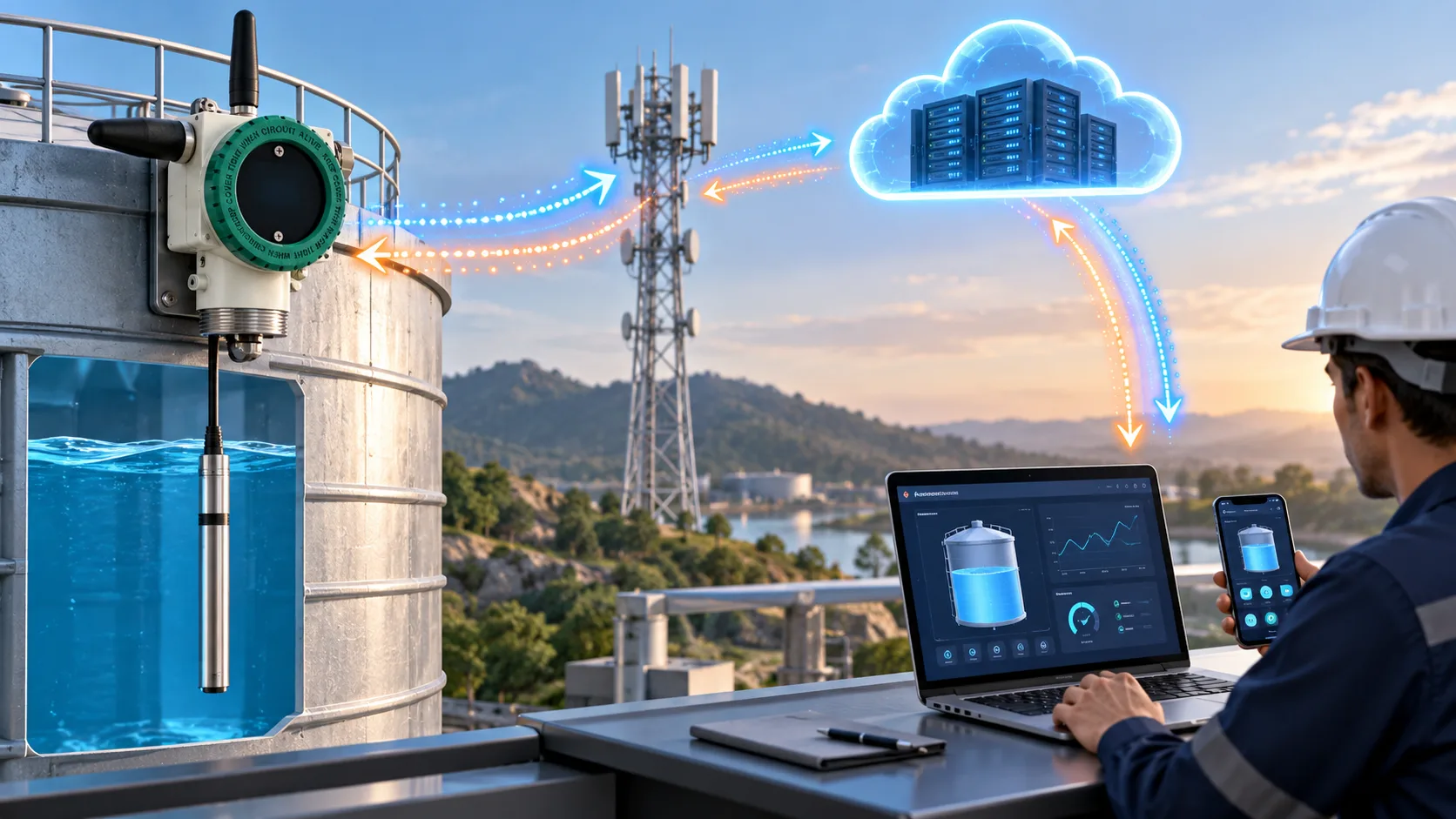
Managing water tanks at remote locations can be difficult when there is no convenient way to check water levels regularly. Manual inspections require time, travel, and personnel, while conventional wired monitoring systems may be difficult to install across geographically distributed sites.
IoT technology provides a more connected approach. By combining a 4G Water Tank Sensor with cellular communication, water-level data can be collected at a remote tank and transmitted to a cloud-based monitoring platform. This allows users to check tank conditions remotely and respond when water levels reach critical thresholds.
But how exactly do 4G IoT devices communicate with remote water tank sensors?
What Is a 4G Water Tank Sensor?
A 4G Water Tank Sensor is part of a connected monitoring system designed to measure water levels and transmit the collected information through a 4G cellular network.
The system generally consists of:
-
A water-level sensor
-
An IoT monitoring device
-
A 4G cellular connection
-
A cloud or remote monitoring platform
-
A dashboard or application for users
The sensor measures the water level inside the tank. The IoT device processes the measurement and sends the information over the cellular network to the monitoring platform.
This eliminates the need for users to physically visit the tank every time they want to know its current level.
How Does Communication Take Place?
The communication process can be understood as a series of steps.
The Sensor Measures Water Level
The first step is measuring the amount of water inside the tank.
A Smart Water Level Sensor can continuously or periodically detect the water level and convert the measurement into usable data.
Depending on the technology used, the sensor may measure the distance between the sensor and the water surface and use that information to determine the tank's water level.
The IoT Device Collects the Data
The sensor sends its measurement to the connected IoT device.
The device acts as the communication bridge between the sensor and the remote monitoring platform. It receives the sensor data, processes it, and prepares it for transmission.
This allows raw sensor measurements to become useful information that can be viewed remotely.
Data Is Transmitted Through 4G
Once the measurement is ready, the IoT device uses a 4G cellular network to transmit the information.
Unlike Wi-Fi-based systems, the device does not necessarily need a local Wi-Fi router at the tank location. Instead, it communicates through the available cellular network.
This makes 4G particularly useful for remote tanks located at sites where installing conventional internet infrastructure may be inconvenient.
Data Reaches the Cloud Platform
The transmitted information is received by a cloud-based monitoring platform.
The platform can store and organize measurements from one or multiple tanks. Historical information can also help users understand water consumption patterns and identify unusual changes.
For organizations managing several remote locations, centralized data can make monitoring significantly easier.
Users Access the Information Remotely
The final stage is presenting the information to the user.
Depending on the monitoring solution, users may be able to access tank-level information through a web dashboard, mobile application, or other connected interface.
Instead of traveling to the tank, an operator can remotely check whether the tank has sufficient water or requires attention.
Role of a Smart Water Level Sensor
A Smart Water Level Sensor does more than simply detect whether a tank contains water. In a connected IoT system, it becomes the starting point for collecting actionable water-level information.
For example, the system can help identify conditions such as:
-
Low water level
-
High water level
-
Nearly empty tank
-
Nearly full tank
-
Changes in water level over time
-
Potential abnormal consumption
This information can help organizations make more informed decisions about water management.
Why Use 4G for Remote Water Tanks?
One of the main advantages of 4G communication is its ability to connect devices without requiring a local wired internet connection.
This can be useful for:
Remote locations: Tanks located away from offices or control rooms can still communicate through cellular networks.
Distributed infrastructure: Organizations managing tanks across different locations can collect data into a centralized platform.
Simpler deployment: Cellular communication can reduce the need to install dedicated internet infrastructure at every monitoring site.
Remote access: Users can check water-level information without physically visiting the tank.
From Sensor Data to Alerts
A connected water monitoring system can go beyond displaying measurements.
Thresholds can be established for different tank conditions. For example, when the water level falls below a predefined level, the system can generate an alert.
Similarly, a high-level alert can warn users when a tank is approaching its maximum capacity.
This can help users respond to water shortages or potential overflow before they become larger operational issues.
Example: Monitoring a Remote Agricultural Tank
Consider a water tank located at an agricultural site several kilometers away from the main facility.
A Smart Water Level Sensor installed on the tank measures the water level. The connected IoT device receives the measurement and transmits it through a 4G network.
The information reaches the monitoring platform, where the operator can view the current level remotely.
If the water level drops below the configured threshold, an alert can prompt the operator to arrange refilling or take another appropriate action.
The operator can therefore monitor the tank without making a physical visit simply to check its level.
What Happens When Connectivity Is Unavailable?
Remote monitoring systems should also account for temporary connectivity problems.
If the 4G signal becomes unavailable, the system may need to store measurements locally and transmit them once communication is restored, depending on the device's capabilities.
This is an important consideration when selecting a 4G Water Tank Sensor for locations where network coverage may fluctuate.
Choosing the Right 4G IoT Water Monitoring System
Before deploying a remote water monitoring solution, organizations should evaluate:
Sensor Accuracy
The sensor should provide measurements appropriate for the tank's size and monitoring requirements.
Cellular Coverage
4G availability should be checked at the installation location. Network performance can vary based on terrain, buildings, distance from towers, and other environmental factors.
Power Supply
Remote installations should consider how the sensor and IoT device will receive power and how the system will operate during power interruptions.
Data Transmission
The device should reliably transmit sensor readings to the monitoring platform at the required intervals.
Alerts and Notifications
Useful monitoring systems should provide configurable alerts for important water-level conditions.
Scalability
If more tanks need to be monitored in the future, the system should be capable of supporting additional devices and locations.
The Future of Remote Water Monitoring
The combination of IoT, cellular connectivity, and water-level sensing is changing how organizations manage distributed water infrastructure.
A 4G Water Tank Sensor can connect a remote tank to a centralized monitoring platform, while a Smart Water Level Sensor provides the measurements needed to understand the tank's condition.
Together, these technologies can reduce dependence on manual inspections and provide better visibility into water storage across remote locations.
Conclusion
4G IoT devices create a communication link between remote water tanks and users who may be located far away from the physical site. The process begins with a Smart Water Level Sensor measuring the water level, followed by an IoT device transmitting the information through a 4G cellular network to a remote monitoring platform.
A 4G Water Tank Sensor can therefore provide a practical way to connect remote water infrastructure, enabling users to access tank-level information, receive alerts, and make better-informed water-management decisions.
As more organizations adopt connected infrastructure, 4G-enabled water monitoring can play an important role in making remote tank management more efficient and accessible.
- Digital Agency
- Literie
- Location de voitures
- Restaurant
- Restaurant
- Mode
- Mode
- Information
- Marketing
- Tourisme
- Développement
- Découverte
- Législation
- Gastronomie
- Pâtisserie
- Event
- Art
- Causes
- Crafts
- Dance
- Drinks
- Film
- Fitness
- Food
- Παιχνίδια
- Gardening
- Health
- Κεντρική Σελίδα
- Literature
- Music
- Networking
- άλλο
- Party
- Religion
- Shopping
- Sports
- Theater
- Wellness
 Greek
Greek
 Indian
 English
 French
 Arabic
 Spanish
 Portuguese
 Deutsch
 Turkish
 Dutch
Dutch
 Italiano
 Russian
 Romaian
 Portuguese (Brazil)
