


How to Overcome Remote Site Monitoring Challenges With 4G
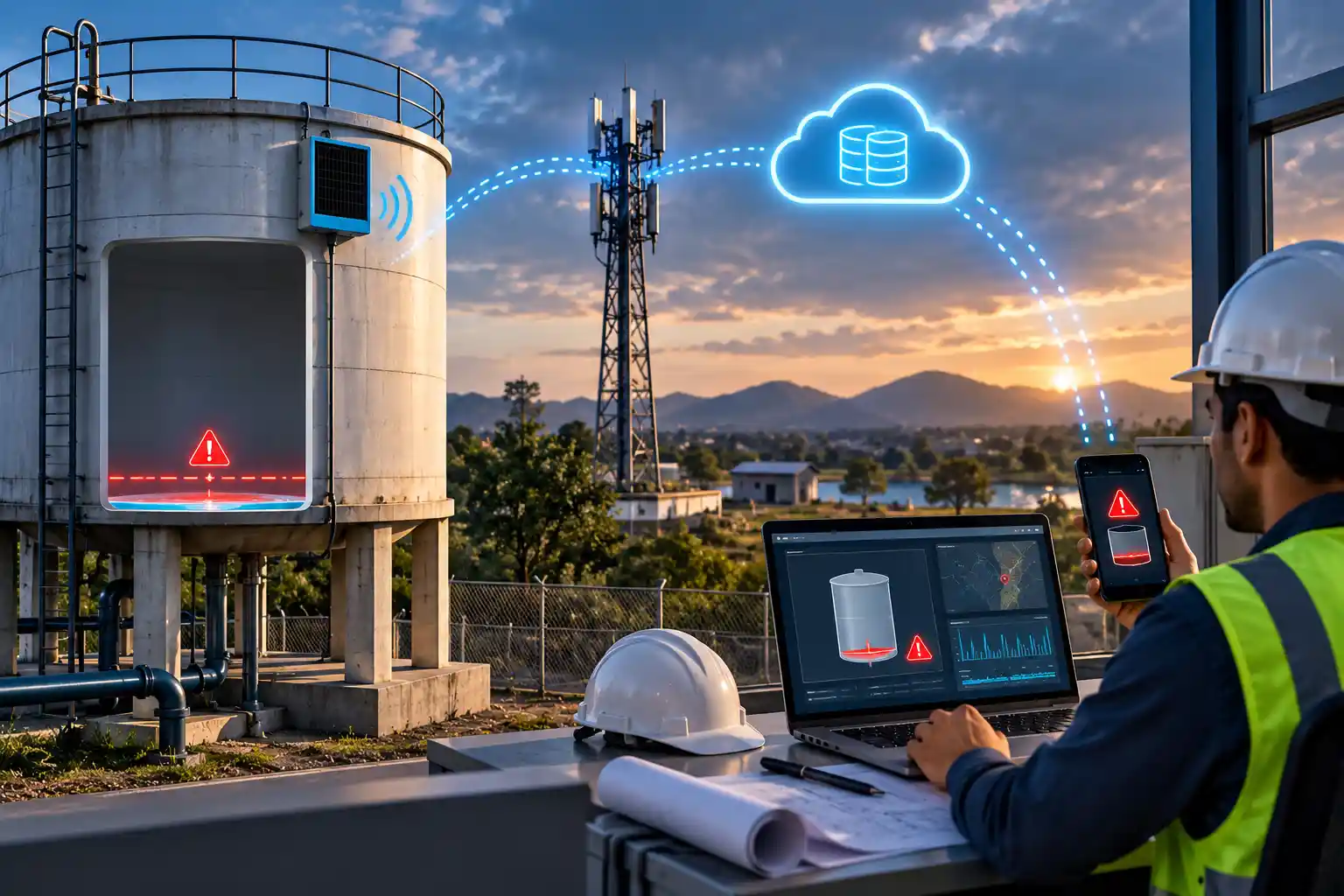
Monitoring water tanks at remote locations can be challenging when sites are spread across large areas, have limited infrastructure, or are difficult to access regularly. Traditional methods often require staff to visit each location, manually check water levels, and report the readings. This approach can be time-consuming, expensive, and unreliable.
A 4G Water Level Monitoring System provides a practical way to overcome these challenges by enabling remote Tank Level Monitoring through cellular connectivity. Instead of relying on frequent physical inspections, organizations can collect tank-level information remotely and use it to make faster decisions.
What Makes Remote Tank Monitoring Difficult?
Remote water tanks can be located at farms, industrial facilities, construction sites, apartment complexes, reservoirs, and other locations where regular supervision is difficult.
Some common challenges include:
Difficult Site Accessibility
Remote tanks may be located far from operational centers or in areas where frequent physical visits are inconvenient. When personnel need to travel to inspect water levels, routine monitoring becomes resource-intensive.
Manual Water-Level Checks
Manual inspection provides information only when someone physically checks the tank. Between inspections, operators may not know whether the tank is filling, emptying, or approaching a critical level.
Unexpected Water Shortages
Without continuous visibility, a tank can become empty before the responsible team realizes that action is required. This can disrupt water supply and daily operations.
Overflow and Water Wastage
Overfilling is another common problem. If pumps continue running after a tank reaches its maximum capacity, valuable water can be wasted and surrounding areas may be affected.
Limited Local Infrastructure
Remote sites may not have Wi-Fi or wired internet infrastructure. This can make conventional internet-connected monitoring solutions difficult to deploy.
How 4G Helps Solve Remote Monitoring Challenges
Cellular connectivity makes it possible to monitor water tanks without depending on local Wi-Fi networks. A 4G Water Level Monitoring System can collect water-level information from sensors installed at the tank and transmit the data over a 4G network.
This allows operators to access tank information remotely instead of traveling to the site for every inspection.
The basic process is straightforward:
Water-Level Sensor → Monitoring Device → 4G Network → Cloud Platform → User
The sensor measures the water level, while the monitoring device sends the information through the cellular network. The data can then be viewed remotely through a monitoring platform.
Benefits of a 4G Water Level Monitoring System
Real-Time Visibility
One of the biggest advantages is remote visibility. Operators can check tank conditions without physically visiting the site.
With timely water-level information, teams can identify low or high water levels and take appropriate action.
Remote Tank Level Monitoring
Effective Tank Level Monitoring helps organizations understand water usage and identify changing tank conditions.
Instead of depending entirely on manual readings, users can monitor levels remotely and establish suitable alert thresholds.
Reduced Site Visits
When water levels can be checked remotely, unnecessary inspection trips can be reduced. Teams can prioritize physical visits for locations that actually require attention.
This can be particularly useful for organizations managing multiple tanks across geographically distributed sites.
Alerts for Critical Levels
A monitoring system can be configured to identify predefined water-level conditions. For example, alerts can be generated when the tank level falls below a selected threshold or approaches its maximum capacity.
This gives operators an opportunity to respond before the situation becomes a major operational problem.
Better Pump Management
Water-level information can also support more effective pump operation. Knowing the current tank level helps operators determine when pumping may be required and when it should be stopped.
When integrated with suitable control systems, monitoring can become part of a broader automated water-management solution.
Why 4G Can Be Useful for Remote Locations
Wi-Fi-based monitoring depends on having an appropriate local internet connection. At remote locations, establishing and maintaining such infrastructure may not always be practical.
4G connectivity provides an alternative by using cellular networks for communication.
For organizations already operating across multiple locations, a cellular-based 4G Water Level Monitoring System can simplify deployment by reducing dependence on site-specific wired or Wi-Fi infrastructure.
However, network availability should always be evaluated at the installation location before selecting a cellular monitoring solution.
MyTank for Remote Water Monitoring
MyTank is designed to make remote water-level monitoring more accessible by combining water-level sensing with wireless connectivity and remote monitoring capabilities.
Instead of depending solely on manual tank inspections, users can obtain tank-level information remotely and use that information to manage water more efficiently.
For facilities managing multiple water tanks, a solution such as MyTank can help bring tank information into a centralized monitoring workflow.
The exact configuration can vary depending on the tank, installation environment, connectivity, and monitoring requirements.
Applications of Remote Tank Level Monitoring
A 4G-enabled monitoring approach can be useful across several applications, including:
-
Industrial facilities with multiple water storage tanks
-
Agricultural sites where tanks may be located away from the main facility
-
Construction sites requiring temporary or remote water storage
-
Residential and commercial buildings with rooftop or underground tanks
-
Water distribution facilities with geographically distributed assets
-
Remote infrastructure sites where regular physical inspection is difficult
-
Farms and plantations where water tanks may be spread across large areas
How to Choose the Right Remote Monitoring Solution
Before installing a 4G Water Level Monitoring System, organizations should consider several factors.
Connectivity
Check whether reliable 4G coverage is available at the tank location. Cellular performance can vary depending on geography, buildings, terrain, and network infrastructure.
Sensor Compatibility
The water-level sensor should be suitable for the tank type, installation conditions, and required measurement range.
Monitoring Platform
Look for a system that makes water-level information easy to access and interpret. A centralized dashboard can be particularly useful when monitoring multiple locations.
Alerts
Consider whether the system supports alerts for low-level, high-level, or other predefined conditions.
Power Requirements
Remote installations should account for the availability and reliability of electrical power. Battery-powered solutions may be useful for certain locations, depending on the monitoring configuration.
Scalability
If an organization expects to add more tanks in the future, selecting a scalable monitoring solution can make expansion easier.
Moving From Manual Checks to Connected Monitoring
Manual tank inspection may work for a small number of easily accessible tanks. However, as the number of locations increases, maintaining consistent monitoring becomes more difficult.
A connected Tank Level Monitoring solution can provide a more structured approach by making tank information available remotely.
With cellular connectivity, organizations can monitor locations that may otherwise be difficult to connect using conventional internet infrastructure.
Conclusion
Remote water tanks present several monitoring challenges, from difficult site access and manual inspections to unexpected shortages and water overflow. A 4G Water Level Monitoring System can address many of these challenges by providing remote access to water-level information through cellular connectivity.
Solutions such as MyTank can help organizations move from periodic manual checks toward connected Tank Level Monitoring, enabling better visibility, faster response, and more efficient water management.
For organizations managing water tanks across remote or distributed locations, 4G-based monitoring can be an effective step toward smarter and more reliable water infrastructure.
- Digital Agency
- Literie
- Location de voitures
- Restaurant
- Restaurant
- Mode
- Mode
- Information
- Marketing
- Tourisme
- Développement
- Découverte
- Législation
- Gastronomie
- Pâtisserie
- Evenement
- Art
- Causes
- Crafts
- Dance
- Drinks
- Film
- Fitness
- Food
- Spellen
- Gardening
- Health
- Home
- Literature
- Music
- Networking
- Overig
- Party
- Religion
- Shopping
- Sports
- Theater
- Wellness
 Dutch
Dutch
 Indian
 English
 French
 Arabic
 Spanish
 Portuguese
 Deutsch
 Turkish
 Italiano
 Russian
 Romaian
 Portuguese (Brazil)
 Greek
Greek
