


How to Stay Compliant With International Taxation Rules
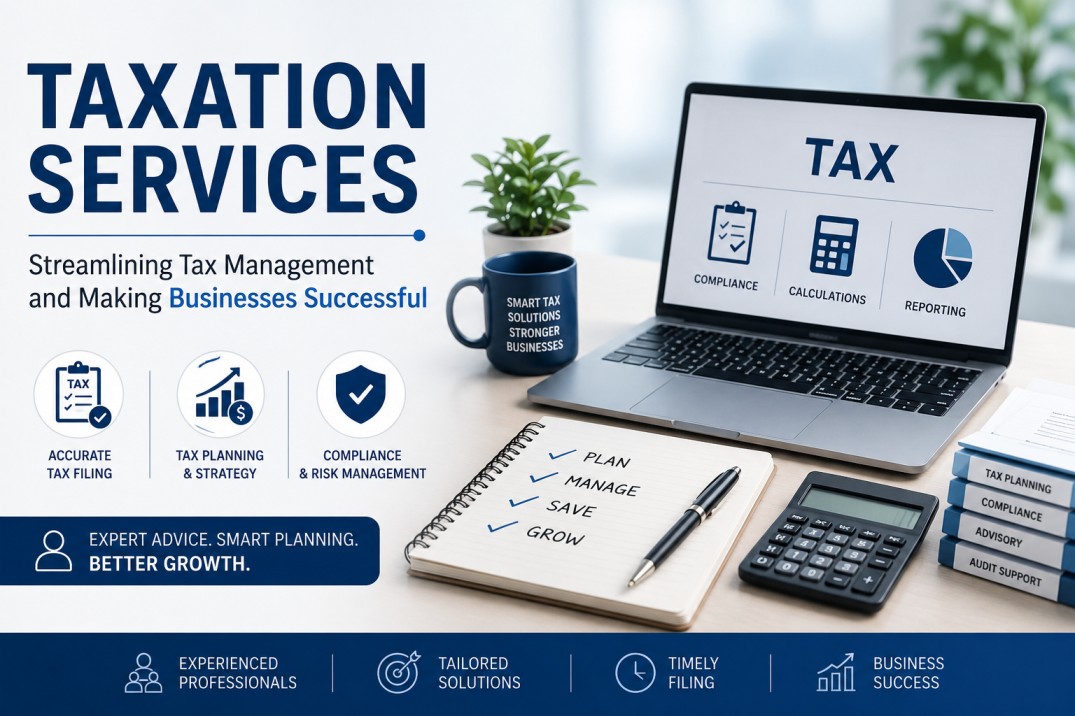
As businesses expand across borders, international taxation becomes an important part of financial and legal planning. Companies that sell products overseas, provide services to foreign customers, employ people in other countries, or maintain overseas offices may have tax obligations in multiple jurisdictions. Understanding and managing these responsibilities can help businesses avoid penalties, disputes, unnecessary tax costs, and compliance problems.
International taxation can be complex because every country has its own tax laws, reporting requirements, tax rates, and compliance deadlines. At the same time, international agreements such as tax treaties influence how cross-border income is taxed. A well-planned compliance process helps businesses meet their obligations while making legitimate use of available tax benefits.
Understand Your Cross-Border Tax Obligations
The first step toward compliance is identifying where your business has tax responsibilities. A company should review the countries in which it operates, earns income, owns assets, hires employees, or maintains business relationships.
Different activities can create different obligations. For example, selling goods to customers in another country may have indirect tax implications, while maintaining an office or dependent agent may create a taxable presence. Employees working abroad can also create payroll and employment-tax responsibilities.
Businesses should identify applicable corporate income tax, withholding tax, goods and services taxes, value-added taxes, payroll taxes, and other relevant obligations.
Determine Your Tax Residency
Tax residency is a key concept in international taxation. A company or individual may be considered tax resident in a country based on factors such as incorporation, management and control, physical presence, or other rules established under local law.
Tax residency can affect which country has the right to tax worldwide or specific categories of income. In some cases, a business may appear to be tax resident in more than one country. Tax treaties may provide rules for resolving dual-residency situations.
Businesses should maintain appropriate documentation supporting their tax residency position and review it whenever their organizational structure or management arrangements change.
Check Whether You Have a Permanent Establishment
A permanent establishment, commonly known as a PE, can create significant tax obligations for an international business. Generally, a PE may arise when a company has a sufficient business presence in another country, although the precise rules vary by jurisdiction and applicable tax treaty.
A physical office is not always the only consideration. Depending on local law and treaty provisions, activities performed through agents, employees, construction projects, or other arrangements may also be relevant.
Companies expanding into foreign markets should assess their business structure before beginning operations. Early analysis can help identify potential corporate tax and reporting requirements.
Follow Transfer Pricing Requirements
Transfer pricing is particularly important for multinational businesses that conduct transactions between related entities in different countries. Examples include management services, loans, royalties, intellectual property, goods, and shared business services.
Many jurisdictions require related-party transactions to follow the arm's-length principle. This generally means transactions should be priced in a manner consistent with what independent parties would reasonably agree to under comparable circumstances.
Businesses should maintain appropriate transfer pricing documentation, agreements, invoices, calculations, and supporting evidence. Regular reviews are also useful because changes in business operations, functions, risks, or market conditions can affect transfer pricing positions.
Understand Tax Treaties
Tax treaties are agreements between countries designed to address issues such as double taxation and the allocation of taxing rights. They can influence withholding tax rates, permanent establishment rules, residency questions, and mechanisms for relieving double taxation.
Businesses should determine whether a relevant tax treaty applies to their cross-border transactions. However, treaty benefits generally depend on satisfying specific conditions and documentation requirements.
For example, a business claiming a reduced withholding tax rate may need to provide a valid tax residency certificate or other prescribed documents. Treaties should therefore be reviewed together with domestic tax laws rather than treated as a standalone source of tax relief.
Maintain Accurate Financial Records
Proper documentation is one of the strongest foundations of international tax compliance. Businesses should maintain records of international sales, purchases, payments, contracts, invoices, intercompany transactions, loans, royalties, and other cross-border activities.
Records should clearly explain how income and expenses were calculated and why particular tax treatments were adopted. Businesses should also maintain copies of relevant tax filings, certificates, agreements, and correspondence with tax authorities.
Digital accounting systems can make it easier to organize information and identify transactions involving multiple jurisdictions.
Meet Tax Filing and Payment Deadlines
Missing a tax filing or payment deadline can result in interest, penalties, or additional scrutiny. International businesses should maintain a calendar containing filing deadlines for every relevant jurisdiction.
The calendar may include corporate tax returns, withholding tax filings, indirect tax returns, payroll filings, information returns, transfer pricing reports, and other regulatory submissions.
Where a business operates through subsidiaries, branches, or other entities, responsibilities should be clearly assigned to internal finance teams or external tax professionals.
Manage Withholding Taxes Correctly
Cross-border payments can trigger withholding tax obligations. Common examples include interest, dividends, royalties, technical services, and certain professional or contractual payments.
Before making an international payment, businesses should determine whether withholding tax applies, identify the applicable rate, and check whether a tax treaty provides a reduced rate or exemption.
Documentation should be collected before relying on treaty benefits. Incorrect withholding can create additional liabilities for the payer and may be difficult to correct after the payment has been made.
Monitor International Tax Law Changes
Tax regulations change regularly as governments update domestic legislation and international tax policies. New rules can affect multinational companies, digital businesses, investors, and individuals with overseas income.
Businesses should periodically review tax developments in the countries where they operate. Changes involving corporate taxation, transfer pricing, digital taxation, reporting requirements, beneficial ownership, withholding taxes, and international tax initiatives may require changes to existing processes.
Using reliable tax advisers, official government resources, and professional tax updates can help businesses identify important developments.
Use Technology for Tax Compliance
Technology can simplify international tax management, especially for businesses operating across several countries. Accounting and enterprise systems can help track revenue, expenses, currencies, taxes, and related-party transactions.
Automated reporting tools can also help businesses identify missing information and prepare recurring compliance reports. However, technology should support—not replace—professional review. Tax rules often depend on facts, contractual arrangements, and jurisdiction-specific interpretations that automated systems may not fully understand.
Review Cross-Border Transactions Regularly
International tax compliance should not be treated as a once-a-year activity. Businesses should periodically review significant transactions and organizational changes.
Events such as entering a new market, establishing a subsidiary, hiring foreign employees, acquiring another company, licensing intellectual property, changing supply chains, or restructuring operations can create new tax consequences.
A regular review allows potential compliance issues to be identified before they become costly problems.
Work With Qualified Tax Professionals
International tax rules can involve multiple legal systems and complicated reporting requirements. Professional advice can be particularly valuable when a business enters a new country or undertakes significant cross-border transactions.
Tax professionals can help evaluate residency, permanent establishment exposure, transfer pricing, withholding taxes, tax treaty benefits, reporting requirements, and potential restructuring issues.
Businesses should provide advisers with complete and accurate information because the quality of tax advice depends heavily on the underlying facts and documentation.
Create an Internal Tax Compliance Policy
A formal tax compliance policy can make responsibilities clearer within an organization. The policy should identify who is responsible for collecting financial information, reviewing cross-border transactions, preparing returns, approving payments, maintaining records, and monitoring regulatory changes.
Larger organizations may also establish internal controls for related-party transactions and international payments. Periodic internal reviews can help identify errors before they lead to penalties or tax disputes.
Conclusion
Staying compliant with international taxation rules requires planning, accurate records, regular monitoring, and an understanding of the tax laws that apply in each country where a business operates. Companies should assess tax residency, permanent establishment risks, transfer pricing requirements, tax treaties, withholding taxes, filing obligations, and documentation requirements before entering into cross-border activities.
International tax compliance is an ongoing process rather than a one-time exercise. By maintaining reliable financial records, monitoring regulatory changes, using appropriate technology, and obtaining professional advice when necessary, businesses can reduce compliance risks and manage their international operations more confidently.
The most effective approach is to identify potential tax obligations early and build compliance into everyday financial and business decisions. This allows companies to meet their legal responsibilities while making informed and sustainable decisions as they expand internationally.
- Digital Agency
- Literie
- Location de voitures
- Restaurant
- Restaurant
- Mode
- Mode
- Information
- Marketing
- Tourisme
- Développement
- Découverte
- Législation
- Gastronomie
- Pâtisserie
- Evento
- Art
- Causes
- Crafts
- Dance
- Drinks
- Film
- Fitness
- Food
- Juegos
- Gardening
- Health
- Inicio
- Literature
- Music
- Networking
- Otro
- Party
- Religion
- Shopping
- Sports
- Theater
- Wellness
 Spanish
 Indian
 English
 French
 Arabic
 Portuguese
 Deutsch
 Turkish
 Dutch
Dutch
 Italiano
 Russian
 Romaian
 Portuguese (Brazil)
 Greek
Greek
