


How to Choose the Right Exam Online Software for Your Institution
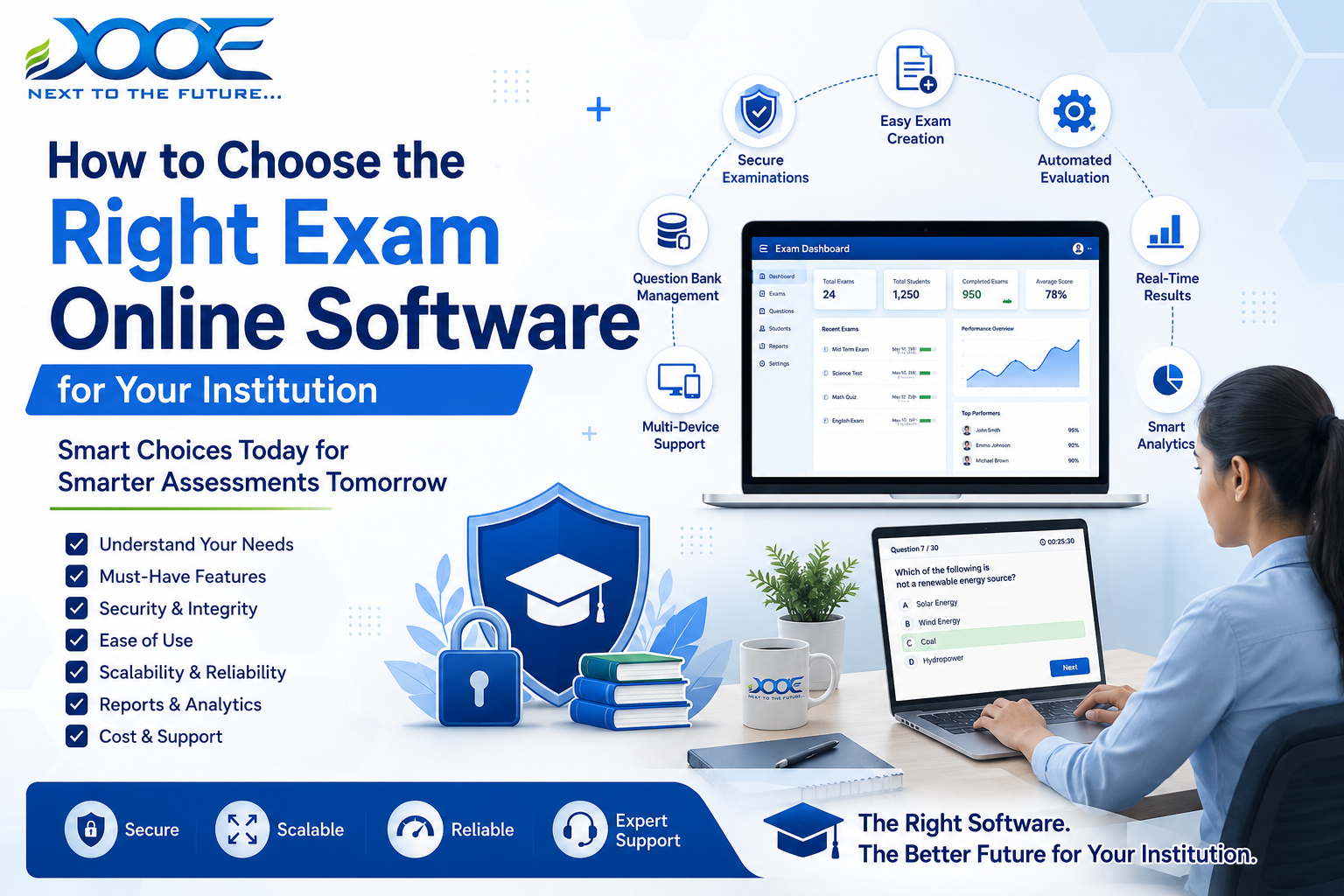
Choosing the right exam online software is an important decision for schools, colleges, universities, coaching institutes, and training organizations. As education continues to move toward digital platforms, institutions need reliable technology to conduct secure, flexible, and efficient examinations. The right online examination software can simplify test creation, candidate management, evaluation, result generation, and performance analysis.
However, with many solutions available, selecting the best platform can be challenging. Institutions should evaluate their requirements, security needs, features, scalability, usability, and overall cost before making a decision.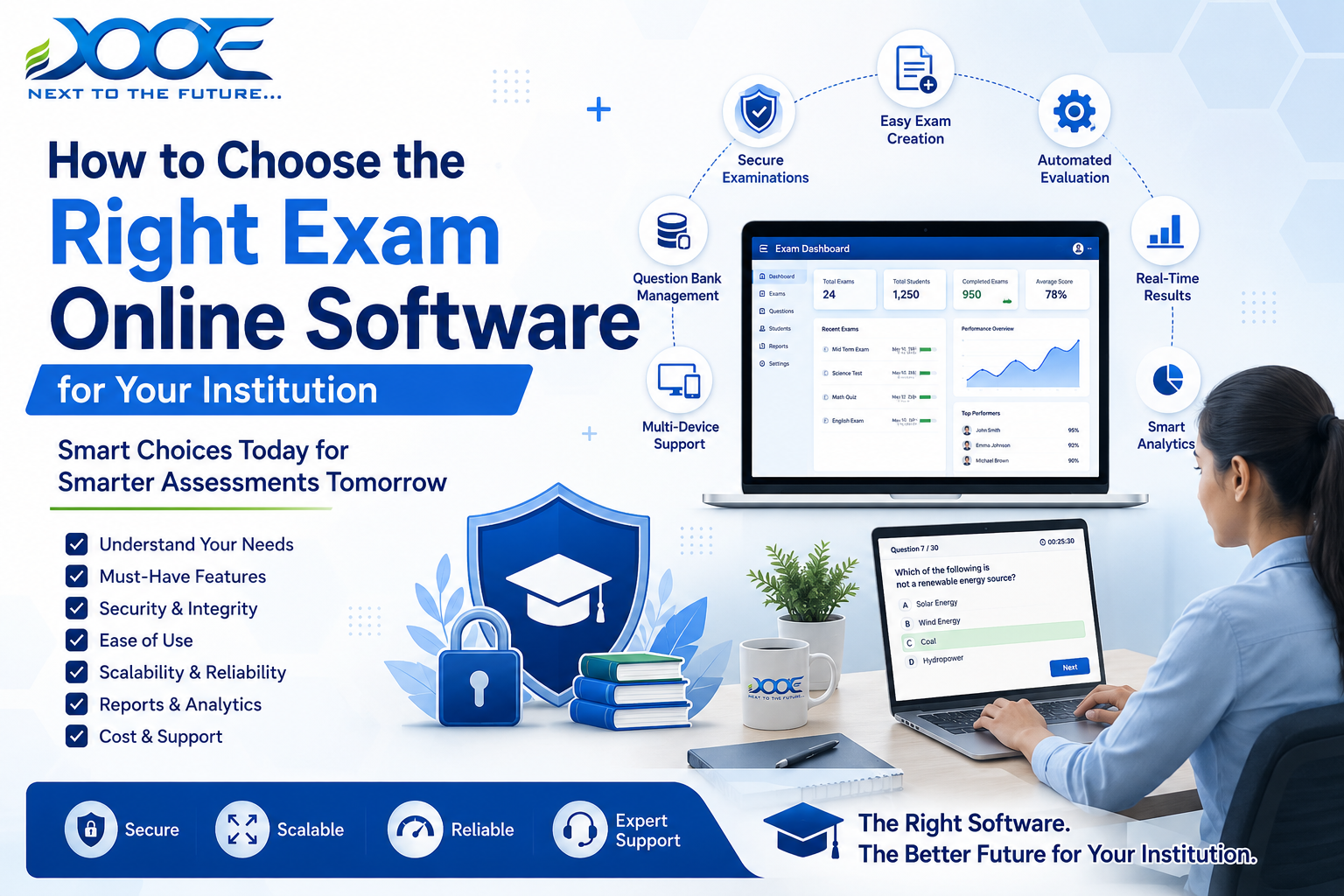
1. Understand Your Institution's Requirements
The first step in selecting online exam software is identifying your institution's specific requirements. Consider how many students will take examinations, how frequently exams will be conducted, and what types of assessments are required.
For example, a school may primarily need multiple-choice tests, while a university may require descriptive questions, practical assessments, internal examinations, and entrance tests. Understanding these requirements helps you choose an online assessment platform that can support your examination structure.
2. Look for an Easy-to-Use Interface
A user-friendly interface is essential for both administrators and students. Teachers should be able to create examinations, add questions, manage schedules, and review results without requiring advanced technical knowledge.
Students should also find the examination interface simple and responsive. Features such as clear navigation, visible timers, easy question selection, and straightforward instructions can improve the overall testing experience.
When evaluating online examination software, institutions should consider whether the platform is intuitive enough for users with different levels of technical experience.
3. Check Question Bank and Exam Creation Features
A strong question bank management system is one of the most useful features of modern examination platforms. It allows teachers to create, organize, categorize, edit, and reuse questions.
Look for software that supports multiple question types, such as:
-
Multiple-choice questions
-
True or false questions
-
Short-answer questions
-
Descriptive questions
-
Numerical questions
-
Matching questions
Automated question selection and paper generation can also help institutions create different test versions while reducing administrative effort.
4. Prioritize Examination Security
Security should be a major consideration when choosing secure online exam software. Digital examinations can face risks such as unauthorized access, impersonation, question sharing, and other forms of academic misconduct.
Institutions should evaluate security features such as candidate authentication, secure login, question randomization, time restrictions, access controls, activity monitoring, and configurable examination settings.
Depending on the institution's requirements, additional proctoring or anti-cheating capabilities may also be valuable.
5. Consider Automated Evaluation
Manual evaluation can consume considerable time, particularly when hundreds or thousands of students participate in an examination. Automated exam evaluation can significantly reduce administrative workload for objective-type questions.
The system should ideally calculate scores automatically, apply predefined marking rules, and generate results efficiently. Automated evaluation can also help reduce calculation errors and provide faster feedback to students.
6. Examine Reporting and Analytics
Modern digital assessment software should provide more than basic scores. Detailed reports can help teachers understand student performance and identify areas that require improvement.
Useful analytics may include:
-
Individual student performance
-
Subject-wise scores
-
Question-wise analysis
-
Average scores
-
Pass and fail statistics
-
Attempt and completion data
-
Performance comparisons
These insights can help educators make better academic decisions and improve teaching strategies.
7. Choose a Scalable Online Examination Platform
Your institution may start with a small number of online tests, but examination requirements can grow over time. Therefore, scalability is an important factor when selecting an online test platform.
The software should be capable of supporting increasing numbers of students, examinations, question banks, and administrators without compromising performance.
A scalable online examination system can be particularly beneficial for universities, competitive examination providers, certification organizations, and large educational institutions.
8. Check Device Compatibility
Students may access examinations using desktops, laptops, tablets, or other supported devices. Therefore, institutions should select an online testing platform that provides a consistent experience across compatible devices.
Responsive design and reliable performance can help students access assessments conveniently while reducing technical difficulties during examinations.
9. Evaluate Integration Capabilities
Integration can make examination management more efficient. Institutions should check whether the exam management software can integrate with existing learning management systems, student information systems, authentication systems, or other educational platforms.
A well-integrated system can reduce duplicate data entry and create a more connected digital education environment.
10. Compare Pricing and Overall Value
Cost is another important consideration when selecting online examination software. Institutions should look beyond the initial subscription or licensing price and evaluate the overall value provided.
Consider factors such as the number of users, available features, technical support, storage, security capabilities, customization options, upgrades, and maintenance requirements.
The most affordable platform is not always the best choice. Institutions should select a solution that provides the right balance between functionality, reliability, security, and cost.
11. Check Technical Support
Reliable technical support is essential, particularly when examinations are conducted at scale. Before selecting an online exam platform, institutions should understand what type of support is available.
Look for providers offering documentation, troubleshooting assistance, onboarding support, and responsive customer service. Reliable support can help minimize disruption when technical issues occur.
Conclusion
Choosing the right exam online software requires careful evaluation of your institution's current and future examination needs. Important factors include ease of use, question bank management, examination security, automated evaluation, analytics, scalability, device compatibility, integration, pricing, and technical support.
A well-designed online examination software solution can simplify the entire assessment lifecycle—from creating question papers and conducting secure online exams to evaluating responses and generating detailed results.
By selecting a platform that aligns with institutional goals and student requirements, educational organizations can build a more efficient, secure, and flexible digital assessment system for modern education.
- Digital Agency
- Literie
- Location de voitures
- Restaurant
- Restaurant
- Mode
- Mode
- Information
- Marketing
- Tourisme
- Développement
- Découverte
- Législation
- Gastronomie
- Pâtisserie
- Event
- Art
- Causes
- Crafts
- Dance
- Drinks
- Film
- Fitness
- Food
- Games
- Gardening
- Health
- Home
- Literature
- Music
- Networking
- Other
- Party
- Religion
- Shopping
- Sports
- Theater
- Wellness
 English
 Indian
 French
 Arabic
 Spanish
 Portuguese
 Deutsch
 Turkish
 Dutch
Dutch
 Italiano
 Russian
 Romaian
 Portuguese (Brazil)
 Greek
Greek
