


IoT Water Level Controller for Automatic Tank Filling
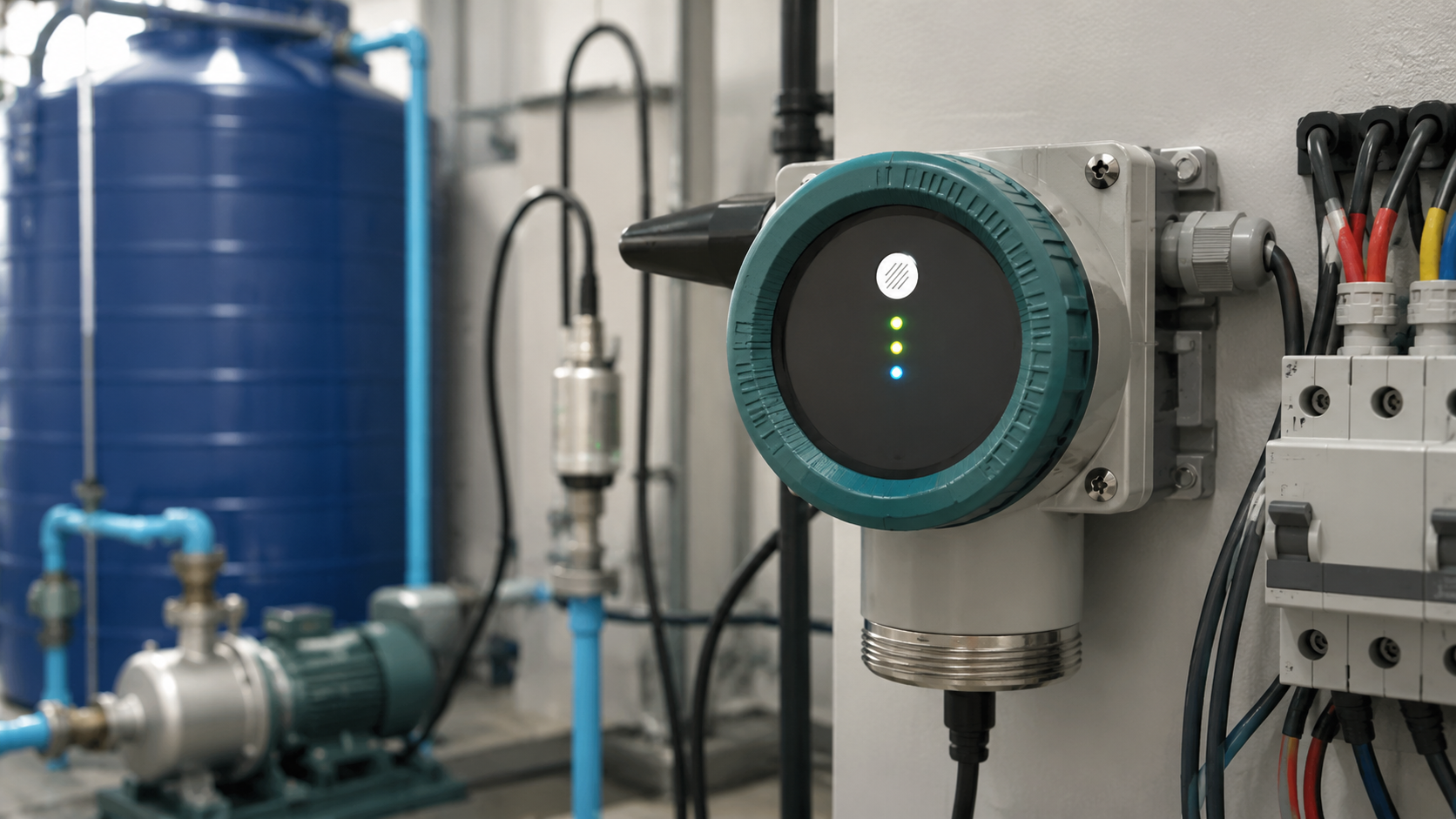
Managing water tanks manually can be time-consuming, especially in apartments, commercial buildings, industries, campuses, and large facilities with multiple tanks. Someone needs to regularly check the water level, switch pumps on when the tank is low, and turn them off when the tank is full.
An IoT-enabled water level controller can automate this process. By combining sensors, controllers, wireless communication, and cloud monitoring, an IoT Water Tank Monitoring System can continuously track water levels and support automatic pump operation.
With the MyTank IoT Platform, organizations can bring tank monitoring, alerts, automation, and IoT connectivity together to create a smarter approach to water management.
What Is an IoT Water Level Controller?
An IoT water level controller is a connected system that monitors the water level inside a tank and can control the associated pump according to predefined conditions.
Unlike a conventional controller that only operates locally, an IoT-enabled controller can connect the tank to a remote monitoring platform.
A typical system can:
-
Measure water levels continuously or at configured intervals
-
Detect low and high water-level conditions
-
Start or stop pumps automatically
-
Send alerts to users
-
Provide remote tank-level visibility
-
Monitor multiple tanks from a centralized platform
This reduces dependence on manual monitoring and gives facility teams greater control over water infrastructure.
How Automatic Tank Filling Works
Automatic tank filling typically depends on predefined water-level thresholds.
For example:
Water level falls below the low threshold → Pump starts → Tank begins filling → Water reaches the upper threshold → Pump stops
The controller uses sensor information to determine when the pump should operate.
This can help prevent situations where the tank becomes empty because nobody switched the pump on or overflows because the pump was left running.
The Role of an IoT Water Tank Monitoring System
An IoT Water Tank Monitoring System connects the water-level sensor, controller, communication network, and monitoring platform.
The sensor collects water-level information and sends it through the available IoT connectivity infrastructure. The information can then be processed and displayed on a centralized dashboard.
This allows operators to understand the current condition of the tank without physically visiting it.
For facilities with multiple tanks, the system can provide a consolidated view of water levels and pump activity across different locations.
MyTank IoT Platform for Smart Water Management
The MyTank IoT Platform provides a connected environment for monitoring and managing water infrastructure.
Instead of relying only on local pump controllers, users can access water-level information remotely and receive alerts when specific conditions occur.
Depending on the system configuration, MyTank can also support monitoring and automation of components such as pumps and valves.
This helps bring different parts of the water-management process into a centralized IoT ecosystem.
Why IoT Connectivity Matters
Reliable IoT connectivity is an important part of remote water tank automation.
A tank may be located on a rooftop, in a basement, across a large industrial facility, or at a remote site. Depending on the location, different communication technologies can be used to connect the sensor and controller to the monitoring platform.
Possible connectivity options include:
-
Wi-Fi
-
LoRa
-
Cellular IoT technologies
-
Other suitable wireless communication methods
The appropriate option depends on factors such as distance, network availability, power requirements, site conditions, and the number of tanks being monitored.
Prevent Tank Overflow
One of the most common problems with manual pump operation is overflow.
If a pump continues operating after the tank reaches its required level, water may be wasted.
An IoT water level controller can detect the upper water-level threshold and initiate the configured pump-stop action.
With remote monitoring and alerts, facility teams can also receive information about tank conditions and respond when required.
Avoid Unexpected Water Shortages
A low water level can cause problems when a building or facility depends on the tank for its daily water supply.
An IoT-based system can identify when the tank reaches a predefined low-level threshold and automatically initiate the appropriate pump-control process.
The system can also generate an alert so that users know the tank has reached a critical or configured level.
This provides an additional layer of visibility and helps teams respond before the tank runs empty.
Monitor Multiple Tanks Remotely
Managing several tanks manually becomes increasingly difficult as the size of a facility grows.
An IoT Water Tank Monitoring System can connect multiple tanks to a centralized platform.
For example, a facility manager may be able to view:
|
Tank |
Water Level |
Pump Status |
Condition |
|
Tank A |
78% |
OFF |
Normal |
|
Tank B |
35% |
ON |
Filling |
|
Tank C |
92% |
OFF |
Near Full |
|
Tank D |
18% |
ON |
Low Level |
Centralized monitoring makes it easier to identify tanks that require attention and understand overall water availability.
Reduce Manual Pump Operation
Traditional tank filling often requires someone to manually operate the pump.
This can create several challenges when staff are busy, unavailable, or responsible for multiple locations.
Automation can reduce these repetitive tasks by allowing the controller to operate according to configured water-level conditions.
Instead of constantly asking whether the pump needs to be switched on or off, operators can rely on predefined control rules while still retaining remote visibility.
Receive Real-Time Alerts
An IoT-connected monitoring platform can provide notifications for important events.
Possible alerts include:
-
Low water level
-
Critical water level
-
High water level
-
Tank full
-
Pump started
-
Pump stopped
-
Unusual water-level changes
-
Communication issues
These notifications can help facility teams identify problems earlier and take appropriate action.
Applications of IoT Water Level Controllers
IoT-based automatic tank filling can be useful across many environments.
Apartment Complexes
Automatically manage overhead and underground tanks while reducing dependence on manual pump operation.
Industrial Facilities
Monitor multiple process or storage tanks and improve visibility across large sites.
Commercial Buildings
Support efficient water management in offices, malls, hotels, and other commercial properties.
Educational Campuses
Monitor distributed tanks across schools, colleges, and universities through a centralized platform.
Agricultural Sites
Monitor remote water tanks and support automated filling where reliable connectivity is available.
Large Residential Properties
Provide remote visibility and automation for multiple tanks and pumps.
Benefits of IoT-Based Automatic Tank Filling
An IoT water level controller can provide several operational benefits:
Automatic operation:
Pumps can be controlled based on predefined water-level conditions.
Remote monitoring:
Users can check tank levels without physically visiting the tank.
Overflow prevention:
High-level conditions can trigger configured pump-stop actions and alerts.
Shortage prevention:
Low-level detection helps initiate timely filling or response.
Centralized management:
Multiple tanks can be monitored from one platform.
Better visibility:
Historical and current data can help users understand tank conditions and usage patterns.
Reduced manual effort:
Routine tank and pump checks can be minimized.
Building a Connected Water Management System
Automatic tank filling is only one part of modern water management. An IoT Water Tank Monitoring System can become part of a larger connected ecosystem that includes water-level sensors, pumps, valves, flow meters, pressure monitoring, alerts, and analytics.
With suitable IoT connectivity, data from these devices can be brought together on a centralized platform.
The MyTank IoT Platform can help organizations move from isolated tank controllers to a more connected approach to monitoring and managing water infrastructure.
Conclusion
An IoT water level controller can make automatic tank filling more efficient by combining water-level sensing, pump control, wireless communication, and remote monitoring.
An IoT Water Tank Monitoring System can help organizations detect low and high water levels, automate pump operation, and receive timely alerts. With the MyTank IoT Platform and suitable IoT connectivity, facilities can monitor multiple tanks remotely and build a smarter, more responsive water-management system.
The result is less dependence on manual intervention, better visibility into water levels, and a more organized approach to automatic tank filling.
- Digital Agency
- Literie
- Location de voitures
- Restaurant
- Restaurant
- Mode
- Mode
- Information
- Marketing
- Tourisme
- Développement
- Découverte
- Législation
- Gastronomie
- Pâtisserie
- مناسبة
- Art
- Causes
- Crafts
- Dance
- Drinks
- Film
- Fitness
- Food
- الألعاب
- Gardening
- Health
- الرئيسية
- Literature
- Music
- Networking
- أخرى
- Party
- Religion
- Shopping
- Sports
- Theater
- Wellness
 Arabic
 Indian
 English
 French
 Spanish
 Portuguese
 Deutsch
 Turkish
 Dutch
Dutch
 Italiano
 Russian
 Romaian
 Portuguese (Brazil)
 Greek
Greek
