


Recyclable Paper Packaging Options For Businesses
Recyclable Paper Packaging Options For Businesses
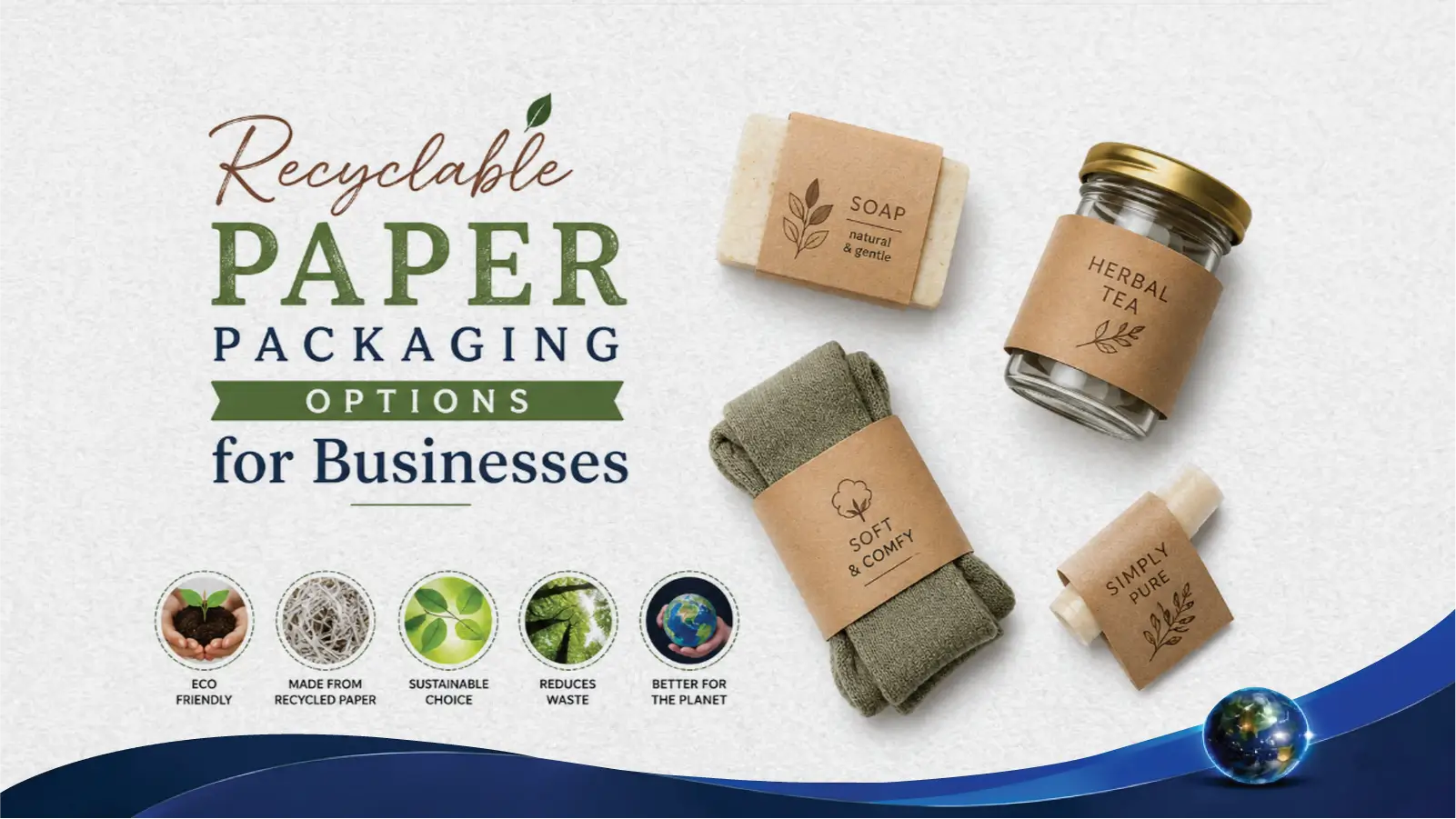
A shift toward recyclable paper packaging is being made by many businesses across Canada, and this change is driven by customer expectations, cost planning, and environmental responsibility. In this article, different types of recyclable paper packaging are explained, along with certification standards, regulations, and personalized branding options. Practical guidance is offered for businesses that want a format that is easy without a compromise on the presentation of the product. Simple wording is used throughout so that every business owner, regardless of experience, is able to understand the options with ease.
Recyclable Paper Packaging Benefits For Businesses
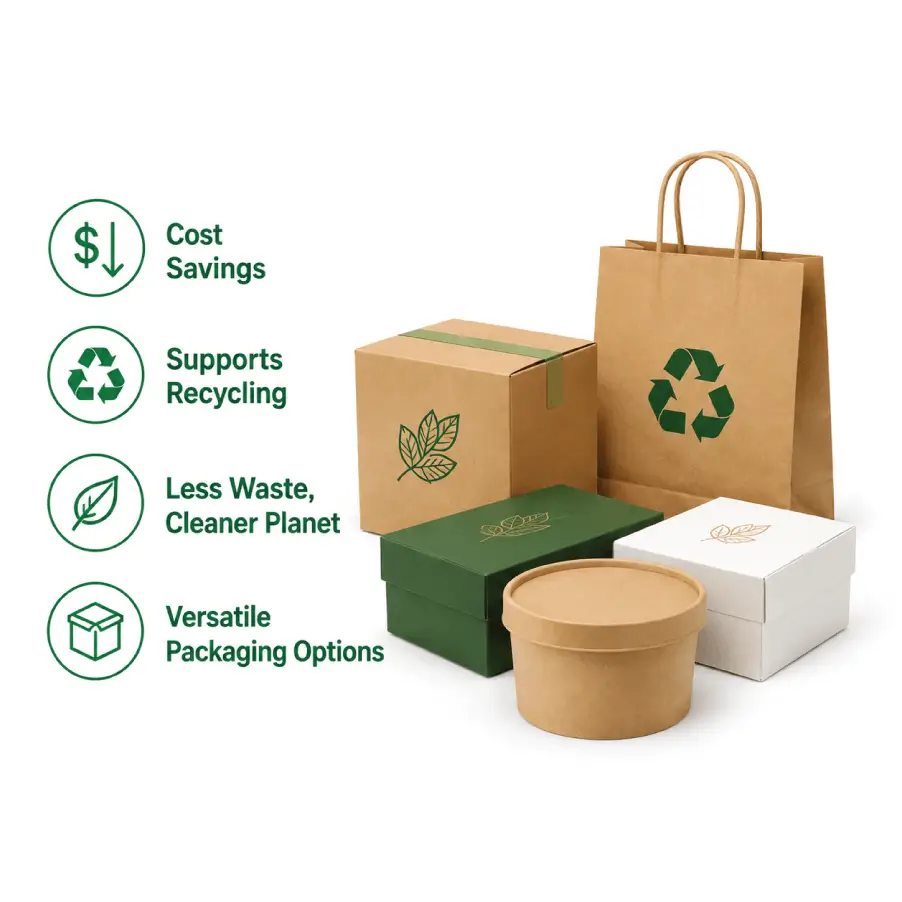
Several benefits are offered through recyclable paper packaging, and the needs of the brand are met at the same time. Lower long-term material costs are achieved through paper recycling programs, since recycled paper is generally offered at a lower price than virgin materials. Paper recycling is supported by most municipal systems in Canada, which means less waste is sent to landfills, and a lighter footprint on the environment is left when fibre-based packaging is chosen instead of plastic. Many upcoming regulations are met in advance when recyclable paper packaging is adopted early, and penalties are avoided later. Several formats, such as paperboard packaging and kraft paper packaging, are offered for different categories, from food items to electronics, so flexibility is not lost along the way.
Types Of Eco-Friendly Paper Packaging Options
Different materials are grouped under paper-based, eco-friendly options, and each one is suited to a different kind of product. The options included: sleeves, labels, wrappers, packets, boxes, and tags.
-
Paperboard Options
Paperboard packaging is generally chosen for lightweight items such as cosmetics and small electronics, since a smooth surface is offered for screen and UV printing. A sharp, clean finish is achieved on this material, and detailed branding tools are printed with ease. Rigidity is also offered by paperboard, so a firm shape is held around delicate items without extra padding being required. A lighter shipping weight is achieved through this material as well, and transport costs are lowered as a result.
-
Kraft Paper Options
Kraft paper packaging is preferred for food items and retail bags because of its natural, rustic look and strength even without added coating. Grease and moisture resistance is offered by certain kraft variants, that results this material a common choice for bakery items and takeaway food. A biodegradable structure is offered by kraft paper, and full recyclability is maintained even after printing is done on its surface through screen and UV printing. A warm, earthy tone is also carried by this material, and a premium, eco-conscious presentation of the product is achieved as a result.
-
Cardboard Paper Options
Cardboard packaging is used for shipping boxes and heavier items, since extra strength is offered through its layered structure. A fluted middle layer is placed between two flat sheets in this material, and impact resistance is offered during transport as a result. Stacking strength is also offered by corrugated cardboard, which means heavier loads are supported in warehouses without a collapse being risked. Full recyclability is maintained by this material even after repeated use, and it is accepted by nearly every municipal recycling program in Canada.
-
FSC Recycled Paper Options
Post-consumer recycled content is included in many paper packaging materials now, which means used paper is turned into new packaging instead of virgin paper fibre being relied upon every time. A closer step toward a circular economy is taken with every batch of recycled paper that is processed and reused. Lower energy consumption is achieved during the manufacturing of this content, compared with paper made purely from virgin paper fibre, and a smaller carbon footprint is left as a result. Trust is also gained from customers when a clear percentage of recycled content is stated on the packaging.
-
Molded Pulp Paper Options
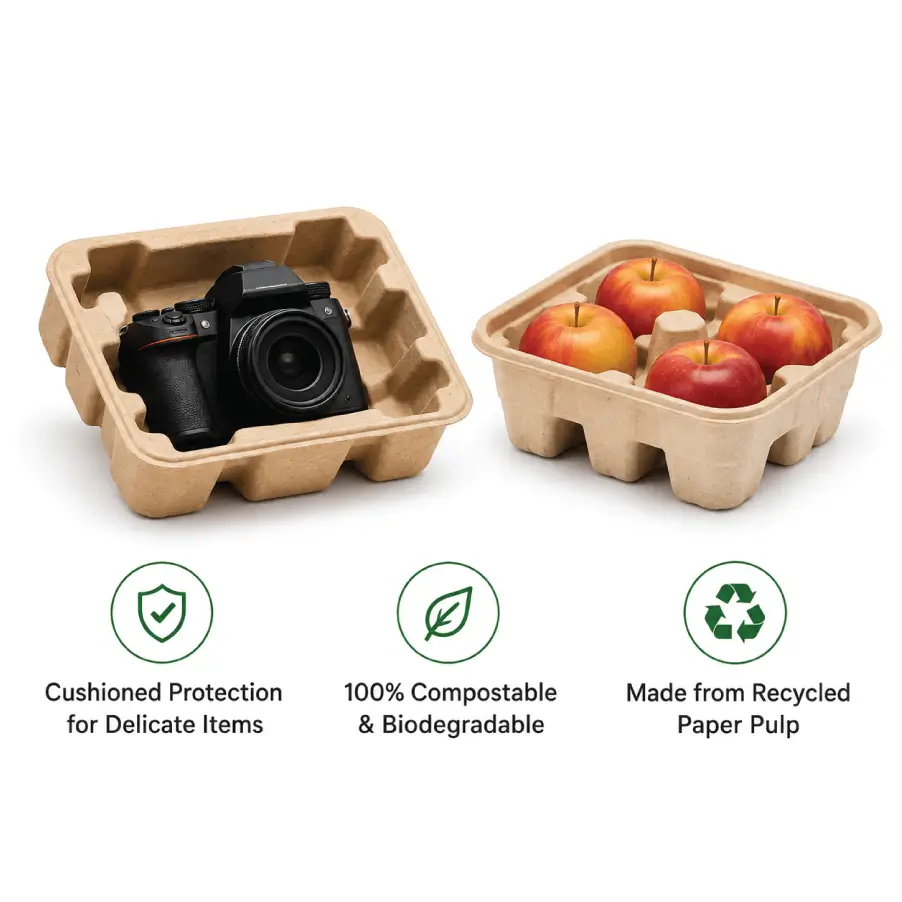
Molded pulp packaging is used for delicate items such as electronics and fruit trays, since a cushioned shape is formed directly from recycled paper pulp. A custom mold is used to shape this material around a product's exact contours, and strong protection of the product is achieved without foam or plastic being added. Full compostability is offered by molded pulp, and a natural breakdown into organic matter is achieved once this material reaches a composting facility. A textured, minimal look is also offered by molded pulp, which is valued by brands that prefer a raw, sustainable presentation.
Eco-Friendly Alternatives To Traditional Product Packaging
Many businesses are shifting away from single-use plastics toward compostable packaging, water-based coatings, moulded pulp, and mushroom-based materials. Plant-fibre packaging is designed for composting, while water-based coatings are used as alternatives to plastic laminates. These options are increasingly considered for lower-waste packaging with suitable protection of the product. Explore Eco-Friendly Alternatives To Traditional Product Packaging for more sustainable packaging options.
Canada Packaging Regulations And Certification Standards
Canadian packaging regulations require accurate environmental claims, clear labelling, and proper material identification. Federal greenwashing rules require environmental claims to be properly substantiated, while N.S. Reg. 139/2023 covers extended producer responsibility for packaging in Nova Scotia. Compostable claims should be supported by relevant standards such as ASTM D6400, ASTM D6868, or EN 13432, and FSC certification is relevant for responsibly sourced paper packaging.
Personalized Branding Options For Paper Packaging
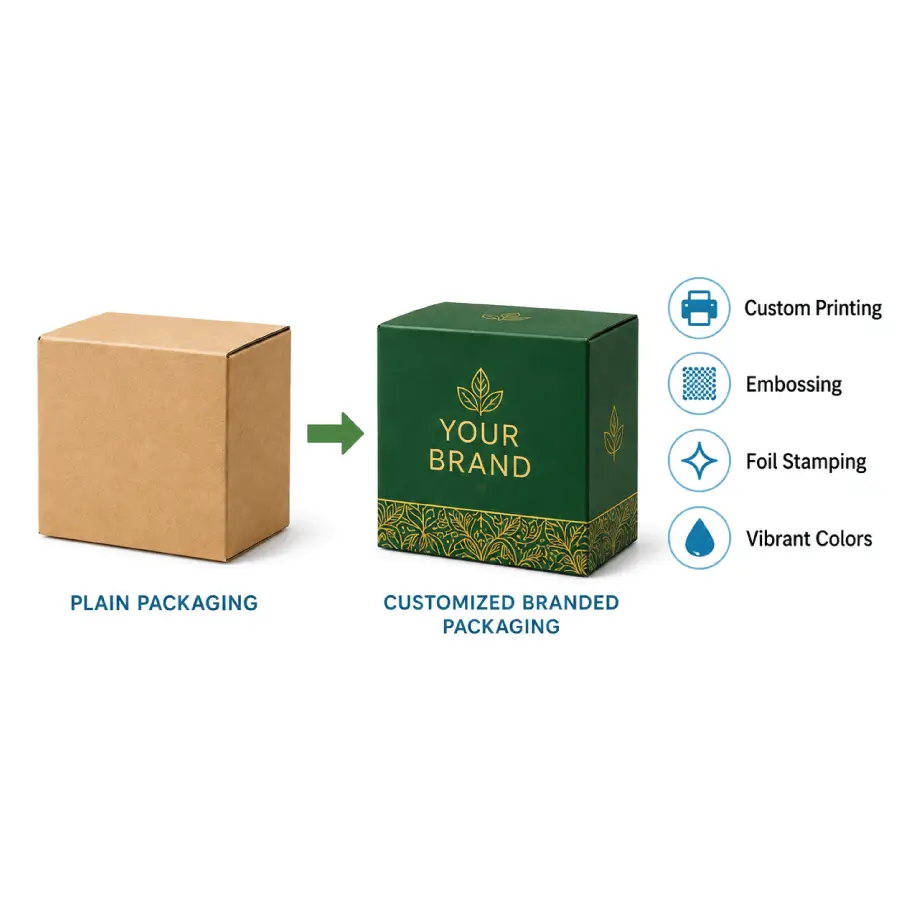
Strong branding opportunities are offered through recyclable paper packaging, with logo, taglines, and colour schemes printed by screen and UV printing. Personalized sizes, shapes, embossed textures, foil stamping, and matte or gloss finishes are also offered for recyclable materials. A personalized unboxing experience is created for customers, while the recognition of the brand and repeat purchases are strengthened through premium presentation.
“Customers will occasionally buy products not because they want them but because of how they are presented to them.” — James Clear
Choosing The Right Paper Packaging Supplier
A dependable supplier is needed before a switch to recyclable paper packaging is made at scale. Verified certifications, such as FSC certification, should be checked first, along with proof of post-consumer recycled content in the materials that are offered. Sample orders are recommended before a bulk order is placed, so that the strength and finish of the packaging is tested under real conditions.
-
Certification proof: documentation is asked for from every supplier, including FSC certification and compostability certificates where relevant.
-
Local sourcing: a supplier based in Canada is preferred by many businesses, since transportation emissions are lowered and faster delivery is achieved.
-
Minimum order flexibility: smaller minimum quantities are offered by some suppliers, and this flexibility is useful for growing businesses with limited storage space.
Cost-Effective Sustainable Packaging Solutions For Businesses
A common concern among business owners is cost, and a reasonable price is generally offered by sustainable packaging once bulk ordering is planned properly. Long-term savings are achieved through paper recycling programs, since raw material costs are lowered when recycled paper is used instead of virgin paper fibre. A reduction in packaging weight is also achieved through thinner, high-strength paperboard packaging, and shipping costs are lowered as a result.
Conclusion
Recyclable paper packaging is increasingly considered by Canadian businesses because of cost savings, regulatory compliance, and the reputation of the brand. From kraft paper packaging to paperboard packaging, options from suppliers such as Universal Packaging are considered for personalized branding without plastic. Certification standards and provincial regulations should be reviewed before the transition, while a gradual approach is preferred for a practical long-term packaging change.
FAQs
Is recyclable paper packaging more expensive than plastic?
Not usually, once bulk pricing is considered. A slightly higher cost is sometimes seen at the start, but long-term savings are achieved through lighter shipping weight and lower disposal costs.
Can paper packaging be personalized with a logo?
Yes, personalized printing is achieved through screen and UV printing on most kraft paper packaging and paperboard packaging, so branding is not limited by the material choice.
Is FSC certification necessary for all paper packaging?
It is not legally required in every case, but FSC certification is recommended, since sustainable sourcing is proven through it, and trust is gained from environmentally conscious customers as a result.
Is recyclable paper packaging suitable for fragile products?
Yes, extra protection of the product is achieved through layered corrugated cardboard, and cushioning inserts made from recycled paper are also added for delicate items.
What is the difference between recyclable and compostable packaging?
Recyclable packaging is processed again into new material through recycling infrastructure, while compostable packaging is broken down naturally into organic matter under the right composting conditions.
- Digital Agency
- Literie
- Location de voitures
- Restaurant
- Restaurant
- Mode
- Mode
- Information
- Marketing
- Tourisme
- Développement
- Découverte
- Législation
- Gastronomie
- Pâtisserie
- Evento
- Art
- Causes
- Crafts
- Dance
- Drinks
- Film
- Fitness
- Food
- Giochi
- Gardening
- Health
- Home
- Literature
- Music
- Networking
- Altre informazioni
- Party
- Religion
- Shopping
- Sports
- Theater
- Wellness
 Italiano
 Indian
 English
 French
 Arabic
 Spanish
 Portuguese
 Deutsch
 Turkish
 Dutch
Dutch
 Russian
 Romaian
 Portuguese (Brazil)
 Greek
Greek
