


Best OMR Software Features Every Educational Institution Should Know
Educational institutions conduct examinations regularly, and evaluating hundreds or thousands of answer sheets manually can be time-consuming and challenging. OMR software has become an effective solution for automating objective examination evaluation, reducing manual work, and improving result accuracy. From schools and colleges to universities, coaching institutes, and examination centers, OMR technology can simplify the complete answer sheet checking process.
Choosing the right OMR software requires understanding the features that can make examination management faster, easier, and more reliable. In this article, we explore the best OMR software features every educational institution should know before selecting an OMR-based examination solution.
1. Automated Answer Sheet Evaluation
One of the most important features of OMR software is automated answer sheet evaluation. Instead of manually checking every question, the software reads marked responses from OMR sheets and compares them with the predefined answer key.
This feature can significantly reduce the time required for examination checking. It also helps teachers and examination staff focus on other academic responsibilities rather than repetitive evaluation tasks.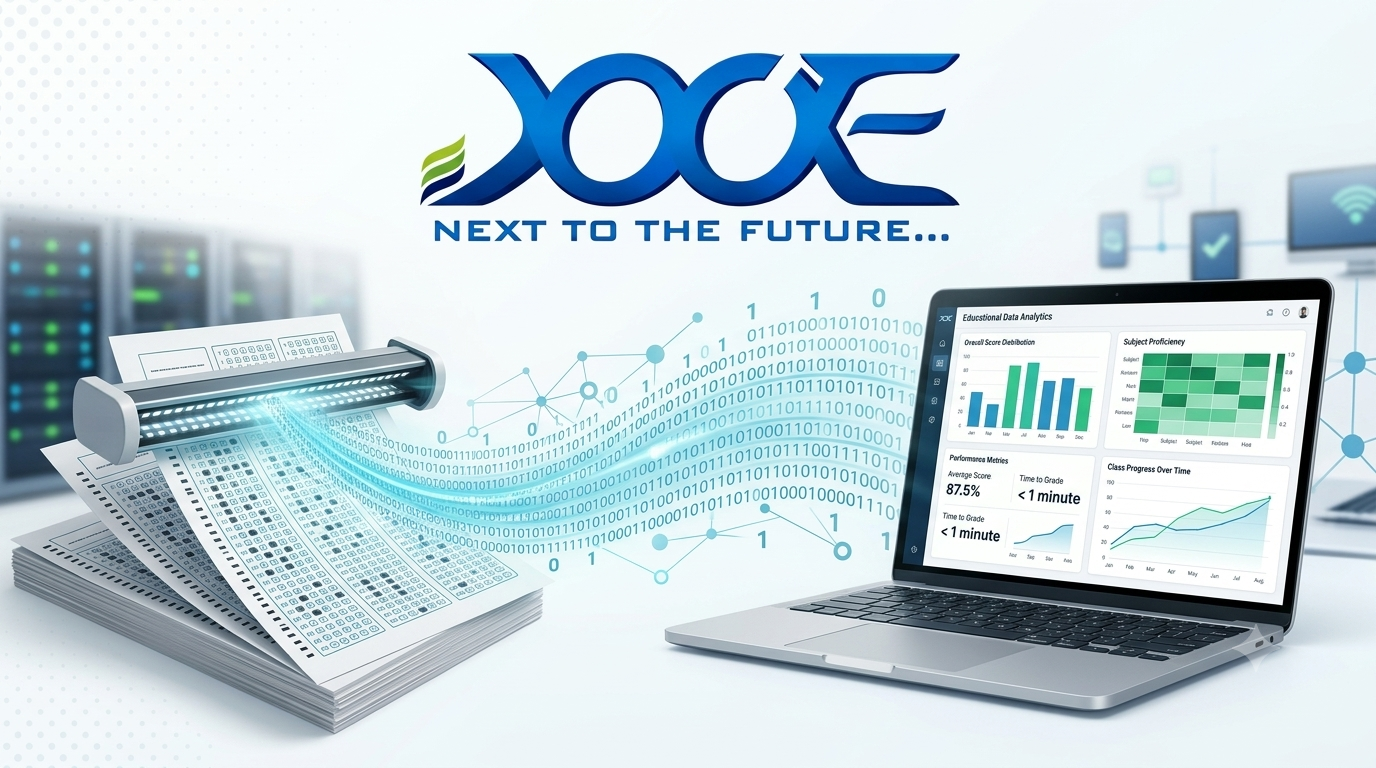
2. Accurate Optical Mark Recognition
The primary function of Optical Mark Recognition software is to identify marks made by students on answer sheets. Reliable OMR technology should accurately detect properly marked responses and process them consistently.
Accurate recognition is particularly important when institutions conduct large-scale examinations. Better recognition capabilities can help reduce errors and improve confidence in automated evaluation.
3. Flexible Answer Key Management
Educational institutions may use different question papers, sets, and examination patterns. Therefore, an effective OMR evaluation software solution should provide flexible answer key management.
Administrators should be able to enter or upload correct answers and associate them with the appropriate examination or question paper. Features such as multiple answer keys and different question paper sets can make the evaluation process more flexible.
4. Support for Different OMR Answer Sheets
A useful OMR solution should support answer sheets designed according to different examination requirements. Institutions may need sheets containing student information, roll numbers, question responses, subject details, and other fields.
OMR answer sheet software can help organizations create or process customized forms based on their examination structure. Flexible sheet support is especially useful for institutions conducting different types of assessments.
5. Automated Scoring and Marking Rules
Different examinations may have different scoring methods. Some tests use negative marking, while others award different marks for different questions.
The best OMR software for exams should allow administrators to configure marking rules according to examination requirements. Automated scoring ensures that the same evaluation rules are applied consistently to all students.
This can reduce manual calculations and help produce results more efficiently.
6. Fast Result Generation
After evaluating answer sheets, institutions need to prepare results quickly. OMR result processing software can automatically calculate scores and organize student performance information.
Depending on the solution, administrators may generate student-wise results, subject-wise scores, rankings, and other reports. Faster result generation can help institutions publish examination results without unnecessary delays.
7. Batch Processing Capability
Large educational institutions may need to evaluate hundreds or thousands of answer sheets. Processing each sheet individually can reduce productivity.
A good OMR sheet checking software solution should support batch processing. This allows multiple answer sheets to be scanned and evaluated in an organized workflow, making it suitable for high-volume examinations.
Batch processing is particularly valuable for universities, entrance examinations, coaching centers, and competitive test providers.
8. Detailed Reports and Analytics
Examination results provide valuable information about student performance. Modern OMR software can help institutions generate detailed reports from evaluated data.
Useful reports may include individual student scores, question-wise performance, subject-wise results, rankings, and overall examination summaries. These insights can help teachers identify areas where students perform well or require additional support.
Therefore, OMR reporting software is not only useful for checking answers but can also contribute to better academic analysis.
9. Easy-to-Use Interface
Technology should make examination management easier, not more complicated. A user-friendly interface is therefore an important feature when selecting OMR software for schools and colleges.
Teachers and administrators should be able to configure examinations, manage answer keys, process sheets, and generate reports without extensive technical knowledge. Simple navigation and clear options can reduce training requirements and improve productivity.
10. Student Information Management
An effective OMR examination system should be capable of handling important student information along with answer responses. Details such as student ID, roll number, registration number, class, section, and subject can help organize examination data.
Proper student identification also helps institutions connect evaluated scores with the correct candidates and reduce administrative confusion.
11. Error Detection and Validation
Another valuable feature is the ability to identify potential issues during answer sheet processing. For example, an OMR system may detect incomplete information, invalid responses, multiple marks, or other sheet-related problems.
Such validation features can help examination administrators review problematic sheets before finalizing results. This creates an additional quality-control step in the automated exam evaluation process.
12. Data Export and Integration
Educational institutions often need to transfer examination results into other systems. Therefore, data export capabilities can be an important consideration.
The ability to export results in commonly used formats can make it easier to share data with school management systems, student information systems, spreadsheets, or other administrative platforms. Integration capabilities can further streamline examination workflows.
13. Secure Examination Data
Examination information is sensitive and should be handled carefully. A reliable OMR examination software solution should provide appropriate data protection and access controls.
Institutions should evaluate features related to user permissions, secure storage, backup, and controlled access when selecting an OMR platform. Protecting examination data helps maintain the integrity of the evaluation process.
14. Scalability for Growing Institutions
The requirements of an institution can change over time. A school may begin with a few hundred students but later expand to several thousand. Similarly, colleges and universities may conduct increasingly large examinations.
Choosing scalable OMR software solutions allows institutions to manage growing volumes of answer sheets without completely changing their examination workflow.
Conclusion
The right OMR software can transform traditional examination evaluation by automating answer sheet checking, scoring, reporting, and result processing. Features such as accurate mark recognition, flexible answer key management, batch processing, automated scoring, detailed reports, data export, and secure data handling can make examination administration more efficient.
Before selecting an OMR solution, educational institutions should carefully evaluate their examination requirements, number of students, question formats, reporting needs, and future scalability. With the right technology, schools, colleges, universities, and coaching institutes can reduce manual workload, improve evaluation consistency, and deliver examination results more efficiently.
- Digital Agency
- Literie
- Location de voitures
- Restaurant
- Restaurant
- Mode
- Mode
- Information
- Marketing
- Tourisme
- Développement
- Découverte
- Législation
- Gastronomie
- Pâtisserie
- Veranstaltung
- Art
- Causes
- Crafts
- Dance
- Drinks
- Film
- Fitness
- Food
- Spiele
- Gardening
- Health
- Startseite
- Literature
- Music
- Networking
- Andere
- Party
- Religion
- Shopping
- Sports
- Theater
- Wellness
 Deutsch
 Indian
 English
 French
 Arabic
 Spanish
 Portuguese
 Turkish
 Dutch
Dutch
 Italiano
 Russian
 Romaian
 Portuguese (Brazil)
 Greek
Greek
