


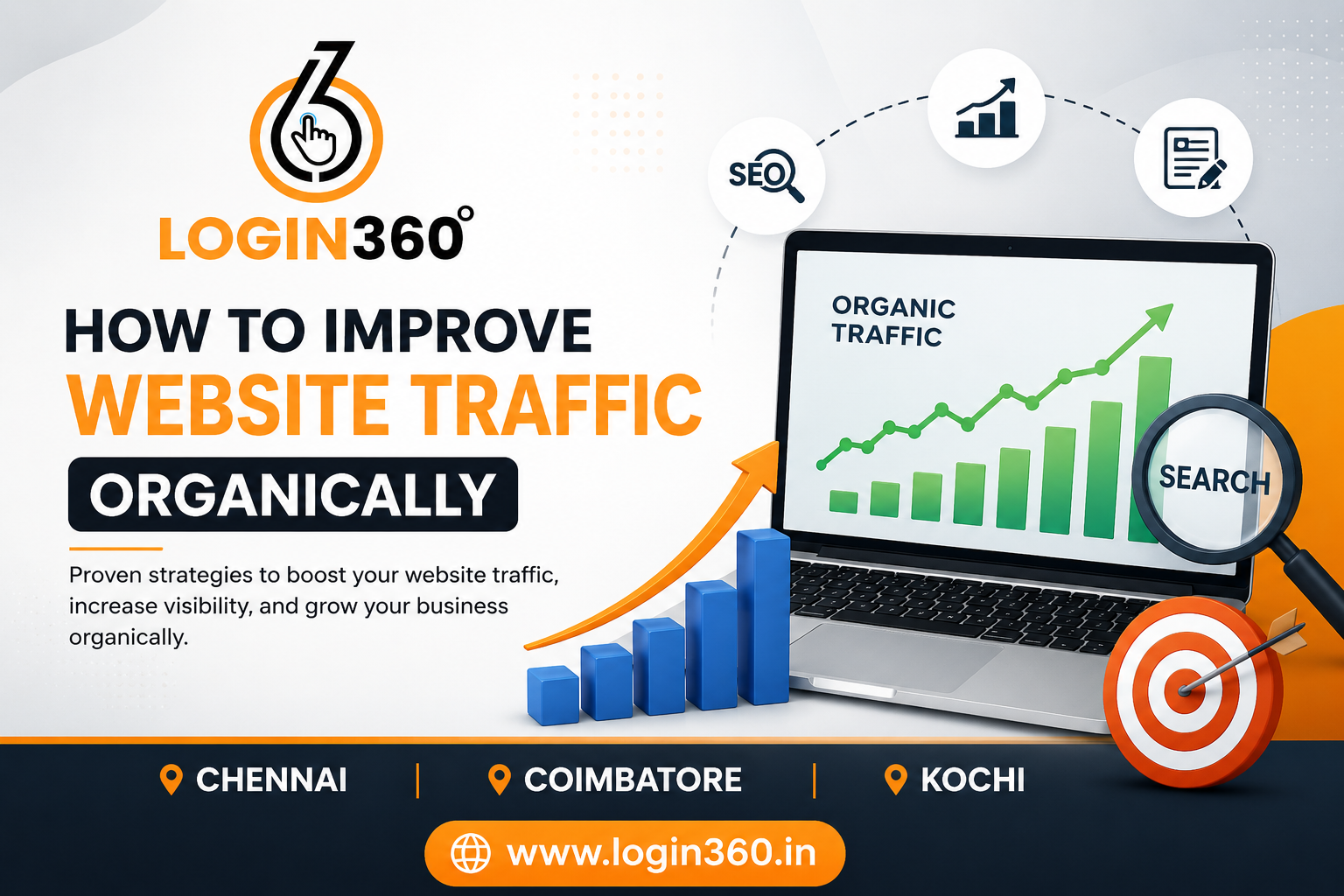
How to Improve Website Traffic Organically
Introduction
Every website owner wants more visitors, but paying for ads isn't always the best long-term solution. Organic traffic refers to visitors who find your website through search engines like Google without paid promotions. By following the right SEO practices and creating valuable content, you can attract more people naturally. Organic traffic not only saves money but also builds trust, improves brand visibility, and delivers long-lasting results. Let's explore the most effective ways to increase your website traffic organically.
1. Create High-Quality Content
Content is the foundation of organic traffic. Write blogs, guides, and articles that answer your audience's questions and solve their problems. Focus on creating original, informative, and engaging content that provides real value. Update older content regularly to keep it relevant and accurate.
2. Use the Right Keywords
Keyword research helps you understand what people are searching for online. Include relevant keywords naturally in your title, headings, meta description, and throughout your content. Avoid keyword stuffing, as it can hurt your rankings. Instead, write naturally while keeping SEO in mind.
3. Optimise Your On-Page SEO
On-page SEO makes your website easier for search engines to understand. Use descriptive title tags, meta descriptions, header tags (H1, H2, H3), and image alt text. Keep URLs short and meaningful, and make sure your content is easy to read with short paragraphs and clear headings.
4. Improve Website Speed
A slow website can drive visitors away and affect your search rankings. Compress images, enable browser caching, reduce unnecessary plugins, and choose reliable web hosting. A faster website provides a better user experience and encourages visitors to stay longer.
5. Make Your Website Mobile-Friendly
Most people browse websites on their smartphones. Ensure your website is responsive and works well on all screen sizes. A mobile-friendly design improves user experience and is an important ranking factor for search engines.
6. Build Quality Backlinks
Backlinks from trusted websites signal to search engines that your content is valuable. Earn backlinks by publishing helpful content, writing guest posts, collaborating with industry websites, and sharing useful resources. Focus on quality rather than quantity.
7. Use Internal Linking
Link related pages and blog posts within your website. Internal links help visitors discover more content while allowing search engines to crawl your website more effectively. This also increases the time users spend on your site.
8. Share Content on Social Media
Although social media doesn't directly improve SEO rankings, it increases your content's visibility. Share your blog posts on platforms where your audience is active. More exposure can lead to more website visits, shares, and backlinks.
9. Optimise for User Experience
A clean website design, easy navigation, readable fonts, and clear call-to-action buttons improve user experience. When visitors can quickly find what they need, they are more likely to stay longer, explore more pages, and return in the future.
10. Track Your SEO Performance
Monitor your website's performance using analytics and SEO tools. Track traffic, keyword rankings, bounce rate, and user behaviour. Analysing this data helps you understand what's working and where improvements are needed, allowing you to refine your SEO strategy over time.
Conclusion
Improving website traffic organically requires patience, consistency, and a focus on providing value to your audience. By creating high-quality content, using effective SEO techniques, improving website performance, and delivering a great user experience, you can steadily increase your search engine rankings and attract more visitors. Organic growth may take time, but it provides sustainable results that benefit your website for years to come.
- Digital Agency
- Literie
- Location de voitures
- Restaurant
- Restaurant
- Mode
- Mode
- Information
- Marketing
- Tourisme
- Développement
- Découverte
- Législation
- Gastronomie
- Pâtisserie
- Evento
- Art
- Causes
- Crafts
- Dance
- Drinks
- Film
- Fitness
- Food
- Juegos
- Gardening
- Health
- Inicio
- Literature
- Music
- Networking
- Otro
- Party
- Religion
- Shopping
- Sports
- Theater
- Wellness
 Spanish
 Indian
 English
 French
 Arabic
 Portuguese
 Deutsch
 Turkish
 Dutch
Dutch
 Italiano
 Russian
 Romaian
 Portuguese (Brazil)
 Greek
Greek
