


Micro OLED Display Problems: Causes and Practical Solutions
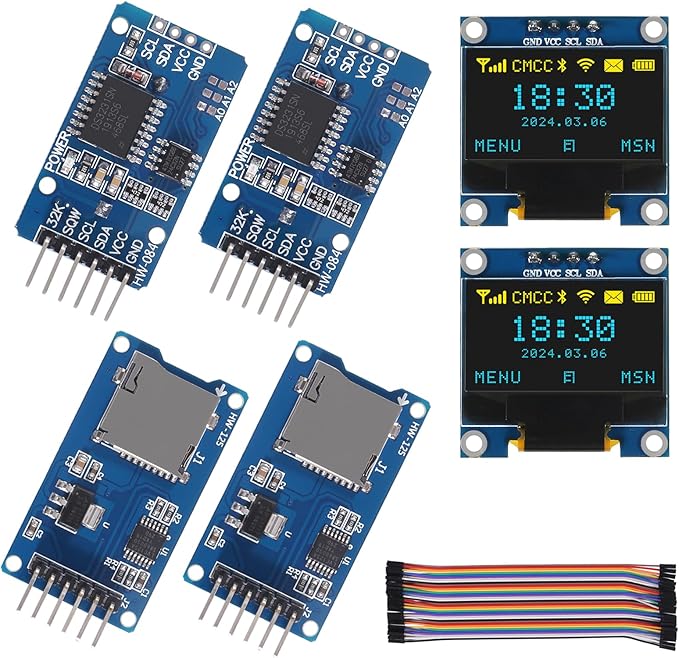
Micro OLED technology has transformed compact displays. It delivers impressive contrast, deep blacks, fast response times, and extremely high pixel density. These advantages make it a popular choice for augmented reality (AR), virtual reality (VR), electronic viewfinders (EVFs), medical imaging devices, and military optics.
Despite these strengths, a micro OLED display is not immune to challenges. Like any advanced display technology, its performance depends on proper design, usage, thermal management, and optical integration. Ignoring these factors can reduce image quality, shorten display life, or affect the user experience.
This article explores the most common problems associated with micro OLED displays, explains why they occur, and discusses practical ways manufacturers and system designers reduce these issues using proven engineering methods.
Why Even Advanced Displays Face Challenges
No display technology is perfect.
LCDs struggle with contrast. Mini-LED displays rely on backlighting. Micro OLED displays eliminate backlights, but they introduce different engineering challenges.
Manufacturers constantly improve efficiency, brightness, and lifespan. However, several factors still influence long-term performance, including:
- Heat generation
- Organic material aging
- Optical efficiency
- Power consumption
- Environmental conditions
Understanding these challenges helps buyers and designers make informed decisions.
Problem 1: Brightness Limitations Outdoors
One of the biggest challenges for a micro OLED display is maintaining visibility under bright sunlight.
Micro OLED panels can produce impressive brightness, but outdoor AR systems often require much higher luminance because optical components such as waveguides and beam splitters reduce the amount of light reaching the user's eye.
Manufacturers address this challenge by improving:
- OLED material efficiency
- Optical engine design
- Light coupling efficiency
- Display driving algorithms
The result is better outdoor readability without significantly increasing power consumption.
Problem 2: Display Burn-In
Burn-in remains one of the best-known concerns with OLED technology.
It occurs when static images remain visible after prolonged display of the same content due to uneven aging of organic materials.
Applications at higher risk include:
- Fixed user interfaces
- Status indicators
- Crosshairs
- Navigation icons
Manufacturers reduce burn-in through:
- Pixel shifting
- Brightness management
- Compensation algorithms
- Improved OLED materials
Modern display controllers significantly reduce this issue compared with earlier OLED generations.
Problem 3: Heat Management
Higher brightness usually generates more heat.
Heat affects both performance and component lifespan.
Designers carefully manage thermal performance by using:
- Efficient display drivers
- Heat-dissipating structures
- Optimized circuit layouts
- Intelligent brightness control
Good thermal management helps maintain consistent image quality while protecting the organic display materials.
Think of heat like traffic during rush hour. A little is manageable. Too much slows everything down.
Problem 4: Limited Lifetime at High Brightness
Organic light-emitting materials gradually age during normal operation.
Higher brightness levels accelerate this aging process.
Manufacturers improve lifespan by:
- Developing more stable OLED materials
- Optimizing driving circuits
- Reducing unnecessary brightness
- Improving power efficiency
For many professional applications, engineers balance brightness with long-term reliability instead of operating continuously at maximum output.
Problem 5: Optical Alignment Challenges
A micro OLED display rarely works alone.
It forms part of a complete optical system that may include:
- Bird bath optics
- Pancake optics
- Waveguides
- Freeform lenses
- Projection optics
Even slight alignment errors may reduce:
- Image sharpness
- Eye box performance
- Viewing comfort
- Color uniformity
Manufacturers use precision assembly techniques and automated calibration to maintain optical accuracy.
Problem 6: Power Consumption in Portable Devices
Although Micro OLED displays consume less power than many traditional display technologies in dark scenes, brightness requirements vary by application.
Battery-powered devices such as:
- AR glasses
- VR headsets
- Electronic viewfinders
- Thermal imaging systems
must balance image quality with operating time.
Engineers improve battery life through:
- Efficient display drivers
- Adaptive brightness control
- Optimized refresh rates
- Low-power system design
Power management remains an important part of product development.
Problem 7: Manufacturing Complexity
Producing a micro OLED display requires extremely precise semiconductor manufacturing.
Unlike conventional OLED panels, Micro OLED technology combines OLED layers with silicon backplanes using advanced fabrication processes.
This complexity increases:
- Manufacturing costs
- Production difficulty
- Quality control requirements
However, continuous improvements in semiconductor manufacturing continue to improve production efficiency and display performance.
How Manufacturers Improve Reliability
Modern Micro OLED systems include several technologies designed to improve long-term performance.
These include:
| Technology | Benefit |
|---|---|
| Pixel compensation | Reduces uneven aging |
| Thermal management | Controls operating temperature |
| Adaptive brightness | Extends display lifespan |
| High-efficiency OLED materials | Improves brightness and durability |
| Precision optical alignment | Enhances image quality |
| Advanced silicon backplanes | Supports high pixel density |
| Intelligent display controllers | Improves overall reliability |
What Buyers Should Evaluate
Whether selecting a display module or developing a complete optical system, buyers should evaluate more than display resolution.
Important factors include:
- Brightness performance
- Contrast ratio
- Refresh rate
- Thermal design
- Optical compatibility
- Display lifetime
- Manufacturer support
A balanced system usually performs better than one focused on only a single specification.
For example, extremely high brightness may look impressive on paper but offers little benefit if heat reduces long-term reliability.
Final Thoughts
A micro OLED display offers outstanding image quality, compact size, high contrast, and exceptional pixel density, making it one of the leading technologies for AR, VR, electronic viewfinders, and advanced optical systems. Like any sophisticated technology, it also presents engineering challenges related to brightness, heat, burn-in, optical alignment, and lifespan.
Fortunately, ongoing advances in OLED materials, silicon backplanes, thermal management, and display control continue to improve reliability and performance. Understanding these real-world challenges helps engineers, manufacturers, and buyers choose display solutions that deliver both excellent image quality and long-term value.
The best display is not simply the brightest one. It is the one that keeps performing reliably long after the product leaves the factory.
- Digital Agency
- Literie
- Location de voitures
- Restaurant
- Restaurant
- Mode
- Mode
- Information
- Marketing
- Tourisme
- Développement
- Découverte
- Législation
- Gastronomie
- Pâtisserie
- Evento
- Art
- Causes
- Crafts
- Dance
- Drinks
- Film
- Fitness
- Food
- Juegos
- Gardening
- Health
- Inicio
- Literature
- Music
- Networking
- Otro
- Party
- Religion
- Shopping
- Sports
- Theater
- Wellness
 Spanish
 Indian
 English
 French
 Arabic
 Portuguese
 Deutsch
 Turkish
 Dutch
Dutch
 Italiano
 Russian
 Romaian
 Portuguese (Brazil)
 Greek
Greek
