


Ohio Medicaid Mental Health Billing in USA: Strategies to Improve Reimbursements and Reduce Claim Denials
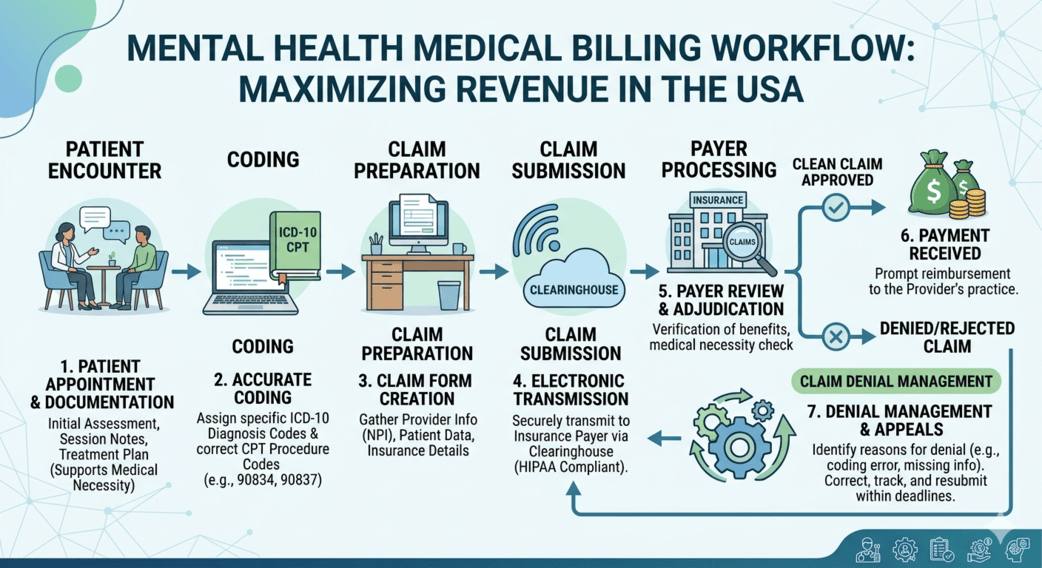
Mental health providers across the United States continue to face growing administrative challenges while trying to deliver quality patient care. In Ohio, Medicaid remains one of the largest payers for behavioral health and mental health services, making accurate billing essential for maintaining financial stability. However, navigating Ohio Medicaid mental health billing can be complex due to changing regulations, coding requirements, credentialing standards, and reimbursement rules.
For mental health practices, community clinics, therapists, psychologists, psychiatrists, and behavioral health organizations, understanding the billing process is critical to maximizing revenue and minimizing claim denials. A well-structured billing system not only ensures timely reimbursements but also allows providers to focus more on patient outcomes and less on administrative burdens.
This guide explores Ohio Medicaid mental health billing, common challenges, best practices, and the role of professional billing support in improving revenue performance.
Understanding Ohio Medicaid Mental Health Billing
Ohio Medicaid provides coverage for a wide range of behavioral health services, including:
- Individual therapy
- Group therapy
- Family counseling
- Psychiatric evaluations
- Medication management
- Substance use disorder treatment
- Telehealth mental health services
- Community psychiatric support services
Mental health providers must comply with Ohio Medicaid guidelines while ensuring accurate documentation, coding, and claim submission. Even minor billing errors can lead to delays, denials, or reduced reimbursements.
The complexity of behavioral healthcare billing has led many organizations to seek specialized support for mental health billing and reimbursement management.
Why Mental Health Billing Is More Complex Than Traditional Medical Billing
Mental health claims often involve unique documentation requirements, time-based coding, treatment plans, and authorization procedures.
Several factors contribute to billing complexity:
Multiple Service Types
Behavioral healthcare providers frequently offer various services during a patient's treatment journey. Each service may require different procedure codes and documentation standards.
Prior Authorization Requirements
Some Medicaid-covered mental health services require pre-approval before treatment begins. Missing authorizations can result in denied claims.
Time-Based Coding
Many psychotherapy and counseling services depend on session length. Accurate time tracking is essential for proper reimbursement.
Frequent Regulatory Updates
Mental health billing regulations continue to evolve, especially regarding telehealth and Medicaid reimbursement policies.
Because of these challenges, many practices rely on third party billing for mental health services to improve claim accuracy and reduce administrative burdens.
Common Challenges in Ohio Medicaid Mental Health Billing
Eligibility Verification Issues
Patient Medicaid eligibility can change frequently. Failure to verify benefits before appointments may result in denied claims.
Documentation Errors
Incomplete treatment notes remain one of the most common reasons for claim denials. Documentation must support medical necessity and accurately reflect services provided.
Coding Mistakes
Incorrect CPT, HCPCS, or diagnosis codes can trigger payment delays or denials. Proper coding remains a critical component of successful mental health medical billing.
Credentialing Delays
Providers who are not properly enrolled with Ohio Medicaid may experience reimbursement issues. Maintaining active provider credentials is essential for uninterrupted billing operations.
Telehealth Compliance
Virtual mental health services have expanded significantly. Providers must stay current with Ohio Medicaid telehealth billing requirements to avoid claim rejections.
Best Practices for Successful Ohio Medicaid Mental Health Billing
Healthcare organizations can improve reimbursement outcomes by implementing proven billing strategies.
Verify Eligibility Before Every Visit
Patient eligibility should be confirmed prior to each appointment. Coverage changes can occur unexpectedly, particularly within Medicaid programs.
Maintain Detailed Clinical Documentation
Strong documentation supports medical necessity and protects against audits.
Documentation should include:
- Treatment goals
- Session duration
- Patient progress
- Interventions provided
- Follow-up recommendations
Use Accurate Behavioral Health Codes
Coding accuracy directly impacts reimbursement. Mental health providers should ensure codes align with payer guidelines and documented services.
Monitor Denial Trends
Tracking denial patterns helps identify recurring issues and opportunities for process improvement.
Conduct Regular Staff Training
Billing teams should receive ongoing education regarding Medicaid updates, coding changes, and compliance requirements.
The Growing Demand for Specialized Mental Health Billing Services
As behavioral healthcare continues expanding nationwide, many providers are outsourcing administrative functions to experts specializing in mental health billing.
Professional mental health billing services help organizations:
- Reduce billing errors
- Improve claim acceptance rates
- Accelerate reimbursements
- Manage denials efficiently
- Enhance compliance
Outsourcing allows providers to dedicate more resources toward patient care rather than administrative management.
How Behavioral and Mental Health Billing Services Support Providers
Behavioral healthcare billing differs significantly from standard medical billing. Specialized behavioral and mental health billing services understand the unique requirements associated with counseling, therapy, psychiatry, and substance use treatment.
Key support areas include:
Claims Management
Experienced billing teams submit clean claims that comply with payer requirements.
Authorization Tracking
Billing specialists help monitor and maintain prior authorization approvals.
Denial Resolution
Rejected claims are investigated and corrected promptly to recover revenue.
Compliance Monitoring
Billing professionals stay informed about evolving Medicaid and payer regulations.
These services help organizations maintain healthier cash flow while reducing administrative stress.
Billing for Mental Health Therapists: What Independent Providers Should Know
Independent therapists often face billing challenges due to limited administrative resources.
Successful billing for mental health therapists requires attention to:
- Proper credentialing
- Accurate coding
- Session documentation
- Insurance verification
- Timely claim submission
Many solo practitioners choose outsourcing solutions because managing billing internally can consume valuable clinical time.
By partnering with billing experts, therapists can focus on patient care while improving financial performance.
The Importance of Mental Health Billing and Credentialing Services
Credentialing and billing work hand in hand. Even perfectly coded claims may be denied if provider enrollment issues exist.
Mental health billing and credentialing services help providers:
- Complete payer enrollment applications
- Maintain active provider status
- Track recredentialing deadlines
- Resolve enrollment-related claim issues
Proper credentialing establishes a strong foundation for long-term reimbursement success.
When Should a Practice Hire a Mental Health Billing Consultant?
Not every billing challenge requires a full outsourcing solution. Sometimes organizations benefit from working with a mental health billing consultant.
Consultants can assist with:
- Revenue cycle assessments
- Workflow optimization
- Compliance reviews
- Staff training
- Denial analysis
A consultant's objective perspective often helps identify inefficiencies that internal teams may overlook.
What Makes the Best Mental Health Billing Services Stand Out?
Choosing the best mental health billing services involves evaluating more than just pricing.
Leading billing partners typically offer:
- Behavioral health specialization
- Medicaid expertise
- Transparent reporting
- Denial management support
- Compliance monitoring
- Dedicated account management
Providers should seek partners with proven experience handling mental health reimbursement challenges.
Why Practices Across the Country Seek Specialized Billing Expertise
While regulations vary by state, mental health organizations nationwide face similar billing challenges.
For example, providers often research mental health billing services in California because California's behavioral healthcare market has developed highly specialized billing solutions. Lessons learned from large healthcare markets can often be adapted to improve billing efficiency in other states, including Ohio.
Similarly, many organizations evaluate a top mental health billing company based on industry expertise, technology capabilities, and measurable financial outcomes rather than geographic location alone.
The Role of Revenue Cycle Management in Behavioral Health
Strong revenue cycle management services help mental health organizations optimize financial performance from patient registration through final reimbursement.
Effective revenue cycle management includes:
- Patient eligibility verification
- Authorization management
- Charge capture
- Medical coding
- Claims submission
- Payment posting
- Denial management
- Accounts receivable follow-up
An optimized revenue cycle reduces revenue leakage and supports long-term organizational growth.
Supporting Mental Health Practices with Medical Billing and Coding Expertise
Mental health providers increasingly require comprehensive administrative support beyond claim submission alone.
Professional medical billing services can help improve operational efficiency while reducing reimbursement delays.
Likewise, accurate medical coding services ensure claims are submitted using the correct procedure and diagnosis codes that align with payer requirements.
Many organizations prefer integrated medical billing and coding services because combining these functions improves claim accuracy and reduces communication gaps between departments.
For growing behavioral health practices, having access to experienced billing and coding professionals can significantly improve reimbursement outcomes and operational stability.
Why Credentialing Services Matter for Sustainable Growth
As practices expand and add providers, credentialing becomes increasingly important.
Professional credentialing services help healthcare organizations:
- Enroll providers with Medicaid and commercial payers
- Track renewals and expirations
- Maintain compliance
- Prevent enrollment-related payment delays
Without proper credentialing oversight, practices risk revenue disruptions that can affect overall financial performance.
Partnering with Experienced Healthcare Revenue Experts
Many behavioral health providers eventually reach a point where internal billing resources are no longer sufficient to support growth. Organizations seeking specialized expertise often partner with industry leaders such as 247 Medical Billing Services to strengthen operational efficiency, improve reimbursement performance, and streamline billing workflows.
By combining experienced billing professionals, coding expertise, credentialing support, and comprehensive revenue management strategies, healthcare organizations can better navigate the complexities of Ohio Medicaid mental health billing while maintaining focus on patient care.
Conclusion
Ohio Medicaid mental health billing requires a thorough understanding of documentation standards, coding accuracy, payer regulations, and reimbursement requirements. As behavioral healthcare continues to evolve, providers must adopt efficient billing processes to remain financially healthy and compliant.
Whether through internal optimization, third party billing for mental health services, specialized consulting, or comprehensive outsourcing solutions, healthcare organizations can significantly improve revenue performance by investing in strong billing strategies.
Professional support in medical billing services, medical coding services, medical billing and coding services, revenue cycle management services, and credentialing services can help mental health providers reduce denials, accelerate reimbursements, and focus on what matters most—delivering quality care to patients throughout Ohio and across the United States.
Frequently Asked Questions
1. What is Ohio Medicaid mental health billing?
Ohio Medicaid mental health billing refers to the process of submitting and managing claims for behavioral health and mental health services provided to Medicaid beneficiaries in Ohio.
2. Why are mental health claims often denied?
Common reasons include coding errors, missing documentation, eligibility issues, authorization problems, and credentialing deficiencies.
3. What are the benefits of outsourcing mental health billing?
Outsourcing can improve claim accuracy, reduce denials, increase reimbursement rates, and allow providers to focus more on patient care.
4. How do mental health billing and credentialing services work together?
Credentialing ensures providers are properly enrolled with payers, while billing services manage claim submission and reimbursement processes. Both are essential for successful revenue generation.
5. What should providers look for in the best mental health billing services?
Providers should prioritize behavioral health expertise, Medicaid experience, transparent reporting, compliance support, and strong denial management capabilities.
6. How do revenue cycle management services improve mental health practice profitability?
Revenue cycle management services streamline every stage of the reimbursement process, helping practices reduce claim denials, improve collections, and maintain healthy cash flow.
- Digital Agency
- Literie
- Location de voitures
- Restaurant
- Restaurant
- Mode
- Mode
- Information
- Marketing
- Tourisme
- Développement
- Découverte
- Législation
- Gastronomie
- Pâtisserie
- Evento
- Art
- Causes
- Crafts
- Dance
- Drinks
- Film
- Fitness
- Food
- Jogos
- Gardening
- Health
- Início
- Literature
- Music
- Networking
- Outro
- Party
- Religion
- Shopping
- Sports
- Theater
- Wellness
 Portuguese (Brazil)
 Indian
 English
 French
 Arabic
 Spanish
 Portuguese
 Deutsch
 Turkish
 Dutch
Dutch
 Italiano
 Russian
 Romaian
 Greek
Greek
