


Switching Careers to Data Analytics: Everything Non-IT Professionals Need to Know
Data analytics has emerged as one of the most practical career paths for professionals looking to move into a high-demand, future-focused industry. As businesses increasingly depend on data to guide decisions, the need for skilled analysts continues to grow. This shift has opened doors for Data Analytics Online Course individuals from non-IT backgrounds, proving that you don’t need a traditional tech degree to build a successful career in analytics.

Why Data Analytics Is an Accessible Career Choice
Unlike many specialized technical fields, data analytics is built on skills that can be learned step by step. Organizations across industries—such as finance, healthcare, retail, education, and logistics—rely on data to improve performance and solve problems. Because of this, professionals who switch into analytics can often apply their existing industry knowledge while developing new technical abilities, making the transition smoother and more practical.
Understanding the Role of a Data Analyst
A data analyst works with data to uncover insights that support business decisions. This involves collecting information, cleaning datasets, identifying patterns, and presenting findings in a clear and visual format. The role is less about complex mathematics and more about logical thinking, problem-solving, and communication. Analysts help organizations understand what is happening in their business and why it is happening.
Essential Skills You Need to Learn
To start a career in data analytics, you need to build a foundation in a few key tools. Excel is commonly used for data handling and basic analysis. SQL is essential for working with databases and retrieving structured information. Visualization tools like Power BI and Tableau help convert raw data into meaningful dashboards. As you advance, Python becomes useful for deeper analysis and automation tasks.
A Practical Approach to Learning Analytics
Instead of trying to learn everything at once, it is more effective to follow a structured and gradual learning path. Begin with basic concepts, practice regularly, and slowly progress to advanced topics. Consistency matters more than speed. Even small, steady improvements over time can lead to strong technical skills and confidence in working with data.
Using Your Background as a Strength
Your previous work experience can be a major advantage in analytics. Whether you have worked in marketing, sales, finance, or operations, you already understand how businesses function. This helps Data Analytics Course in Chennai you interpret data in a meaningful way and connect insights to real-world problems. Employers often value this combination of domain knowledge and analytical thinking.
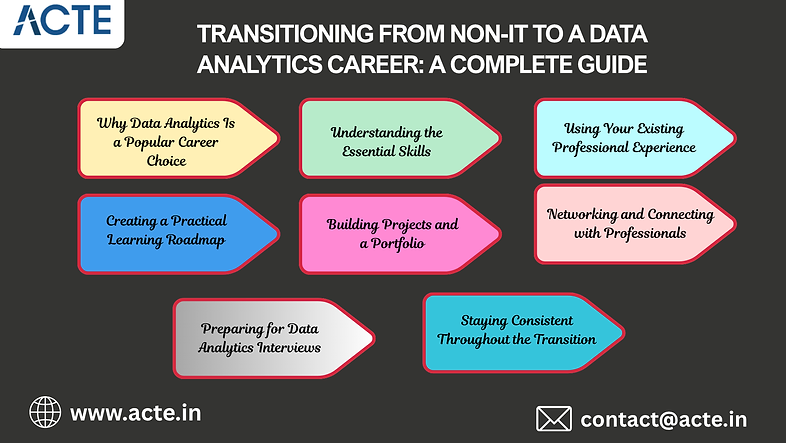
Gaining Experience Through Practice Projects
Hands-on experience is essential for building confidence and job readiness. Working with real datasets allows you to apply what you learn and understand how analytics works in practice. You can explore trends, analyze business scenarios, and create reports or dashboards. These Software Training Institute projects help bridge the gap between learning and professional work.
Building a Portfolio That Demonstrates Your Skills
A portfolio is one of the most important assets for a career switcher. It showcases your ability to work with data and solve problems. Include projects that highlight different skills such as data cleaning, visualization, analysis, and storytelling. Clearly explain your approach and insights so employers can understand your thinking process.
The Role of Networking in Career Growth
Connecting with professionals in the data analytics field can significantly support your transition. Engaging in online communities, attending events, and participating in discussions helps you stay updated with industry trends. Networking can also lead to mentorship, referrals, and job opportunities that may not be publicly advertised.
Staying Updated in an Evolving Industry
Data analytics is a fast-changing field where tools and techniques continue to evolve. To stay competitive, continuous learning is important. Professionals who keep upgrading their skills and adapting to new technologies are more likely to grow into advanced roles and long-term career success.
Conclusion
Transitioning from a non-IT background to a data analytics career is a realistic and achievable goal. By learning essential tools, leveraging your existing experience, building practical projects, and maintaining consistent effort, you can successfully enter this growing field. With dedication and the right learning strategy, data analytics can become a stable, rewarding, and future-ready career path.
- Digital Agency
- Literie
- Location de voitures
- Restaurant
- Restaurant
- Mode
- Mode
- Information
- Marketing
- Tourisme
- Développement
- Découverte
- Législation
- Gastronomie
- Pâtisserie
- Eveniment
- Art
- Causes
- Crafts
- Dance
- Drinks
- Film
- Fitness
- Food
- Jocuri
- Gardening
- Health
- Acasă
- Literature
- Music
- Networking
- Alte
- Party
- Religion
- Shopping
- Sports
- Theater
- Wellness
 Romaian
 Indian
 English
 French
 Arabic
 Spanish
 Portuguese
 Deutsch
 Turkish
 Dutch
 Italiano
 Russian
 Portuguese (Brazil)
 Greek
