


Bite Tug vs. Chew Toy: Understanding the Difference for Safer Play
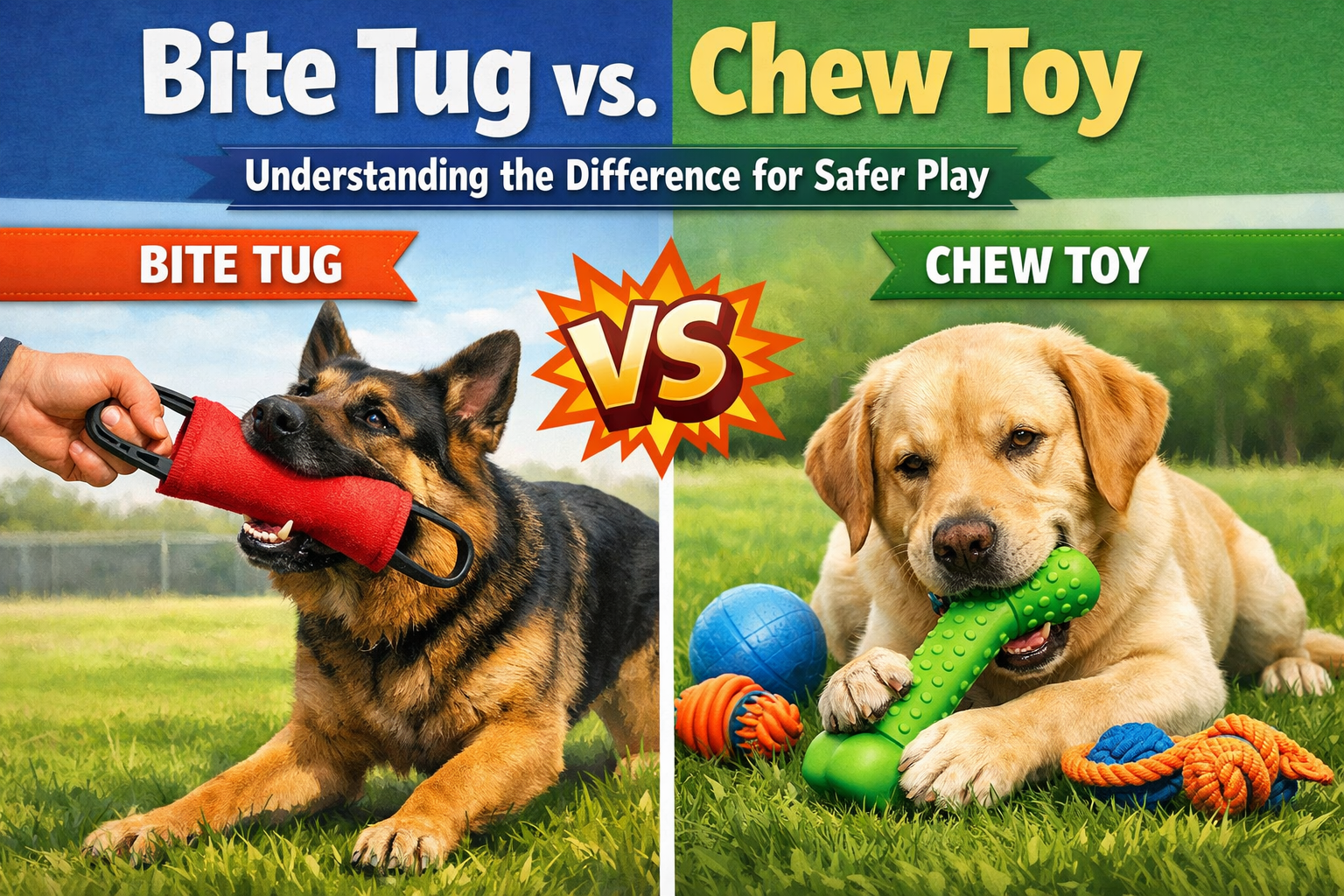
Dogs naturally love to bite, chew, and tug during play. These behaviors are part of their instincts and are essential for mental stimulation, physical exercise, and overall well-being. However, many dog owners mistakenly believe that all dog toys serve the same purpose. In reality, different toys are designed for different activities, and using the wrong one can lead to confusion or even unsafe play.
Two commonly misunderstood toys are bite tugs and chew toys. While they may look similar at first glance, they serve very different purposes in a dog’s development and training. Understanding these differences can help ensure safer playtime and better training results.
What Is a Bite Tug?
A dog bite tug is a training tool designed specifically for interactive play between a dog and a handler. Unlike chew toys that dogs use independently, bite tugs are meant to be used during structured play sessions.
These toys are commonly used in professional dog training, especially for working dogs involved in obedience training, protection work, or sport training. Bite tugs are typically made from durable materials such as jute, leather, or synthetic fabric and often include handles that allow the handler to control the game.
The main goal of a bite tug is to encourage controlled biting and tugging while building a stronger bond between the dog and handler.
What Is a Chew Toy?
A chew toy is designed for independent chewing rather than interactive play. Dogs chew naturally to relieve boredom, reduce stress, and keep their teeth clean. Chew toys are built to withstand long chewing sessions and are often made from materials like rubber, nylon, or natural bone substitutes.
Unlike training tools, chew toys allow dogs to entertain themselves safely without requiring constant supervision from the owner.
These toys are particularly helpful for:
-
Teething puppies
-
Dogs with high chewing instincts
-
Preventing destructive chewing on furniture or shoes
-
Keeping dogs mentally stimulated when alone
Because chew toys are meant for solo use, they are usually more rigid and durable than training toys.
Key Differences Between Bite Tugs and Chew Toys
Although both toys involve biting, their purpose and design are very different.
1. Purpose of the Toy
The primary difference lies in how the toy is intended to be used. A bite tug for dogs is used during interactive training games such as tug-of-war, where the handler actively participates. The goal is to channel the dog’s prey drive and reward correct behaviors during training.
Chew toys, on the other hand, are meant for self-directed play. Dogs can chew them whenever they feel the need to relieve stress or boredom.
2. Training vs. Entertainment
Bite tugs are often used as rewards in training. Trainers may use them to reinforce commands like recall, engagement, or obedience. For many high-drive dogs, tug play can be more motivating than food rewards.
Chew toys are primarily used for entertainment and stress relief rather than structured training.
3. Interaction Level
Bite tug play requires the presence of a handler. The game involves controlled pulling, releasing, and rewarding the dog for correct behavior.
Chew toys require little to no human interaction. Dogs simply chew them independently.
4. Material and Design
Bite tugs are designed to be soft enough for gripping but strong enough to withstand pulling. Many feature handles to give the handler better control during play.
Chew toys are usually thicker and harder because they must withstand repeated chewing pressure over long periods.
5. Safety Considerations
Because bite tugs involve interactive play, they should always be used under supervision. Proper technique helps prevent accidental bites or overly aggressive tugging.
Chew toys should also be selected carefully based on the dog’s chewing strength. A toy that is too soft may break apart, while one that is too hard could damage teeth.
When to Use a Bite Tug
Bite tugs are best used during training sessions or structured playtime. They are especially effective for energetic dogs that enjoy chasing, gripping, and tugging.
Situations where bite tugs work well include:
-
Reward-based obedience training
-
Building engagement with the handler
-
Strengthening recall and focus
-
Providing controlled outlets for prey drive
-
Interactive exercise sessions
These toys help transform natural instincts into positive and controlled behaviors.
When to Use Chew Toys
Chew toys are ideal for situations when your dog needs something to occupy their attention without constant supervision.
They are particularly useful for:
-
Dogs left alone at home
-
Puppies going through the teething stage
-
Preventing destructive chewing habits
-
Reducing boredom and anxiety
Providing appropriate chew toys can significantly reduce unwanted behaviors such as chewing furniture or shoes.
Choosing the Right Toy for Your Dog
Every dog has unique preferences, energy levels, and chewing strength. When selecting toys, consider factors such as:
-
Your dog’s size and breed
-
Chewing intensity
-
Training goals
-
Play style and energy level
High-energy dogs often benefit from both types of toys. Bite tugs provide structured interaction and training opportunities, while chew toys satisfy natural chewing needs.
Using the right toy for the right activity ensures that dogs remain mentally stimulated and physically active without developing harmful habits.
Tips for Safe Play
Regardless of the type of toy you choose, safety should always come first.
Follow these guidelines for safer play sessions:
-
Always supervise tug games.
-
Replace toys that show signs of damage.
-
Choose toys appropriate for your dog’s size and strength.
-
Teach commands such as “drop” or “release” during tug play.
-
Rotate toys to keep your dog interested and engaged.
Proper toy selection and supervision help create positive play experiences while preventing injuries or behavioral issues.
Conclusion
Understanding the difference between bite tugs and chew toys is essential for responsible dog ownership. While both toys involve biting and play, they serve very different roles in a dog’s life.
Bite tugs are interactive training tools designed to build engagement, reward behavior, and strengthen the bond between dog and handler. Chew toys, on the other hand, provide independent entertainment and satisfy a dog’s natural chewing instincts.
By using each toy for its intended purpose, dog owners can create safer play environments while supporting their dog’s physical and mental development. When used correctly, both toys become valuable tools in raising a happy, healthy, and well-behaved dog.
- Digital Agency
- Literie
- Location de voitures
- Restaurant
- Restaurant
- Mode
- Mode
- Information
- Marketing
- Tourisme
- Développement
- Découverte
- Législation
- Gastronomie
- Pâtisserie
- Evento
- Art
- Causes
- Crafts
- Dance
- Drinks
- Film
- Fitness
- Food
- Juegos
- Gardening
- Health
- Inicio
- Literature
- Music
- Networking
- Otro
- Party
- Religion
- Shopping
- Sports
- Theater
- Wellness
 Spanish
 Indian
 English
 French
 Arabic
 Portuguese
 Deutsch
 Turkish
 Dutch
Dutch
 Italiano
 Russian
 Romaian
 Portuguese (Brazil)
 Greek
Greek
