In today’s expanding power transmission and distribution networks, aerial power cable systems play a vital role in delivering electricity efficiently, safely, and cost-effectively. From urban infrastructure to rural electrification and industrial projects, overhead cable solutions remain a preferred choice for utilities and EPC contractors seeking durability, scalability, and lower installation costs.
As a global manufacturer of overhead conductors and power cables, HNBF Power provides engineered aerial cable solutions tailored to diverse grid requirements. This guide explores how aerial power cables work, their types, applications, and how to select the right solution for your project.
What Is an Aerial Power Cable?
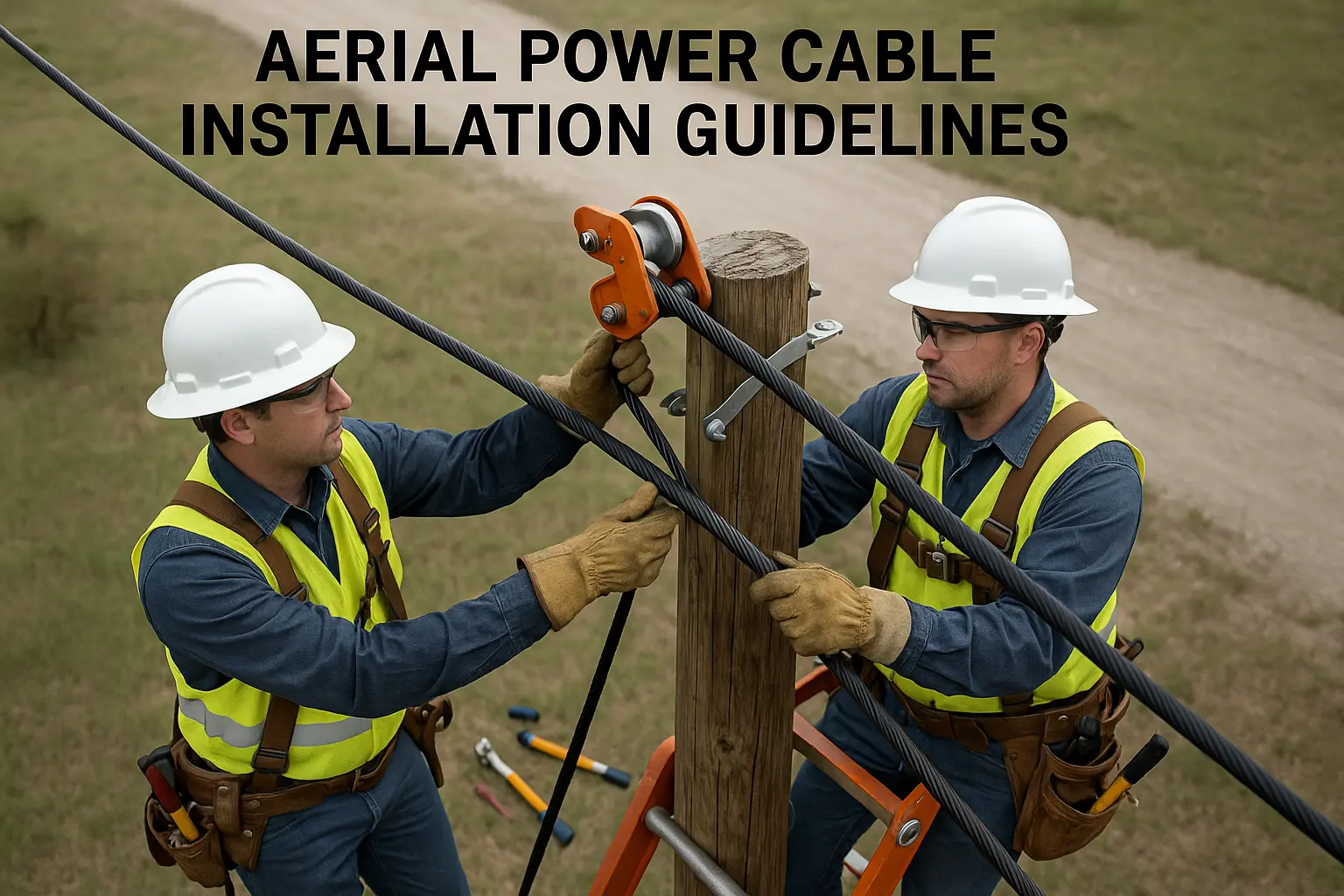
An aerial power cable is an insulated or bare conductor system installed above ground, typically supported by poles or towers, to transmit and distribute electrical energy. Unlike underground cables, aerial systems are easier to install, maintain, and expand making them ideal for both temporary and permanent power networks.
These cables are designed to withstand environmental stresses such as wind, temperature fluctuations, UV exposure, and mechanical loads, ensuring long-term performance in challenging conditions.
Key Types of Aerial Power Cables
Understanding different aerial cable types helps engineers and procurement teams select the most suitable option based on load capacity, terrain, and budget.
AAC (All Aluminum Conductor)
AAC cables offer excellent conductivity and are widely used in short-distance distribution networks where strength requirements are minimal. They are lightweight and cost-effective but have lower tensile strength compared to reinforced conductors.
AAAC (All Aluminum Alloy Conductor)
AAAC cables provide a balance between conductivity and mechanical strength. With improved corrosion resistance, they are ideal for coastal or humid environments.
ACSR (Aluminum Conductor Steel Reinforced)
ACSR cables combine aluminum strands with a steel core, delivering high tensile strength for long-span transmission lines. These are commonly used in high-voltage overhead applications.
ABC (Aerial Bundled Cable)
Aerial bundled cables (ABC) are insulated conductors bundled together, designed for low voltage (LV) and medium voltage (MV) distribution. They enhance safety, reduce power theft, and minimize outages caused by external interference.
LV Power Cable & Concentric Cable
For low-voltage distribution, insulated aerial cables such as LV power cables and concentric cables provide reliable energy delivery with added protection against faults and environmental hazards.
Advantages of Aerial Power Cable Systems
Cost-Effective Installation
Aerial systems require less excavation, trenching, and civil work compared to underground cables, significantly reducing project costs.
Faster Deployment
Utilities can install aerial cables quickly, making them ideal for emergency restoration, rural electrification, and temporary power setups.
Easy Maintenance and Inspection
Fault detection and repair are more accessible in overhead systems, reducing downtime and operational costs.
Flexibility and Scalability
Expanding or upgrading aerial networks is simpler, allowing utilities to adapt to increasing power demand.
Improved Safety with Insulated Options
Modern solutions like ABC cables reduce risks of electric shock, short circuits, and unauthorized connections.
Applications of Aerial Power Cables
Aerial power cables are widely used across various sectors:
- Urban Distribution Networks: Reliable power supply in cities with dense infrastructure
- Rural Electrification Projects: Cost-efficient solutions for remote areas
- Industrial Facilities: Power delivery for factories, construction sites, and mining operations
- Temporary Installations: Events, exhibitions, and emergency power restoration
- Utility Transmission Lines: Medium and high-voltage overhead power transmission
Key Considerations for Selecting Aerial Power Cables
Choosing the right aerial cable involves more than just cost comparison. Engineers and procurement teams must evaluate several technical and environmental factors.
Load Capacity and Voltage Rating
Ensure the cable can handle the required current load and voltage level without excessive losses or overheating.
Mechanical Strength
For long spans or harsh environments, cables like ACSR provide the necessary tensile strength to withstand mechanical stress.
Environmental Conditions
Factors such as humidity, temperature, wind load, and corrosion potential influence material selection (e.g., AAAC for coastal areas).
Insulation Requirements
In populated or high-risk areas, insulated options like ABC cables enhance safety and reliability.
Compliance and Standards
Verify that cables meet international standards such as IEC, ASTM, or BS for quality and performance assurance.
How HNBF Power Delivers Reliable Aerial Cable Solutions
HNBF Power specializes in manufacturing high-performance aerial power cables designed for modern grid challenges. With advanced production capabilities and strict quality control, the company ensures consistent product reliability for global utilities and EPC contractors.
Customized Engineering Support
Every project has unique requirements. HNBF Power provides tailored solutions based on voltage levels, span length, environmental conditions, and installation constraints.
High-Quality Materials
Using premium-grade aluminum and alloy materials, HNBF Power ensures optimal conductivity, strength, and corrosion resistance.
Global Standards Compliance
All products are manufactured in accordance with international standards, ensuring compatibility and long-term performance.
Supply Chain Reliability
With efficient production and logistics, HNBF Power supports large-scale infrastructure projects with timely delivery and consistent quality.
Common Challenges in Aerial Power Cable Projects (and Solutions)
Power Loss and Efficiency Issues
Solution: Select conductors with optimal cross-sectional area and conductivity to minimize transmission losses.
Environmental Damage
Solution: Use corrosion-resistant materials and proper insulation to withstand harsh climates.
Safety Risks in Urban Areas
Solution: Implement insulated aerial bundled cables to reduce accidents and improve network reliability.
Maintenance Downtime
Solution: Choose durable cable designs and implement routine inspection schedules.
FAQs About Aerial Power Cable
What is the main advantage of aerial power cables over underground cables?
Aerial cables are more cost-effective, easier to install, and quicker to repair compared to underground systems.
Which aerial cable is best for long-distance transmission?
ACSR cables are widely preferred due to their high tensile strength and ability to support long spans.
Are aerial bundled cables safer?
Yes, ABC cables are insulated, reducing the risk of electric shock, short circuits, and power theft.
Can aerial power cables be used in coastal areas?
Yes, AAAC cables are ideal for such environments due to their corrosion resistance.
How do I choose the right aerial cable for my project?
Consider load requirements, environmental conditions, installation span, and compliance standards when selecting a cable.
Power Your Grid with HNBF Power
Selecting the right aerial power cable is critical for ensuring efficient, reliable, and safe electricity distribution. Whether you are planning a new grid project or upgrading an existing network, partnering with an experienced manufacturer makes all the difference.
HNBF Power offers a complete range of overhead conductors and aerial cable solutions tailored to your specific project needs. Contact HNBF Power today to get expert guidance and customized solutions that optimize performance, reduce costs, and ensure long-term reliability.



 Turkish
 Indian
 English
 French
 Arabic
 Spanish
 Portuguese
 Deutsch
 Dutch
Dutch
 Italiano
 Russian
 Romaian
 Portuguese (Brazil)
 Greek
Greek
