


Automotive Spot Welder: Revolutionizing Precision Welding in Modern Manufacturing
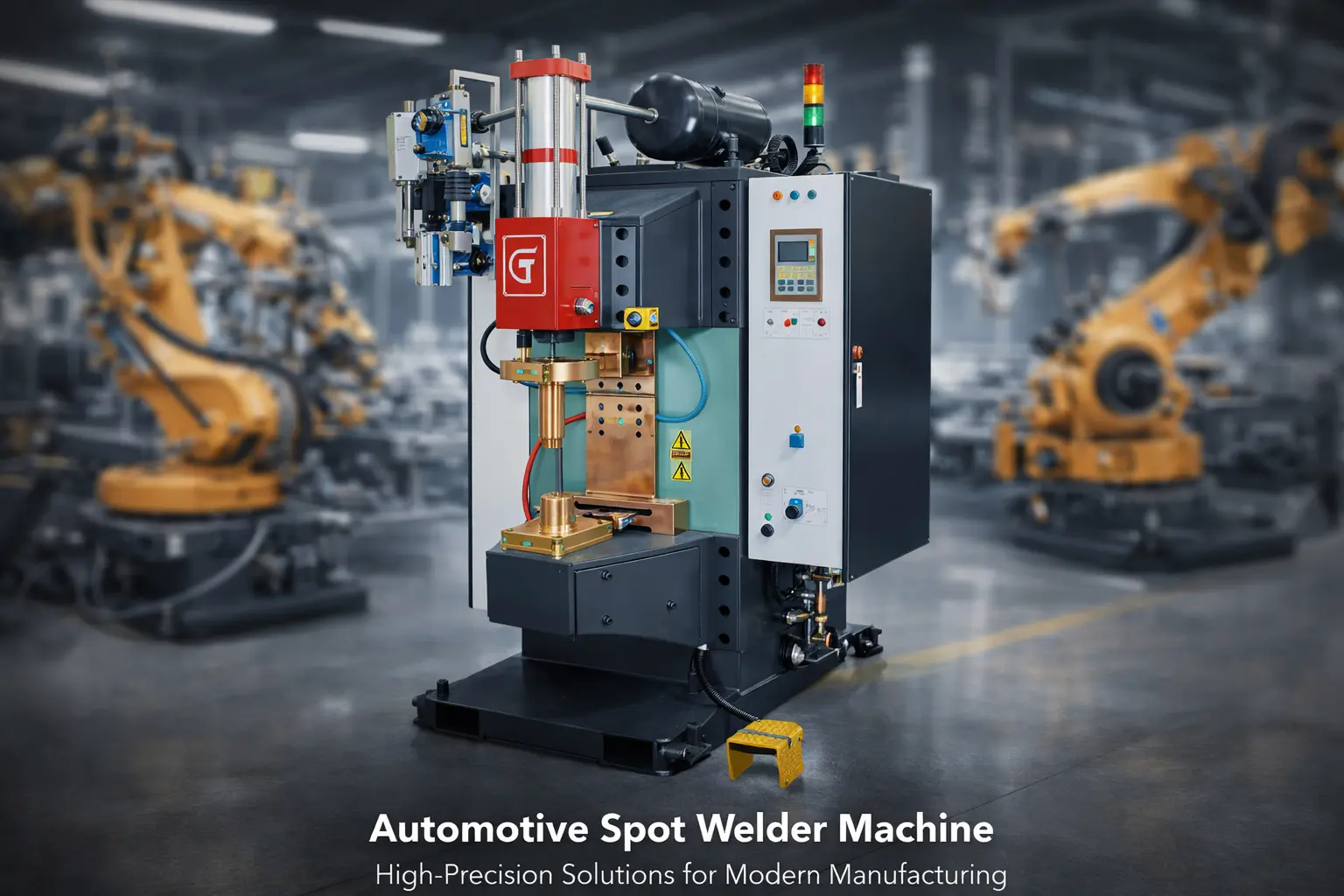
In today’s fast-paced automotive industry, precision, speed, and reliability in welding operations are critical. Automotive spot welders have emerged as a cornerstone technology for joining sheet metals efficiently, ensuring structural integrity, and supporting advanced manufacturing processes. For manufacturers, OEMs, and automation integrators, choosing the right spot welding solution is not just about cost it’s about long-term production performance, safety, and quality consistency.
Heron Welder, a global leader in industrial welding solutions, offers cutting-edge resistance spot welding machines, along with fully automated production lines, designed to meet the demands of modern automotive factories.
What is an Automotive Spot Welder?
An automotive spot welder is a type of resistance welding machine specifically engineered to join metal sheets at precise points, creating a strong, localized bond without requiring filler material. The process involves:
- Clamping two or more sheets of metal between copper electrodes.
- Passing a controlled electrical current through the contact point.
- Generating heat due to electrical resistance, which melts the metal locally.
- Applying pressure to form a solid weld nugget upon cooling.
This method is widely favored in automotive body assembly because it combines high efficiency with repeatable, high-quality welds.
Key Applications in Automotive Manufacturing
Spot welding is fundamental in automotive production for both structural and non-structural components:
- Car Body Assembly: Joining chassis panels, roof, doors, and floor sections with precision.
- Battery Enclosures: Ensuring strong welds in EV battery housings where electrical conductivity and mechanical integrity are critical.
- Automotive Exhaust Systems: Connecting sheet metal parts that require durability under high temperature.
- Interior Metal Frames: Fabricating seats, brackets, and reinforcements efficiently.
By leveraging modern automotive spot welders, factories can significantly reduce production time while maintaining strict quality standards.
How Automotive Spot Welding Works: Principles and Techniques
Understanding the technical principles of spot welding helps manufacturers optimize operations and prevent defects:
Electrical Resistance Heating
The core principle involves converting electrical energy into heat at the contact point. The heat must be sufficient to form a weld nugget but controlled to avoid burn-through or excessive deformation.
Electrode Pressure
Uniform pressure ensures that the molten metal solidifies properly, forming a strong joint. Inconsistent force can lead to weak welds or surface damage.
Cooling Cycle
After welding, controlled cooling prevents cracks and ensures metallurgical stability. Modern machines integrate water-cooled electrodes to maintain consistent weld quality in high-volume production.
Advantages of Automotive Spot Welding
Automotive spot welders offer several benefits for high-volume manufacturing:
- Speed: Each weld is completed in fractions of a second, supporting fast assembly lines.
- Repeatability: Advanced controls allow for consistent nugget size and weld strength.
- Material Efficiency: No filler materials or adhesives are required.
- Automation-Friendly: Easily integrated with robotic arms, conveyors, and automated quality inspection systems.
Heron Welder’s portfolio includes MFDC spot welders, capacitor discharge units, and automated welding systems tailored for automotive OEMs, ensuring precision, safety, and productivity.
Comparing Spot Welding with Other Welding Methods
While spot welding is ideal for thin-sheet metal applications, manufacturers often evaluate alternatives such as:
| Welding Method | Ideal Use | Pros | Cons |
|---|---|---|---|
| MIG Welding | Thick metals, complex shapes | Versatile, strong | Slower, needs filler wire |
| TIG Welding | High-precision, stainless steel | Clean, controlled | Slower, skill-dependent |
| Laser Welding | Automotive EV battery enclosures | Extremely precise | High initial cost, safety concerns |
| Spot Welding | Sheet metals, high-volume production | Fast, repeatable, cost-effective | Limited to lap joints, sheet thickness constraints |
Spot welding excels in automotive applications because it balances speed, quality, and automation compatibility.
Best Practices for Automotive Spot Welding
- Regular Electrode Maintenance: Maintain copper electrodes to prevent wear and maintain consistent weld quality.
- Proper Current Settings: Adjust current based on sheet thickness and material type. MFDC spot welders offer precise control for aluminum and high-strength steel.
- Robotic Integration: Automating spot welders with robotic arms enhances precision and reduces human error.
- Quality Monitoring: Use real-time monitoring systems to detect nugget size, weld strength, and electrode alignment for reliable production.
Heron Welder supports factories with both advanced manual and robotic spot welding solutions, ensuring optimal productivity and minimal downtime.
Frequently Asked Questions (FAQs)
1. What materials can automotive spot welders handle?
Spot welders work best with steel and aluminum sheets, commonly found in automotive body panels and structural components.
2. How is spot welding different from seam welding?
Spot welding joins metal at discrete points, while seam welding creates continuous welds along a line. Spot welding is ideal for lap joints, whereas seam welding suits cylindrical or continuous surfaces.
3. Can automotive spot welders be automated?
Yes. Modern spot welders, including Heron’s MFDC and capacitor discharge models, are fully compatible with robotic arms and automated production lines.
4. How do I ensure consistent weld quality?
Maintaining electrodes, calibrating current settings, and using real-time monitoring systems are key practices. Heron offers integrated solutions with advanced quality controls for production reliability.
5. Are spot welders suitable for EV manufacturing?
Absolutely. Spot welding is widely used for EV battery enclosures and lightweight aluminum body panels, delivering strong, precise joints essential for safety and performance.
Partner with Heron Welder for Automotive Spot Welding Excellence
For automotive manufacturers, OEMs, and automation integrators, selecting the right spot welding solution is critical for production efficiency, quality, and safety. Heron Welder combines advanced technology, global experience, and automation-ready systems to deliver high-performance automotive spot welders tailored to your factory needs.
Whether you require manual, semi-automatic, or fully robotic spot welding systems, Heron provides custom solutions, technical support, and on-site integration expertise.
Request a quote or consult Heron today to optimize your automotive welding operations with precision, speed, and reliability.
- Digital Agency
- Literie
- Location de voitures
- Restaurant
- Restaurant
- Mode
- Mode
- Information
- Marketing
- Tourisme
- Développement
- Découverte
- Législation
- Gastronomie
- Pâtisserie
- Evenement
- Art
- Causes
- Crafts
- Dance
- Drinks
- Film
- Fitness
- Food
- Spellen
- Gardening
- Health
- Home
- Literature
- Music
- Networking
- Overig
- Party
- Religion
- Shopping
- Sports
- Theater
- Wellness
 Dutch
Dutch
 Indian
 English
 French
 Arabic
 Spanish
 Portuguese
 Deutsch
 Turkish
 Italiano
 Russian
 Romaian
 Portuguese (Brazil)
 Greek
Greek
