


What Businesses Should Know Before Creating a Medical Mobile Platform
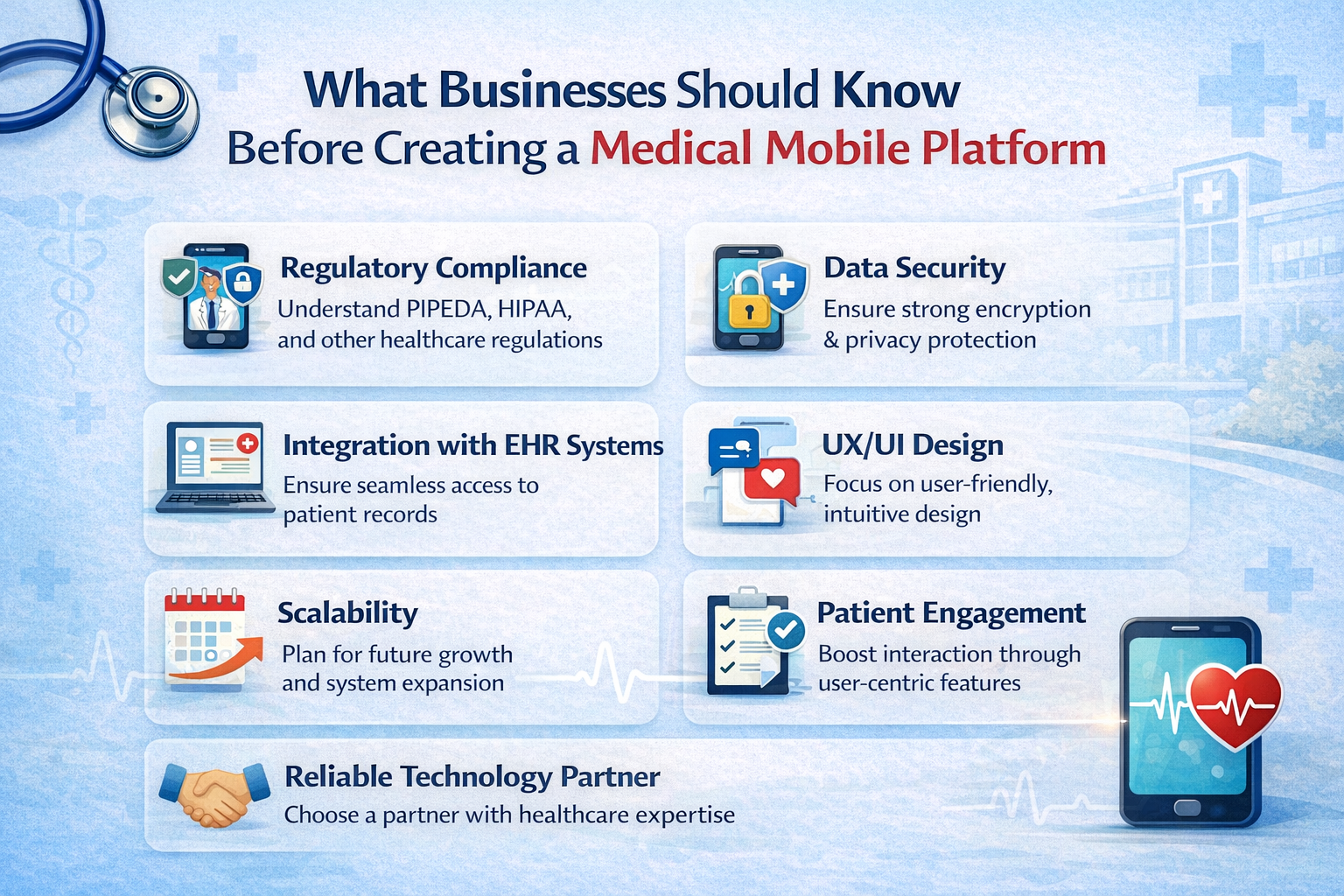
Healthcare is changing faster than many industries expected. Patients now book appointments online, doctors review digital records, and consultations can happen through video calls. Mobile technology is slowly becoming a normal part of how healthcare works. Because of this shift, many businesses and healthcare organizations are thinking about building their own medical mobile platforms. However, creating a successful healthcare application requires careful planning, strong technical understanding, and knowledge of the healthcare environment. Before starting the process, businesses must understand several important factors that shape how these platforms work and how they serve patients and healthcare providers.
Understanding the Real Needs of Healthcare Users
Patients expect convenience and accessibility
Patients today expect healthcare services to be simple and easy to access. A medical mobile platform should allow users to book appointments, check medical information, and communicate with providers without confusion. When an application is designed around patient convenience, people are more likely to trust the platform and continue using it regularly.
Doctors need efficiency in their daily workflow
Healthcare professionals often deal with busy schedules and heavy workloads. A well designed mobile platform should help doctors review patient records quickly, manage appointments, and communicate with patients without wasting time navigating complex screens. Efficiency is one of the most important goals when designing healthcare tools.
Hospitals require organized information management
Hospitals handle large amounts of patient information every day. A digital platform must help healthcare teams manage data in an organized way so they can access the right information at the right moment. Proper information management helps improve patient care and reduces confusion in hospital operations.
Clear communication between providers and patients
Communication is one of the biggest challenges in healthcare. A mobile platform should help patients ask questions, receive updates, and understand their treatment plans. Better communication reduces stress for patients and helps doctors provide clearer guidance.
Easy appointment and schedule management
Managing appointments manually can be frustrating for both staff and patients. A mobile system should allow users to view available times, book appointments, and receive reminders. This helps reduce missed appointments and keeps healthcare operations running smoothly.
Support for remote healthcare services
Remote healthcare services have grown significantly in recent years. Mobile platforms can support virtual consultations and digital monitoring, allowing patients to receive care without visiting a hospital every time. This improves access to healthcare for people in different locations.
Key Features Every Medical Mobile Platform Should Include
Secure patient information systems
Healthcare data is highly sensitive and must be protected carefully. A medical platform must include strong security systems that protect patient records and personal details. Security measures help maintain trust and ensure healthcare providers follow legal and ethical responsibilities.
User friendly interface design
A complicated application can discourage users from continuing to use it. The interface should be simple and clear so patients and healthcare professionals can navigate the platform easily. When users feel comfortable with the interface, they are more likely to rely on the application regularly.
Real time health information access
Patients and doctors both benefit from quick access to medical information. Mobile platforms should allow healthcare professionals to review patient history and treatment details instantly. This helps doctors make better decisions and improves the quality of care.
Appointment booking and reminders
Appointment scheduling is one of the most useful features in healthcare applications. Automated reminders can help patients remember their visits and prepare for consultations. This reduces scheduling confusion and improves overall healthcare coordination.
Integration with hospital systems
Many hospitals already use digital record systems. A mobile platform should connect smoothly with these systems so patient data stays consistent across different tools. Integration allows healthcare teams to access information from one central system.
Payment and billing management
Healthcare platforms can also simplify billing and payment processes. Patients can review invoices and pay securely through digital systems. This improves transparency and reduces administrative workload for healthcare staff.
Important Technical and Legal Considerations
Healthcare regulations and data privacy
Healthcare applications must follow strict regulations related to patient data protection. Businesses must understand privacy rules and ensure the platform protects sensitive medical information. Compliance with regulations builds trust with patients and healthcare providers.
System reliability and performance
Healthcare platforms must work consistently without interruptions. System downtime can create serious problems in medical environments where timely information is critical. Reliable infrastructure and regular monitoring help maintain stable performance.
Scalability for future growth
A healthcare platform should be designed to grow with the organization. As patient numbers increase and new services are added, the system should be able to handle additional users and data without slowing down.
Compatibility with different devices
Patients and healthcare professionals use various mobile devices. A medical platform must work smoothly on different screen sizes and operating systems so all users can access the service easily.
Data backup and recovery systems
Healthcare information must always be protected against unexpected system failures. Backup systems ensure that patient records and important medical data remain safe and can be recovered if technical issues occur.
Continuous updates and improvements
Technology evolves quickly and healthcare platforms must adapt to new changes. Regular updates help improve performance, fix issues, and introduce new features that enhance user experience.
How Businesses Approach Building Medical Mobile Platforms
Understanding healthcare industry challenges
Businesses must first study how healthcare systems operate and identify common challenges faced by patients and medical professionals. Understanding real problems helps organizations design solutions that are truly useful.
Collaborating with healthcare professionals
Healthcare experts provide valuable insights about how medical processes work. Businesses should involve doctors, nurses, and administrators during the planning stage to ensure the platform meets practical needs.
Focusing on patient experience
A successful medical mobile platform always prioritizes patient experience. When applications make healthcare services easier to access and understand, patients feel more comfortable using digital healthcare solutions.
Working with experienced development teams
Building a medical platform requires specialized knowledge of healthcare technology. Many organizations work with experienced teams that provide healthcare mobile app development service canada to ensure the platform meets technical and regulatory standards.
Testing the platform before launch
Testing is an essential part of the development process. The application should be tested with real users to identify issues and improve usability before the platform becomes available to the public.
Planning long term platform growth
A healthcare platform should not be seen as a one time project. Businesses must plan for long term growth and consider how the system will evolve as technology and healthcare needs change.
Conclusion
Mobile technology is gradually transforming the healthcare industry. Patients expect convenient digital services while healthcare providers need tools that simplify complex processes. Creating a medical mobile platform offers many opportunities for businesses and healthcare organizations, but success requires careful planning and a deep understanding of healthcare systems.
By focusing on user needs, strong security, reliable technology, and long term growth strategies, businesses can build platforms that improve healthcare accessibility and efficiency. When designed thoughtfully, medical mobile applications can support better communication, improved patient experiences, and more organized healthcare operations.
Frequently Asked Questions
What is a medical mobile platform
A medical mobile platform is a digital application that allows patients and healthcare providers to access healthcare services through mobile devices. These platforms can support appointment booking, medical record access, communication with doctors, and health monitoring.
Why are healthcare organizations investing in mobile platforms
Healthcare organizations are adopting mobile technology to improve efficiency, enhance patient communication, and simplify administrative tasks. Mobile platforms help healthcare providers deliver services faster and allow patients to manage their healthcare needs more easily.
What features should a medical mobile platform include
A medical platform should include secure patient data management, appointment scheduling, communication tools, and easy access to medical information. These features help healthcare professionals and patients interact more effectively.
Are medical mobile platforms safe for patient information
When built correctly, medical platforms include strong security systems that protect sensitive patient data. Healthcare organizations must follow strict privacy regulations and implement advanced security practices to safeguard medical information.
How long does it take to create a medical mobile platform
The development timeline depends on the complexity of the platform and the features required. Some platforms may take several months to design, build, test, and launch successfully.
Can medical mobile platforms support remote healthcare services
Yes mobile platforms can support remote healthcare services such as virtual consultations and digital monitoring. This allows patients to receive care from healthcare professionals without needing to visit a hospital or clinic in person.
- Digital Agency
- Literie
- Location de voitures
- Restaurant
- Restaurant
- Mode
- Mode
- Information
- Marketing
- Tourisme
- Développement
- Découverte
- Législation
- Gastronomie
- Pâtisserie
- Evento
- Art
- Causes
- Crafts
- Dance
- Drinks
- Film
- Fitness
- Food
- Jogos
- Gardening
- Health
- Início
- Literature
- Music
- Networking
- Outro
- Party
- Religion
- Shopping
- Sports
- Theater
- Wellness
 Portuguese (Brazil)
 Indian
 English
 French
 Arabic
 Spanish
 Portuguese
 Deutsch
 Turkish
 Dutch
Dutch
 Italiano
 Russian
 Romaian
 Greek
Greek
