


Projection Welding: A Comprehensive Guide for Modern Manufacturing
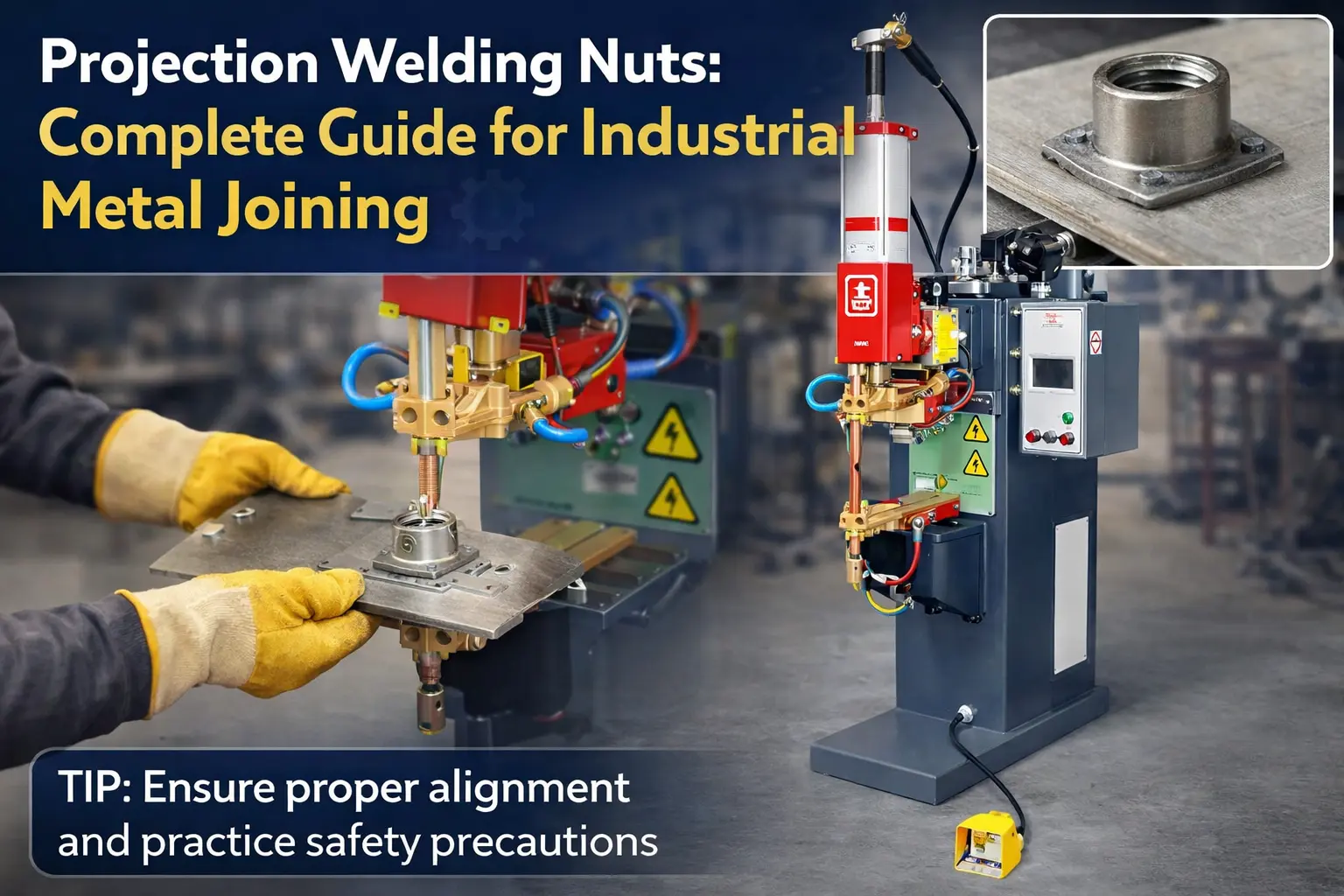
In today’s competitive manufacturing landscape, precision, speed, and reliability are critical. One technology that delivers all three is projection welding a highly efficient resistance welding technique widely used in automotive, electronics, and heavy manufacturing industries. At Heron Welder , we specialize in providing advanced projection welding machines and automated production solutions tailored to industrial applications, helping manufacturers optimize their processes while ensuring consistent quality.
What Is Projection Welding?
Projection welding is a form of resistance welding that focuses the electrical current and pressure on predefined projections or raised points on one or both metal surfaces. Unlike standard spot welding, where the current flows through the entire contact area, projection welding uses these small, intentional projections to concentrate heat generation.
This method allows for:
-
Reduced electrode wear
-
Higher welding consistency
-
The ability to weld multiple points simultaneously
By controlling current, pressure, and dwell time, manufacturers can achieve strong, precise welds even on complex or thick assemblies.
How Projection Welding Works
Projection welding relies on three key principles:
-
Electrical Resistance Concentration: The raised projections create localized points of high resistance. When an electric current passes through, heat is generated precisely at the projection.
-
Mechanical Pressure: Electrodes apply pressure to ensure proper metal contact and material flow during welding.
-
Material Fusion: Heat melts the metal at the projection point, forming a nugget that solidifies upon cooling to create a strong weld.
Modern projection welding machines, such as those offered by Heron, incorporate MFDC (Medium Frequency Direct Current) technology and programmable controllers to optimize cycle times, reduce energy consumption, and achieve repeatable weld quality.
Common Applications of Projection Welding
Projection welding is ideal for industries and processes that demand speed, precision, and durability. Key applications include:
-
Automotive Manufacturing: Welding nuts, fasteners, clips, and brackets to body panels. Projection welding enables multiple points to be welded simultaneously, increasing throughput on high-volume production lines.
-
Electrical Components: Securing terminals, connectors, and bus bars in switchgear, transformers, and batteries.
-
Heavy Industry & Machinery: Welding structural components, heat exchangers, and sheet metal assemblies.
-
Appliance Manufacturing: Joining brackets and panels in washing machines, refrigerators, and HVAC systems.
Heron’s range of projection welding machines supports integration into automated production lines, allowing OEMs and integrators to maximize efficiency while maintaining consistent weld quality.
Projection Welding vs. Spot Welding
While both are resistance welding techniques, understanding the differences is crucial when choosing the right solution:
| Feature | Projection Welding | Spot Welding |
|---|---|---|
| Contact Area | Concentrated on projections | Entire electrode contact area |
| Electrode Wear | Lower due to localized heat | Higher due to widespread current |
| Weld Multiple Points | Yes, simultaneously | Limited to individual spots |
| Ideal Materials | Thick plates, complex assemblies | Thin sheets, simple joints |
| Cycle Time | Faster for multi-point welding | Slower for multiple joints |
For manufacturers dealing with high-volume, multi-point assemblies, projection welding often offers higher efficiency and lower operational costs compared to conventional spot welding.
Best Practices for Projection Welding
To achieve optimal results in projection welding:
-
Proper Projection Design: Ensure projections are uniform in height and spacing. Irregularities can lead to weak welds or electrode damage.
-
Controlled Parameters: Monitor current, pressure, and weld time using modern welding controllers. MFDC machines can offer precise control for sensitive or high-strength materials.
-
Electrode Maintenance: Regular cleaning and reshaping of electrodes prevent inconsistencies and prolong tool life.
-
Automation Integration: Use robotic arms or automated welding cells for consistent placement and improved throughput.
-
Material Selection: Ensure compatible alloys and surface treatments to avoid cracking or weak welds.
Heron Welder provides full technical support and customization services to help manufacturers implement these best practices for maximum efficiency.
Why Choose Heron for Projection Welding Solutions
At Heron Welder, we understand the demands of modern manufacturing. Our projection welding machines are designed for durability, precision, and easy integration into automated production lines.
Key advantages of choosing Heron include:
-
Expertise in resistance welding, FSPR, and clinching systems
-
Advanced MFDC and capacitor discharge projection welding technology
-
Fully customizable automation solutions for OEMs and factories
-
Comprehensive technical support and training to ensure smooth production
Our solutions are trusted by global manufacturers for improving productivity, reducing energy consumption, and maintaining consistent weld quality.
FAQs About Projection Welding
Q1: Can projection welding be used on thick metal plates?
Yes, projection welding is ideal for thicker metals and assemblies where spot welding may not generate sufficient heat at the joint.
Q2: How many welds can be done at once?
Depending on the electrode configuration, projection welding can weld multiple points simultaneously, significantly improving production speed.
Q3: What materials are suitable for projection welding?
Most ferrous and non-ferrous metals can be welded, including steel, stainless steel, aluminum, and copper alloys, as long as the projections are properly designed.
Q4: Is projection welding compatible with automation?
Absolutely. Heron’s projection welding machines can integrate with robotic arms and automated production lines for precise, high-volume manufacturing.
Q5: How do MFDC machines improve projection welding?
MFDC (Medium Frequency Direct Current) machines allow precise control over current and cycle time, reducing electrode wear and ensuring repeatable, high-quality welds.
Take Your Manufacturing to the Next Level
Projection welding is a proven method to enhance efficiency, precision, and reliability in industrial manufacturing. With Heron Welder’s advanced machines and automation solutions, you can achieve superior weld quality while reducing production costs.
Request a quote or consult with Heron today to explore customized projection welding and automated welding solutions tailored to your factory’s needs.
- Digital Agency
- Literie
- Location de voitures
- Restaurant
- Restaurant
- Mode
- Mode
- Information
- Marketing
- Tourisme
- Développement
- Découverte
- Législation
- Gastronomie
- Pâtisserie
- Eveniment
- Art
- Causes
- Crafts
- Dance
- Drinks
- Film
- Fitness
- Food
- Jocuri
- Gardening
- Health
- Acasă
- Literature
- Music
- Networking
- Alte
- Party
- Religion
- Shopping
- Sports
- Theater
- Wellness
 Romaian
 Indian
 English
 French
 Arabic
 Spanish
 Portuguese
 Deutsch
 Turkish
 Dutch
Dutch
 Italiano
 Russian
 Portuguese (Brazil)
 Greek
Greek
