


Welding Gun: Essential Tool for Industrial Welding and Automation
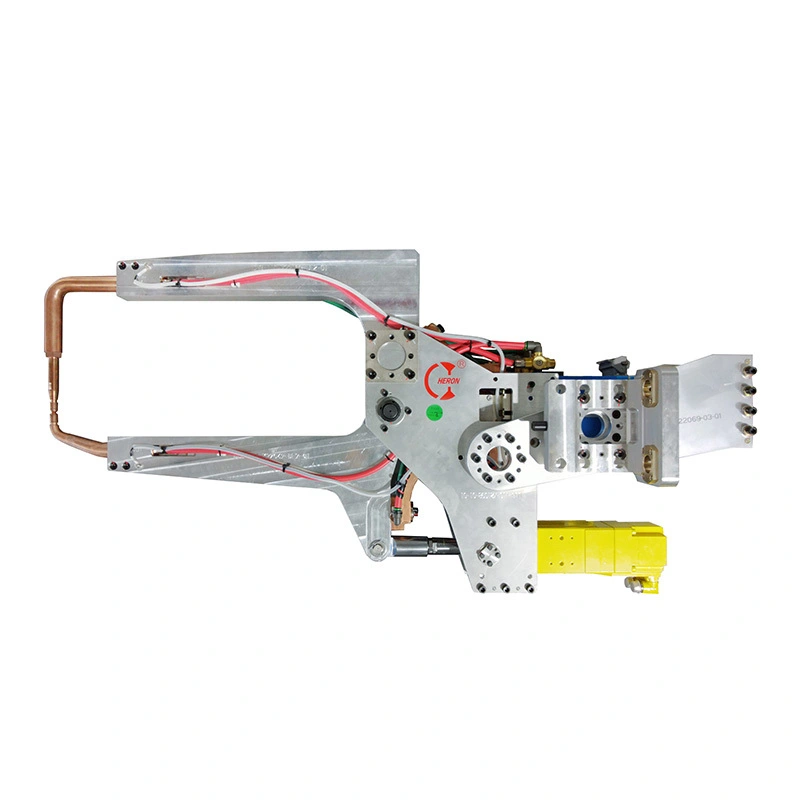
In modern manufacturing, efficiency, precision, and reliability are key. At the heart of many metal-joining operations lies the welding gun a specialized tool designed for spot, projection, and seam welding processes. For OEMs, automation integrators, and factory decision-makers, selecting the right welding gun can significantly impact production quality, cycle time, and overall cost-effectiveness. Heron Welder, a global leader in industrial welding solutions, offers a comprehensive range of welding guns engineered for performance, durability, and integration with automated production systems.
What is a Welding Gun?
A welding gun is a handheld or automated device that delivers the necessary current, pressure, and control to join metal components through resistance welding or other metal-joining processes. It typically consists of:
-
Electrodes: Conduct the welding current and apply pressure to the workpiece.
-
Frame or Handle: Provides ergonomic support and houses mechanical and electrical components.
-
Cooling System: Maintains electrode temperature for consistent performance and long service life.
-
Trigger or Control Interface: Allows operators or automated systems to initiate welding cycles.
Welding guns are designed to handle a wide range of materials, thicknesses, and production volumes, from small automotive parts to large industrial assemblies.
How Welding Guns Work
Welding guns function on the principle of resistance welding, where electrical current passes through the metal at the joint. The resistance of the materials generates localized heat, causing the metals to melt and fuse under pressure. Key steps include:
-
Clamping: Electrodes apply pressure to hold the workpiece securely.
-
Current Flow: A controlled electrical pulse passes through the metals, generating heat at the contact point.
-
Fusion: Heat causes the metal surfaces to melt and form a weld nugget.
-
Cooling and Release: Electrodes maintain pressure as the weld solidifies, ensuring a strong, consistent joint.
For automated production lines, welding guns can be mounted on robotic arms or custom fixtures, allowing high-speed, precise, and repeatable welds.
Applications of Welding Guns
Welding guns are critical in industries where speed, quality, and repeatability matter. Common applications include:
-
Automotive Manufacturing: Spot and projection welding for car body assembly, battery packs, and chassis components.
-
Electronics and Appliances: Joining metal sheets and frames in appliances, heating elements, and enclosures.
-
Industrial Fabrication: Seam and spot welding of structural components, machinery, and metal furniture.
-
Aerospace: High-precision welding for lightweight aluminum and high-strength steel assemblies.
Heron Welder’s product line ensures that welding guns are compatible with a variety of materials, including steel, stainless steel, and aluminum, and can handle both low- and high-volume production environments.
Types of Welding Guns
Selecting the right type of welding gun depends on the material, thickness, and welding method. Some common types include:
Spot Welding Guns
Ideal for joining overlapping metal sheets, spot welding guns deliver high-current pulses for short durations, creating localized welds without affecting surrounding areas.
Seam Welding Guns
Used for continuous welds along a joint, seam welding guns feature rotating electrodes that provide consistent, leak-proof connections—commonly used in fuel tanks, pipes, and automotive panels.
Projection Welding Guns
Designed for components with embossed or pre-formed projections, projection welding guns concentrate the welding current on raised points, ensuring precise and strong joints.
Capacitor Discharge and MFDC Guns
For thin or delicate materials, capacitor discharge (CD) or medium-frequency DC (MFDC) welding guns provide precise, controlled welds with minimal thermal distortion.
Heron Welder offers all these variants with customizable electrode designs, cooling options, and integration capabilities for automated welding systems.
Best Practices for Welding Gun Use
Optimizing welding gun performance requires attention to several factors:
-
Electrode Maintenance: Regular cleaning and dressing prevent inconsistent welds and extend electrode life.
-
Cooling Efficiency: Proper water or air cooling maintains electrode temperature, reducing wear and improving weld quality.
-
Parameter Optimization: Correct current, pressure, and weld time settings ensure strong, defect-free welds.
-
Automation Integration: Using welding guns with robotic or CNC systems increases repeatability, reduces operator fatigue, and enhances safety.
Heron’s technical support team provides guidance on parameter settings, electrode selection, and system integration to maximize productivity and quality.
Why Choose Heron Welding Guns
Heron Welder has established itself as a trusted partner for global manufacturers by delivering:
-
High-Precision Welding Guns engineered for automotive, industrial, and aerospace applications.
-
Customizable Solutions including FSPR, clinching, and automated line integration.
-
Durability and Reliability with robust materials, efficient cooling, and ergonomic design.
-
Global Support and Consultation for OEMs and integrators seeking optimized welding solutions.
By combining expertise in resistance welding technology with a focus on industrial automation, Heron ensures clients achieve consistent, high-quality welds while improving throughput and reducing operational costs.
FAQs About Welding Guns
1. Can a welding gun be used for both steel and aluminum?
Yes, modern welding guns, especially MFDC and CD variants, are designed to handle both steel and aluminum with proper electrode selection and process parameters.
2. How do I know which type of welding gun is right for my production line?
Consider material type, thickness, production volume, and joint configuration. Heron offers consultation services to help select the most suitable gun.
3. How often should electrodes be replaced or dressed?
Electrode maintenance depends on usage and material type, but routine inspection and dressing are recommended to maintain weld quality and consistency.
4. Can welding guns be integrated with robotic systems?
Yes, Heron welding guns are designed for robotic and automated production lines, offering precise control and repeatable performance.
5. What is the difference between spot and projection welding guns?
Spot welding guns create single localized welds, whereas projection welding guns focus on raised points or embossed areas, ideal for more complex geometries.
Conclusion
A high-quality welding gun is not just a tool—it is a critical component of modern manufacturing efficiency and product reliability. From automotive assembly to industrial fabrication, choosing the right welding gun can make a significant difference in production speed, joint strength, and overall quality.
Heron Welder combines global expertise, advanced technology, and tailored solutions to meet the diverse needs of OEMs, factory engineers, and automation integrators.
Ready to optimize your welding operations? Contact Heron today to request a quote or consult with our experts for customized welding and automation solutions tailored to your production needs.
- Digital Agency
- Literie
- Location de voitures
- Restaurant
- Restaurant
- Mode
- Mode
- Information
- Marketing
- Tourisme
- Développement
- Découverte
- Législation
- Gastronomie
- Pâtisserie
- Evenement
- Art
- Causes
- Crafts
- Dance
- Drinks
- Film
- Fitness
- Food
- Spellen
- Gardening
- Health
- Home
- Literature
- Music
- Networking
- Overig
- Party
- Religion
- Shopping
- Sports
- Theater
- Wellness
 Dutch
Dutch
 Indian
 English
 French
 Arabic
 Spanish
 Portuguese
 Deutsch
 Turkish
 Italiano
 Russian
 Romaian
 Portuguese (Brazil)
 Greek
Greek
