


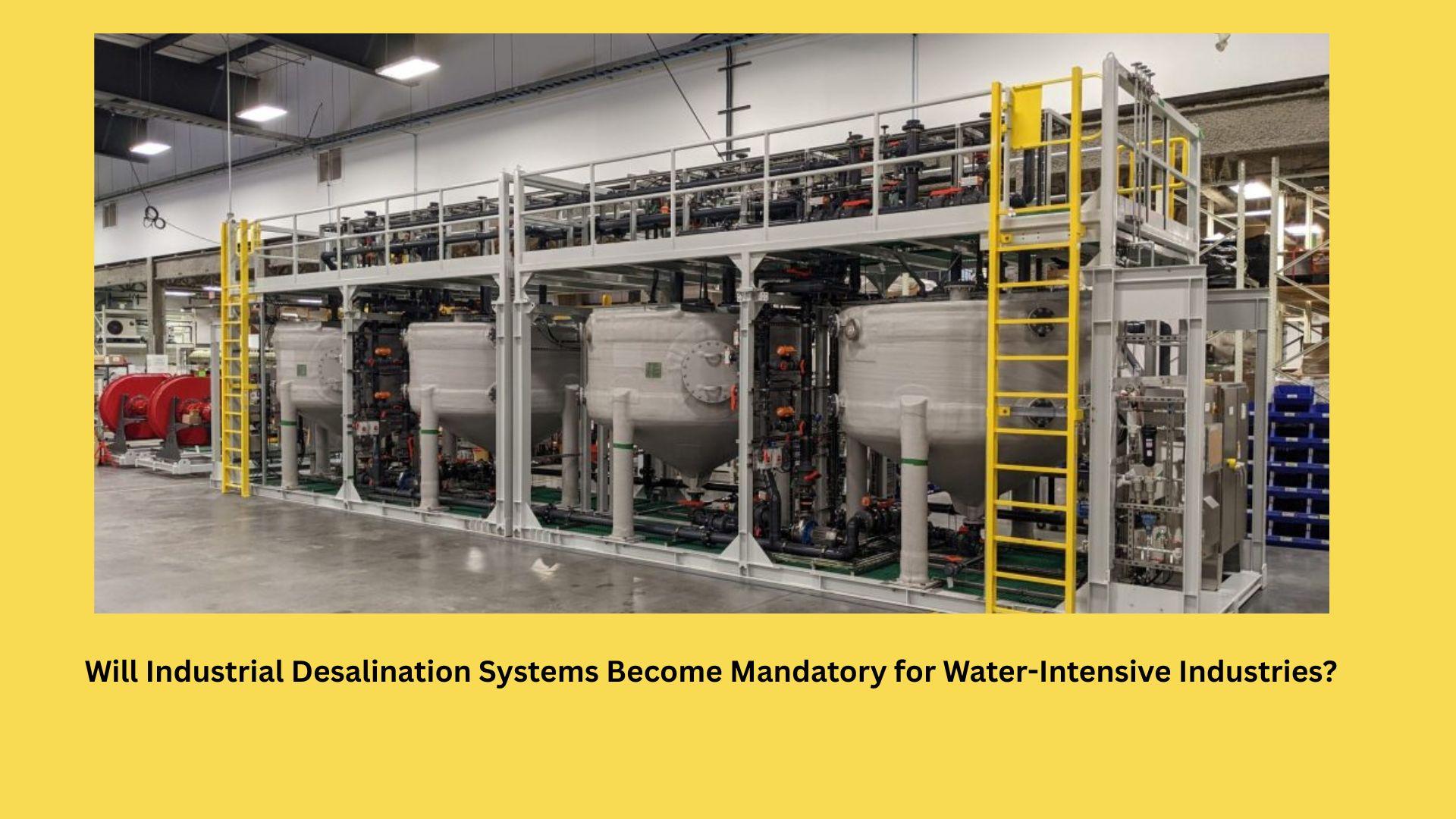
Will Industrial Desalination Systems Become Mandatory for Water-Intensive Industries?
Introduction: When Water Becomes the Most Expensive Resource
Imagine turning on a tap at your factory floor… and nothing comes out.
It sounds dramatic, but for many industries worldwide, this scenario isn’t fictional anymore — it’s creeping closer every year.
With climate change, rising populations, and shrinking freshwater reserves, industries that rely heavily on water are under growing pressure. Power plants, refineries, textile manufacturing, food processing, and mining are already feeling it. And that’s where Industrial Desalination Systems enter the conversation — not just as a solution, but possibly a future requirement.
But here’s the real question:
Will governments actually make them mandatory for water-intensive industries?
Let’s explore what’s driving this shift, what it could mean for your operations, and whether it’s something you should start preparing for now.
The Growing Water Crisis Isn’t Just a Distant Problem
Water scarcity doesn’t just affect households and agriculture. It’s a massive industrial risk.
Many regions across the world are already categorized as water-stressed. In simple terms, this means demand for water is close to — or exceeding — the natural supply.
For industries, that creates a perfect storm:
-
Limited access to freshwater
-
Higher water pricing
-
Stricter water regulations
-
Growing public and environmental scrutiny
In some areas, plants have slowed down or shut operations simply because they couldn’t secure enough water.
And here’s the thing — water isn’t optional for you. It powers cooling systems, cleaning processes, production lines, steam generation, and more. Without it, operations stall.
As a result, governments and regulators are now searching for long-term solutions instead of short-term fixes.
This is where desalination technology enters the spotlight.

Why Desalination Is Getting So Much Attention
Desalination is the process of removing salt and impurities from seawater or brackish water to make it usable for industrial and even drinking purposes.
For water-intensive industries, this has huge advantages:
-
It reduces dependency on shrinking freshwater resources
-
It creates a more reliable, controlled water supply
-
It helps companies meet sustainability and environmental goals
-
It lowers the stress on local water systems
In coastal and arid regions especially, more corporations are already installing private desalination plants.
But what once seemed like an “optional upgrade” is now starting to feel like a future “must-have.”
Not because someone wants it…
Because necessity leaves no alternative.
Will Industrial Desalination Systems Become Mandatory?
Yes — and probably sooner than many companies expect.
Across several regions, governments are already drafting or enforcing regulations that push industries toward using alternative water sources.
Some examples of what’s happening:
-
Restrictions on freshwater extraction from rivers and groundwater
-
Higher taxes for excessive water use
-
Environmental impact requirements for large-scale water consumption
-
Corporate sustainability disclosures becoming mandatory
In water-scarce countries, large manufacturing plants are already being required to show how they reduce freshwater dependency.
In short:
When freshwater becomes too limited to sustain growing industrial demand, regulatory pressure will only increase.
And for many sectors, the only scalable solution available is… Industrial Desalination Systems.
Why Governments May Push for Mandatory Adoption
Let’s look at the main forces driving this.
1. Environmental Protection
Excessive withdrawal of freshwater damages ecosystems, dries up lakes and rivers, and destroys biodiversity. Governments are under massive pressure from climate scientists, environmental groups, and citizens to act.
Replacing freshwater with desalinated water helps restore that natural balance.
2. National Water Security
Countries with limited natural water need long-term security plans. Relying on rainfall and natural sources isn’t enough anymore.
By encouraging industries to shift toward desalination, governments can protect drinking water supplies for cities and agriculture.
3. Corporate Sustainability Targets
Environmental, Social, and Governance (ESG) standards are no longer optional for large companies. Water usage is now a major metric.
Making desalination part of industrial policy aligns governments with global climate and sustainability goals.
And believe it or not — some countries are already moving in that direction.
Why Industries Might Resist… At First
Now, let’s be real.
For many companies, the idea of mandatory desalination raises concerns:
-
High capital costs
-
Increased energy consumption
-
Complex technical requirements
-
Maintenance and skilled manpower
These are valid worries. Setting up a desalination plant isn’t as simple as installing a water filter.
But here’s the important part…
What seems expensive today may become cheaper than losing access to water completely tomorrow.
And that’s where perspective shifts.
The Long-Term Business Case Makes Sense
While the upfront investment can be significant, desalination often delivers long-term value:
-
Consistent water supply regardless of droughts
-
Protection from rising municipal water tariffs
-
Reduced regulatory risk
-
Stronger brand image for sustainability leadership
Industries that adopt it early may actually gain an advantage over slower competitors.
Think of it as future-proofing your operations rather than just meeting a regulation.
And let’s be honest — no business likes to react under pressure. Preparation always costs less.
Sectors Most Likely to Face Mandatory Rules First
Not all industries will be impacted equally.
The most likely candidates include:
Power Generation
Large volumes of water are required for cooling systems.
Oil & Gas
Refineries and extraction operations use massive amounts of process water.
Mining & Metals
Water is critical for mineral processing and dust suppression.
Textile Industry
Known for high water consumption and contamination risks.
Chemical & Pharmaceutical Plants
Where water purity and availability are mission-critical.
These sectors face the dual pressure of high water usage and environmental scrutiny.
If mandates start, they’ll likely start here.
Technology Is Evolving — And Fast
Here’s some good news.
Modern desalination technology has come a long way.
Over the past decade, newer systems have achieved:
-
Higher energy efficiency
-
Lower operational costs
-
Better membrane durability
-
Lower environmental footprint
Plus, integration with renewable energy is becoming more common, making them more sustainable and economical long term.
What used to be seen as “too expensive” or “too complex” is now becoming more mainstream and accessible.
How Mandatory Policies Typically Roll Out
Mandates usually don’t happen overnight. They come in phases.
First, you’ll see:
-
Incentives and subsidies for voluntary adoption
-
Tax benefits or grants for sustainable water solutions
-
Stricter reporting requirements on water usage
Then comes:
-
Limits on freshwater extraction
-
Industry-specific regulations
-
Mandatory usage thresholds for alternative water sources
And finally, in highly stressed regions, full mandatory adoption.
Knowing where your region sits in this cycle helps you prepare smartly instead of scrambling later.
Should You Start Preparing Now?
Short answer?
Yes — but strategically, not fearfully.
You don’t need to install anything tomorrow. But you should start:
-
Assessing your current water use
-
Understanding your region’s water policy trends
-
Exploring technical and financial feasibility
-
Talking to experts about scalable options
Here’s a little trick:
Companies that prepare early usually get better financing options, better technology choices, and fewer regulatory headaches later.
You don’t want to be making rushed decisions when deadlines are already around your neck.
Also Read this : Do Water Purifiers Waste a Lot of Water? The Truth About Drinking Water Purifier Machines
Common Myths About Mandatory Desalination
Let’s clear the air on a few assumptions:
“Only coastal factories can use desalination.”
Not true. Brackish water sources and water transportation options make it more flexible now.
“It’s too expensive for medium businesses.”
Costs are dropping, and scalable solutions exist for various operation sizes.
“It’s bad for the environment.”
Modern designs focus heavily on minimizing marine impact and reducing energy use.
As with any technology, it’s evolving — and improving fast.
Future Outlook: Not If, But When
The real question isn’t whether desalination will become mandatory.
It’s where, when, and for which industries first.
In high-stress regions, it’s very likely to happen as water scarcity strengthens its grip.
And when it does, companies with zero preparation will struggle the most.
Those who explored options early will move ahead calmly and strategically.
Conclusion: A Shift You Can’t Ignore
The push toward sustainable water use isn’t just environmental talk anymore — it’s becoming industrial reality.
As freshwater availability shrinks and policies tighten, Industrial Desalination Systems are very likely to move from optional investment to strategic necessity.
The good news?
You’re not late — you’re early enough to make smart, calm, calculated decisions.
Explore your options.
Start the conversation.
And stay ahead of the wave instead of being swept by it.
Because when water becomes the new currency, preparation is your best asset.
FAQs
Will all industries be required to use desalinated water in the future?
Not necessarily. It will likely depend on regional water stress levels and how much water your industry consumes.
Is desalinated water suitable for all industrial processes?
Yes, with proper treatment and mineral adjustment, it can be customized for various industrial applications.
How long does it take to implement a system?
It depends on the size and complexity of your plant. It can take anywhere from a few months to over a year.
Can smaller factories afford it?
With modular and scalable solutions becoming more available, small and medium industries are finding more affordable pathways.
Are governments offering financial support for adoption?
In many regions, yes. Subsidies and green financing initiatives are rising as part of climate action plans.
- Digital Agency
- Literie
- Location de voitures
- Restaurant
- Restaurant
- Mode
- Mode
- Information
- Marketing
- Tourisme
- Développement
- Découverte
- Législation
- Gastronomie
- Pâtisserie
- Etkinlik
- Art
- Causes
- Crafts
- Dance
- Drinks
- Film
- Fitness
- Food
- Oyunlar
- Gardening
- Health
- Ana sayfa
- Literature
- Music
- Networking
- diğer
- Party
- Religion
- Shopping
- Sports
- Theater
- Wellness
 Turkish
 Indian
 English
 French
 Arabic
 Spanish
 Portuguese
 Deutsch
 Dutch
Dutch
 Italiano
 Russian
 Romaian
 Portuguese (Brazil)
 Greek
Greek
