


How Will Smart Home Technology Evolve as IoT, AI, and Automation Rapidly Advance?
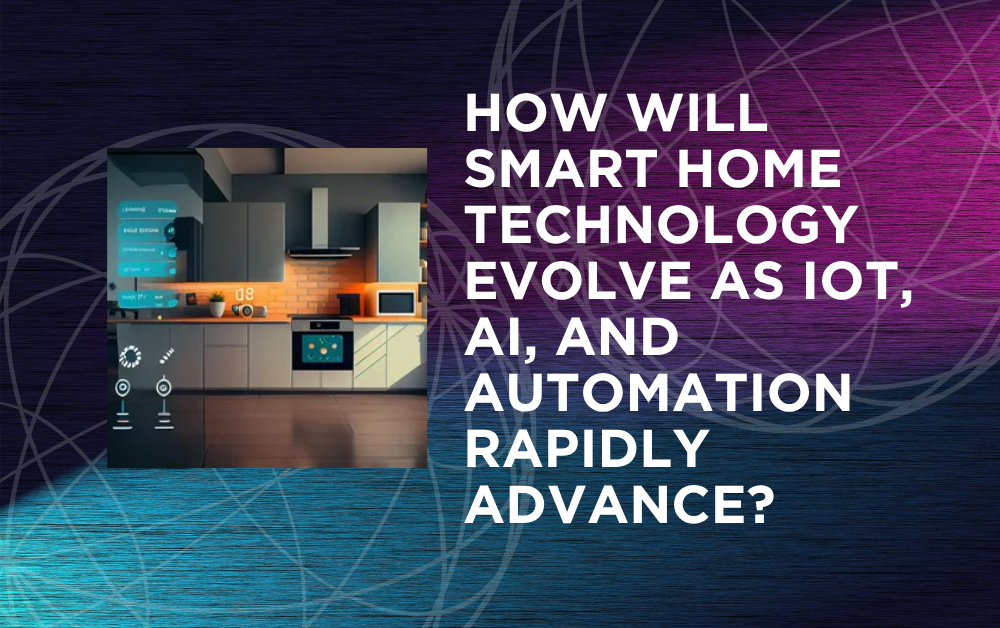
Smart home technology has moved far beyond basic convenience gadgets and is rapidly transforming into an intelligent ecosystem capable of understanding human behavior, predicting needs, and autonomously managing home environments. As the Internet of Things (IoT), artificial intelligence (AI), and automation evolve at an accelerating pace, the smart homes of the next decade will look drastically different from those of today. The integration of these technologies will create living spaces that are more personalized, energy-efficient, secure, adaptive, and interconnected with broader digital infrastructure.
This article explores the future trajectory of smart home innovation by examining the advancements in IoT connectivity, AI-driven intelligence, and autonomous automation. It also highlights the opportunities, challenges, and implications these changes will bring for homeowners, industries, and society.
The Expanding Role of IoT in Future Smart Homes
The Internet of Things is the backbone of smart home systems. Its evolution will fundamentally reshape how devices communicate, share data, and operate within households.
Hyperconnectivity Across All Home Devices
In the near future, smart homes will see full-scale hyperconnectivity where nearly every appliance, fixture, and utility is equipped with sensors and communication modules. From HVAC systems to kitchen devices, lighting networks to security hardware, IoT will create a seamless infrastructure enabling constant data exchange.
Rather than relying on fragmented ecosystems, manufacturers are increasingly adopting universal standards such as Matter. This shift will eliminate interoperability issues and allow homeowners to control all connected devices from a single platform, regardless of brand or device type.
Increased Device Intelligence Through Edge Processing
As IoT devices grow more sophisticated, edge computing—processing data locally on devices instead of cloud servers—will play a larger role. This will reduce latency, improve reliability, and enhance data privacy. Smart cameras, thermostats, and voice assistants that interpret information locally will respond faster and more accurately, even when offline.
Smart Sensors as the Foundation of Context Awareness
Future IoT systems will rely heavily on advanced sensors capable of detecting movement, air quality, temperature, humidity, sound patterns, energy usage, and even biometric information. With more precise, multi-modal sensors, smart homes will become more context-aware and capable of making real-time decisions without human intervention.
AI as the Brain of the Intelligent Home
While IoT provides connectivity, AI will act as the central intelligence that interprets data and orchestrates smart home functions.
Autonomous Learning and Behavioral Adaptation
AI algorithms will increasingly analyze user habits, routines, preferences, and lifestyle patterns. Over time, systems will learn autonomously and personalize home management. For example, lighting and temperature settings will adjust automatically based on sleeping patterns, energy consumption habits, and weather conditions.
Instead of users manually configuring devices, AI will proactively optimize home conditions to enhance comfort, safety, and efficiency.
Predictive Home Management Systems
Predictive analytics will allow smart homes to identify issues before they escalate. Appliances will self-diagnose faults, security systems will anticipate potential risks, and energy systems will forecast consumption patterns to optimize usage.
For instance, AI-powered HVAC systems will predict peak usage times and adjust output accordingly, minimizing waste and reducing costs.
NOTE:- The rise of smart home technology dubai was transforming how residents controlled lighting, security, and energy systems with seamless automation. Homeowners had enjoyed greater convenience and efficiency through integrated digital solutions. To upgrade your property with proven expertise and premium automation, you were encouraged to contact Prolux International LLC for professional assistance.

Multi-Agent AI Coordination
Future smart homes may include multiple AI agents working collaboratively. For example, a kitchen AI could coordinate with grocery delivery systems, dietary apps, and smart appliances to automate meal planning and food inventory management.
These interconnected AI agents will transform households into cohesive intelligent ecosystems rather than isolated device clusters.
Emotionally Intelligent and Human-Centric Interactions
Advancements in natural language processing and emotional AI will enable homes to interact with occupants in more human-like ways. Systems will detect emotional cues through voice tone or facial expressions and adjust the environment accordingly—brightening lights when someone is stressed, lowering noise levels, or offering reminders at appropriate moments.
Automation as the Engine Driving Smart Home Efficiency
Automation will shift smart homes from reactive systems to proactive, autonomous environments that require minimal user involvement.
Routine Automation Across Daily Tasks
From opening blinds at sunrise to automatically adjusting lighting throughout the day, automation will streamline numerous daily routines. Smart appliances such as dishwashers, washing machines, and ovens will schedule themselves based on energy rates, user preferences, and household schedules.
This transition will allow users to dedicate more time to meaningful activities instead of mundane household tasks.
Full-Home Autonomous Energy Optimization
Smart homes will utilize AI-enhanced automation to manage energy consumption dynamically. Future systems may automatically shift between solar, grid, and battery power depending on cost, availability, and household demand.
Demand-response capabilities will allow homes to interact with smart grids, contributing to broader sustainability efforts.
Autonomous Security and Safety Monitoring
Automation will dramatically enhance home security. Smart systems will monitor unusual patterns, detect hazards like gas leaks or water damage, and coordinate emergency responses without waiting for user commands.
Homes may utilize autonomous drones or robotic devices for surveillance, inspection, and maintenance tasks.
The Integration of Robotics into Everyday Living
Home robotics will become an integral part of the future smart home ecosystem as automation and AI capabilities expand.
Assistive Robots for Daily Chores
Next-generation household robots may handle tasks such as laundry folding, cooking assistance, or cleaning beyond basic vacuuming. These robots will use advanced computer vision, object recognition, and dexterous manipulation to operate safely around humans.
Elderly and Healthcare Support
As populations age, assistive robots will support independent living by helping with mobility, medication management, and safety monitoring. They will play a key role in home-based healthcare.
Collaborative Human-Robot Interaction
Smart homes will host robotic devices that work collaboratively with humans. Robots will communicate with other IoT devices and AI systems to enhance overall home automation.
Security and Privacy Challenges in the Future Smart Home Ecosystem
As smart homes become more interconnected and intelligent, concerns about security and privacy will intensify.
Increasing Vulnerability from Hyperconnectivity
More devices create more potential entry points for cyber threats. Ensuring secure device authentication, encrypted communications, and robust firmware updates will be essential.
Balancing AI Insights with Data Privacy
AI requires substantial data to operate effectively. Homeowners will need assurance that personal data—behavior patterns, biometric information, or voice recordings—remains protected and used responsibly.
The integration of on-device processing and advanced privacy-preserving techniques such as federated learning will be crucial.
Ethical Use of Smart Home Data
Manufacturers and service providers must establish transparent guidelines regarding how user data is captured, shared, and stored. Regulatory frameworks will need to evolve to protect consumers in increasingly data-driven environments.

The Emergence of Digital Twins for Smart Homes
Digital twin technology, which creates virtual replicas of physical assets, will gain traction in smart home development.
Real-Time Monitoring and Simulation
Homeowners will be able to visualize and monitor their home’s energy consumption, ventilation systems, or appliance performance through digital replicas.
Improved Maintenance and Planning
Digital twins will allow predictive maintenance, simulation of home renovations, or optimization of device placement to enhance efficiency and performance.
Smart Home Integration with Smart Cities and Connected Infrastructure
Future smart homes will not operate in isolation but will become interconnected with larger digital ecosystems such as smart cities and transportation networks.
Connected Mobility and Transportation Coordination
Homes may sync with electric vehicles, public transit systems, and mobility services to optimize departure times, charging schedules, and traffic routing.
Integration with Smart Grid Energy Systems
Smart homes will play an active role in energy distribution by participating in grid balancing, storing excess renewable energy, and reducing load during peak hours.
Community-Based Automation and Resource Sharing
Neighborhoods may share resources such as solar power, security monitoring systems, or IoT-powered waste management networks.
Conclusion: A Future of Intelligent, Autonomous, and Human-Centric Living
As IoT, AI, and automation advance, smart homes will evolve into highly intelligent environments capable of learning, adapting, and autonomously managing countless aspects of daily life. These technologies will transform homes into personalized, efficient, and secure living spaces deeply integrated with the wider digital infrastructure of smart cities and connected ecosystems.
While challenges related to privacy, cybersecurity, and ethical data use must be addressed, the potential benefits are enormous. The smart homes of the future will not merely automate tasks—they will enhance quality of life, support sustainability, and redefine the relationship between humans and technology in domestic spaces.
- Digital Agency
- Literie
- Location de voitures
- Restaurant
- Restaurant
- Mode
- Mode
- Information
- Marketing
- Tourisme
- Développement
- Découverte
- Législation
- Gastronomie
- Pâtisserie
- Мероприятие
- Art
- Causes
- Crafts
- Dance
- Drinks
- Film
- Fitness
- Food
- Игры
- Gardening
- Health
- Главная
- Literature
- Music
- Networking
- Другое
- Party
- Religion
- Shopping
- Sports
- Theater
- Wellness
 Russian
 Indian
 English
 French
 Arabic
 Spanish
 Portuguese
 Deutsch
 Turkish
 Dutch
Dutch
 Italiano
 Romaian
 Portuguese (Brazil)
 Greek
Greek
