


How to Select a Radar Level Transmitter with Remote Monitoring Capabilities?
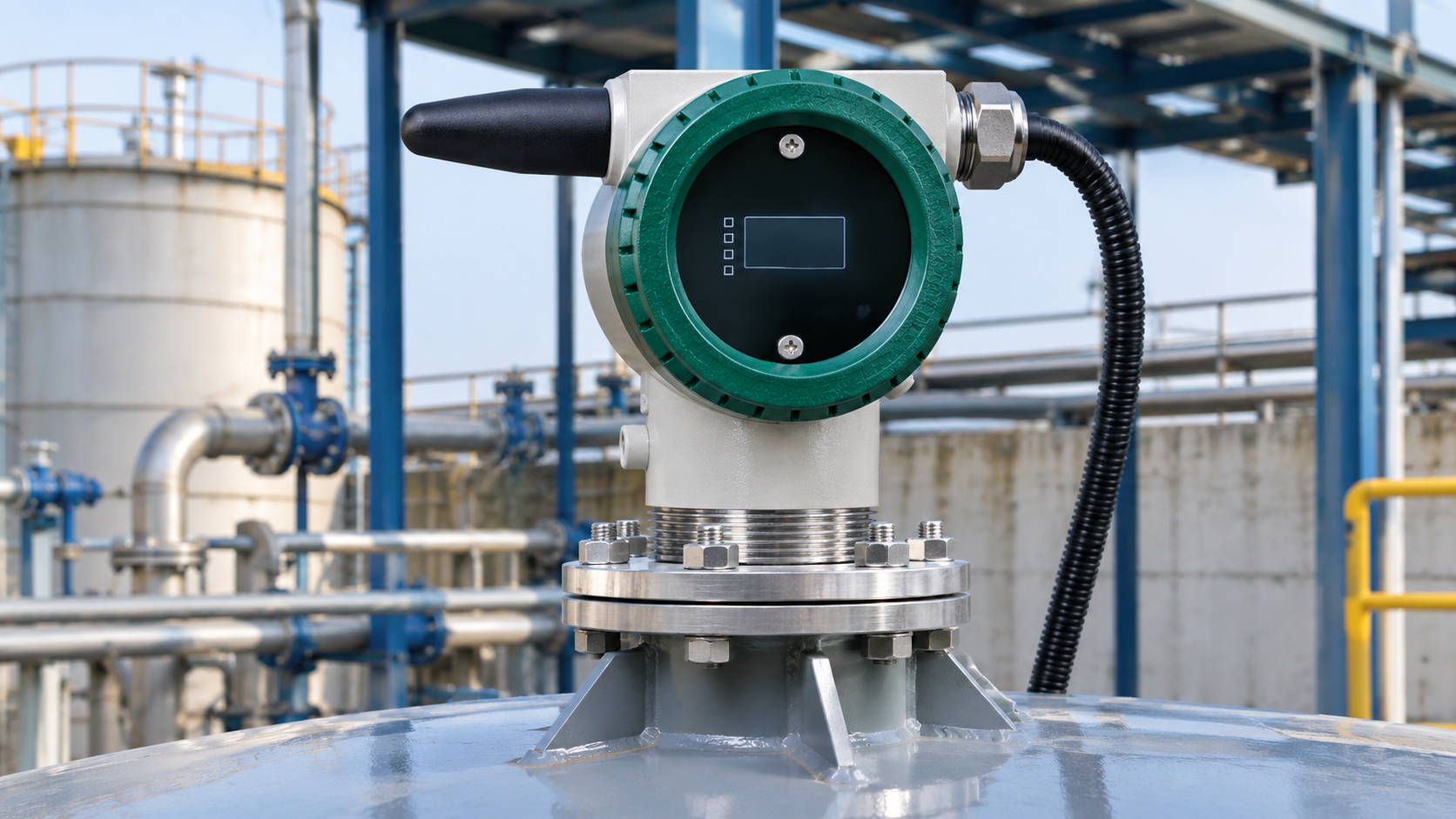
Industries managing water storage tanks, process vessels, and liquid inventory systems need accurate level measurement to maintain smooth operations. Traditional monitoring methods often depend on manual inspections or locally installed indicators, making it difficult to track tank levels across multiple locations.
A radar level transmitter with remote monitoring capabilities can help businesses access measurement data from a centralized dashboard. By combining radar sensing technology, wireless connectivity, IoT gateways, and cloud-based software, industries can improve visibility into their storage operations and respond more efficiently to changing liquid levels.
However, selecting the right device requires careful evaluation of measurement accuracy, radar technology, communication options, installation conditions, and software compatibility. Working with a suitable Radar Level Sensor Manufacturer in India can help businesses identify equipment that meets their technical and operational requirements.
This article explains how to select a radar level transmitter with remote monitoring capabilities and how AI-Driven IoT Solutions can support smarter industrial tank management.
Understand How a Radar Level Transmitter Works
A radar level transmitter measures the distance between the sensor and the surface of the stored liquid using electromagnetic waves. It then uses the measured distance and configured tank dimensions to calculate the liquid level.
Unlike contact-based measurement technologies, a Radar level sensor can measure liquid levels without directly touching the stored material.
Radar transmitters are commonly considered for:
-
Industrial water storage tanks.
-
Overhead and underground water tanks.
-
Chemical storage vessels.
-
Process liquid tanks.
-
Wastewater treatment facilities.
-
Industrial inventory monitoring.
The suitability of a particular model depends on its measurement range, antenna design, operating frequency, tank geometry, and the properties of the stored material.
Check Measurement Range and Accuracy
Measurement range and accuracy should be among the first specifications you evaluate.
A transmitter must cover the full usable height of the tank while providing readings that meet the application's requirements.
Consider these factors:
Measurement range: Confirm that the transmitter supports the maximum distance between the sensor and the liquid surface.
Accuracy: Review the manufacturer's stated accuracy and the conditions under which it applies.
Resolution: Check whether the device can detect the level changes required by your operation.
Response time: Determine how frequently the transmitter updates its readings.
Dead zone: Understand the minimum distance below the sensor where reliable measurement may not be possible.
For example, a small water tank and a large industrial vessel may require different measurement ranges and installation arrangements.
Avoid selecting a transmitter based only on its advertised maximum range. Its performance under actual operating conditions is equally important.
Evaluate the Radar Technology and Sensor Design
Radar transmitters use different measurement approaches, including pulse radar and Frequency Modulated Continuous Wave (FMCW) radar.
-
Pulse radar: Sends short electromagnetic pulses and calculates distance using the time taken for the reflected signal to return.
-
FMCW radar: Transmits a continuous signal with changing frequency and calculates distance by analysing the frequency difference between transmitted and received signals.
Both technologies can support industrial level measurement. The appropriate choice depends on the application and the specifications of the device.
When evaluating a Radar level sensor, check:
-
Operating frequency.
-
Antenna design and beam angle.
-
Measurement range.
-
Minimum measuring distance.
-
Resistance to environmental interference.
-
Suitability for the tank's internal geometry.
Also consider whether internal structures, agitators, pipes, foam, or condensation could affect the measurement. Ask the manufacturer for application-specific installation guidance.
Choose the Right Communication Technology
Remote monitoring requires measurement data to travel from the transmitter to a gateway, network, or cloud platform.
The communication interface is therefore a major selection factor.
Common options include:
|
Communication technology |
Typical use |
|
4–20 mA |
Connecting transmitters to PLCs and controllers |
|
RS-485 |
Digital communication with compatible equipment |
|
Modbus RTU |
Industrial device and controller integration |
|
Wi-Fi |
Wireless communication within suitable network coverage |
|
Cellular connectivity |
Remote installations using mobile networks |
|
LoRaWAN |
Low-power, long-range communication for distributed sensors |
Not every radar transmitter supports all these technologies. Some devices require an external controller or communication gateway to transfer measurement data remotely.
Before purchasing, confirm the supported interfaces, network requirements, data transmission frequency, and additional hardware costs.
Verify Remote Monitoring and Dashboard Compatibility
A remote monitoring system should make it easy for operators to view tank levels without visiting each installation location.
A typical remote monitoring architecture includes:
-
The radar transmitter measures the liquid level.
-
A compatible controller or gateway collects the measurement.
-
A supported wired or wireless network transfers the data.
-
A cloud platform receives and processes the readings.
-
Authorized users access tank information through a dashboard or application.
<box border radius="lg" padding={3} gap={2}> <box background="rgba(59,130,246,0.10)" radius="md" padding={3} align="center"> **Radar level transmitter** <caption color="secondary">Measures the liquid level</caption> </box> <box align="center"> <icon name="arrow-down" color="secondary" size="lg"/> </box> <box background="rgba(59,130,246,0.10)" radius="md" padding={3} align="center"> **Controller or IoT gateway** <caption color="secondary">Collects and transmits measurement data</caption> </box> <box align="center"> <icon name="arrow-down" color="secondary" size="lg"/> </box> <box background="rgba(59,130,246,0.10)" radius="md" padding={3} align="center"> **Network and cloud platform** <caption color="secondary">Transfers and stores available readings</caption> </box> <box align="center"> <icon name="arrow-down" color="secondary" size="lg"/> </box> <box background="rgba(34,197,94,0.10)" radius="md" padding={3} align="center"> **Remote monitoring dashboard** <caption color="secondary">Displays tank status, trends, and configured alerts</caption> </box> </box>
Before selecting a transmitter, check whether the monitoring platform supports its output format and communication protocol.
Important dashboard capabilities to evaluate include:
-
Live or periodically updated tank-level readings.
-
Monitoring of multiple tanks.
-
Historical measurement records.
-
Configurable high- and low-level alerts.
-
Device communication status.
-
User access controls.
-
Mobile or web-based access, where available.
Also verify how the system identifies stale readings when a sensor or gateway loses connectivity.
Consider AI-Driven IoT Solutions for Smarter Monitoring
Basic remote monitoring displays current measurements and configured alerts. More advanced systems can use analytics and artificial intelligence to examine historical readings and identify unusual patterns.
AI-Driven IoT Solutions can help improve the interpretation of tank-level information when supported by suitable data, software, and integration.
Potential applications include:
Abnormal level detection: Analytics can identify unusual changes in tank levels compared with historical operating patterns.
Consumption analysis: Historical measurements can help estimate water usage trends.
Leakage indicators: Unexpected level reductions may highlight possible leakage or unusual consumption, although further inspection is needed to confirm the cause.
Predictive insights: Historical trends can help estimate future storage requirements when sufficient reliable data is available.
Operational alerts: Configured rules and analytics can notify operators when measurements cross specified thresholds or patterns require attention.
AI-generated alerts should be treated as decision-support information rather than confirmed diagnoses. Their usefulness depends on sensor accuracy, data quality, appropriate configuration, and the operating context.
Evaluate the Manufacturer's Technical Expertise
Choosing a suitable manufacturer is just as important as choosing the sensor technology.
A reliable Radar Level Sensor Manufacturer in India should be able to explain product specifications, integration requirements, and installation limitations.
Evaluate the following:
-
Experience with industrial radar measurement.
-
Availability of detailed technical datasheets.
-
Installation and configuration documentation.
-
Product testing and calibration procedures.
-
Communication and gateway integration support.
-
Application-specific technical guidance.
-
Warranty and after-sales service.
Ask whether the manufacturer has experience with applications similar to yours, such as industrial water tanks, process vessels, or multi-location storage systems.
A manufacturer that provides clear technical information can help reduce the risk of selecting an unsuitable transmitter.
Check Environmental Protection and Installation Requirements
The operating environment has a direct influence on sensor selection and measurement reliability.
Before purchasing, review:
IP rating: Check whether the enclosure provides sufficient protection against dust and water.
Operating temperature: Confirm that the sensor can operate within the expected temperature range.
Material compatibility: Ensure that exposed components are appropriate for the stored liquid and surrounding environment.
Mounting arrangement: Verify that the transmitter can be installed securely and positioned correctly.
Tank obstructions: Consider pipes, internal structures, agitators, and other objects that may interfere with the radar signal.
Condensation and vapour: Ask the manufacturer whether these conditions could affect the selected model.
Correct installation and configuration are essential for dependable readings, even when the transmitter has advanced measurement capabilities.
Assess Integration with Existing Industrial Systems
Many facilities already use PLCs, SCADA systems, building management systems, or industrial gateways.
The new transmitter should fit into the existing infrastructure wherever possible.
Check the following before finalizing the purchase:
-
Supported analog and digital outputs.
-
Modbus or other protocol availability.
-
Controller compatibility.
-
Gateway requirements.
-
Cloud platform integration options.
-
Data security and authentication.
-
Expansion capacity for additional sensors.
If automatic pump or valve operation is required, the monitoring system must also include compatible controllers, electrical interfaces, actuators, and appropriate safety interlocks. Remote measurement alone does not automatically control equipment.
Compare Total Cost and After-Sales Support
The initial transmitter price does not represent the full investment. Installation, connectivity, integration, maintenance, and software expenses should also be considered.
|
Cost factor |
What to evaluate |
|
Sensor price |
Cost of the selected radar transmitter |
|
Installation |
Mounting, wiring, and commissioning |
|
Connectivity |
Gateway and network expenses |
|
Integration |
Controller and platform compatibility |
|
Software |
Monitoring and subscription costs, if applicable |
|
Maintenance |
Inspection and replacement requirements |
|
Support |
Technical assistance and warranty coverage |
Also ask whether the manufacturer provides commissioning support, troubleshooting assistance, spare parts, and future expansion options.
A product with suitable technical specifications and dependable support may provide better long-term value than a cheaper device with limited integration capabilities.
Final Checklist Before Selecting a Radar Level Transmitter
Use this checklist to compare available products and manufacturers:
-
Does the transmitter support the required measurement range?
-
Is its accuracy suitable for the application?
-
Does it use pulse radar or FMCW radar technology?
-
Is the antenna appropriate for the tank design?
-
Can it operate in the expected environmental conditions?
-
Which communication interfaces are supported?
-
Can it connect to the intended remote monitoring platform?
-
Are gateway and controller requirements clearly documented?
-
Can the system monitor multiple tanks?
-
Are historical data and configurable alerts available?
-
Does the manufacturer provide installation and technical support?
-
Are warranty conditions and maintenance requirements clearly stated?
Comparing manufacturers against the same criteria makes the selection process more objective and helps prevent unexpected integration costs.
Conclusion
Selecting a radar level transmitter with remote monitoring capabilities requires a balanced evaluation of measurement performance, radar technology, connectivity, environmental protection, software compatibility, and manufacturer support.
A suitable Radar Level Sensor Manufacturer in India should provide clear technical documentation and help identify the right product for the intended application. The right Radar level sensor can deliver non-contact liquid-level measurements, while connected monitoring and AI-Driven IoT Solutions can help industries improve visibility into tank operations and identify unusual measurement patterns.
By checking these factors before purchasing, businesses can develop a reliable remote monitoring architecture that supports better storage management, operational planning, and long-term efficiency.
- Digital Agency
- Literie
- Location de voitures
- Restaurant
- Restaurant
- Mode
- Mode
- Information
- Marketing
- Tourisme
- Développement
- Découverte
- Législation
- Gastronomie
- Pâtisserie
- Event
- Art
- Causes
- Crafts
- Dance
- Drinks
- Film
- Fitness
- Food
- Games
- Gardening
- Health
- Home
- Literature
- Music
- Networking
- Other
- Party
- Religion
- Shopping
- Sports
- Theater
- Wellness
 English
 Indian
 French
 Arabic
 Spanish
 Portuguese
 Deutsch
 Turkish
 Dutch
 Italiano
 Russian
 Romaian
 Portuguese (Brazil)
 Greek
