


How Can AI-Based IoT Sensors Detect Abnormal Water Level Changes in Chennai?
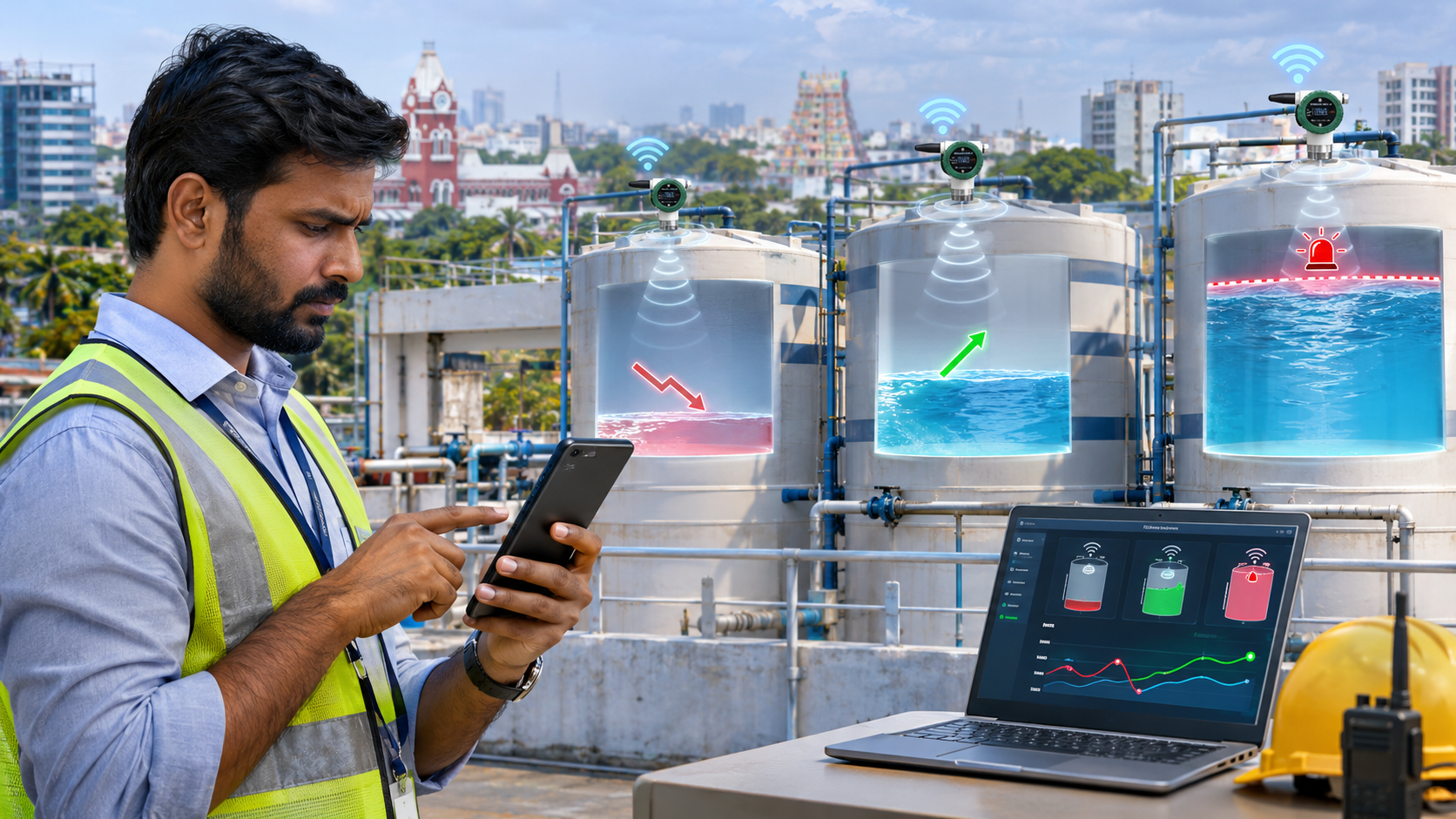
Water management is becoming increasingly important for residential buildings, commercial facilities, and industrial operations in Chennai. Unexpected water-level changes can lead to tank overflow, water shortages, equipment damage, and unnecessary operational expenses. Traditional tank monitoring methods often depend on manual inspections or basic sensor alerts, which may not identify unusual water usage patterns early enough.
AI-based Internet of Things (IoT) sensors offer a smarter approach. By combining continuous water-level measurement, connected monitoring devices, and intelligent data analysis, these systems can identify abnormal changes and notify users before minor issues become major problems.
A reliable Water Tank Level Sensor Chennai solution integrated with End-to-End IoT Solutions can help property owners and industries improve water monitoring, reduce wastage, and make informed decisions.
What Are AI-Based IoT Water Level Sensors?
AI-based IoT water level monitoring systems combine electronic sensors, communication technologies, and intelligent software to monitor water storage conditions.
A Water tank level sensor measures the amount of water inside a storage tank and sends the readings to a connected monitoring platform. AI-based analytics can then examine the collected information to identify patterns and detect unusual variations.
For example, the system may identify:
-
Unexpected drops in water level.
-
Unusually rapid tank filling.
-
Continuous water consumption during inactive periods.
-
Possible leakage-related level changes.
-
Repeated overflow conditions.
-
Unusual differences between expected and actual water usage.
Unlike conventional monitoring systems that depend only on fixed high-level and low-level thresholds, AI-enabled platforms can analyze historical readings and identify patterns that may indicate abnormal behaviour.
How Do AI-Based IoT Sensors Detect Abnormal Water Level Changes?
AI-based water monitoring generally works through continuous measurement, data transmission, and intelligent analysis.
Step 1: Continuous Water-Level Measurement
A sensor installed inside or above the tank measures the water level at configured intervals. Depending on the application, technologies such as ultrasonic, radar, hydrostatic, or other compatible sensing methods may be used.
Step 2: Data Collection and Transmission
The sensor sends measurement data to an IoT gateway or connected controller. The information is then transferred to a monitoring platform using a suitable communication technology.
Step 3: Historical Data Analysis
The platform stores water-level readings and examines normal usage patterns. It may consider factors such as:
-
Typical daily water consumption.
-
Normal tank filling duration.
-
Refill frequency.
-
Water-level changes during different operating hours.
-
Historical high-level and low-level conditions.
Step 4: AI-Based Anomaly Detection
AI algorithms analyse incoming measurements and compare them with expected behaviour.
For instance, if a tank usually loses water gradually but suddenly experiences a rapid level decrease, the system may identify the event as unusual and generate an alert.
Step 5: Notifications and Corrective Action
When an abnormal condition is detected, the platform can notify authorized users through supported channels such as mobile applications, dashboards, or configured messaging services.
This allows maintenance teams or property managers to investigate the issue promptly.
What Types of Abnormal Water-Level Changes Can AI Detect?
AI-based monitoring can help identify several unusual conditions that traditional monitoring systems may overlook.
A. Sudden Water-Level Drops
An unexpected reduction in tank level may indicate leakage, excessive consumption, or an unauthorized water draw.
AI-based analysis can compare the current drop rate with historical usage patterns and flag significant deviations.
B. Continuous Water Consumption
If the water level continues decreasing when consumption is normally low, the system can identify the unusual pattern for further investigation.
This may help detect leaking pipelines, faulty valves, or equipment that continues drawing water unnecessarily.
C. Unusual Tank Filling Patterns
A tank that normally fills within a particular time may suddenly take much longer to reach its target level.
Possible causes include:
-
Reduced water supply.
-
Pump performance problems.
-
Partially blocked pipelines.
-
Valve malfunction.
-
Changes in inlet pressure.
D. Repeated Water Overflow
Repeated high-level events may indicate incorrect pump operation, faulty control settings, or valve-related problems.
An integrated monitoring and automation system can help operators identify these recurring conditions.
E. Unexpected Level Fluctuations
Rapid or irregular level changes may result from unstable supply conditions, sensor issues, or unusual water usage.
AI-based analytics can help distinguish patterns that require investigation from normal operational variations.
Why Is a Water Tank Level Sensor Important for AI-Based Monitoring?
Accurate measurement is the foundation of an effective AI-based water monitoring system.
A Water tank level sensor provides the data required for analysis. If the sensor produces unreliable readings, the AI platform may generate inaccurate alerts or fail to identify important changes.
When selecting a sensor, consider the following factors:
-
Measurement accuracy: The sensor should provide readings suitable for the tank and application.
-
Operating range: Ensure that the measurement range matches the tank dimensions.
-
Installation conditions: Consider tank shape, mounting position, obstructions, and environmental conditions.
-
Communication compatibility: Confirm that the sensor can connect to the selected controller or IoT gateway.
-
Data consistency: Stable and regularly collected readings help improve anomaly detection.
-
Maintenance requirements: Periodic inspection and calibration, where applicable, help maintain measurement reliability.
Choosing the appropriate Water Tank Level Sensor Chennai solution helps establish a dependable foundation for intelligent water monitoring.
How End-to-End IoT Solutions Improve Water Monitoring
Individual sensors provide measurements, but a complete IoT ecosystem connects field devices, communication networks, data platforms, and user interfaces.
End-to-End IoT Solutions can bring these components together to support centralized water monitoring.
A typical architecture includes:
-
Sensor layer: Measures water levels inside storage tanks.
-
Controller layer: Collects sensor readings and manages connected equipment.
-
Connectivity layer: Transfers data through suitable wired or wireless networks.
-
Cloud or server layer: Stores and processes incoming measurements.
-
AI analytics layer: Identifies unusual patterns and potential anomalies.
-
Application layer: Displays tank information, trends, and notifications to users.
The benefits of this integrated approach include:
-
Centralized monitoring of multiple tanks.
-
Remote access to water-level information.
-
Intelligent alerts for unusual conditions.
-
Historical data analysis.
-
Improved visibility into water consumption.
-
Opportunities for automated pump and valve control.
The exact AI and automation capabilities depend on the platform, connected hardware, and system configuration.
How Can MyTank Support Smart Water Monitoring?
MyTank can be part of a connected water monitoring setup designed to improve visibility into tank storage conditions.
When integrated with compatible sensors, controllers, and communication systems, a smart monitoring platform can help users access water-level information without depending entirely on physical tank inspections.
Potential applications include:
-
Monitoring residential overhead and underground tanks.
-
Tracking water storage across apartment complexes.
-
Monitoring multiple tanks in commercial buildings.
-
Supporting industrial water storage operations.
-
Providing visibility into changing water-level conditions.
When AI-based analytics are available in the selected configuration, historical readings can be used to identify unusual water-level patterns and support timely investigation.
For users evaluating MyTank, it is important to confirm which monitoring, alerting, analytics, and automation features are included in the specific product configuration.
Applications of AI-Based Water-Level Monitoring in Chennai
AI-enabled IoT monitoring can support different types of properties and industries across Chennai.
Residential Apartments
Apartment associations can monitor overhead and underground tanks, identify unusual consumption patterns, and reduce dependence on manual inspections.
Commercial Buildings
Shopping centres, offices, and business facilities can use connected monitoring to improve water storage visibility and identify abnormal level changes.
Industrial Facilities
Manufacturing units can monitor process water storage and investigate unexpected consumption or refill variations.
Educational Institutions
Schools and colleges can improve water storage management across multiple buildings and facilities.
Hospitals and Healthcare Facilities
Connected monitoring can help facility teams maintain better visibility into water storage conditions and respond to unusual changes.
For these applications, a suitable Water Tank Level Sensor Chennai solution can contribute to more efficient and controlled water management.
What Should You Consider Before Implementing AI-Based IoT Water Monitoring?
Before installing an intelligent monitoring system, evaluate the following requirements:
|
Consideration |
Why It Matters |
|
Sensor selection |
Determines measurement reliability and suitability for the tank. |
|
Data collection frequency |
Affects how quickly unusual changes can be identified. |
|
Network connectivity |
Ensures consistent transmission of sensor readings. |
|
Historical data availability |
Helps establish normal usage patterns. |
|
AI analytics capability |
Determines which abnormal conditions can be identified. |
|
Alert configuration |
Ensures relevant users receive timely notifications. |
|
System integration |
Supports connections with pumps, valves, and existing infrastructure. |
|
Maintenance |
Helps maintain sensor accuracy and system reliability. |
It is also important to remember that AI alerts indicate unusual behaviour, not necessarily a confirmed fault. Physical inspection and additional checks may be required to determine the actual cause.
Conclusion
AI-based IoT sensors are transforming water-level monitoring by combining continuous measurement with intelligent data analysis. These systems can identify unexpected water-level drops, unusual consumption patterns, irregular filling cycles, and recurring overflow conditions.
A reliable Water tank level sensor provides the measurement data, while AI analytics help identify deviations from normal operating patterns. Integrating these technologies through End-to-End IoT Solutions enables centralized monitoring, timely notifications, and better water management.
For residential, commercial, and industrial properties in Chennai, adopting a suitable Water Tank Level Sensor Chennai solution can improve operational visibility and help reduce water wastage. With connected platforms such as MyTank, organizations can take practical steps toward smarter and more efficient water monitoring.
- Digital Agency
- Literie
- Location de voitures
- Restaurant
- Restaurant
- Mode
- Mode
- Information
- Marketing
- Tourisme
- Développement
- Découverte
- Législation
- Gastronomie
- Pâtisserie
- Event
- Art
- Causes
- Crafts
- Dance
- Drinks
- Film
- Fitness
- Food
- Games
- Gardening
- Health
- Home
- Literature
- Music
- Networking
- Other
- Party
- Religion
- Shopping
- Sports
- Theater
- Wellness
 English
 Indian
 French
 Arabic
 Spanish
 Portuguese
 Deutsch
 Turkish
 Dutch
 Italiano
 Russian
 Romaian
 Portuguese (Brazil)
 Greek
