


How Connected Sensors Provide Real-Time Water Level Alerts to Chennai Hospitals
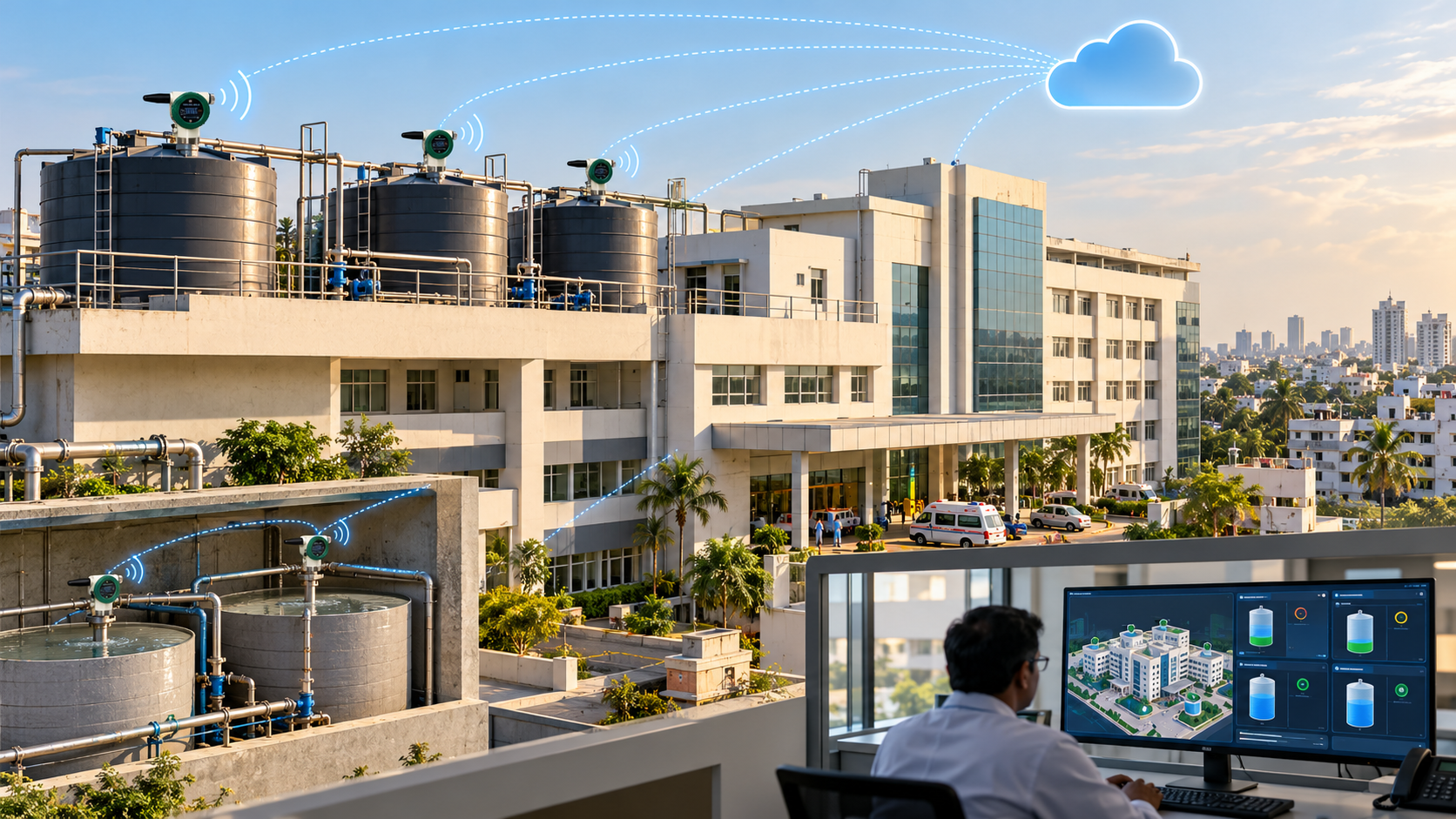
Hospitals require reliable water storage management to support sanitation, cleaning, laundry, kitchens, and other essential facility operations. In multi-storey hospitals, monitoring overhead tanks and underground sumps can become challenging when staff depend on manual inspections or conventional pump controls.
Connected sensors offer a smarter way to monitor tank levels and notify facility teams when water levels reach predefined thresholds. For hospitals exploring hospital water management Chennai
solutions, a connected water tank monitoring system can improve visibility, help identify potential overflow risks, and support more organised water management.
With MyTank, hospitals can explore smart water monitoring solutions designed to support remote tank monitoring and compatible pump automation.
Why Do Hospitals Need Real-Time Water Level Alerts?
Hospitals may have several water storage tanks serving different buildings, floors, and operational areas. Without timely information, facility teams may not discover a problem until a tank is nearly empty or water begins overflowing.
Common challenges include:
-
Unexpected low water levels: Staff may not notice declining tank levels in time.
-
Tank overflow: Pumps may continue running after a tank reaches capacity.
-
Manual inspection requirements: Maintenance personnel must physically check multiple storage locations.
-
Limited centralised visibility: Facility managers may struggle to monitor every tank from one location.
-
Delayed maintenance response: Unusual level changes may go unnoticed between inspections.
A connected monitoring system can help address these challenges by providing sensor-based readings and configurable notifications.
How Connected Sensors Generate Water Level Alerts
A connected water tank monitoring system typically combines a level sensor, a communication module, and a monitoring platform.
Step 1: Measure the Water Level
A radar level sensor measures the distance between the sensor and the water surface without direct contact. The system uses this measurement to calculate the approximate water level in the tank.
Step 2: Transmit the Sensor Data
The sensor sends level information to a gateway or connected platform through a supported communication technology, such as LoRa, cellular connectivity, or another compatible network.
Step 3: Compare the Reading with Configured Thresholds
The monitoring system compares the current level with predefined limits. For example, a hospital may configure a low-level alert when a tank falls below a selected percentage of its capacity.
Step 4: Notify the Facility Team
When a configured threshold is reached, the system can generate an alert through supported channels, such as a mobile application, dashboard, or notification service.
Step 5: Support Timely Action
Facility staff can review the tank status and decide whether to refill the tank, inspect the pump, or investigate an unexpected level change. Where compatible automation is installed, the system may also initiate configured pump-control actions.
Alert delivery depends on sensor performance, communication availability, platform configuration, and the selected notification method.
What Types of Water Level Alerts Can Hospitals Use?
A connected monitoring platform can support several useful alert types, depending on the available features.
|
Alert type |
Purpose |
|
Low water level |
Warns staff when stored water falls below a configured threshold |
|
High water level |
Helps identify when a tank is approaching its upper limit |
|
Potential overflow |
Supports timely intervention before the tank exceeds its safe operating level |
|
Unexpected level changes |
Helps staff investigate unusual filling or consumption patterns |
|
Sensor or connectivity fault |
May indicate that monitoring data is unavailable or unreliable, if fault detection is supported |
These alerts help maintenance teams prioritise their response. They should complement, rather than replace, suitable pump safeguards and routine maintenance.
Why Remote Monitoring Matters for Chennai Hospitals
For hospitals with multiple floors or separate buildings, manually inspecting every tank can take time. Remote monitoring allows authorised staff to view available tank information through a connected dashboard.
Benefits may include:
-
Centralised monitoring: Review connected tanks from a single interface.
-
Faster awareness: Receive notifications when configured level thresholds are reached.
-
Reduced routine inspections: Use remote readings to identify which tanks need attention.
-
Better pump coordination: Use level information to support compatible automated controls.
-
Operational planning: Review available historical data to understand water storage patterns.
These capabilities can support hospital water management Chennai initiatives by improving visibility into stored water and helping facility teams respond to changing conditions.
Tank-level alerts do not independently measure distribution pressure, verify drinking-water quality, or guarantee uninterrupted water availability. Hospitals may need additional equipment and procedures for these requirements.
How MyTank Supports Connected Water Tank Monitoring
MyTank offers smart water tank monitoring and automation solutions that hospitals can evaluate according to their infrastructure and operational requirements.
Depending on the selected configuration, the system can support:
-
Radar-based level measurement: Monitor water levels without direct contact with the water.
-
Wireless communication: Transmit readings through supported connectivity options.
-
Remote dashboard access: View information from connected tanks.
-
Configured level alerts: Help staff identify high- and low-level conditions.
-
Multi-tank monitoring: Consolidate available information from multiple connected storage points.
-
Pump automation integration: Connect compatible controllers for configured level-based pump operation.
For Chennai hospitals, these capabilities can help maintenance teams monitor overhead tanks and underground sumps more systematically.
Before selecting a system, hospitals should confirm sensor compatibility, wireless coverage, alert delivery methods, power backup, and pump-control requirements with the solution provider.
How to Choose a Water Tank Monitoring System for a Hospital
When evaluating a water tank monitoring system, hospital facility managers should consider the following factors:
-
Number of tanks: Identify all overhead tanks and underground sumps that need monitoring.
-
Sensor technology: Choose sensors suitable for the tank dimensions and installation conditions.
-
Connectivity: Verify reliable communication across the hospital campus.
-
Alert configuration: Establish suitable high- and low-level thresholds for each tank.
-
Pump integration: Confirm compatibility with existing controllers and electrical protection systems.
-
Fault handling: Check how the system responds to missing readings, sensor failures, or communication loss.
-
Scalability: Ensure the monitoring solution can accommodate future facility expansion.
A site assessment can help determine the appropriate sensor placement, communication method, and automation configuration.
Conclusion
Connected sensors help hospitals monitor water levels, receive alerts when configured thresholds are reached, and respond more quickly to potential overflow or low-storage conditions. When combined with suitable connectivity and a central monitoring platform, they can reduce dependence on manual inspections and support more efficient facility management.
For hospitals investing in hospital water management Chennai solutions, a connected water tank monitoring system provides a practical way to improve water storage visibility and support better operational decisions.
With MyTank, hospitals can explore smart water monitoring and compatible automation solutions tailored to their tank infrastructure and monitoring requirements.
Looking to improve water level monitoring at your hospital in Chennai? Contact MyTank to discuss a suitable configuration for your water tanks and facility operations.
- Digital Agency
- Literie
- Location de voitures
- Restaurant
- Restaurant
- Mode
- Mode
- Information
- Marketing
- Tourisme
- Développement
- Découverte
- Législation
- Gastronomie
- Pâtisserie
- Eveniment
- Art
- Causes
- Crafts
- Dance
- Drinks
- Film
- Fitness
- Food
- Jocuri
- Gardening
- Health
- Acasă
- Literature
- Music
- Networking
- Alte
- Party
- Religion
- Shopping
- Sports
- Theater
- Wellness
 Romaian
 Indian
 English
 French
 Arabic
 Spanish
 Portuguese
 Deutsch
 Turkish
 Dutch
 Italiano
 Russian
 Portuguese (Brazil)
 Greek
