


How IoT Pump Controllers Automate Water Tank Filling in Hyderabad Apartments
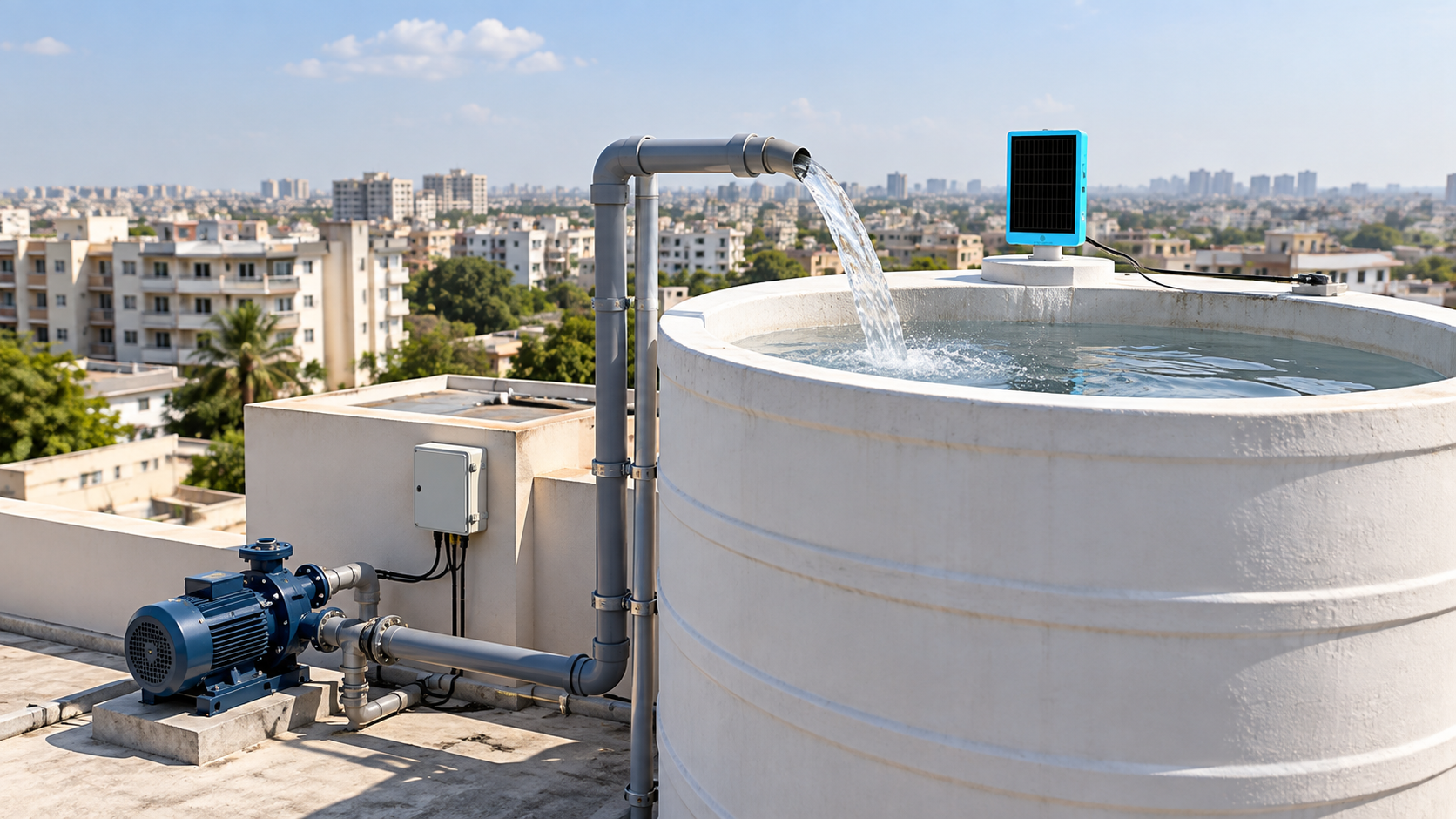
Managing water supply in large apartment communities requires regular monitoring of underground sumps, overhead tanks, pumps, and distribution systems. When these systems are operated manually, maintenance teams may need to inspect tank levels and switch pumps on and off several times a day. This can result in overflow, dry running, unnecessary electricity consumption, and inconsistent water availability.
IoT pump controllers provide a smarter approach by connecting water-level sensors with automated pump-control systems. By continuously monitoring tank levels and applying predefined operating conditions, these systems can automate the filling process and reduce dependence on manual intervention.
A Water Tank Automation System for Apartments in Hyderabad can combine IoT connectivity, tank-level sensors, cloud monitoring, and Level-Based Pump Control to create a more efficient water-management system. Platforms such as MyTank Monitoring can provide centralized visibility into connected tanks and pumps.
Why Apartment Communities Need Automated Water Tank Filling
Large apartment communities can have several overhead tanks and underground sumps serving different buildings or blocks.
Manual pump operation can create several challenges:
-
Overhead tank overflow
-
Pump dry running
-
Unnecessary pump operation
-
Water wastage
-
Higher electricity consumption
-
Delayed response to low water levels
-
Frequent manual inspections
-
Difficulty monitoring multiple tanks
An automated system can continuously monitor tank conditions and operate pumps according to configured water-level thresholds.
What Is an IoT Pump Controller?
An IoT pump controller connects the pump-control system with water-level sensors and an IoT platform.
The sensors measure the water level in tanks, while the controller uses this information to determine whether the pump should operate.
A typical system works through the following process:
Water-Level Sensor → IoT Controller → Pump Control → Cloud Platform → Dashboard
When the water level falls below a predefined threshold, the controller can start the pump. When the tank reaches the desired upper level, the pump can automatically stop.
This eliminates the need for someone to manually monitor the tank throughout the filling process.
How Level-Based Pump Control Works
Level-Based Pump Control operates the pump according to actual water levels rather than fixed schedules.
For example, consider an apartment with an underground sump and an overhead tank.
-
The overhead tank level falls below the minimum threshold.
-
The system checks whether sufficient water is available in the sump.
-
If the conditions are suitable, the transfer pump starts.
-
The tank begins filling.
-
The sensor continuously measures the rising water level.
-
When the tank reaches the maximum threshold, the pump stops automatically.
The process can be represented as:
Low Level → Pump ON → Tank Filling → High Level → Pump OFF
This approach can help reduce unnecessary pumping and prevent overflow.
Role of MyTank Monitoring
MyTank Monitoring can provide centralized visibility into connected water tanks and their operating conditions.
Instead of depending entirely on physical inspection, apartment maintenance teams can monitor water levels through a connected dashboard.
Depending on the system configuration, users can view information such as:
-
Current tank level
-
Underground sump level
-
Pump status
-
High-level conditions
-
Low-level conditions
-
Water-level trends
-
Pump operating history
-
Alerts and notifications
This can be particularly useful for apartment communities with multiple buildings and water-storage points.
Preventing Overhead Tank Overflow
Overflow is a common problem when pumps are manually operated.
A pump may continue running after an overhead tank has reached its capacity if nobody is available to switch it off.
With automated water-level monitoring, the controller can continuously track the tank level.
When the tank reaches the configured upper threshold, the pump can automatically stop.
This helps reduce:
-
Water wastage
-
Unnecessary pump operation
-
Wet or damaged rooftop areas
-
Manual monitoring requirements
Preventing Pump Dry Running
Water tank automation should also consider the amount of water available in the source tank.
For example, an apartment transfer pump may draw water from an underground sump. If the sump becomes empty, continuing to operate the pump can cause dry running.
An IoT controller can monitor the sump level and use it as part of the pump-control logic.
A typical sequence could be:
Sump Has Water → Pump Operation Allowed
Sump Level Too Low → Pump Operation Restricted
This provides an additional layer of protection for the pump system.
Monitoring Multiple Apartment Tanks
Large residential communities may have several overhead tanks and underground sumps.
Manually checking each tank can be time-consuming, especially when the tanks are located across different blocks.
A centralized IoT platform can collect information from multiple sensors and present it through a single interface.
With MyTank Monitoring, a facility team can potentially view the status of connected tanks from one platform instead of physically visiting every location.
This can make it easier to identify which tanks require attention.
Cloud Connectivity and Remote Monitoring
Cloud connectivity extends pump automation beyond the local control panel.
Water-level and pump-status information can be transferred to a cloud platform, allowing authorized users to access the information remotely.
This can be useful when:
-
Facility managers are away from the property
-
Multiple apartment blocks need monitoring
-
Maintenance teams need centralized visibility
-
Water-level alerts require quick attention
-
Historical data needs to be reviewed
Remote monitoring can complement local automation rather than replacing it.
How Automation Reduces Water Wastage
A smart Water Tank Automation System for Apartments in Hyderabad can help reduce water wastage in several ways.
Automatic Pump Shutdown
The pump can stop when the overhead tank reaches the configured maximum level.
Low-Level Detection
The system can identify when a tank requires water and initiate the filling process according to configured conditions.
Source-Level Monitoring
Monitoring the underground sump can help prevent pumps from operating when insufficient water is available.
Alerts
Users can receive notifications about unusual tank conditions or pump activity.
Historical Data
Water-level and pump-operation records can help identify recurring inefficiencies.
Benefits for Apartment Maintenance Teams
Automated pump control can simplify daily water-management tasks.
Less Manual Intervention
Maintenance personnel do not need to continuously check tanks and operate pumps manually.
Improved Visibility
Tank and pump information can be accessed through a centralized monitoring interface.
Better Pump Management
Level-based automation can reduce unnecessary pump operation.
Reduced Overflow Risk
Automatic shutdown at predefined levels can help prevent water from being wasted.
Faster Response
Alerts can help maintenance teams identify low or high water-level conditions more quickly.
Multi-Tank Monitoring
Multiple tanks can be monitored from a centralized platform, depending on the system configuration.
What to Consider When Selecting an IoT Pump Controller
Apartment communities should consider several factors before implementing an IoT pump-control system.
Sensor Accuracy
Reliable water-level measurement is essential for effective automation.
Pump Compatibility
The controller should be compatible with the electrical characteristics and operating requirements of the existing pump.
Automation Logic
The system should support appropriate low- and high-level thresholds.
Connectivity
Wireless communication should be suitable for the size and layout of the apartment community.
Cloud Platform
A cloud platform should provide convenient access to tank and pump information.
Alerts
Look for configurable notifications for important water-level and pump conditions.
Scalability
The system should be capable of supporting additional tanks and buildings as the community grows.
Example of Automated Water Filling
Consider a Hyderabad apartment community with an underground sump and an overhead tank.
The overhead tank is configured with a minimum and maximum water-level threshold.
When the water level falls below the minimum:
Step 1: The level sensor detects the low water level.
Step 2: The IoT controller checks the sump condition.
Step 3: If sufficient water is available, the transfer pump starts.
Step 4: The tank fills while the sensor continuously tracks the level.
Step 5: Once the maximum threshold is reached, the pump automatically stops.
Step 6: The updated tank and pump status can be available through the monitoring platform.
This automated process reduces the need for continuous manual intervention.
Conclusion
IoT pump controllers can transform traditional water-tank filling into an automated and connected process. By combining water-level sensors, cloud connectivity, pump controllers, and Level-Based Pump Control, apartment communities can improve their management of underground sumps and overhead tanks.
A Water Tank Automation System for Apartments in Hyderabad can help reduce manual pump operation, minimize overflow, support dry-run protection, and provide better visibility into water infrastructure.
With MyTank Monitoring, apartment maintenance teams can gain centralized access to tank and pump information, making it easier to monitor multiple water-storage points and respond to important conditions.
The result is a more connected approach to apartment water management where pumps operate according to actual water levels rather than relying entirely on manual inspection and switching.
- Digital Agency
- Literie
- Location de voitures
- Restaurant
- Restaurant
- Mode
- Mode
- Information
- Marketing
- Tourisme
- Développement
- Découverte
- Législation
- Gastronomie
- Pâtisserie
- Evento
- Art
- Causes
- Crafts
- Dance
- Drinks
- Film
- Fitness
- Food
- Giochi
- Gardening
- Health
- Home
- Literature
- Music
- Networking
- Altre informazioni
- Party
- Religion
- Shopping
- Sports
- Theater
- Wellness
 Italiano
 Indian
 English
 French
 Arabic
 Spanish
 Portuguese
 Deutsch
 Turkish
 Dutch
Dutch
 Russian
 Romaian
 Portuguese (Brazil)
 Greek
Greek
